Nvidia Wants Your Home Network to Work Like a Mini Data Center for Local AI: What This Means for the Future of Computing
For the past few years, the story of artificial intelligence has been the story of the cloud. When you type a question into a chatbot, your words travel hundreds of miles to a massive warehouse full of servers. The machines think, and the answer makes the long journey back to your screen. It feels instant, but it is not magic. It is a giant, distant brain that billions of people share.
Now one of the most important companies in AI is looking in the opposite direction. Nvidia, the chip maker whose processors power many of those giant data centers, wants your home network to work like a mini data center for local AI. Instead of sending everything to some faraway building, the devices in your house, your computer, your phone, your router, your smart speakers, and more, would join forces to run AI right where you live.
That simple idea could change the future of AI in ways that are easy to miss. It affects your privacy. It affects your internet bill. It affects who gets to use powerful AI and who does not. And it could reshape the entire technology industry, from giant chip makers down to the people who install your home internet. Let's break down what a "mini data center" in your home really means, and why it matters to everyone, not just tech fans.
What Does a "Mini Data Center" at Home Actually Mean?
To understand Nvidia's vision, it helps to peek inside a real data center. A data center is basically a room full of computers that share resources. One machine stores files. Another one processes them. A third watches over the network. They all talk to each other at lightning speed through special networking hardware. Software decides which machine handles which job, so the whole room works like one giant computer.
Our homes are different today. Your laptop is an island. Your phone is another island. Your smart speaker is a tiny island. They can talk to the internet, but they do not really cooperate with each other in a smart way. If your laptop needs extra computing power, it cannot borrow some from your phone. If your security camera records a video, it usually sends that video up to the cloud for someone else's computer to analyze.
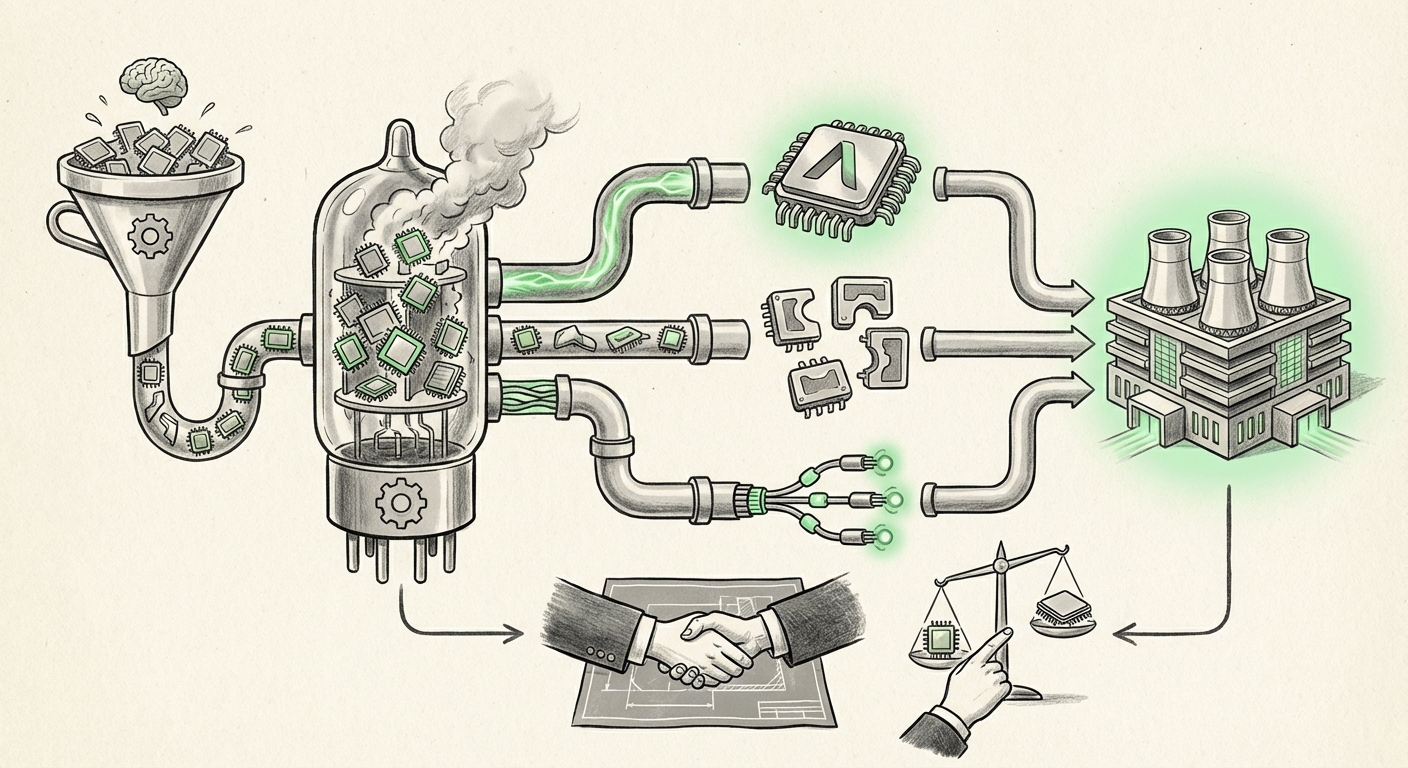
Nvidia imagines a different setup. In its vision, your home network becomes a small team of devices that work together the way servers do in a data center. A powerful computer in your office could act like a "server." Your router could become the "network switch" that directs traffic. A storage device could act as shared memory. Your phone and smart devices would tap into the team when they need help, without ever leaving the house.
Think of it this way: today, your devices are like neighbors who each drive separately to a distant office building to do their work. Nvidia wants them to work from home together, sharing one kitchen, one printer, and one filing cabinet. Everything gets done locally, together, with no commute to the cloud.
Why Is Nvidia Pushing This Idea Right Now?
There are two reasons Nvidia is interested in local AI, and they are worth separating.
The first reason is business. Nvidia creates the most important brains of the AI boom. Its chips are the gold standard for training and running large AI models. But building even more chips for distant data centers is not the only path to growth. If AI moves into homes, offices, and everyday devices, a whole new wave of hardware will be needed. In that sense, the "home data center" is also a growing market for the company that makes the electronic shovels for the AI gold rush.
The second reason is technology. Several trends are finally coming together at once. Home internet speeds have exploded. Mesh routers now cover every corner of a house with a strong signal. Storage is cheaper than ever. And AI models have become dramatically smaller and smarter, meaning useful AI can run on a laptop or a phone instead of only in a giant server room.
At the same time, the pure cloud model is showing cracks. Sending every prompt, image, and recording to a distant data center is costly. It eats bandwidth. It slows down when millions of people are online at once. And it raises worries about who can see your private data once it leaves your home. The practical solution to all these problems is the same: handle more work locally and only send what truly needs to go.
What Everyday Life Could Look Like With Local AI
The easiest way to understand Nvidia's vision is to imagine the difference in daily life. Today's smart assistants are polite but forgetful. Tomorrow's local AI could be different, because it would be allowed to remember. Let's walk through a few examples.
An Assistant With a True Memory
Imagine an AI that has learned your family's routines because it has watched them safely inside your home network for months. It knows that you like the bedroom at a cool temperature, that your child reads a bedtime story at eight, and that nobody wants the downstairs lights on after midnight. It learns all of this not by spying on you from a distant server, but by quietly noticing patterns on your own machines. Because the learning stays local, that personal "memory" never becomes a product sold to advertisers.
AI That Works Even When the Internet Fails
Today, when your internet connection drops, smart devices often become dumb. A local AI network would keep working. Your voice commands would still be understood. Your security cameras would still detect motion. Your smart thermostat would still adjust itself. The AI would not stop being smart just because the cable went down, because its brain lives in your home, not in a distant server.
Home Security With Actual Privacy
Video cameras are one of the most sensitive devices in any home. In the cloud model, footage is often uploaded so software can analyze it. In the local model, the camera sends its feed to your own home server, where the AI decides whether that shadow in the yard is a deer, a delivery person, or something to worry about. Only true alerts go to your phone. Your footage, and your life, never leaves your property.
Devices That Cooperate Instead of Competing
Today, your phone, laptop, TV, and speakers each run their own little slice of AI. A home data center would let them share. Your laptop could ask your desktop for extra power to run a big model. Your phone could hand off a task to a stronger machine when its battery is low. The whole house behaves like one intelligent system instead of a collection of gadgets.
What This Means for the Future of AI Itself
If Nvidia's vision spreads, the future of AI will not look like one giant brain in the sky. It will look like millions of small brains living closer to the people they serve. This is sometimes called distributed AI, and it is a major shift in thinking.
The shift matters because it changes the economics of intelligence. Today, running the very best AI often means paying for cloud services and trusting someone else's computers. In the future, powerful AI could be something you own, like a washing machine. Once you buy it, running it does not cost much at all. For people and businesses in areas with poor internet connections, that could be life-changing. An AI that runs on a local machine can serve a village clinic or a rural school even when the cloud is far away.
The shift also changes the priorities of AI research. Massive models need massive power, but local AI must run efficiently on small devices. So expect more breakthroughs in small, efficient, specialized models that do not copy all the abilities of their giant cousins, but do their one job brilliantly. The future will probably be hybrid: big brains in the cloud for difficult problems, and small, fast, private brains at home for everyday tasks.
There is also a beautiful side effect. Right now, AI's appetite for electricity is growing so fast that it is straining power grids. A future where many tasks run on efficient local hardware, instead of giant data centers, spreads the load and encourages less wasteful AI. Energy efficiency is not just good for bills; it is good for the planet.
What This Means for Businesses
You do not have to be a technology company to be touched by this change. Almost every business now uses AI in some form, and the location of that AI matters more than most leaders realize.
Privacy as a Business Advantage
Banks, hospitals, law firms, and schools handle data that they are not allowed to simply toss into the cloud. Local AI makes it easier to follow privacy laws because the sensitive information simply never leaves the building. In this world, companies that can promise "your data never leaves your premises" will win the trust of cautious customers.
A New Market for Services
If every serious household and small business needs a "mini data center," someone has to set it up, tune it, and fix it when it breaks. This creates new jobs for network installers, hardware integrators, and IT support teams. Internet service providers may start bundling home AI servers, just like they now bundle routers. Retailers may sell "AI-ready" networking gear. An entire ecosystem will form around the simple act of putting AI closer to people.
Redesigning Products for a Local-First World
Every software maker should start asking a hard question: Does this need to run in the cloud, or could it run on the customer's own hardware? The companies that answer that question well will build products that are faster, cheaper to run, and easier to trust. The ones that insist everything must live in their cloud may find themselves left behind as customers demand more control.
The Hard Questions We Cannot Ignore
As exciting as local AI sounds, a home data center is not automatically a perfect world. We need to talk about the risks while there is still time to shape the future.
Security Moves Into Your Closet
Today, when data sits in a giant cloud, at least teams of security experts guard it. When your AI runs at home, you become part of the security team. A home server full of personal data is a much richer target for hackers than a single laptop. If Nvidia and its partners push devices into homes, they must also commit to years of security updates, automatic patches, and honest communication when something goes wrong. And families need better simple tools to keep their networks safe.
The Human Right to Live Without AI
Not everyone will want a home data center. Some people will find the idea of a house that watches and remembers uncomfortable, even if the watching happens locally. It is essential that local AI remain a choice, not something forced on people by default settings. Boundaries matter. A smart home should still respect the humans inside it.
The Digital Divide Could Grow Wider
Powerful local AI needs powerful hardware. Fast networking. Modern devices. That costs money. If only wealthier households can afford their own mini AI data centers, the gap between those who have capable AI and those who do not could widen. It will be up to companies, governments, and educators to make sure local AI does not become another luxury that leaves whole communities behind.
E-Waste and Upgrades
A local AI model is not a one-time purchase. Models improve, and hardware ages. If people are encouraged to replace their home servers every two years, the mountains of electronic waste will grow. Manufacturers should design these devices to last and to accept new AI models through software updates, not just new boxes.
Actionable Steps to Prepare for the Local AI Future
You do not have to wait for the future to arrive. Here are practical steps that households and businesses can take today.
For Households
- Strengthen your home network. The heart of a home data center is the network. If you can, use wired connections for devices that stay in one place, and make sure your router is modern enough to handle many devices at once.
- Keep your firmware updated. Security updates are the cheapest insurance you will ever buy for your digital life. Update everything, especially your router.
- Buy devices with local intelligence in mind. When you replace a phone, laptop, or smart speaker, look for ones that can run AI models on the device itself rather than sending everything to the cloud.
- Learn the basics of your own network. You do not need to be an engineer. Knowing how to log into your router and see which devices are connected is a powerful safety skill.
For Businesses
- Audit your data. Which of your workloads truly need the cloud, and which could run locally with better privacy and lower cost? Start asking now, before your competitors do.
- Plan for hybrid AI. The future is not cloud or local. It is both. Design your operations so they can move work between local devices and cloud services as needs change.
- Rethink what you build. If powerful AI can run on customer hardware, what new products become possible? On-site AI that never touches your servers could become your strongest selling point.
- Talk to your technology providers. Ask your software vendors about their roadmaps for local and edge AI. The answers they give will tell you a lot about whether they are preparing for tomorrow or defending yesterday.
The Bottom Line: AI Is Coming Home
For a long time, the future of AI seemed to point upward and outward, to bigger data centers, bigger models, and bigger clouds. Nvidia's vision points the other way. It points to a future where intelligence is not just something distant that you rent by the minute, but something close that you own, like the electricity in your walls or the water in your pipes.
That future comes with genuine gifts: privacy, speed, reliability, and access for people who cannot depend on the cloud. It also comes with genuine responsibilities: security, fairness, privacy protection, and sustainable design. The technology that puts a mini data center in your closet is arriving quickly. The rest is up to us.
The data center of tomorrow may not be a giant fortress in the desert. It may be a quiet box on your shelf, humming softly with intelligence that belongs to you. When that day comes, the most important question will not be whether your house can run AI. It will be whether we made sure that everyone, everywhere, gets a fair chance to benefit from it.