Google's WeatherNext 3 Ditches Physics Simulations and Learns Weather From Live Satellite Data
For more than half a century, the recipe for a weather forecast barely changed. Scientists built a giant virtual copy of the atmosphere inside a supercomputer, poured millions of measurements into it, and let physics equations describe what would happen next. That method, called physics simulation, became one of the most impressive achievements of modern computing.
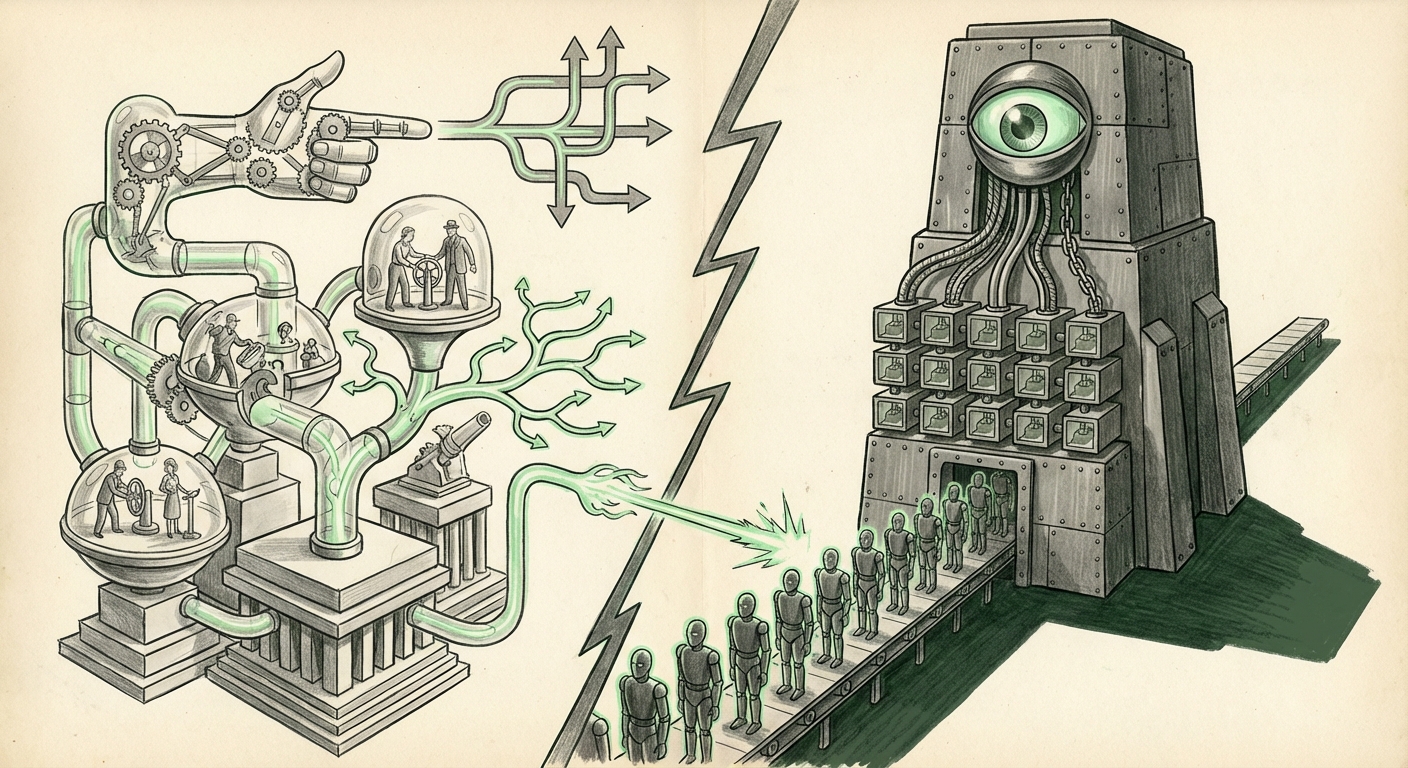
Now Google's WeatherNext 3 has torn up the recipe. The new AI system dramatically changes the approach. Instead of running a physics simulation of the sky, WeatherNext 3 learns weather directly from live satellite data. It does not receive a rulebook written by scientists. It watches the actual, ever-moving planet and figures out the rules on its own.
That may sound like a small technical detail. It is not. This is a major signal that artificial intelligence is moving from "computing what we think will happen" to "observing what actually happens and learning from it." And that shift will touch far more than tomorrow's forecast.
The Old Way: A Supercomputer That Plays Physics
To understand why WeatherNext 3 matters, it helps to understand what it is leaving behind. For decades, the world's best forecasts came from numerical weather prediction. In this approach, the atmosphere is sliced into a giant grid of boxes. Each box contains information about temperature, pressure, humidity, and wind. Supercomputers then solve complicated physics equations for every single box, over and over, moving the weather forward minute by minute and day by day.
This works remarkably well. Modern physics-based forecasts save lives and billions of dollars every year. But the approach has real limits. It demands some of the most powerful computers on Earth. It is expensive to run. And because we cannot simulate every individual air molecule, the models must use approximations. The atmosphere is incredibly complex, and a simulation is always a simplified copy of the real thing.
The New Way: An AI That Learns by Watching
WeatherNext 3 flips the old logic completely. Instead of starting with physics equations, it starts with live satellite data. It takes in real observations of Earth's atmosphere as they happen, constantly watching the changing picture from space.
From those streams of data, the AI discovers patterns. It notices how cloud systems form, how temperatures shift, how moisture moves, and how the atmosphere behaves before a storm arrives. It learns associations: when a certain pattern appears over the ocean today, a specific kind of weather tends to arrive days later. No equations are handed to it. No atmospheric laws are programmed in. The model simply watches enough weather to internalise how weather behaves.
Think of the difference between learning to ride a bicycle by studying a physics textbook and learning by actually riding. The textbook teaches you about balance and momentum. But riding teaches your body something deeper. WeatherNext 3 is learning the sky the way a rider learns the bike, through direct experience, not through instructions.
The word "live" matters too. Because WeatherNext 3 learns from live satellite data, its picture of the world stays fresh. Weather is not static. The planet's climate patterns shift from year to year and season to season. A system that keeps drawing on current observations can stay in step with the real world instead of relying on older snapshots of how the atmosphere used to behave.
A Quick Look at What Changed
- The old approach: Hand the computer the laws of physics and let it simulate the atmosphere step by step.
- WeatherNext 3: Hand the AI live satellite data and let it discover the patterns of weather itself.
- The old approach: Depends on enormous supercomputing power every time a forecast is made.
- WeatherNext 3: Learns from real observations and uses that learned understanding to make predictions about what comes next.
Why This Matters Far Beyond Weather
Weather is one of the hardest tests AI could face. The atmosphere is what scientists call a chaotic system. Tiny changes in one place can grow into huge changes somewhere else days later. If an AI can grasp a chaotic system like the sky simply by studying raw data, it strengthens a much bigger idea: AI can master incredibly complex problems without being told the rules in advance.
That idea points to the future of AI across many fields. For years, many AI systems were designed by encoding human knowledge and rules into them. The emerging approach is different. Give a model enough real-world observation, and let it discover the underlying patterns for itself. This could reshape how we model ocean currents, air pollution, crop growth, energy demand, disease spread, and even parts of the economy. The weather story is the visible tip of a much larger trend.
What This Means for the Future of AI Forecasting
If approaches like WeatherNext 3 mature, forecasting could look very different in the years ahead.
Forecasts could keep improving automatically. Because the model learns from live data, it can keep updating as the planet changes. Each new day of satellite observations offers another lesson. The system gets sharper without humans manually rewriting its rules.
Forecasts could become faster and lighter. Once trained, data-driven models do not necessarily need the same heavy supercomputer resources that physics simulations demand. That could make high-quality predictions available in places that cannot afford giant computing facilities.
Forecasts could also capture things scientists did not think to program in. Physics simulations only include what scientists know how to express in equations. A model that learns from data is not limited in the same way. It can spot subtle relationships that humans might never think to write down.
Practical Impact on Business
Weather is not a small matter for the economy. It influences almost every industry. Better forecasting powered by live data could create real advantages.
Farming and Food Security
Farmers make decisions based on the weather weeks ahead. When to plant, when to irrigate, when to harvest, and when to protect crops from frost. Sharper, fresher forecasts mean fewer wasted harvests, stronger yields, and more stable food prices. Global food companies that buy grain, coffee, or cocoa also rely on weather intelligence to manage supply chains. For them, better prediction directly protects revenue and feeding people.
Energy and Renewables
Solar farms need to know how much sunshine will reach their panels. Wind farms depend on wind patterns. Grid operators must balance energy supply and demand every minute. When the forecast gets better, renewable energy becomes more reliable. Energy traders, utility companies, and even homeowners with rooftop solar all benefit from knowing what the sky will do hours and days in advance.
Logistics, Retail, and Insurance
Airlines plan flight routes around storms. Retailers stock extra supplies before severe weather and prepare their delivery networks. Insurers price risk and move emergency teams before disasters hit. Construction companies schedule work around rain. Every one of these businesses runs on weather information. The better that information is, the less money is lost to surprise weather events.
What This Means for Society
The most important impact may be on public safety. Severe storms, floods, heat waves, and other extreme weather events cause devastating damage around the world every year. Earlier and more accurate warnings give communities time to prepare, evacuate, and save lives.
There is also a chance for fairness. In the past, world-class forecasting required enormous supercomputers and deep expertise in physics. That placed the best weather prediction tools in the hands of wealthy nations and large institutions. Data-driven models could lower the barrier. If a country has access to satellite data and computing power, it may be able to build strong forecasting abilities without first building a massive physics simulation program. Good forecasting could become more democratic.
This also means that access to the underlying data becomes a public interest issue. Satellite observations and weather measurements are increasingly valuable resources. Communities that can gather high-quality data, and keep it open and shared, will be better positioned in the AI weather era.
The Honest Challenges
WeatherNext 3 is not magic, and the path forward has real challenges. Satellite data can be messy. Sensors fail, measurements have gaps, and cloudy skies can hide what is happening below. An AI that learns from data can only be as good as the data it sees. The old saying applies: garbage in, garbage out.
Rare and extreme events also remain tricky. A category of once-in-a-century storm does not happen often, so there is less data for the AI to learn from. In those cases, physics knowledge can still act as an important guardrail and safety net. The smartest future may not be pure physics or pure data, but a combination of both. This is where a purely data-driven approach must prove itself: on the rare events that matter most.
Trust is another issue. AI models are often described as black boxes because even their creators cannot always explain exactly why they make a particular prediction. For forecasters and emergency managers, understanding why a model expects a dangerous storm can be just as important as the warning itself. Human forecasters will remain essential, checking AI predictions, adding context, and communicating risk to the public. And every prediction should be carefully verified against what actually happens.
Climate change also adds pressure. As the planet warms, the past becomes a less reliable guide to the future. Weather patterns are shifting. This makes live learning even more useful, because the model can keep adapting to conditions that have never occurred before. But it also means no model, no matter how smart, can fully predict surprises in a rapidly changing climate.
What Should You Do Now?
For business leaders, this trend is a reminder to treat weather as a strategic factor, not an excuse. Start experimenting with forecast information in your planning. Look at your supply chain, your energy use, your staffing, and your marketing. Ask where better weather prediction would save money or create an edge.
For AI and data teams, the lesson is to value data as much as algorithms. Models like WeatherNext 3 show the power of learning directly from high-quality, real-time observations. Investing in data pipelines, cleaning, storage, and live feeds is just as important as investing in the latest AI architecture. Real-time data, not just historical files, will fuel the next generation of models.
For communities and leaders, the message is to support open weather data and measurement networks. If the future belongs to models that learn from observations, then good data infrastructure is public infrastructure. Funding satellites, ground sensors, and open data sharing is one of the smartest investments a society can make in its own safety.
The Future Is Learned, Not Programmed
The sky looks the same as it always has. But the way we understand it is changing. Google's WeatherNext 3 looks at the same planet and asks an entirely new question. Instead of "what do the physics equations predict?" it asks "what have I learned from watching this sky for a very long time?"
In a way, this is how humans always predicted weather before supercomputers existed. Farmers read the clouds, sailors watched the wind, and elders remembered the seasons. The universe of AI now moves closer to that instinct, but at a scale no human could ever match. It is trained not on a textbook of the atmosphere, but on the atmosphere itself.
That is the future of AI taking shape: fewer hand-written rules, more open eyes. The models that will define the coming decades will not just follow instructions. They will watch reality closely, learn constantly, and help us live smarter lives in a world that never stops changing.