AI-Designed Drug Turns Back the Biological Clock: What This Means for the Future of Medicine
It sounds like the opening scene of a science-fiction movie: an experimental drug whose chemical blueprint was invented entirely by an artificial intelligence, given to real people, and now showing early signs that it can wind the body's clock backward. In a newly reported early-stage trial, an AI-designed therapy appeared to reduce biological-age markers, the molecular signs that reveal how fast the body is actually ageing on the inside.
The data is still preliminary. Early trials are small, and many promising treatments fail at later hurdles. But this moment matters. It marks a major turning point for two fields at once: artificial intelligence and the science of living longer, healthier lives. The future this points to is not just a single anti-ageing pill. It is a completely new way of inventing medicine, one guided by machine intelligence, learning from every experiment, and getting faster with every success.
Breaking Down the Headline
To fully appreciate what happened, it helps to separate the story into two parts.
First, there is the drug itself. An AI system designed the molecule. That goes far beyond the usual way computers help scientists, where software simply sorts through libraries of existing chemicals to suggest candidates. In this case, the AI imagined something new, a molecule built from scratch to interact with the body's ageing machinery.
Second, there is the biological clock. Your body actually keeps time at a chemical level. Every cell carries tiny chemical tags on its DNA called epigenetic marks. They act like volume knobs on your genes, turning some up and others down. As you age, the pattern of these marks changes in highly predictable ways. Scientists can read those patterns and estimate your biological age, which may be older or younger than the number of candles on your birthday cake.
According to the early trial results, people who received the AI-designed drug showed biological-age markers moving in a healthier, younger direction. Think of it less like a time machine and more like turning down the volume on ageing-related damage. It is a genuinely striking result, and an early one. It still must be tested in larger groups, watched over longer periods, and confirmed by other scientists who can repeat the work. That is how good science gets done.
The Real Breakthrough Is the Method, Not Just the Molecule
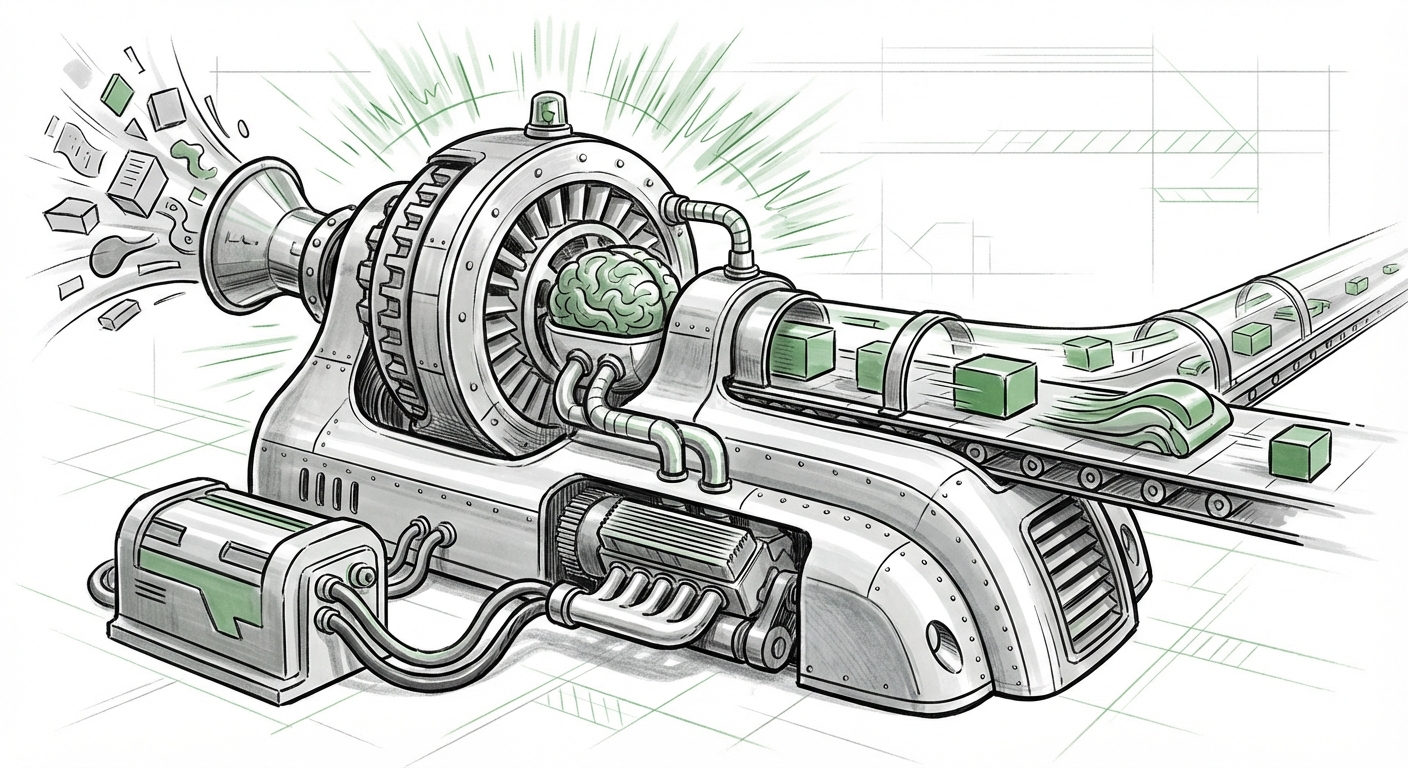
Here is what makes this story bigger than a single promising drug: the AI learned how to design it.
For more than a century, drug discovery worked the same way. Chemists would sketch molecules that seemed similar to ones that already worked. Then they would test them, one by one, against cells, animals, and finally people. The failure rate was enormous. More than nine out of ten experimental drugs never reached patients. Each new medicine could take over a decade and billions of dollars to create. It was like searching for a needle in a haystack, while building the haystack by hand.
AI changes that equation. A powerful machine-learning model can study millions of molecules, learn the deep patterns that make some chemicals safe and effective, and then generate entirely new ones that have never existed. It is not guessing randomly. It is combining everything humanity has already learned about chemistry and biology in ways no single human mind could hold.
The molecule tested in this trial is an early fruit of that approach. But the deeper value is the reusable method. The knowledge now lives inside the neural network, not just in a laboratory notebook. Once the model is proven, it can be pointed at other challenges: new cancer targets, rare diseases, brain disorders, or personalised medicines built for one person's genetics. Every trial it designs adds new knowledge that makes the next design better. That is a self-improving engine for medicine.
What This Means for the Future of AI
If these results hold up, the next decade of medicine will look radically different. Here is how AI will likely be used.
From One Molecule to Thousands
Right now, a single AI-designed drug entering a trial is a landmark. In the future, AI drug designers will spin out hundreds or thousands of candidate molecules for every disease. Founders of the field like to say the goal is designing drugs "at the speed of software." This trial is one of the first glimpses of that promise becoming real in human bodies.
Self-Driving Laboratories
AI will not stop at designing molecules. It will increasingly run the experiments that test them. Robotic labs already exist that can prepare samples, run tests, and record results around the clock. Combined with generative AI, these systems could form a feedback loop: AI designs a molecule, a robot tests it, data flows back to the model, and the next design is better. No human needs to supervise every step. Science could begin running 24 hours a day, 365 days a year.
Biological Age as a New Measuring Stick
One of the most exciting possibilities is that biological-age tests become a standard tool in medicine, the way blood pressure is today. Instead of waiting years to see if a drug prevents heart disease or dementia, researchers could measure whether it shifts someone's biological clock in the right direction. That makes clinical trials faster, cheaper, and more personal. Eventually, your doctor might check your biological age during a routine physical and recommend a lifestyle change, or a medicine, to slow it down.
Practical Implications for Business and Society
This is not just a story for scientists. It matters for businesses, hospitals, insurance companies, employers, and every person who hopes to grow old with energy and dignity.
Pharmaceutical Companies
The economics of drug development are about to be thrown open. A startup with powerful AI and a small team may soon design drugs as quickly as a pharmaceutical giant with thousands of employees. That means faster treatments for patients, but also tougher competition. Companies that fail to adopt AI will be left behind. Companies that embrace it will need new skills, new partnerships, and new willingness to trust intelligent machines with the most important decisions in medicine.
Hospitals and Health Systems
If ageing itself can be treated, the biggest cost drivers in healthcare, chronic diseases like heart disease, diabetes, and dementia, could be delayed together rather than fought one at a time. Earlier and smarter treatments could shift healthcare from paying for expensive emergencies to paying for prevention and early intervention.
Employers and Insurers
Imagine employees who remain healthy, energetic, and mentally sharp well into their sixties and seventies. Companies will need to rethink retirement, workplace design, and wellness programmes. Insurers will have to rethink risk, because a population with slower biological ageing will make different demands on the health system. Some of the biggest winners may be companies that build the data platforms, wearable sensors, and diagnostic tools that measure whether these treatments actually work.
Everyday People
Eventually, longevity medicine may become as normal as annual checkups. People might ask not just "What did my blood test show?" but "How fast am I ageing, and what can I do about it?" The first wave of consumers will likely be those who can afford cutting-edge diagnostics. That raises an important question we must all face together.
The Hard Questions: Ethics, Access, and Hype
Every dramatic advance in medicine brings serious responsibilities. An AI-designed anti-ageing drug is no exception.
First, there is the hype problem. Early trial success does not guarantee a working medicine. Many drugs sail through small trials and then fail in large ones. False hope is a real cost, and the internet is already full of questionable "longevity" products. We need clear, honest communication about what is proven and what is still experimental.
Second, there is the access problem. If biological ageing can truly be slowed, a world where only the wealthy can afford the treatment would deepen existing divides. Society will need to decide how to make these breakthroughs available fairly, in rich countries and poor ones, in cities and rural communities, for young adults preventing decline and older adults hoping to reverse it.
Third, there is the regulatory problem. Government agencies that approve medicines were designed for traditional drugs. An AI-generated medicine that targets ageing itself does not fit neatly into old categories. Regulators will need new frameworks, new biomarkers, and new international partnerships to decide what counts as proof of safety and effectiveness.
Fourth, there are the questions we rarely want to discuss. If people live longer, what happens to retirement ages, family structures, pensions, and the planet's resources? Longer life is only meaningful if it is healthy life. The goal should be more years of vitality, not simply more years of frailty stretched out.
Actionable Insights: What Should You Do Now?
For businesses, policymakers, and everyday readers, the time to prepare is now. Here are practical ways to think about this future.
- Read results, not just headlines. When you hear about an AI-designed medicine, ask which trial stage it reached, how many people were studied, and whether independent researchers confirmed the findings. A headline is not a cure.
- Take biological age seriously, today. The science behind it is already being used in research. You do not need a futuristic drug to benefit. Regular sleep, strength training, good nutrition, and social connection reliably push epigenetic clocks in a younger direction. The lifestyle basics remain the most proven "anti-ageing medicine" we have.
- Build AI fluency in your organisation. Every company, not just pharmaceutical ones, will eventually use AI to design something: a product, a service, an experiment. Learn what large generative models can do in your domain before a competitor does.
- Invest in data quality. AI models are only as good as their training data. Hospitals, biobanks, and research groups that collect clean, diverse patient data will hold enormous power in the coming era.
- Join the ethical conversation. Longevity medicine will touch everything from health insurance to retirement law to global inequality. Ask candidates, companies, and community leaders how they plan to ensure these tools serve everyone, not just the privileged.
- Plan for a longer working life. Individuals should keep learning and building career flexibility. Employers should design workplaces that welcome older workers and keep them vigorous. The most forward-looking companies are already doing this.
A Gentle Note of Caution
It is worth repeating: this is an early trial, and many such stories end in disappointment. The difference here is the pattern it reveals. AI is no longer merely suggesting which existing drugs to study. It is creating never-seen molecules aimed at ageing itself, and those molecules are reaching real patients with measurable effects. That pattern will not disappear. It will only sharpen.
We are likely looking back on this moment in a decade as the point where drug discovery split into two eras: the era of human guessing and trial-and-error, and the era of machine-guided design and rapid learning. One era brought us the modern pharmacy. The next, if we stay careful and honest, could bring us remarkable tools for extending healthy life, not by magic, but by the disciplined use of intelligent machines, rigorous science, and patience for the slow, careful work of proving what really works.
The biological clock appears to have met its match. And the watchmaker that fashioned the winning key was not a human hand, but an artificial mind. The future of AI, and the future of medicine, has just gotten a lot more interesting.