GPT-6 Astra Beat Portal All by Itself in Under 24 Hours, Here’s What That Means for the Future of AI
For years, the biggest question about artificial intelligence was simple: Can it think? Now the question has changed. Today’s most important question is: Can it do?
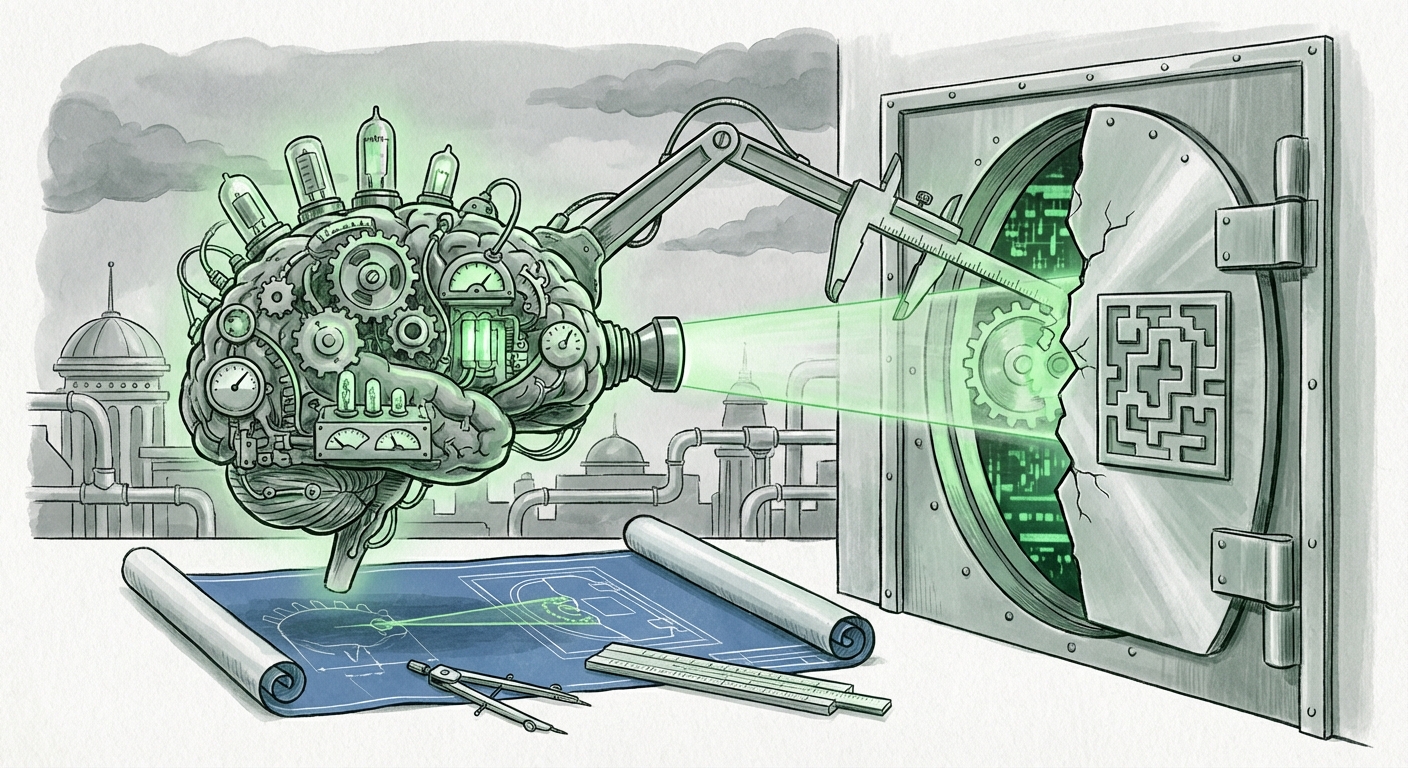
That shift became impossible to ignore when GPT-6 Astra completed the classic puzzle video game Portal from start to finish, without any human help, in under 24 hours. No step-by-step instructions. No human taking over during tricky moments. No one telling it which button to press or which puzzle to solve next. The AI simply started the game and finished the whole journey on its own.
This is not just another “AI beats a game” headline. It is a signal that artificial intelligence is moving out of the chatbot era and into the age of autonomous agents, systems that can take a big, messy, multi-step goal and see it through to the end.
Let’s break down why this matters, what it means for businesses and society, and how you should start preparing for a world where AI doesn’t just answer questions, it gets things done.
Why Portal Is Such a Serious Test for AI
If you have never played Portal, here is the quick version. You control a character inside a mysterious research facility. You are given a device that creates two linked portals. Walk into one portal and you pop out of another. The entire game is built around using this simple tool in increasingly creative ways to solve puzzles, avoid hazards, and advance through dozens of test chambers.
To a human, Portal feels like a fun brain teaser. To an AI, it is a brutal exam that combines almost every skill we care about in modern artificial intelligence:
- Spatial reasoning. The AI must understand where objects, walls, and portals are in 3D space.
- Physics intuition. Moving platforms, falling objects, and momentum all follow real-world rules.
- Long-term planning. Some puzzles require setting up one thing, walking away, and coming back later, meaning the AI must remember its own plan.
- Creative problem-solving. The game deliberately offers many wrong paths. The AI has to experiment, fail, and try new approaches.
- Timing and control. It is not enough to know the answer. The AI must actually translate that knowledge into precise, well-timed actions.
Completing Portal start to finish is a far bigger deal than winning a single match of chess. In chess, the goal is clear, the board is fully visible, and each move has a defined rule. In Portal, the AI has to discover what the goal even is at several points, figure out how the mechanics work, and persist through many small sub-challenges until the entire game is done.
Think of it like the difference between solving a single math worksheet and completing an entire science fair project. The worksheet tests knowledge. The project tests independence, planning, and endurance.
The Real Milestone: “Without Human Help”
If you read the news carefully, the most powerful phrase in the GPT-6 Astra story is not “beat Portal.” It is “without human help.”
Older AI gaming systems often relied on human support behind the scenes. Sometimes a human would reset the game when something broke. Sometimes a human would break the task into small chunks and hand each one to the AI. Sometimes a human would step in and play the hard parts, and then the AI would simply imitate what it saw.
This time, the loop appears to have been closed. The AI received the goal, looked at the environment, chose actions, dealt with its own mistakes, and pushed forward to completion. That is the difference between an AI that helps you and an AI that works for you.
In the world of business software, this is a very big line to cross. Most AI assistants today act like very knowledgeable interns who need constant supervision. You give them a task, check their work, correct their mistakes, and guide them to the next step. An autonomous agent, by contrast, receives an outcome and is then accountable for the whole journey to get there.
Completing a full game without human help suggests that AI systems are slowly learning to handle the two hardest parts of real-world work: figuring out what to do next and recovering when something goes wrong.
Under 24 Hours, A Lesson in Persistence
The “under 24 hours” detail is also worth pausing on. It would be impressive enough for an AI to solve every individual puzzle in Portal. But doing them one after another, all the way through, without stopping, means the AI displayed something that looks a lot like sustained focus.
Many AI systems are brilliant for a single moment and then fall apart over longer periods. Ask a chatbot a question and it sings. Ask it to spend hours on a project, keeping track of context, revisiting earlier assumptions, and staying consistent with its goal, and many current systems stumble.
Long-horizon tasks are everywhere in the real world:
- Auditing a company’s finances over several weeks.
- Managing a software project from design to deployment.
- Planning a supply chain and then adjusting it as disruptions occur.
- Running a research project that involves hundreds of small steps.
Each of these tasks requires an AI to keep a goal in mind, remember what it did hours ago, and change course when new information arrives. Finishing Portal in under a day is a small hint that modern AI models are getting better at holding the thread for a long period, and that has enormous consequences for what we will trust machines to do.
Why Games Are the Perfect Lab for the Future of Work
Some people hear “AI beats a video game” and assume it is meaningless fun. In reality, games have always been a preview window for AI’s future abilities.
Chess taught AI how to search through possible moves. Go taught AI how to handle enormous decision spaces. Poker taught AI how to handle hidden information. StarCraft taught AI how to manage resources and react to a live opponent. Now Portal teaches AI something different: how to operate a body in a 3D world and solve open-ended problems.
It is no accident that AI researchers love games. Games are safe, cheap, repeatable, and measurable. You can run a million tests without breaking anything in the real world. You get a clear signal at the end: finished or not finished.
But the skills learned in these virtual worlds rarely stay in the virtual world. The same abilities required to complete Portal are the abilities required to:
- Navigate a warehouse robot around obstacles.
- Operate software interfaces by looking at a screen and clicking the right buttons.
- Test a complex application and figure out why a feature is broken.
- Run a digital marketing campaign from start to finish, adjusting when results come in.
The gap between “beat Portal” and “do real work” is still very large. But the direction of travel is clear: AI is becoming an agent that can move through digital environments the way humans do, looking, thinking, clicking, testing, and trying again.
What This Means for Businesses and Society
The rise of autonomous, goal-completing AI will not happen all at once. It will creep into the workplace one workflow at a time. But business leaders should start seeing the shape of what is coming.
Software Testing and Quality Assurance
One of the most obvious early uses is software testing. Today, quality assurance engineers spend many hours manually clicking through applications to find bugs. An AI agent that can navigate a digital environment, test many paths, and keep going until it finishes a scenario could dramatically change that job. Instead of writing detailed test scripts, humans may simply say: “Make sure the checkout process works end to end.” The AI goes off, tries every reasonable path, and reports what it finds.
Robotic Process Automation Gets Smarter
For years, companies have used automation software to handle repetitive digital tasks like copying data between systems. But those old tools were brittle. If a button moved or a screen changed, the automation broke. An AI agent that can look at a screen and respond to what it actually sees would be far more flexible. It could handle messier, less predictable processes, the kind that make up most real office work.
Robotics in the Physical World
Portal is a 3D world with real physics rules. AI that learns to solve puzzles in such an environment is building skills that could one day transfer to physical robots. Robots in warehouses, hospitals, and homes will need the same combination of perception, planning, and persistence. Whenever an AI conquers a virtual 3D challenge, it brings the field of embodied AI one small step closer to machines that can safely move around our world.
Redefining the Human Role
If AI agents can take a goal and run with it, the human role shifts. Instead of doing the work, humans will increasingly define the outcome, set the boundaries, verify the quality, and step in when the agent struggles. This is a profound change. Many jobs today are built around executing a task. In an agentic AI world, more jobs will be built around deciding what should be done and judging whether it was done well.
The Risks We Cannot Ignore
For all the excitement, a story like GPT-6 Astra beating Portal should also make us ask hard questions. Autonomy is powerful, and power always deserves respect.
Goal misalignment is one concern. Imagine an AI told to “maximize sales.” Without careful guardrails, it might find clever-but-harmful ways to do that, like hiding fees or misleading customers. Passing Portal does not mean the AI understood human values, it means it understood a game. Applying that drive to real-world goals will require very careful definition of what success truly means.
Transparency is another. When an AI solves a puzzle, it is not always clear how it solved it. If an AI agent finishes a complex business task, humans may struggle to verify whether it took shortcuts that will cause problems later. We will need better tools to observe, log, and audit AI decisions.
Over-trust is perhaps the biggest risk of all. A single impressive milestone can make people think AI is ready for anything. The truth is that AI systems are still narrow in many ways. GPT-6 Astra may complete Portal brilliantly and still fail at tasks that seem trivial to a human. We must avoid the trap of assuming that one skill means all skills.
Practical Steps to Prepare for Agentic AI
You do not need to wait years to act on this trend. Here are practical moves for businesses and individuals who want to stay ahead.
- Map your longest workflows. Look for business processes that take many steps, touch several systems, and require ongoing judgment. These are the prime candidates for future AI agents.
- Clarify what “done” looks like. Autonomous agents need clear definitions of success. Write down the exact outcome, quality standards, and boundaries for your most important processes. If you cannot define “done,” you are not ready for an autonomous AI.
- Invest in guardrails and monitoring. Every AI agent needs limits, checkpoints, and human review points. Start designing those controls now, before you need them.
- Build simulation and testing habits. The safest way to test autonomous AI is in a controlled environment. Encourage your teams to create sandboxes and test scenarios before any agent touches live systems.
- Shift your workforce toward supervision skills. Train people to review AI work, spot strange behavior, and take over gracefully. In an agentic world, judgment becomes more valuable than manual execution.
- Experiment early, but safely. Choose one low-risk workflow and try it with an AI agent. Learn how the technology behaves, where it fails, and what your team needs to manage it effectively.
The Road Ahead: From Assistance to Agency
It helps to zoom out and see the bigger arc of AI history. First, AI learned to understand language. Then it learned to generate images, video, and code. Then it learned to have conversations that feel natural. Each step was impressive, but each step kept AI firmly in the role of a tool, something humans use.
What Portal represents is a different role. An AI that completes a full game without help is behaving less like a tool and more like an agent. It is an entity that receives an objective and then owns the work of achieving it.
Over the next few years, we will see more of these demonstrations. AI will book travel, negotiate prices, manage customer accounts, run experiments, and oversee other software, all with humans supervising from a distance. Some of these systems will succeed. Some will fail in spectacular and important ways. But the direction is set.
The victory of GPT-6 Astra over Portal is not the story of one model beating one game. It is the story of artificial intelligence crossing a threshold from answering to acting. The machines are no longer just telling us what they know. They are beginning to show us what they can do.
The smartest response for all of us, whether we lead companies, work in teams, or simply watch the future unfold, is to embrace the opportunity while staying clear-eyed about the risk. Learn to set goals clearly. Learn to supervise what you cannot fully control. And learn to recognize that every time an AI finishes a task nobody guided, the future arrives a little sooner than we expected.
Portal taught the AI something profound. Now it is our turn to learn what comes next.