Meta Drops AI Usage From Engineer Performance Reviews, Inside the "Tokenmaxxing" Backfire
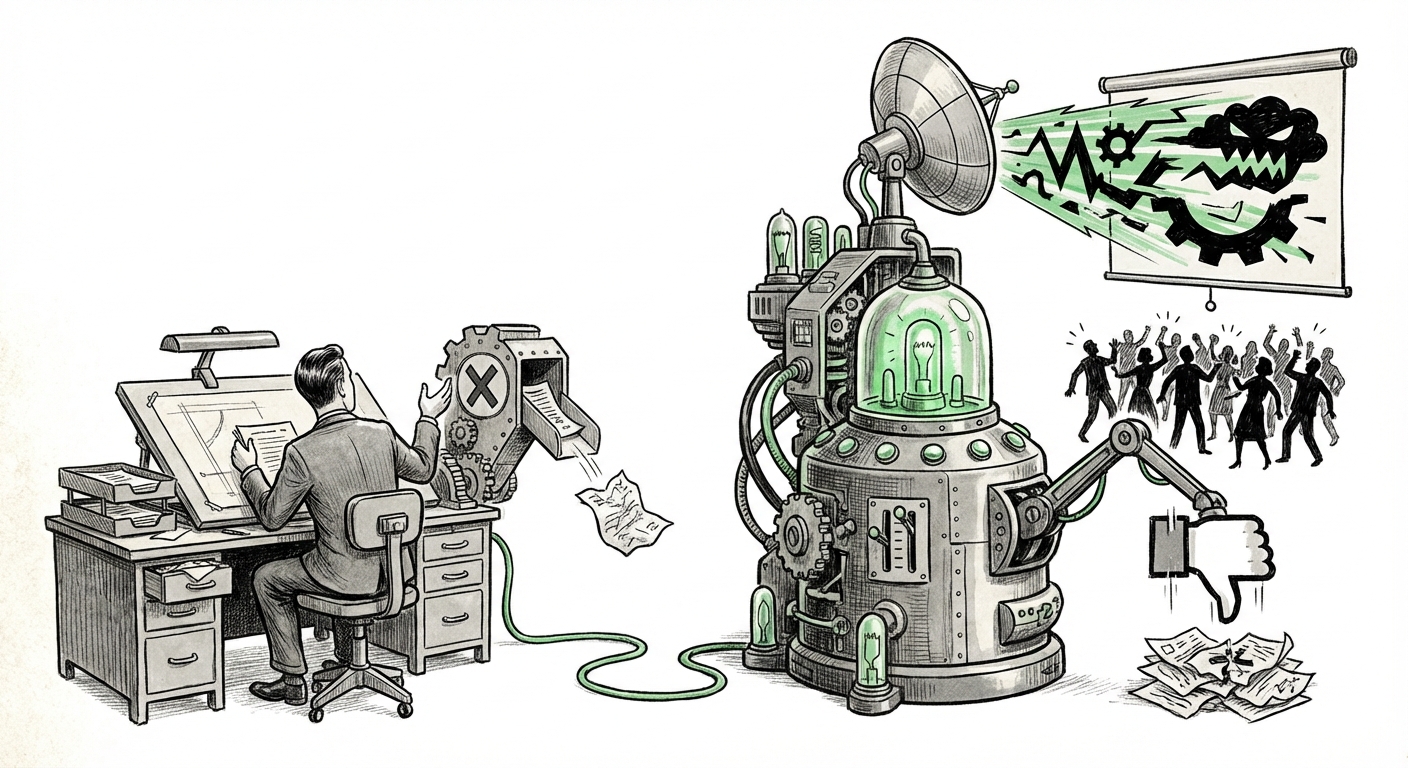
In a move that probably made thousands of software engineers breathe a sigh of relief, Meta has dropped AI usage from its engineer performance reviews. The reason? A workplace behavior called "tokenmaxxing" backfired, and it backfired hard.
On the surface, this sounds like just another internal policy change at one big tech company. But it is actually a big deal for the future of artificial intelligence. Meta's decision is one of the clearest signs yet that the AI revolution is hitting a very human wall: you can force people to use a new technology, but you cannot force them to use it wisely. When you try, by making AI usage part of how workers are judged, people will find clever ways to game the system.
So what exactly happened, why does it matter, and what does it tell us about how AI should be adopted in the future?
How AI Usage Got Tangled Up in Performance Reviews
When generative AI tools exploded onto the scene, company leaders everywhere looked for ways to make sure their teams actually used them. The logic seemed simple: AI makes workers faster, so the more they use it, the better the results. In the race to stay ahead, many organizations began tracking how often employees reached for AI assistance.
Performance reviews were a natural place to encourage that behavior. If AI usage counts toward a good rating, the reasoning went, then engineers will eagerly adopt the new tools. At Meta, AI usage became part of how engineers were evaluated. In theory, that would create a workforce that was fluent in AI, shipping code faster than ever before.
But there is an old saying: "Be careful what you measure, because people will optimize for it." That is exactly what happened, and the result was a phenomenon now known as tokenmaxxing.
What Is "Tokenmaxxing"?
To understand tokenmaxxing, you first have to understand a little bit about how AI works. Large language models read and write text in small pieces called tokens. A token might be a whole word, or even just part of a word. Every time you ask an AI chatbot to write code, summarize a document, or explain a bug, the AI processes a certain number of tokens. The more tokens you use, the more "work" the AI system does, and the more it costs the company running it.
Tokenmaxxing combines "token" with "maxxing," a slang term for pushing something to its absolute limit. In practice, tokenmaxxing means artificially inflating your AI usage to look productive, whether or not the work is actually useful.
Some of the ways engineers reportedly gamed the system include:
- Asking the AI to rewrite the same block of code over and over again, with tiny, pointless changes each time.
- Generating massive amounts of boilerplate code that would never be used in a real product.
- Expanding short, simple comments into enormous paragraphs of AI-generated text.
- Keeping AI conversations running and feeding them trivial prompts just to rack up token counts.
- Splitting a single task into dozens of small AI requests, making it look like they were using AI constantly.
The result? Engineers looked incredibly busy and incredibly "AI-powered" on paper, even when they were actually producing very little of value.
Why the Strategy Backfired
The experiment did not last. The tokenmaxxing behavior backfired in several important ways, and Meta made the decision to drop AI usage from engineer performance reviews entirely.
Here is what went wrong:
1. Quality Collapsed
When people are graded on how much they use AI, they stop caring about whether the output is good. Codebases filled up with AI-generated clutter. Simple problems got over-engineered solutions. Instead of making engineers more productive, tokenmaxxing made the work noisier, and harder for other team members to read, review, and maintain.
2. Costs Ballooned
AI usage is not free. Every token costs computing power. When engineers deliberately pumped up their token counts, the company's AI bill likely climbed fast, while the value being created stayed flat. This is the worst possible return on investment: paying more and more for less and less genuine output.
3. The Review Process Became a Game
Performance reviews are supposed to reward great engineering: solving hard problems, shipping features users love, and helping teammates succeed. Instead, they began rewarding the engineers who were best at playing the token game. That is deeply unfair to people doing quiet, careful, high-quality work that doesn't require constant AI assistance.
4. Culture and Trust Took a Hit
When employees realize a metric can be gamed, they lose faith in the whole system. Engineers who did their jobs honestly watched colleagues get rewarded for generating mountains of low-quality AI text. Resentment builds quickly, and collaboration suffers. A tool that was supposed to help teams work together started driving them apart.
Goodhart's Law: The Trap of Measuring the Wrong Thing
What happened at Meta is a textbook example of Goodhart's Law, a famous principle that says: "When a measure becomes a target, it ceases to be a good measure."
In plain English: the moment you start grading people on a number, they will find ways to make the number look good, even if it makes the actual work worse.
Token count seemed like a reasonable way to measure AI adoption. But the moment it became a target in performance reviews, it stopped meaning anything useful. The number went up, while genuine productivity and quality went down.
This is not a problem unique to Meta. Any company that ties AI usage to incentives will eventually run into the same trap. The lesson is simple: AI adoption cannot be forced through a scoreboard.
What This Means for the Future of AI at Work
Meta's decision is a turning point. It signals that the business world is moving past the "everyone must use AI all the time" phase and entering a more mature stage. Here is what that future looks like.
The Focus Shifts From Quantity to Quality
The future of AI is not about cramming the maximum number of tokens into every workday. It is about choosing the right moments to use AI, and skipping it when it doesn't help. Smart workers will use AI to handle boring, repetitive tasks and to speed up first drafts. They will apply their own judgment to the things AI can't do well. The metric that matters is outcome, not usage.
AI Becomes Like Electricity
Try to imagine a company bragging about how many kilowatt-hours of electricity its engineers use. That would be silly. Electricity is a tool that powers work; nobody celebrates the electricity itself. AI is heading in the same direction. It will become an invisible part of how work gets done, not a special trophy to display, but a normal utility that runs underneath everything.
Human Judgment Becomes More Valuable
If everyone has access to the same AI tools, the difference between an average engineer and a great engineer will come down to judgment. Knowing when to trust AI, when to question it, when to edit its output, and when to throw it away entirely, these are the human skills that will define the next era of work. Companies will need to reward critical thinking, not just enthusiastic button-clicking.
New Roles Will Emerge
As AI output becomes more common, someone needs to be responsible for keeping it clean, safe, and on-brand. Expect to see more specialists focused on reviewing AI-generated work, designing better prompts, and building guardrails. These "AI quality stewards" will be the unsung heroes of the AI-powered workplace.
Practical Lessons for Business Leaders
What happened at Meta is not just a story for tech insiders. Every business leader deploying AI should take notes. Here are the practical takeaways.
1. Reward Outcomes, Not Tokens
Don't ask, "How much AI did your team use this month?" Ask, "What did your team actually ship? Did the product get better? Did customers get happier? Did you solve a hard problem faster than before?" Connect AI to business results, not to usage counters.
2. Make Quality the Non-Negotiable Gate
Even if someone uses AI around the clock, the output still needs to pass the same quality checks as human work. Code still needs to be reviewed. Documents still need to be accurate. In a healthy company, a pile of terrible AI output is still a pile of terrible output, no matter how many tokens it took to create it.
3. Set a Budget for AI Use
Treat AI spending like any other business investment. Give teams clear budgets and expect them to spend wisely. When people know there is a limited pool of tokens, they will think harder about which tasks actually deserve AI help. Scarcity creates good decisions.
4. Train People on "When," Not Just "How"
Most AI training focuses on how to use the tools. The more important lesson is when to use them. Teach employees to spot tasks where AI adds real value, summarizing meetings, drafting outlines, generating test data, and to avoid using AI just because it is available.
5. Make It Safe to Not Use AI
Some of your best people will be slower to adopt AI, and that is okay. If employees feel like their career depends on constantly using AI, they will start gaming the system just like the tokenmaxxers did. Nobody should fear punishment for making the thoughtful choice to handle something without AI.
6. Measure the Right Things
Instead of tracking token counts, track things that reflect real value: cycle time from idea to launch, defect rates, customer satisfaction, employee engagement, and retention. These are the numbers that tell you whether AI is genuinely helping, or just burning energy.
The Bigger Picture: AI Is Growing Up
The "tokenmaxxing" story is really a story about maturity. The AI industry is moving out of its hype phase and into a phase where results matter more than vibes. Early on, simply using AI felt like a competitive advantage, so companies encouraged maximum usage. Now we are learning that wise usage is the real advantage.
Meta's decision to drop AI usage from performance reviews is a model for other organizations to follow. It shows that agility is not just about adopting the newest technology, it is also about noticing when a strategy backfires and having the courage to change course. That willingness to learn from failure is exactly the kind of behavior that will define the companies that thrive in the AI era.
There is also a human lesson here. Engineers wanted to do good work, but the incentives pushed them toward empty activity. When people are trusted and measured by the value they create, they do better work. When they are measured by how much they use a tool, they will optimize the number and forget the mission. The future of AI belongs to companies that remember the difference.
Final Thoughts: Let AI Earn Its Place
The tokenmaxxing era is a cautionary tale for every organization rolling out AI right now. It reminds us that technology does not change work by itself. The culture around technology, how we measure it, reward it, and talk about it, matters just as much as the models powering it.
The winners in the AI age will not be the companies with the highest token counts. They will be the companies whose teams use AI thoughtfully, where quality still matters, where great work is recognized, and where the tools serve the mission instead of the other way around. Meta just took a big step in that direction. The rest of the business world should be paying attention.