How Much Guardrail Does Your AI Agent Need? What Every Leader Must Be Able to Defend
Artificial intelligence has crossed a threshold. For years, AI tools were brilliant at answering questions. They wrote emails, summarized documents, and suggested next steps. But they always waited for a human to press the button. That era is ending. A new generation of AI agents does more than suggest. It plans, decides, and acts on its own. It can book a meeting, approve a refund, write and deploy code, or negotiate with a vendor until a human stops it.
This change is both exciting and unsettling. The technology promises enormous gains in speed and productivity. Yet it also introduces a question every business leader must now face: how much guardrail does your AI agent need? The honest answer is not a single number. It depends on what the agent can touch, what could go wrong, and whether you are ready to defend every decision it makes.
A Big Shift: From Assistants to Agents
To understand why guardrails suddenly matter so much, it helps to look at what has actually changed. Traditional AI tools were like exceptionally fast typists. They produced content, but the work ended at the edge of the screen. Agents, by contrast, are connected to the world of action. They plug into email systems, payment platforms, customer databases, supply chain tools, and software repositories. When an agent acts, the effects are real. An order ships. A discount is applied. A file is deleted. A customer receives a message that can never truly be unsent.
That is the core of the shift. We are moving from AI that helps us decide to AI that executes those decisions. And execution carries risk that words never carried. A chatbot might give a wrong answer and cause a frustrated hour. An agent with too much freedom might drain a bank account in an afternoon. The stakes are no longer about awkward sentences. They are about trust, money, legal exposure, and brand reputation. This is why the guardrail conversation has moved from the engineering team to the boardroom.
Why Guardrails Are Suddenly a Leadership Issue
There is a simple rule that explains this moment: the more powerful the tool, the more important the boundaries around it. When AI agents were confined to drafts and suggestions, a small mistake was easy to catch. A human was always in the loop, acting as the final filter. But as organizations compete to automate bigger workflows, the human can slide further away from each individual action. One supervisor might now oversee an agent handling thousands of small tasks. That supervisor cannot read every output, check every transaction, or spot every questionable decision.
Scale changes the nature of the problem. It is no longer enough to check a few examples before launch. Leaders must think about systems that behave well across thousands of cases, including ones nobody predicted. An agent that works perfectly for a typical customer might fail badly when it meets an angry customer, a confusing order, or a request written in a language it rarely sees. A human might notice the oddity in a second. An autonomous agent might barrel ahead with confidence. The result can be a costly error that happens so fast nobody has time to stop it.
Choosing the Right Level of Autonomy
Not every AI agent needs the same amount of oversight. The wise approach is to treat autonomy as a dial, not a switch. There is a useful way to think about the levels:
- Level One: Suggest. The agent proposes actions but cannot take them. A person reads, approves, and executes. This is the safest setting and the slowest.
- Level Two: Act with approval. The agent can prepare actions and even present them for quick approval. But every meaningful move still requires a human yes. This works well for medium-risk tasks.
- Level Three: Act within boundaries. The agent executes on its own inside clearly defined rules and spending limits. It may pause automatically when something looks unusual. This is where productivity gains become dramatic, and where careful design matters most.
- Level Four: Full autonomy. The agent handles complex, long-running missions with little or no human check-in. This is reserved for the most predictable, reversible, and low-harm environments.
The mistake many teams make is skipping ahead. They fall in love with the idea of a fully autonomous workforce and forget that autonomy must be earned. Start at the lower levels, measure how often the agent makes good choices, and only increase its freedom as the evidence supports it.
What Leaders Must Be Able to Defend
The title of this discussion points to a sharper question: what must leaders be able to defend? In the age of agents, accountability does not disappear. It migrates upward. When an AI agent makes a questionable decision, the public and the regulators will not blame the software. They will blame the people who deployed it at scale. When something goes wrong, leaders will need a strong answer to several uncomfortable questions.
First, they must be able to defend why the agent was deployed. What problem was it solving? What value did it create? A clear business case is the foundation of every other defence. If the answer is merely "everyone else is doing it," that is not a defensible position.
Second, they must defend the boundaries. What could the agent do, and what was it prevented from doing? A leader who cannot explain the agent's permissions cannot claim to have set them thoughtfully. This means defining which systems the agent may access, which budgets it may touch, and which actions require human sign-off.
Third, they must defend their knowledge of failure. What did the agent get wrong? How often? How did you find out, and how quickly did you respond? If an organization cannot describe its monitoring and incident response, it is effectively admitting it has been flying blind. That admission is very hard to defend.
Finally, they must defend compliance and fairness. Does the agent respect privacy laws? Does it treat customers equally? Can it explain its decisions? Regulations are tightening around artificial intelligence, and most new rules share a common theme: accountability must live somewhere. Leaders who cannot point to that somewhere will face the greatest exposure.
A Framework for Building the Right Guardrails
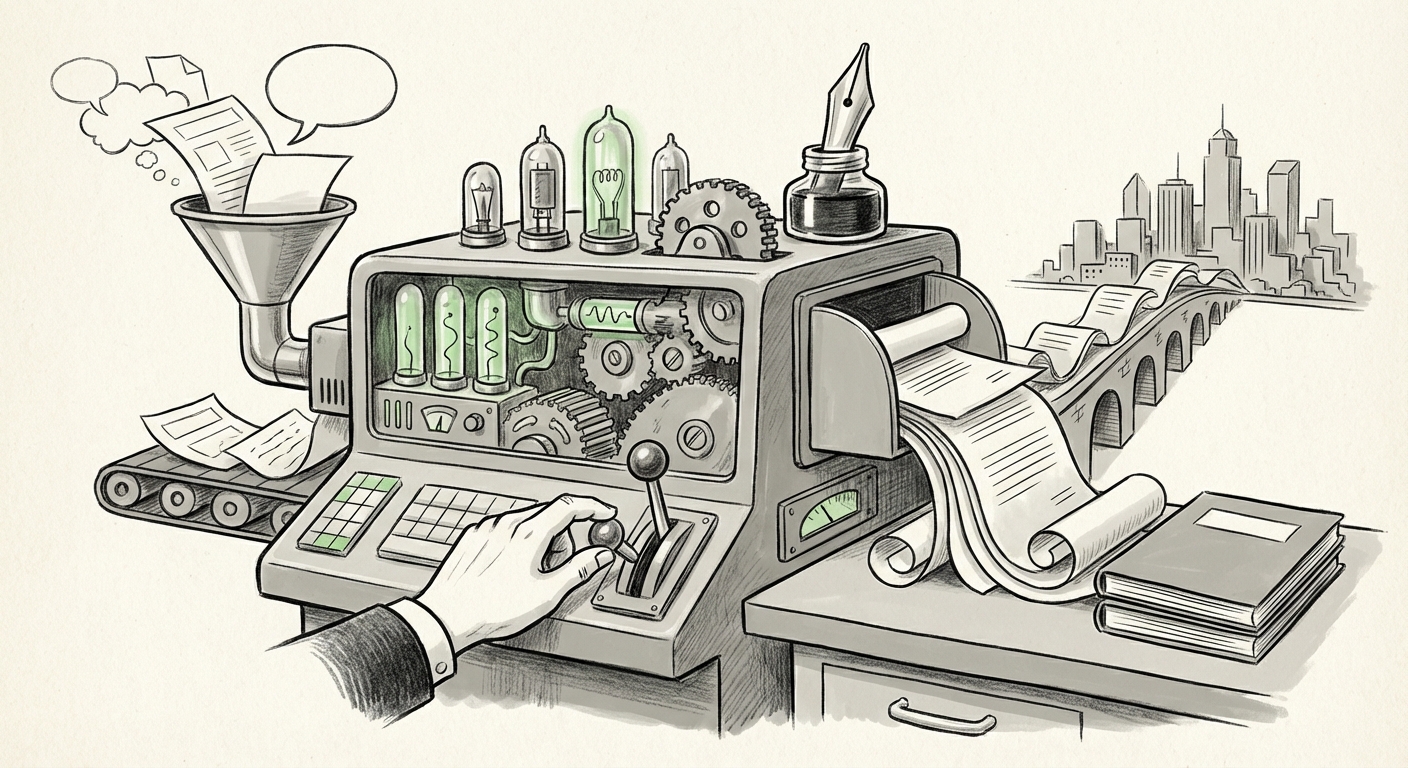
Deciding how much guardrail an agent needs becomes easier when you use a consistent framework. The best approach borrows from an old engineering idea: defend in depth. No single control should carry the whole burden. Instead, several independent layers work together.
Start with scope and permissions. Give each agent only the access it truly needs. A marketing agent does not need to touch payroll. A support agent should not be able to delete customer accounts. This principle, known as least privilege, is the oldest guardrail in the book, and it still matters more than any sophisticated new tool.
Add human checkpoints at the moments of highest risk. Perhaps the agent may send routine messages, but a human must approve any message that offers a discount above a set amount. Perhaps it may test code, but only a person can push it to production. These checkpoints keep humans where they add the most value: at the edge of large consequences.
Build in observability. If you cannot see what an agent is doing, you cannot guard it. Every action should leave a clear, searchable record. This means logging decisions, transactions, and even the reasoning trail. A strong audit log is worth every penny when a dispute arrives or a regulator calls.
Use automated rule checks that act like tripwires. An agent that tries to spend beyond its limit, access a blocked system, or use sensitive data outside policy should be stopped instantly. These guardrails can operate at machine speed, catching problems before any human would notice.
And prepare for incidents before they happen. Every organisation should know in advance what it will do when an agent causes harm. Who is responsible for answering? Who communicates with affected customers? Under what circumstances is the agent switched off entirely? Rehearsing these scenarios is uncomfortable, but it is far better than improvising during a crisis.
What This Means for the Future of AI
The way guardrails evolve will shape how AI is used in the years ahead. Companies that find the right balance will gain a serious competitive edge. They will automate deeply, respond to customers faster, and redirect their people toward truly creative work. Companies that get the balance wrong will face a different future. Some will be so afraid of risk that they stall, letting rivals pass them. Others will move recklessly, suffer public failures, and invite strict regulation that slows the entire industry.
The future points toward agents becoming true teammates inside organizations. They will not just run single tasks. They will manage ongoing missions. An agent might coordinate a product launch by assembling materials, scheduling reviewers, tracking approvals, and sending reminders. Multiple agents may even talk to each other, handing work back and forth like colleagues in different departments. This creates fascinating possibilities, and also a puzzle: when many agents work together, who is responsible for the combined result? The answer will always trace back through the design choices made by accountable humans.
Regulators will keep pushing on this point. The broader trend in AI policy is simple to summarize: those who design and deploy the system must be able to explain and defend it. The leaders of tomorrow will not be the ones with the most impressive demos. They will be the ones who can document exactly what their agents do, why they are allowed to do it, and how they are kept on a short and visible leash.
Practical Steps for Business Leaders and Society
For leaders who want to act now, several practical steps can create immediate momentum. This list may feel basic, but it is surprisingly rare among organisations rushing toward agents.
- Count your agents. Many teams run AI experiments invisibly inside departments. You cannot govern what you do not know exists. Create an inventory of every agent in use, before someone else creates it for you in a news headline.
- Assign one clear owner per agent. Not a committee. One named person who must answer for its behavior. Accountability works best when it is specific.
- Rate every task by risk. If an action is irreversible, expensive, sensitive, or visible to the public, require human approval. Save full autonomy for tasks that are safe, cheap, and easy to undo.
- Demand readable logs. Every agent should produce records that even a non-engineer can follow. If the logs feel like a mystery novel, the agent is not ready for the real world.
- Test like an adversary. Before scaling an agent, try to break it. Make it face strange requests, malicious prompts, and unusual edge cases. Time spent breaking the agent in private is time saved from a public disaster.
- Build review into the calendar. Agents and the business conditions around them change. Review each deployment regularly to confirm the guardrails still match the risk.
For society, the implications run deeper. AI agents will act as gatekeepers between businesses and people. If those agents are poorly guarded, the harms will fall disproportionately on the most vulnerable. A confusing bill, a denied claim, or an unhelpful dead end caused by an agent might be exactly where a human would have paused, asked, and helped. Wise societies will reward organisations that invest in human judgement exactly at those points of greatest human need.
Confidence Comes From Evidence, Not Hype
Ultimately, the question of how much guardrail an AI agent needs is not a technical riddle. It is a values question dressed in software. How much error is acceptable? How much speed is worth the risk? Which decisions are too important to delegate? Different organizations will answer differently, and that is fine. What is not acceptable is leaving these choices hidden, unnamed, and undefended.
The leaders who thrive in the agent era will be the ones who treat guardrails not as annoying restrictions, but as the very thing that makes boldness possible. A rock climber does not see a rope as an enemy. The rope is what turns a deadly fall into a learning experience. The same logic applies to AI agents. Strong guardrails give an organization the confidence to climb higher, move faster, and reach places that cautious competitors cannot. They turn autonomous software from a dangerous gamble into a dependable teammate.
The question is no longer whether your company will use AI agents. It is whether you can defend how you use them. Know your risks. Set your boundaries. Keep your logs. And always keep a human hand near the lever. That is the guardrail strategy that will survive any future the technology brings.