ChatGPT Images 2.5: What Faster, More Precise AI Images Mean for Business and Society
On September 9, 2026, the world of AI image creation changed again. That is the day ChatGPT Images 2.5 arrived, and the message from its makers is clear: the new version is faster and more precise than anything that came before it. For anyone who creates content, designs products, or simply enjoys making pictures with AI, this is exciting news.
But there is a catch hiding inside the announcement. The new experience is not the same for everyone. That single phrase raises big questions about who gets the best AI tools first, who gets left behind, and what that gap means for the future of work and creativity.
This article breaks down what ChatGPT Images 2.5 really changes, why the uneven rollout matters, and how businesses and everyday people should prepare for the next era of AI-generated visuals.
What "Faster" Really Means for Daily Use
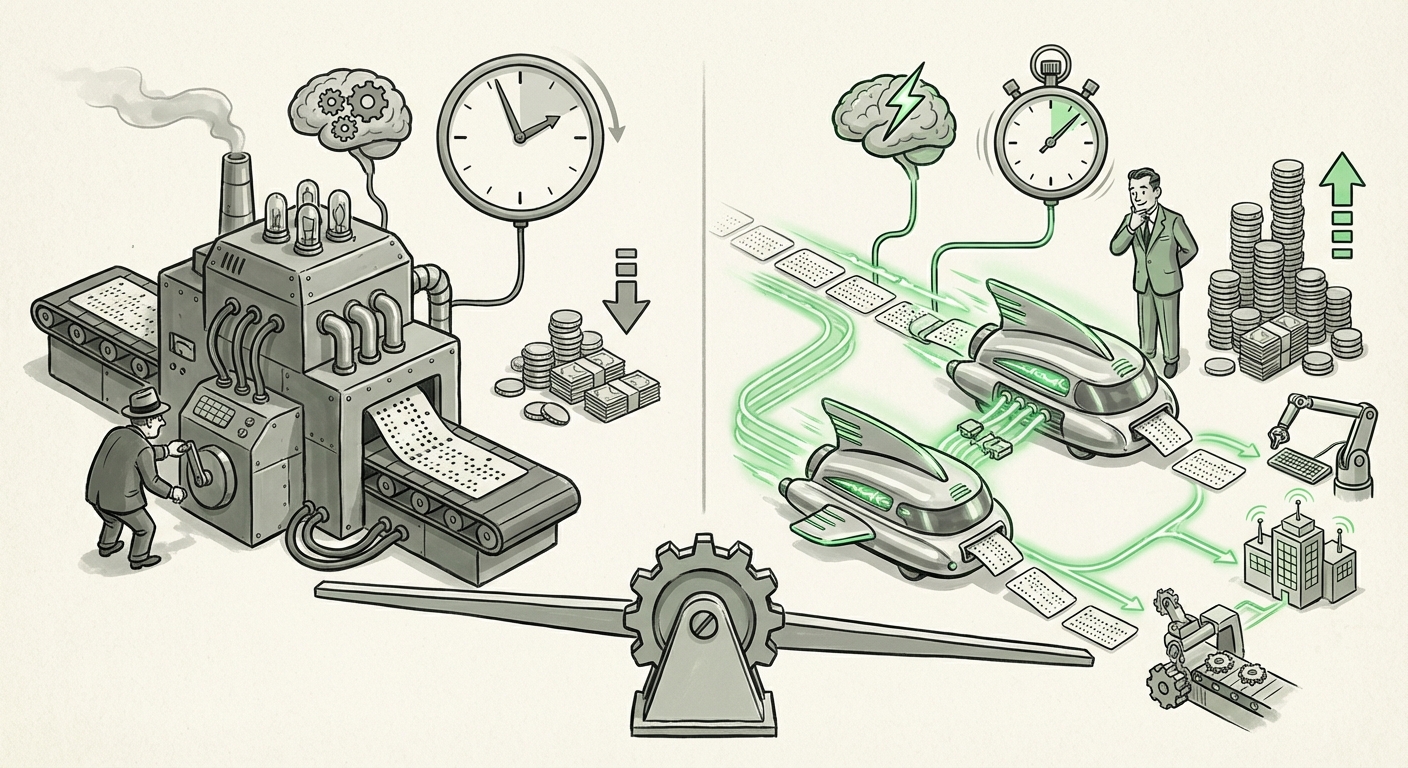
Speed may sound like a small improvement, but in the world of AI image generation, it changes everything. With earlier versions, users typed a description and then waited. Sometimes they waited a long time. Every failed attempt meant another long pause before trying again. Creating one perfect image could take many rounds of waiting.
ChatGPT Images 2.5 flips that experience. Faster generation means users spend less time staring at loading screens and more time experimenting. They can test many ideas in the time it used to take to test one. This is not just a comfort improvement. Speed is the difference between using AI for occasional projects and using it as a natural part of daily work.
Think about how a designer or marketer thinks. Ideas often come in bursts. When a tool is fast enough to keep up with the mind, creative flow stays unbroken. When the tool is slow, people stop exploring. They settle for their first result because trying again costs too much time. So the speed boost in ChatGPT Images 2.5 is really a boost to creativity itself. More attempts mean more options, and more options mean better final choices.
Speed also lowers the barrier for newcomers. People who have never made AI images are more willing to try a tool that responds quickly. Fast tools feel more like playing and less like waiting for a printer to finish a huge document. That matters because the number of people comfortable making images with AI is still growing, and 2.5 could be the version that wins over millions of first-time users.
The Power of "More Precise" Image Making
The second promise of ChatGPT Images 2.5 is precision. In simple terms, the image you ask for should match the image you picture in your head. This has been the hardest problem in AI image generation since the beginning.
Early AI tools were impressively artistic but frustratingly unpredictable. Ask for three apples and you might get four. Ask for a red car and the AI might paint a blue one. Ask for text on a storefront and the letters would come out scrambled. Hands, fingers, reflections, shadows, and fine details were constant sources of failure. Getting a truly accurate image often felt like playing a lottery.
Precision in version 2.5 means the model pays closer attention to what users describe. It means the relationship between the words typed and the picture produced is tighter and more reliable. The model is better at following instructions about placement, style, lighting, mood, color, and composition. It should also handle finer details like readable text and correct object counts.
Why does this matter so much? Because precision is what turns AI image tools from toys into professional instruments. A toy is fun to play with, but you cannot depend on it for important work. An instrument is trustworthy. When an AI model reliably produces exactly what was requested, businesses can hand real projects to it. The shift from "close enough" to "right the first time" is the moment when AI image generation becomes a serious part of the workplace.
Precision also unlocks better human-AI collaboration. When the model understands and obeys instructions well, users can guide it step by step: change the background, move the product to the left, make the lighting warmer. Each instruction works as expected. This is the beginning of treating AI like a skilled assistant rather than a wild creative partner.
The Big Catch: Not the Same for Everyone
Now for the most important phrase in the entire announcement: not the same for everyone. The new version of ChatGPT Images will not arrive as one identical experience for every user on the same day. This is a pattern we have seen again and again with new AI features.
What explains this uneven experience? There are several likely reasons. First, rolling out a major new image model to millions of people at one moment can overwhelm computer systems. Companies often release new AI capabilities in waves to keep their services stable. Some users get access on day one, while others wait days or even weeks.
Second, the quality of the experience may depend on the plan a user pays for. People using free versions often receive smaller upgrades later or face limits on how many images they can create. Paying customers typically get priority access, higher limits, and the best performance. This creates a two-tier world of AI creativity: one group with full power and another with a taste of it.
Third, geographic differences often play a role. Some countries receive new AI tools before others because of regulations, language support, or technical infrastructure. Businesses operating internationally may find that their teams in one country have image-generation abilities that teams elsewhere lack.
Finally, the devices and platforms people use can change their experience. A user interacting through a phone app might receive the update at a different time than someone on the web version. Business accounts may be configured differently from personal accounts. In all these cases, the same product name hides very different user experiences.
This uneven access is not just a small annoyance. It creates real competitive advantages and disadvantages. A marketing team that gets ChatGPT Images 2.5 early can produce campaigns faster and with more polish than a rival team waiting for access. A freelance designer with the full version can deliver higher quality work than one stuck on an older model. In a fast-moving economy, even a few weeks of faster, more precise tools can matter enormously.
Why This Moment Matters for Visual Content
To understand the impact of ChatGPT Images 2.5, look at how visual content already shapes our world. Product photos drive online shopping. Social media posts rely on eye-catching images. Presentations, reports, websites, and advertisements all depend on pictures to communicate fast and emotionally. Visuals are not a luxury; they are the main language of modern attention.
Until recently, creating high-quality visuals required special skills and expensive tools. Professional photography, graphic design, or illustration were out of reach for many small businesses and individuals. AI image generators already began to close that gap. Version 2.5 accelerates the change by making the tools faster and easier to direct.
The result is that the ability to produce professional-looking images is spreading to almost everyone. A local bakery can generate beautiful images for its menu and social channels. A teacher can create custom illustrations for lessons. A job seeker can build a striking portfolio. The cost of visual creation drops toward zero, while quality climbs.
What This Means for Businesses
For business leaders, ChatGPT Images 2.5 is more than a curiosity. It is a signal that visual production costs are about to fall sharply, and companies that adapt early will enjoy a genuine advantage.
Here are the areas where businesses should expect the biggest changes:
- Marketing and advertising: Creating campaign images, social media graphics, banner ads, and email visuals will become dramatically faster. Teams can test many creative directions before spending money on production.
- Product design: Designers can visualize new product ideas in minutes, explore variations of color and shape, and show realistic concepts to customers before building anything physical.
- E-commerce: Stores will generate customized product images, lifestyle photos, and seasonal promotions without expensive photoshoots. Smaller catalogs can look as polished as giant retailers.
- Training and communication: Companies can illustrate internal documents, training materials, and presentations with custom images that clearly explain ideas, instead of relying on generic stock photos.
- Rapid prototyping: Teams can present ideas to leaders and clients using convincing visuals early in the process, making decisions faster and with better information.
At the same time, business leaders must update their workflows. Creating a great image with AI still requires a human who can describe what they want clearly, review results critically, and choose the best option. The job of the creator does not disappear; it changes. The most valuable skill becomes knowing how to direct AI well rather than how to operate design software.
Companies should also think about new risks. If everyone can create convincing images quickly, then visual content loses some of its power to prove what actually happened. Businesses must build habits around verifying images, labeling AI-generated content clearly, and protecting their brands from misleading visuals made by others.
Weighing the Risks and Responsibilities
Every great advance in AI image generation brings challenges alongside its benefits. The risks with ChatGPT Images 2.5 are not new, but the speed and precision of the model can make them sharper.
One concern is misinformation. More realistic and controllable images make it easier to create convincing pictures of events that never happened. A fake image can spread online within seconds and damage reputations, move stock prices, or influence elections. Precision is a double-edged sword: the same accuracy that delights designers can also produce deceptive content that is harder to detect.
Another issue is ownership and fairness. AI models learn from vast collections of images, including work created by human artists. Questions continue over whether artists should be paid when AI produces work inspired by their styles. These legal and ethical battles are far from settled, and the arrival of more powerful tools only intensifies them.
There is also the question of human jobs. When image creation becomes faster and more precise, some roles that once required dedicated designers or photographers may shrink. The wise approach is not to ignore this change but to adapt. Creators who learn to combine AI tools with their own judgment and taste will remain valuable. In fact, human taste becomes more important, not less, when machines can generate unlimited options.
Finally, there is the problem of unequal access with which we started. If advanced AI tools remain unevenly distributed, then the future creative economy could divide into those with powerful AI assistance and those without. Society will need to think about how to give broad access to these capabilities, through schools, libraries, affordable plans, and public programs.
The Road Ahead: What ChatGPT Images 2.5 Tells Us About the Future of AI
Looking beyond today, ChatGPT Images 2.5 is an important signpost for where AI is heading. The move toward both speed and precision tells us that future AI systems will feel less like experimental toys and more like dependable tools. Expect every future model to follow the same path: faster, cheaper, and more obedient to human instructions.
The deeper trend is multimodality. Image generation does not stay alone for long. Success in creating precise pictures will merge with progress in language, sound, and video. The future AI assistant will not just write a script for a commercial; it will storyboard the scenes, generate the images, animate them into video, and add voice and music. Every improvement in still images is a building block for that bigger system.
We are also moving toward AI that understands the visual world, not only one that creates it. A model precise enough to follow detailed image instructions is also learning about how objects, spaces, and actions relate to each other. This understanding will power future robots, smart camera systems, and AI agents that can look at a screen, read a diagram, identify a problem, and take action. The image generator of today is the visual brain of tomorrow's machines.
For people, the future means that creating anything will be easier than ever, while judging what is real and valuable becomes harder. The scarce resource will not be production skill. It will be attention, trust, and taste. The winners will be those who ask the best questions, direct AI with clarity, and share their work honestly.
Actionable Steps to Take Right Now
Whichever version of ChatGPT Images 2.5 you receive and whenever you receive it, you can begin preparing today. Here is practical advice for both individuals and organizations:
- Learn to describe images in detail: Practice writing prompts that mention subject, style, lighting, colors, composition, and mood. The more clearly you direct the AI, the more you benefit from its precision.
- Check which features you have: Understand what your current plan includes. If the newest capabilities matter to your work, find out when you will get them and whether an upgrade makes sense. Do not assume everyone around you is having the same experience.
- Build a review habit: Always examine AI images for accuracy before publishing. Check text, details, and consistency with your brand. AI can still produce errors, especially with complex requests.
- Label AI-generated content: Whether required by law or not, honesty is the best policy. Clear labels build trust with customers and protect you from accusations of deception.
- Create team standards: If you run a business, write guidelines for how AI images should be used, verified, and stored. Include rules about sensitive content and brand safety.
- Watch for the next wave: Use the arrival of this version as a reminder that AI evolves quickly. Build flexible workflows that can adopt improved models without painful disruption.
- Develop human skills: Invest in creativity, critical thinking, and visual judgment. These are the skills AI cannot replace, and they become more valuable as the tools improve.
Conclusion: A Faster, More Precise, and More Uneven Future
ChatGPT Images 2.5 marks a clear turning point in the short but intense history of AI image generation. Faster generation unlocks creative flow. Precise control makes AI trustworthy enough for professional work. Together, these improvements will push AI-created images deeper into marketing, design, education, and everyday communication.
But the announcement also reminds us that technological progress is rarely shared evenly. The gap between first access and last access, between premium experience and basic experience, shapes who benefits most from each new breakthrough. Watching how that gap closes over the coming months will tell us a great deal about the values built into our AI future.
For now, the message is clear: AI image creation has grown up. It is fast enough to work alongside you, precise enough to take direction, and important enough that you should start using it wisely today. The future belongs to those who create with both machine power and human care.