OpenAI Is Using AI “Research Interns”, and Warning That AI Is Moving Too Fast
The future of AI just got easier to picture.
OpenAI recently made two statements that seem to pull in opposite directions. First, it reports that it now uses AI systems as “research interns”, software that takes on real research work, the way a human intern would. Second, it is warning about how fast AI is advancing, including the pace of its own efforts.
These are not contradictions. Read together, they give one of the clearest views yet of the future of AI research, the future of knowledge work, and a strange new problem: speed itself. The company is telling us that AI can already help build AI, and that this is happening faster than even the builders can comfortably manage.
What Are AI “Research Interns”?
To understand this news, it helps to think about what an intern actually does. A research intern does not run the whole lab. They receive a clear, limited task and dig in: reading and summarizing papers, preparing data, running experiments, checking numbers, and writing up results. A senior researcher provides direction, checks the work, and takes responsibility for the outcome.
An AI “research intern” fills that lower-rung role, but as software. Unlike a simple chatbot that answers questions, this kind of AI can be given a research task, use tools, produce output, and hand that output to a human for review. That makes it very different from the AI tools most people have seen so far. It is not just a source of answers; it is a worker with an assignment.
And here is the key point: OpenAI is not describing a distant idea. It is describing work that is already happening inside one of the world’s leading AI organizations. If AI agents are trusted with intern-level research at the very frontier of the field, they are being trusted with real responsibility in a real workplace.
The choice of the word “intern” also matters. Interns are allowed to make mistakes. They work under close supervision. They prove themselves before receiving more trust. If that is how OpenAI thinks about its AI tools, we should expect a gradual rise in responsibility, from intern-like tasks today to junior-researcher-like tasks tomorrow, and quite possibly further after that.
Why the Warning Matters as Much as the Milestone
The research interns are impressive. But the warning attached to them may be even more important. It is rare for a frontier AI lab to look at its own speed and publicly say that the pace is a concern. Most announcements from the AI industry are full of confidence: bigger models, better scores, newer abilities. A warning about pace is a different kind of message. It is a message about control.
What could that warning mean? It probably means several things at once. AI progress is compounding. Tools built last year help build better tools this year, and those tools help build even better tools next year. When a lab starts using AI research interns inside its own research process, it speeds up the exact work that creates the next generation of AI. The faster that cycle spins, the harder it becomes to test everything, verify everything, and think through second-order consequences before moving forward.
There is also a simpler reading. If a lab at the front of the field says, “we are moving very fast, perhaps faster than we can fully keep up with,” that is an invitation for the rest of us to take the pace seriously. The warning may be aimed at the industry, at policymakers, and at society as a whole. It is rare honesty from a field that usually talks in proud milestones. Treating it seriously is the responsible response.
The Self-Accelerating Loop at the Heart of AI Research
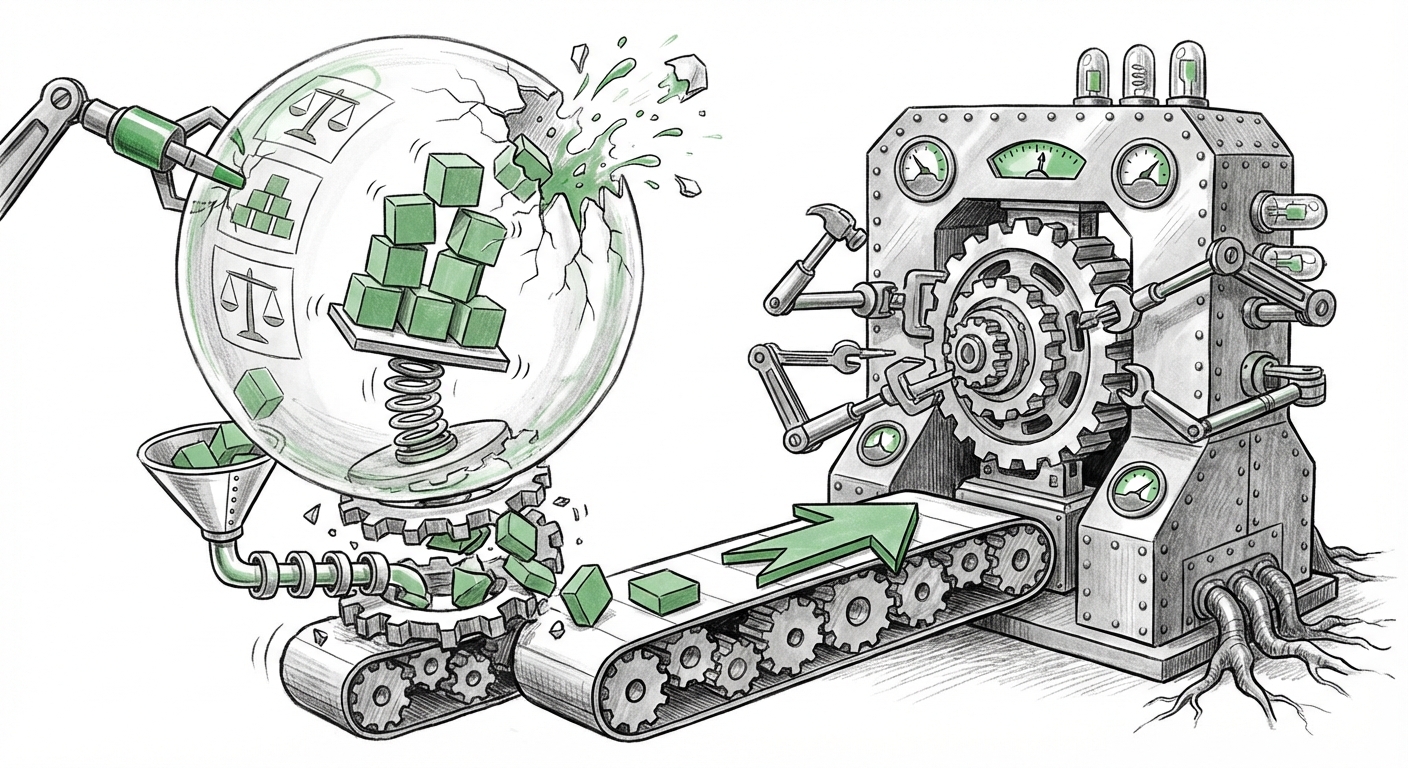
Here is the part that deserves the most attention. AI research interns speed up the lab. A faster lab produces better AI. Better AI produces better research interns. That is a loop, and a dangerously self-accelerating one.
In the past, every step of AI research, the idea, the experiment, the analysis, depended on human time and human attention. People can read only so many papers in a day. They can run only so many experiments in a week. When AI systems absorb intern-level work across a research organization, those human limits start to matter less. The result is not just more research. It is research moving along many parallel tracks at once, with humans supervising rather than doing every step themselves.
What does the future of AI look like under these conditions? Three shifts stand out.
First, the bottleneck moves. When machines handle the busy work, the limiting factor becomes human judgment: choosing which questions matter, deciding which results can be trusted, and making the calls that software cannot make. The scarce skill of the future is not grinding through tasks. It is framing hard problems and judging uncertain outcomes.
Second, verification becomes central. If AI produces research output in large volumes, checking that output becomes as valuable as producing it. Labs and companies will need methods for reviewing AI work, catching errors, and keeping clear records of who decided what and why. Trust becomes a systems problem, not just a personal one.
Third, the pace gap widens. An organization that uses AI on its own research will quickly outrun organizations that do not, not by a small margin, but by a growing one. The same is true for teams, industries, and even nations. Speed is becoming a competitive weapon, and that is exactly why the warning is important: fast is good, but faster than our ability to steer is dangerous.
The uncomfortable question is whether any warning will meaningfully slow things down. Recognizing a risk and stopping to address it are two different actions. Still, naming the problem is the first step toward managing it.
What This Means for Researchers and the Workforce
The most direct effect of AI research interns will be felt by the people who once filled those roles. Internships and other entry-level research jobs have always been the training ground of science. They are where young people learn how a lab operates, absorb its standards, and build the instincts they will need later as senior researchers. If AI takes over entry-level tasks, the question becomes: where will humans train?
That is the career-ladder problem, and it reaches far beyond AI research. In nearly every knowledge field, the first rungs of the ladder, gathering information, summarizing documents, running standard analyses, look like tasks an AI intern could soon handle. It is tempting to say that humans will simply move to higher-level work. But that is not automatic. A junior person who never practices daily research may never develop the judgment that senior roles require.
Organizations will need to be deliberate about this. They must keep humans involved in oversight and review of AI work, and create new ways for people to learn by doing, even when machines do most of the doing. Mentorship will not disappear; it will change shape. Instead of teaching someone how to run an experiment by hand, a mentor may teach someone how to direct an AI, check its results, and take responsibility for the final answer.
There is also an optimistic side. If AI systems can act as research interns, the same technology can eventually be aimed at almost any knowledge problem, new materials, medical treatments, energy solutions, policy analysis. Small teams and local organizations could gain a research capacity once reserved for giant labs. A capability that raises serious questions about jobs could also lower the cost of discovery and make expertise more available around the world.
For individuals, the practical advice is straightforward: learn to direct and evaluate AI instead of trying to out-work it. The humans who thrive will treat the AI as a teammate to manage, not as a rival to race.
What Businesses Should Do Right Now
The arrival of AI research interns is not only a story for AI labs. It is a preview of how knowledge work will change inside nearly every company that does research, analysis, or product development. Companies that treat this as a strategic issue will gain an advantage. Companies that treat it as a curiosity will struggle to catch up.
A few actions deserve attention today.
- Start small, with real oversight. Pick a well-bounded task, a market review, a competitor summary, a data analysis, and assign it to an AI agent with a named human owner. Define what good looks like before you begin.
- Give every AI output a responsible human. Work produced by AI needs verification, context, and ownership. If no human will answer for it, the AI should not be producing anything important.
- Write a pace plan, not just a policy. The warning from OpenAI is a reminder that adoption speed is a business decision. Decide how fast your company will move, where you will pause, and which decisions always require human sign-off.
- Redesign early-career paths. If machines take entry-level tasks, redesign roles so that juniors learn judgment by overseeing AI, checking its work, catching its mistakes, and reporting upward. That is the new version of learning by doing.
- Plan for ripple effects. AI interns produce more output, which increases verification workloads and changes team structures. Budget for those second-order costs now, before they surprise you.
- Expect sudden capability jumps. Self-accelerating research means this year’s assumptions about AI limits may be outdated within months. Keep plans flexible.
Notice that this list is not about replacing people. It is about moving them toward judgment, oversight, and direction while machines absorb the volume. The organizations that do best will treat supervision as a serious discipline, not an afterthought.
Society, Safety, and the Question of Pace
The dual message, interns on one side, a warning on the other, points to a problem that reaches beyond any single company. When the builders of a technology say their own pace is difficult to manage, it is a clear sign that our shared rules and institutions are even further behind. Regulation, education, and public understanding normally move at the speed of culture: slowly.
That does not mean the correct answer is panic. The correct answer is preparation. Society needs more people who can assess AI claims, more institutions that can audit AI systems, and more public conversation about what speed is acceptable, including the possibility of slowing down when risks are unclear. And it needs honest builders. A lab that publishes risks alongside achievements sets a standard every other organization could follow.
The deeper question is whether the technology world can learn to match speed with discipline. The tools for moving fast already exist. The tools for steering, shared norms, verification practices, independent oversight, and a workforce trained in judgment, are still being invented. The race between those two sets of tools will define the next chapter of the AI era.
Conclusion: Listen to Both Messages
News about AI research interns would be significant on its own. It tells us that AI is stepping out of the chat window and into real research work, supervised, productive, and already in place inside a leading AI organization. Adding the warning about pace makes the story harder to dismiss. Even the architects of this technology are asking us to pay attention to speed as a risk in itself.
For the future of AI, the takeaway is simple: the field has entered a loop. AI helps build AI, and each turn of the loop shortens the time to the next turn. For businesses, that means adopting AI with structured human oversight while treating speed as a governance question. For individuals, it means building skills machines do not yet have, judgment, direction, and responsibility. For society, it means creating the ability to steer now, before the pace makes our choices for us.
The most mature technology leaders do two things at once: they push the frontier, and they point out the cliffs. OpenAI just did both. The wise response is to hear both messages clearly and act on them together.