Claude Fable 5.1 Makes Prompts Less "Load-Bearing", And That Changes Everything About How We'll Use AI
For the past few years, talking to an AI has felt a lot like reciting a magic spell. You had to pick the right words, put them in the right order, add the right little phrases, and hope nothing small got lost along the way. Change one sentence and the whole answer could fall apart.
That is starting to change. With Claude Fable 5.1, the language going into the model is carrying less weight than it did with the version before it. In plain terms: the words matter less, because the model is doing more of the work on its own.
This sounds like a small technical detail. It is not. It may be one of the clearest signs yet of where AI is heading, and it reshapes who can use these tools, how businesses build with them, and what skills actually matter going forward.
What "Load-Bearing Language" Actually Means
The phrase comes from construction. A load-bearing wall is the one holding the building up. Take it out and the house falls down.
AI has had the same thing. Certain words in a prompt were load-bearing. They held up the result. An instruction like "you are an expert editor" or "think through this step by step" or "answer only in a table" wasn't decoration, it was structure. Remove it and the output changed shape entirely.
That is what made prompting feel fragile. Users learned dozens of tricks, not because the tricks were elegant, but because the model needed the help. The prompt was propping up the answer.
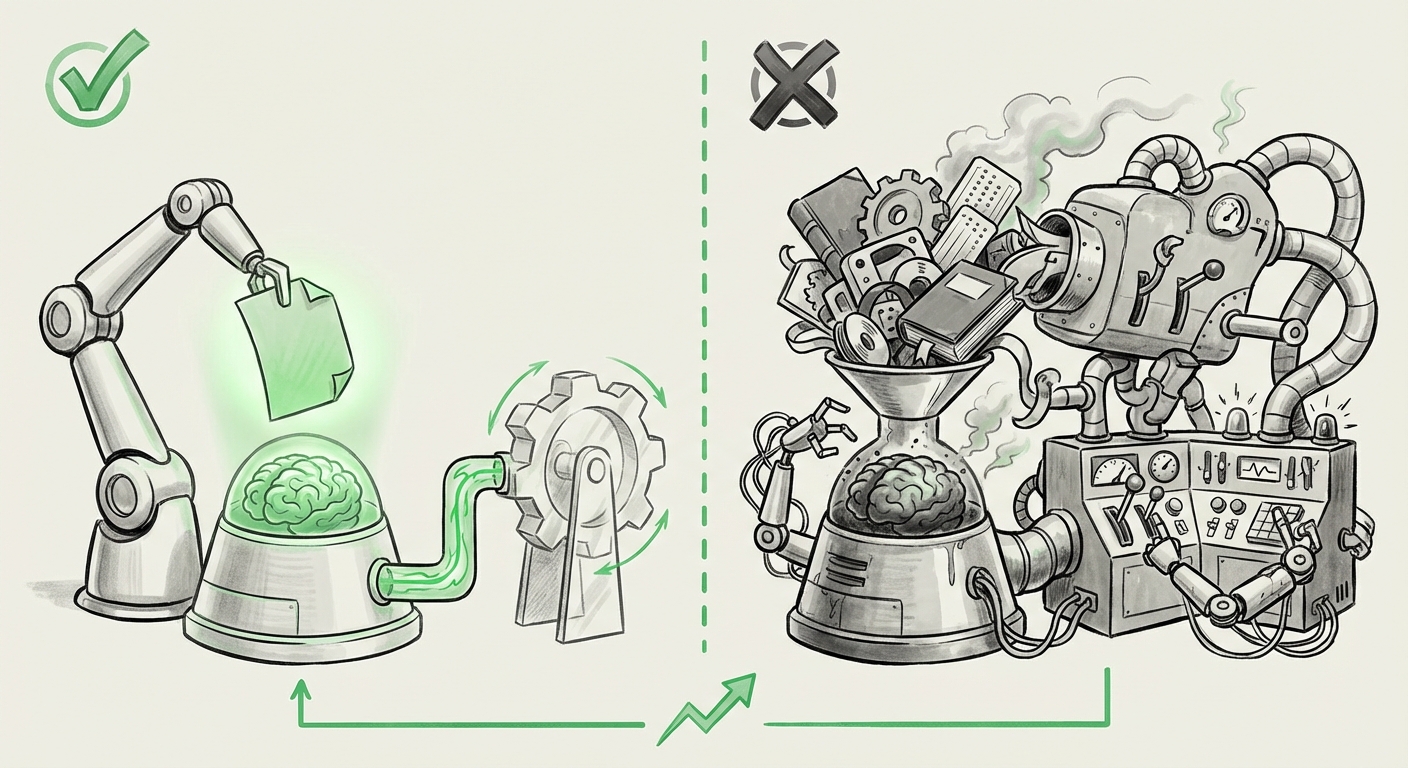
With Claude Fable 5.1, that support beam is thinner. The model reads intent more than instruction. You can say the same thing in different ways, in sloppier words, in a shorter sentence, and still land in roughly the same place. The language is less load-bearing because the model is carrying more of the load.
Why a Lighter Prompt Is a Much Bigger Deal Than It Sounds
Think about driving a car with a manual transmission versus an automatic. Both get you there. But the manual demands that you learn something extra that has nothing to do with your destination. The automatic lets you focus on the road.
Prompt engineering has been that manual transmission. It was a skill, and a genuinely valuable one, but a lot of it existed to compensate for a machine that was too brittle to understand a normal person.
When the language stops being load-bearing, three things shift at once:
- Who can use it. People who never learned the tricks can now get good results with ordinary sentences.
- How fast you can move. Less time tuning words means more time on the actual problem.
- Where it can be embedded. Brittle prompts break in production. Flexible ones survive real-world messiness.
That third point is the one that will quietly reshape entire industries. A prompt that only works when typed perfectly is a demo. A prompt that works when a tired employee types it badly at the end of a shift is a product.
From Prompt Engineering to Intent Engineering
If the exact wording matters less, then the job changes shape. It doesn't disappear, it moves up a level.
The old job was about finding the right words. The new job is about defining the right goal. That means spelling out context, constraints, what "good" looks like, and what should never happen. Fewer incantations, more briefs.
This is actually a more mature skill, and a more transferable one. Writing a clear brief for a human colleague has always been valuable. Writing a clear brief for a model is now becoming the same skill, rather than a separate, slightly strange one.
For teams, that is good news. You don't need a prompt wizard. You need people who can think clearly about outcomes, which, ideally, you already have.
What This Means for Businesses
The practical effects show up fast.
Training gets cheaper. Companies have spent real money teaching staff the "right" way to phrase things. When phrasing matters less, that investment shrinks and rollout to non-technical teams gets easier.
Production systems get sturdier. Many AI pipelines are chains of prompts, one feeding the next. If each link is slightly brittle, the whole chain is shaky. Make each link more forgiving and the chain holds together. That matters enormously for multi-step work like research, drafting, and support workflows.
The procurement question changes. Buyers used to ask, "How well does it follow a perfect prompt?" The better question now is, "How well does it handle an imperfect one?" That is the test that predicts real-world success.
Some competitive moats shrink. Plenty of companies believed their secret prompt library was an edge. If wording is less load-bearing, that edge fades. The advantage moves to data, workflow design, integration, and trust, things that are harder to copy anyway.
Retired projects get a second chance. A lot of AI pilots were shelved because the results were too inconsistent for the messiness of daily operations. Lighter prompts are exactly the fix for inconsistency that comes from small wording mistakes. It is worth reopening those files.
What It Means for Builders and Technical Teams
For developers, the changes are concrete.
- Shorter system prompts. Less space spent on instructions and examples, which can mean faster responses and lower cost per call.
- New kinds of testing. If you were measuring whether the model obeyed exact phrasing, that test is outdated. You now want to measure whether it reaches the right outcome from many different wordings.
- More reliable agents. Agent systems chain many decisions together. Each step that tolerates loose language removes a place where the whole run can fail.
- Guardrails move out of the prompt. If wording was doing safety work, that work needs a new home, system-level rules, review steps, and evaluations.
One caution: less load-bearing does not mean unlimited. Structure still helps. What's changing is how much precision you need before the model gets it right, not whether precision ever helps.
The Risks Worth Watching
There is a real trade-off hiding here, and it deserves attention.
When the model fills gaps in your language, it is guessing. Most of the time that guess is good, that's the whole point. But sometimes the guess is confidently wrong, and because your prompt was vague, nobody catches it.
Ambiguity gets resolved silently. That is convenient right up until it is expensive.
There is also a safety angle. Some teams relied on careful phrasing as a soft guardrail, a way of nudging the model away from bad outputs. That was never a real safety layer, and treating it like one was risky. As wording matters less, the need for proper controls grows, not shrinks.
Finally, there's the human side. If careful phrasing stops being rewarded, some people will get sloppier in how they think. Others will use the freed-up attention to be more precise about goals instead. Which group you end up in is a choice, not a side effect.
Where This Is Heading
The direction is easy to see. Models keep absorbing more of the burden that users used to carry. Interfaces get simpler as the machine gets smarter.
If that continues, the "prompt" as a discrete thing may fade into the background. You won't sit down to write a prompt. You'll open a tool, describe what you need the way you'd describe it to a colleague, and get on with the work. The prompt becomes invisible plumbing, not a skill you list on a résumé.
That shift also unlocks the next stage of AI use. Single-question chat is easy to get right. Long, multi-step work, planning, checking, revising, handing off, falls apart the moment the model is too literal. A model that reads intent rather than exact words is the foundation for AI that can actually carry a project forward.
The hard problems also move. When words stop being the barrier, the barrier becomes judgment: knowing what good looks like, knowing when to trust the output, and knowing where a human still needs to sign off.
What You Should Do Now
A few practical moves, whether you're running a team or building a product:
- Stress-test your prompts. Rewrite them badly on purpose. If they still work, you've got flexibility. If they fall apart, you've found a hidden weakness before your users did.
- Rewrite prompts as briefs. Lead with the goal, then context, constraints, examples, and what success looks like.
- Change what you measure. Test outcomes across many wordings, not obedience to one exact script.
- Rebuild guardrails properly. Don't rely on phrasing to keep you safe. Use reviews and checks where mistakes are costly.
- Reopen shelved pilots. The reason many failed may now be gone.
- Reward clear thinking. Tell your teams the skill you value is defining the problem well, not memorizing magic words.
None of this is glamorous. But it's the difference between watching a trend and being ready for it.
The Bottom Line
Claude Fable 5.1's lighter, less load-bearing language is a quiet milestone. It signals that AI is graduating from a tool you have to coax to a tool you can simply ask.
The winners in this next phase won't be the people with the biggest collection of prompt tricks. They'll be the people who can say clearly what they want, spot when the answer is wrong, and build systems that hold up when the humans using them are imperfect, which, in every real workplace, they always are.