Robotics Is Waiting for Its ChatGPT Moment, and It's Closer Than You Think
Something strange has happened in technology over the last few years. Software learned to talk, write, code, and reason. Machines that live inside a screen got dramatically smarter almost overnight. But the machines that walk around in the real world, the arms in factories, the carts in warehouses, the robots that were supposed to fold our laundry by now, mostly didn't. That gap is the defining story of this moment in AI, and it is the exact gap that the robotics industry is now racing to close.
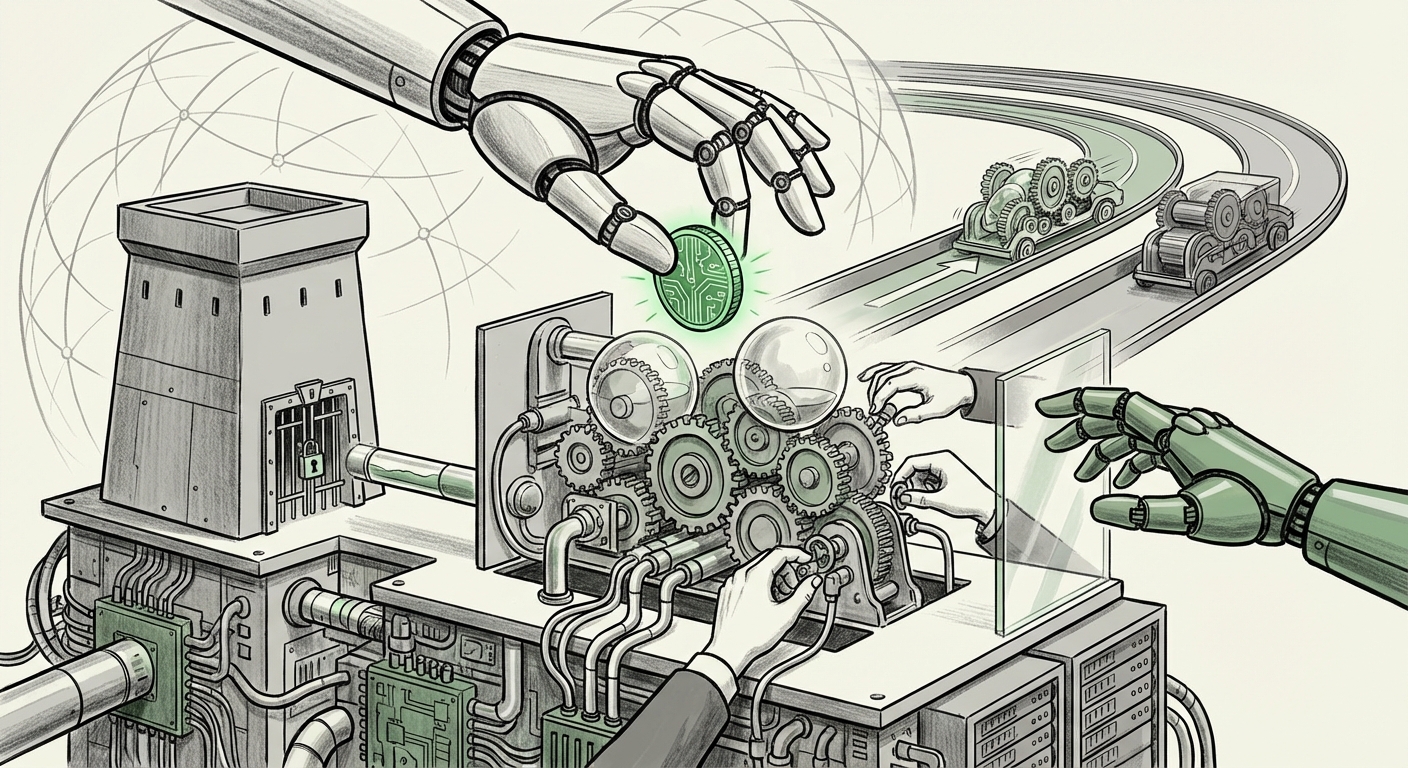
The phrase being passed around the field is simple: robotics is waiting for its ChatGPT moment. Not a moment where a robot becomes a person. A moment where robots stop being purpose-built machines and start becoming general-purpose ones, where you can tell a robot what you want in plain language and it figures out the rest. That is the shift that turned language AI from a research curiosity into a tool that hundreds of millions of people use every day. If it happens in robotics, it reshapes warehouses, farms, hospitals, homes, and the entire labor market along with them.
What "a ChatGPT Moment" Actually Means
It helps to be precise about the analogy, because it's easy to misuse. When conversational AI broke into the mainstream, three things came together at once. The models became general, one system could handle thousands of different tasks instead of one. The interface became natural, anyone could use it without training. And the results became good enough to trust for real work.
Robots have had none of those three at scale. A factory arm welds one part, over and over, in exactly the same spot. It's brilliant at that and helpless at anything else. Repurpose the line and you likely need to reprogram or replace the machine. That's the opposite of general-purpose, and it's why robotics has stayed expensive and slow to spread while AI software has exploded.
A true robotics moment would look like this: a single robot brain that can be dropped into different bodies and different environments, learn new tasks from demonstration or plain instructions, and improve over time. The robot becomes a platform rather than an appliance. Software updates start to matter more than hardware specs. That's the world the industry is building toward.
Why Robotics Got Stuck While Chatbots Flew
The single biggest reason is data. Language models feasted on the entire written internet, trillions of words, already digitized, mostly free to collect. Robots have no equivalent. There is no public archive of "how to unload a dishwasher in ten thousand different kitchens." Physical experience has to be gathered the hard way: one grasp, one step, one dropped box at a time.
Three other problems compound it:
- Hardware is unforgiving. A software bug produces a wrong answer. A robotics bug produces a broken machine or an injured person. Safety margins slow everything down.
- The world is messy. Language is complicated, but it's still just symbols. A kitchen has bad lighting, spilled milk, a toddler, and a chair that isn't where it was yesterday.
- Costs are physical. You can ship a new AI model to millions of users for almost nothing. You cannot ship a new robot arm for almost nothing.
The result was a field full of spectacular demos and very few general products. Every robot was a custom project, which meant every robot was expensive, which meant few were deployed, which meant little data came back. A classic chicken-and-egg trap.
The Ingredients Finally Coming Together
What's changed is that each part of that trap is loosening at the same time.
1. Robot "brains" can now be trained like language models
The same techniques that made chatbots fluent are being pointed at motion and manipulation. Instead of hand-coding every action, researchers train large models on video, simulation, and real-world demonstrations so the robot learns patterns and generalizes. The result is a system that can attempt a task it has never seen before and get better with practice, much like a language model handling an unfamiliar question.
2. Simulation is becoming a training ground
Because real-world data is scarce, simulated environments are doing an enormous amount of the heavy lifting. Millions of virtual attempts can be run in the time it takes to run one physical test. The open challenge is the "reality gap", making sure what a robot learns in simulation survives contact with the real world. That gap is narrowing, and it's the single most important technical problem in the field right now.
3. Language is becoming the robot's interface
This is the piece most people underestimate. Once a robot can connect what it sees to what it understands, instruction stops requiring an engineer. "Put the blue tote on the top shelf" is a command a supervisor can give, not a program someone has to write. That single change removes the biggest practical barrier between robots and the businesses that could use them.
4. Hardware is getting cheaper and more modular
Better sensors, stronger and lighter actuators, and shared software stacks mean the same physical platform can serve many jobs. When the body is commoditized and the intelligence is the differentiator, the economics flip. That's exactly what happened in computing, and it's the pattern to watch.
What This Means for Businesses
For most companies, the practical question isn't "when will robots be as smart as people?" It's "when does the math work for my operation?" That math is already shifting in three ways.
Robots stop being capital projects and start being software subscriptions. If a robot can be retrained for a new task instead of replaced, the payback period collapses. Instead of buying a machine that solves one problem for a decade, you buy a platform that solves three problems and gets better each quarter.
The bottleneck moves from hardware to data and integration. The winners won't be the companies with the fanciest arms. They'll be the ones who capture clean data about their own physical processes and feed it back into the system. Your warehouse layout, your picking patterns, your exceptions, that's your competitive asset.
Small and mid-sized businesses get access. Today, serious automation is mostly for large players who can afford custom engineering. General-purpose robots that learn from demonstration lower that barrier dramatically. That's a genuine structural change in who gets to compete.
Where to look first
- Repetitive, high-turnover physical tasks. If you're constantly hiring and retraining for the same motion, that's the first place a general robot pays off.
- Tasks with variation. Oddly, these are now more attractive than perfectly uniform ones, because general models handle variation better than old rigid automation did.
- Dangerous or unpleasant work. The business case is easiest when the alternative is injury, burnout, or unfilled shifts.
What It Means for Society and Work
Here's where the honest answer is uncomfortable: a robotics breakthrough would hit the physical economy the way language models hit the knowledge economy, unevenly and fast.
Some jobs change rather than disappear. A warehouse worker becomes a robot fleet supervisor. A technician becomes a trainer of robot behaviors. A nurse offloads lifting and fetching to focus on patients. Those transitions are real, but they require training that most organizations don't yet provide.
Other roles will shrink, particularly ones built entirely around a single repetitive motion. Pretending otherwise doesn't help anyone prepare. The countries and companies that handle this well will be the ones that treat retraining as a core operating expense, not a public relations gesture.
Two more issues deserve early attention. Safety is not optional, general-purpose robots working near people need strict, testable limits, and regulators will need frameworks that don't freeze innovation or allow recklessness. And trust is earned slowly. People will accept a robot that reliably does a narrow job long before they accept one that "mostly" does everything.
Actionable Steps You Can Take Now
- Audit your physical work. List every task that's repetitive, high-turnover, or dangerous. That list is your robotics roadmap, whether or not you buy anything this year.
- Start capturing data. Video, timing, exceptions, failure modes. When general robots arrive, the organizations with clean process data will deploy them far faster than those starting from zero.
- Run a narrow pilot. Pick one bounded task, measure it honestly, and learn what integration actually costs. Demos lie; pilots don't.
- Rethink the business case. Model robots as retrainable platforms, not fixed machines. The value comes from the second and third task, not the first.
- Invest in people early. Identify who supervises, maintains, and trains the systems. Build that capability before you need it.
- Watch the reality gap. The clearest signal that the moment has arrived is robots handling messy, unfamiliar, real-world situations without a human babysitter, not slick videos of perfect conditions.
The Road Ahead
Nobody can say exactly when the robotics moment lands. But the shape of it is clear, and the pieces are visibly moving into place: general models instead of single-task programs, simulation as a training engine, language as the interface, and hardware that's cheap enough to deploy widely once the intelligence is good enough.
When that happens, the change won't look like a robot walking into your office. It will look like a line item quietly moving from "capital equipment" to "software," a hiring req that doesn't get posted, a shift that gets covered without anyone scrambling. Slow at first, then all at once, the same way the last AI moment felt.
The companies and workers who thrive won't be the ones who predicted the exact date. They'll be the ones who spent the waiting period getting their processes, their data, and their people ready for a machine that can finally be told what to do.