Clay Mathematics Institute Says Navier-Stokes Has "Apparently Been Settled", What This Means for AI
One of the hardest open questions in all of mathematics may finally have an answer. The Clay Mathematics Institute has stated that the Navier-Stokes Millennium Prize Problem has "apparently been settled." That single word, apparently, carries a lot of weight, and it tells you almost everything about where this story stands right now.
For people who work with AI, simulation software, or any business that depends on predicting how fluids move, this is not an abstract academic footnote. The Navier-Stokes equations describe how liquids and gases flow. They sit underneath weather forecasts, aircraft design, blood-flow models, oil pipelines, and the cooling systems inside the data centers that train modern AI models. If the foundation of that math has genuinely changed, the ripple effects reach surprisingly far.
What the Navier-Stokes Problem Actually Is
The Navier-Stokes equations have been written down for well over a century. Engineers use them every single day. They work. Planes fly. Weather models run. So why is there a prize attached to them at all?
The gap is not about whether the equations work in practice. It is about whether mathematicians can prove they always behave. In three dimensions, nobody has been able to show that smooth, well-behaved solutions always exist and never blow up into nonsense. In plain terms: we can use the equations, but we cannot fully prove they never break.
The Clay Mathematics Institute built its Millennium Prize Problems around exactly this kind of unanswered question, a small list of deep problems that have resisted the best minds for decades. Navier-Stokes is one of them. So when the Institute itself uses the phrase "apparently been settled," that is a serious signal, not a casual one.
Why "Apparently" Is the Most Important Word
Mathematics does not run on press releases. It runs on verification. A claimed proof is not a proof until other experts read it, test it, and fail to break it. That process can take months. Sometimes it takes years. Sometimes it never finishes, because the proof has a hole nobody spotted at first.
The word "apparently" in the Institute's statement is a deliberate hedge. It says: we have seen something that looks like a resolution. It does not say: the community has confirmed it. Those are very different claims, and anyone following this story should hold both in mind at once.
This is exactly where AI becomes interesting, not as the headline, but as the tool that may decide how fast this gets settled.
The Real AI Story: Verification at Machine Speed
Historically, checking a long, technical proof has been a slow, human, painfully manual job. A handful of specialists read it line by line, over months, arguing about every step. That bottleneck has not changed much in a hundred years.
What has changed is that computer-verified mathematics is now a real discipline. Researchers translate proofs into a formal language that a machine can check step by step. If the translation is right and the machine accepts it, the logic holds, no hand-waving, no hidden assumptions.
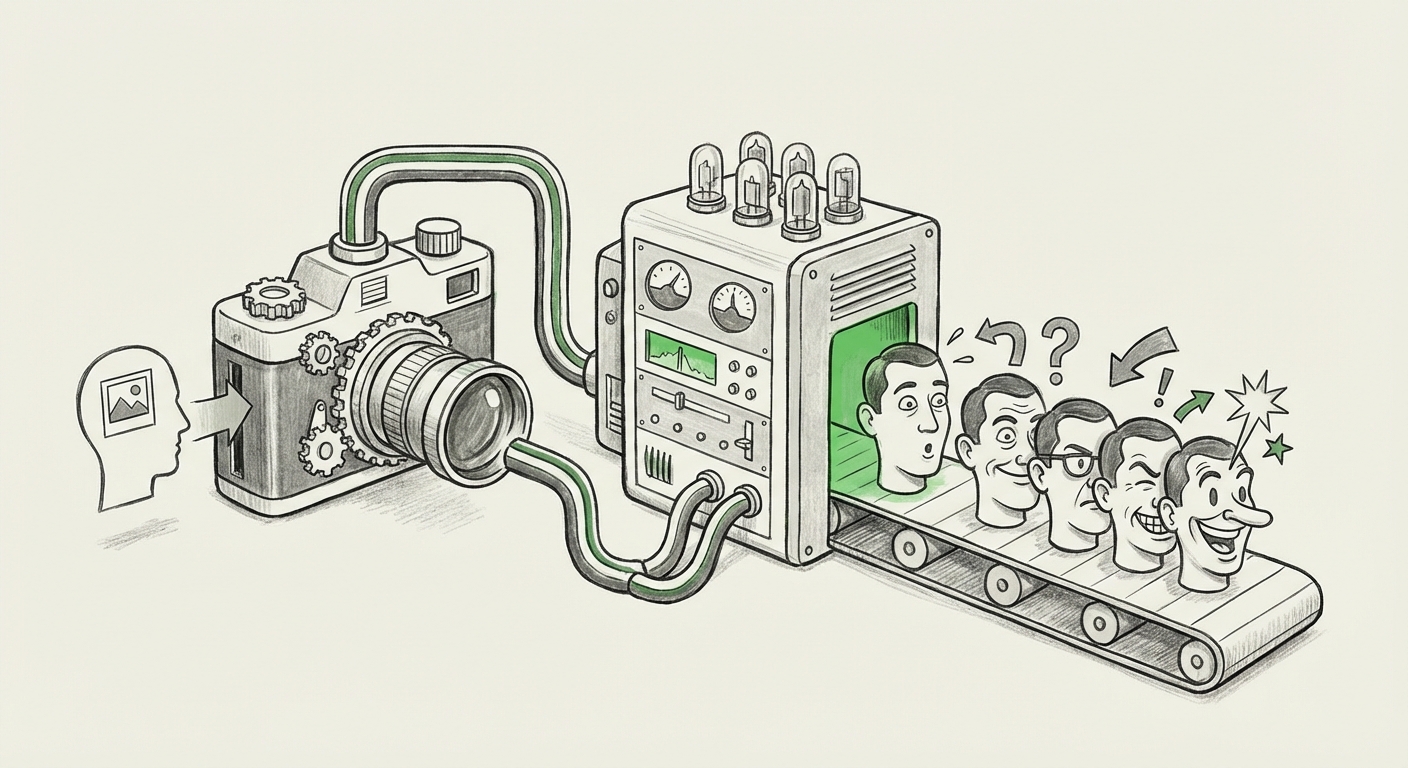
AI systems are increasingly useful in this space. They can help translate informal mathematics into formal statements. They can search huge libraries of already-proven results to find which known theorems a new proof depends on. They can flag a step that looks like it might not follow. None of that replaces a mathematician, but it compresses the timeline dramatically.
Here is the practical takeaway for anyone watching this story: the biggest AI angle in a major mathematical breakthrough is not "AI solved it." It is "AI may be what makes the solution checkable in weeks instead of years."
What Changes If This Holds Up
Suppose the result survives scrutiny. What actually changes?
1. Better simulation software, and better trust in it
Today, every serious fluid simulation carries uncertainty. Engineers use turbulence models, approximations that stand in for the fine details the equations are too expensive to compute directly. Those models work, but they are patches. A proven result about the underlying equations would give researchers a firmer theoretical map of where those patches are safe and where they are not.
2. A new test case for AI-driven discovery
If AI tools played any role in reaching or checking a result of this scale, it becomes a landmark case study. It would push companies and research labs to invest harder in AI systems built for rigorous reasoning rather than fluent guessing. That is a very different product category from a chatbot, and it has a very different buyer: research institutions, engineering firms, national labs, and regulators who need answers they can defend.
3. Pressure on "good enough" computing
If the mathematical ground shifts even slightly under fluid dynamics, industries that lean on legacy simulation code will face a question they have avoided for years: when do we rebuild? Aerospace, energy, automotive, and climate modeling all sit on decades-old numerical methods. A proven result does not break those methods, but it can reveal where they were always approximate.
4. A sharper spotlight on AI accuracy claims
There is an uncomfortable parallel here. AI companies make big claims constantly. Mathematics has a 2,000-year-old process for testing claims: you publish, others attack the work, and only what survives gets accepted. If the Navier-Stokes result goes through that mill publicly, including whatever role AI played, it becomes a model for how the AI industry might be expected to prove things too.
What to Be Skeptical About
A few cautions are worth stating plainly.
- Do not assume the proof is correct yet. "Apparently settled" is not "settled." History is full of grand proofs that collapsed under review.
- Do not assume AI did the work. Details of how the problem was approached have not been broadly established, and early narratives in stories like this are often wrong.
- Do not expect instant products. Even a fully verified proof takes years to translate into better engineering tools. Math moves to manufacturing slowly.
- Do watch the verification process. How this gets checked, by whom, with what tools, how fast, is itself the story about where AI is heading.
Actionable Insights for Businesses and Teams
If you run an engineering, science, or AI-heavy organization, here is what is worth doing now, before the dust settles.
- Track the verification, not the headline. Assign someone to follow whether the result holds. That is the signal. The announcement is just noise until then.
- Audit your simulation dependencies. Know which of your products, forecasts, or safety cases depend on fluid models. You do not need to change anything today, but you should know your exposure.
- Invest in verification tooling. The ability to machine-check complex reasoning is becoming a competitive advantage. This applies to software correctness and to AI output quality, not just math.
- Separate reasoning AI from language AI. Systems that can prove things are a distinct category from systems that can talk about things. Budget and evaluate them separately.
- Prepare for a credibility shift. As machine-checked results become normal in science, buyers will start asking harder questions about AI products that cannot show their work.
The Bigger Picture: Science Gets a Faster Loop
Step back, and the pattern is bigger than one equation. For most of modern history, the speed of science has been limited by human attention. Someone has to read the proof. Someone has to check the data. Someone has to catch the mistake.
AI is starting to attack that bottleneck from several directions at once, generating candidate ideas, searching vast bodies of prior work, and helping machines check the logic of what comes out. The Navier-Stokes news, whatever its final outcome, lands right in the middle of that shift.
That is why this story matters well beyond mathematics departments. It is a live test of whether the world's hardest problems can now be worked on with AI as a genuine collaborator, and whether the results can be trusted fast enough to matter.
Conclusion
The Clay Mathematics Institute's statement that the Navier-Stokes Millennium Prize Problem has "apparently been settled" is one of the most significant mathematical announcements in years, and one of the most carefully hedged. The hedge is the honest part. Verification takes time, and the mathematical community will take that time regardless of how much excitement the news generates.
For the AI world, the lesson is not that a machine cracked a century-old problem. It is that the value of AI in serious work is shifting from generating answers to checking them, and that shift is where the next wave of useful, defensible products will come from. Watch the verification. That is where the future is being written.