Sam Altman Calls for Pacing AI Development, But Promises the Progress Won't Stop
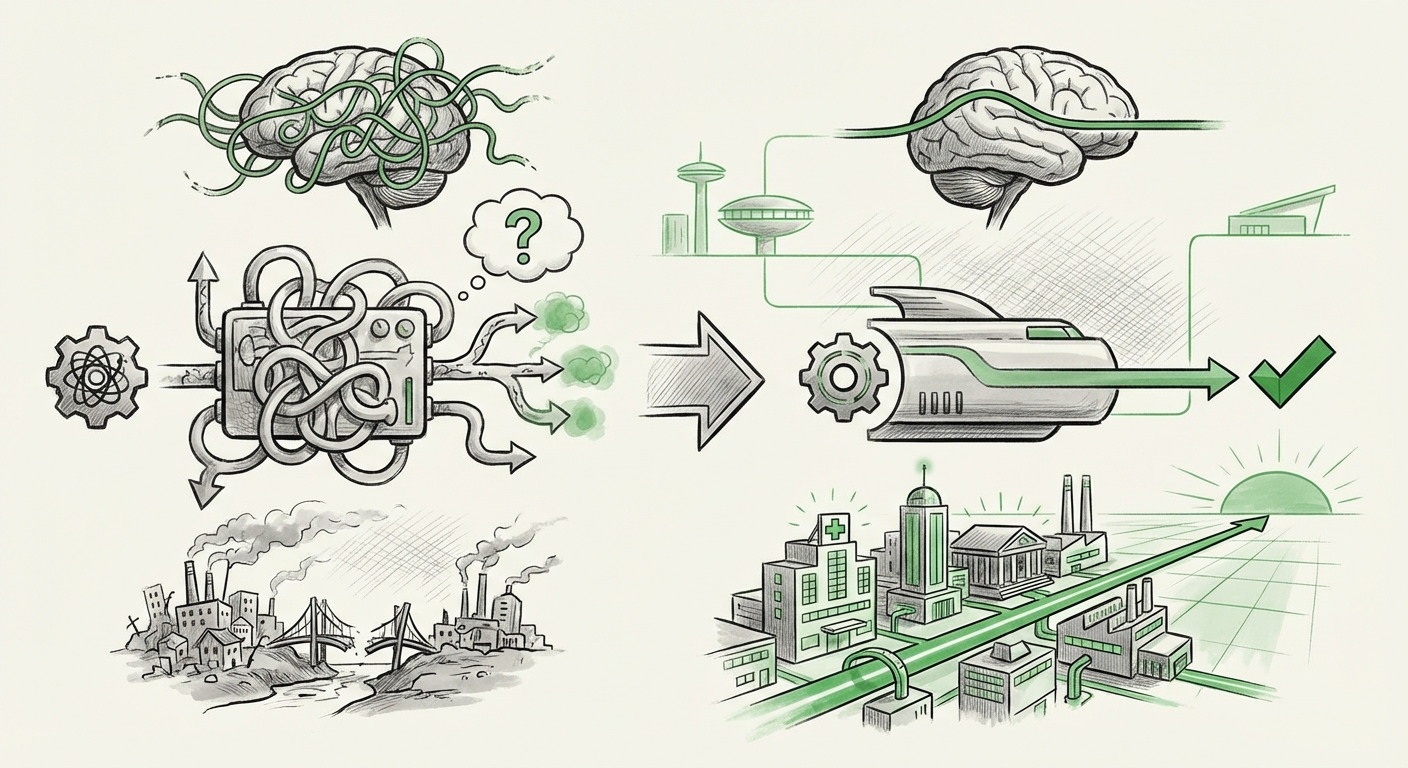
On September 14, 2026, Sam Altman sent two messages at the same time. He said the AI industry should pace itself. He also said fast progress will keep coming anyway.
At first glance, those two ideas sound like they fight each other. One says "slow down." The other says "we are not slowing down." But if you look closer, this is not a contradiction. It is a plan. And it tells us a lot about where AI is heading next, and what that means for your job, your business, and your daily life.
This article breaks down what Altman's message really means, why it matters right now, and what smart companies and workers should do about it.
The Two Halves of the Same Message
Altman, who leads OpenAI, is not the first tech leader to talk about pacing. But he is one of the most important voices in the field. When he speaks, the whole industry listens, and so do governments, investors, and businesses buying AI tools.
His message had two parts:
- Part one: The industry should be careful. It should pace itself. It should think about safety, risk, and the effect on society before racing ahead.
- Part two: Rapid progress is coming anyway. It will continue. It will not stop.
That combination is not a mixed signal. It is a promise wrapped in a warning. Altman is saying: we will keep building fast, but we want to do it with our hands on the wheel.
Why "Pacing" Does Not Mean "Stopping"
Many people hear the word "pace" and think it means "pause." That is a mistake.
In running, pacing means you control your speed so you can finish the race. You do not stop. You just do not sprint so hard that you collapse halfway through. That is exactly what Altman seems to be describing for AI.
Pacing in AI could mean several practical things:
- Testing before releasing. Checking how a new AI system behaves before putting it in front of millions of people.
- Rolling out in stages. Giving new tools to a small group first, watching what happens, then expanding.
- Sharing safety knowledge. Letting researchers and regulators understand what is being built.
- Setting rules that apply to everyone. A speed limit only works if all cars follow it. Otherwise the careful driver just loses the race.
The last point is the hardest one. If one company slows down but its competitors do not, the cautious company falls behind. This is called a race to the bottom, and it is the biggest reason "pacing" is so hard to actually do.
The Real Tension: Safety vs. Speed
Here is the honest truth about the AI industry today. Everyone says they care about safety. Everyone also keeps shipping new products.
Altman's message captures that tension perfectly. He is not pretending the race will stop. He is saying the race will continue, and the goal is to run it well.
Why does this matter so much right now? Because AI is shifting from a toy to a tool. A few years ago, chatbots wrote silly poems. Today, AI systems write code, handle customer service, review documents, help doctors, and drive business decisions. The more power these systems get, the higher the stakes become.
When the stakes are low, moving fast is fine. When the stakes are high, moving fast without care becomes dangerous. Altman's dual message is really an admission that we have crossed into the high-stakes phase.
What This Means for the Future of AI
1. Progress Will Keep Accelerating, Not Slowing
Take Altman at his word. Rapid progress will continue. That means more capable AI tools in the next few years, not fewer. Businesses should plan for a world where AI gets better every few months, not every few years.
That changes how you plan. A five-year technology roadmap built in 2026 may be outdated in two years. The companies that win will be the ones that review and update their AI plans often.
2. Safety Will Become a Product Feature
When the top voices in the field talk about pacing, safety stops being a nice thing to have. It becomes part of the product. Buyers will ask vendors: How do you test this? What happens when it fails? Who is responsible?
Expect safety and reliability to move from the legal department into sales conversations.
3. Regulation Will Move Faster Too
Pacing is hard for one company to do alone. That is exactly why governments get involved. When industry leaders call for care, lawmakers hear an invitation to write rules. The next stage of AI will likely include more formal standards, more reporting, and more testing requirements, especially for AI used in health, finance, and public services.
4. Smaller, Focused AI Will Grow
As the biggest systems push forward, there is also room for smaller, specialised AI that does one job well. These tools are cheaper, easier to control, and easier to check for safety. For many businesses, that is the practical path forward.
Practical Implications for Businesses
If you run a business, here is what Altman's message means in plain terms.
Start now, but start with a plan
Waiting is not a safe strategy. The tools are improving fast, and your competitors are already testing them. But jumping in with no plan is also risky. Pick one or two clear uses, like drafting support replies or summarising reports, and measure the results.
Build your own testing habits
You do not need a huge safety team. You do need simple rules. Who checks AI output before it reaches a customer? What happens when the AI is wrong? Write those answers down.
Train your people, not just your systems
The biggest gains from AI come from people who know how to use it well. A team that understands what AI is good at, and where it fails, will always beat a team that just has access to the same tool.
Watch the rules
As pacing talk turns into real policy, compliance will become part of AI adoption. Keep an eye on what applies to your industry, and build flexibility into your systems so you can adapt.
Practical Implications for Society
The wider effects matter just as much.
Jobs will change shape. Not every job disappears, but almost every job will shift. Tasks that are repetitive and text-based will be handled by AI more often. Tasks that need judgement, trust, and human contact will grow in value.
Trust becomes the scarce resource. If AI can produce anything, text, images, code, answers, then knowing what to believe becomes harder. Companies and creators who can prove their work is real and reliable will stand out.
The pace debate is really a power debate. Who decides how fast AI moves? Right now, it is a small group of companies and governments. That is why calls for "pacing" get so much attention. They are about who holds the brakes.
Actionable Takeaways
- Do not wait for a perfect moment. Altman says progress continues. Waiting means falling behind.
- Pick small, measurable AI projects first. Prove value before scaling up.
- Write simple safety rules. Human review, clear ownership, and a plan for failure.
- Invest in skills. The people who use AI well will be your advantage.
- Plan for changing rules. Build systems that can adapt to new standards.
- Stay sceptical of hype, and of fear. Both extremes miss the middle, where the real work happens.
The Bottom Line
Sam Altman's message on September 14, 2026 was not confusing. It was honest. He is telling us that AI will keep moving fast, and that the industry wants to move with care. Those two ideas can live together, but only if someone actually does the careful part.
For businesses, the lesson is simple: adopt AI now, but adopt it smartly. For workers, the lesson is to keep learning, because the tools will keep changing. For society, the lesson is to pay attention, because the speed of AI is no longer just a tech story. It is everyone's story.
The race is not stopping. The only real question is how well we run it.