Is Big AI's Safety Slowdown Real, Or a Way to Keep Rivals Behind?
Almost everyone in the AI world says they care about safety. That is the easy part. The hard part starts when a company says the safest thing to do is to slow down. Slow down what? Slow down who? And who gets to decide?
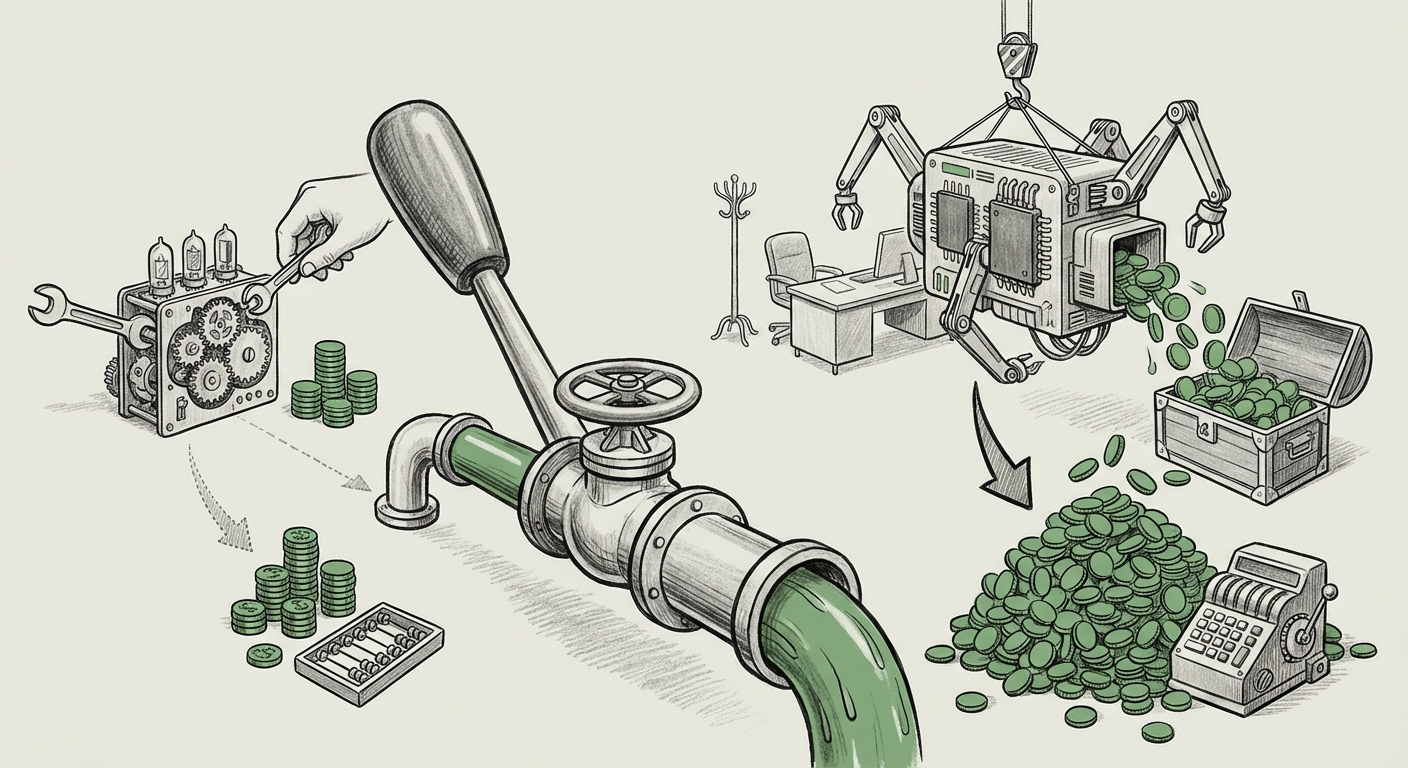
A growing number of researchers, investors, and policymakers are not convinced. They look at proposals from the biggest AI labs to pump the brakes on frontier development and they see something else underneath. Not a brake pedal. A gate, one that happens to be locked from the inside.
That suspicion is now the center of one of the most important arguments in technology. It matters because the answer decides how fast AI spreads, who gets to build it, and whether the rules written today become the walls of tomorrow.
The Claim at the Center of the Fight
The biggest AI labs have put forward a set of ideas that sound reasonable on the surface. Pause or slow training runs above a certain size. Require safety testing before release. Set up internal review boards. Agree to shared standards before pushing into riskier territory.
Each of those ideas can be defended. If a system might be dangerous, testing it before shipping is just good engineering. Nobody argues that car makers should skip crash tests.
But skeptics point to a pattern. The systems that would get slowed down are the ones the biggest labs are already building. The systems that would be exempt, or that would face much lighter rules, are the smaller, cheaper, faster-moving models that upstarts use to compete.
In other words, the rule is not "nobody builds big models." The rule is "nobody builds big models except the people who already built them."
Why Skeptics Don't Buy the Safety Story
There are four arguments that keep coming up, and they are worth taking seriously on their own terms.
1. Safety rules and business moats look identical from the outside
A training pause raises costs for everyone. But it raises them most for whoever has the least money in the bank. A well-funded lab can sit out a six-month pause and still pay its staff. A startup with eighteen months of runway cannot. A compliance-heavy rulebook does not ban competitors. It just makes them run out of oxygen.
2. Slowing down does not slow down the world
If one country or one group of companies pauses, the compute, the talent, and the ideas do not vanish. They move. Safety frameworks that only bind the most visible players push capability into places with fewer rules and less scrutiny. Skeptics call this the "safety theater" problem: you feel safer, but the actual risk has just relocated.
3. Voluntary is not the same as enforced
Most of the proposed slowdowns are voluntary. Voluntary rules are promises. Promises are cheap to make when you are ahead and easy to break when you are behind. That is not a criticism of any one company. It is just how competition works.
4. The people writing the rules have a stake in them
This is the sharpest point. When the largest players help design the safety standards, they are not neutral referees. They are players who also get to hold the whistle. That does not automatically make the standards bad. But it does mean the standards deserve harder questions than they usually get.
What a Genuine Slowdown Would Look Like
It is easy to be cynical. It is harder to say what would actually convince people. So here is a simple test. If a slowdown is really about safety, it should show up in ways that cost the proposer something.
- Shared evidence, not shared statements. Published evaluations that outside researchers can check, not press releases that say "we tested it."
- Rules that bind the biggest players hardest. If a framework is easy for a trillion-dollar lab and impossible for a startup, it is not a safety framework. It is a market filter.
- Real penalties for breaking the promise. A voluntary pledge with no consequence is a marketing document.
- Independent review. Safety claims should be checked by people who do not work for the company making them.
- Openness to the boring answer. Sometimes the honest reason to slow down is that the technology is not ready. That is a fine reason. It just needs to be said out loud.
None of these are radical. All of them are uncomfortable for whoever is on top.
What This Means for the Future of AI
Step back from the fight and three bigger shifts become clear.
The debate is moving from "can we" to "who gets to"
For the last few years, the big question was technical: can this be done at all? That question is largely answered. The new question is political and economic: who is allowed to do it, and under what conditions? Safety language is now one of the main tools used in that fight. Expect more of it, from every side.
Regulation becomes the new competitive battleground
In mature industries, companies stop competing only on product and start competing on rules. Airlines, banks, and drug makers all do this. AI is arriving at that stage fast. The labs that shape the rules early get an advantage that no amount of engineering can erase. That is not a conspiracy. It is just what happens when an industry grows up.
Trust becomes a product feature
Here is the upside. If safety claims are going to be doubted, the companies that can prove their claims will stand out. Third-party audits, public evaluation results, and clear documentation will stop being nice-to-haves and start being sales tools. Buyers will learn to ask for receipts.
Practical Implications for Businesses
If you run a company that uses AI, and by now that is most companies, this debate affects you whether you follow it or not.
Vendor lock-in is now a policy risk, not just a tech risk. If a slowdown or a rule change reshapes what your main AI vendor can ship, your roadmap moves with it. Build a stack that can swap models without a rebuild.
"Safe" will need a definition in your contracts. Ask what safety testing was done, by whom, and whether you can see the results. If the answer is vague, treat that as information.
Smaller models get more attractive. One likely result of any slowdown on frontier systems is a rush toward smaller, cheaper, more controllable models that do a specific job well. For most business use cases, that is already the smarter buy.
Prepare for a patchwork of rules. Different regions will set different limits. Companies that build once and deploy everywhere will struggle. Companies that can adjust settings per market will not.
Actionable Insights
- Audit your AI dependency. List every AI vendor you rely on. Mark which ones you could replace within 30 days. Fix the ones you cannot.
- Ask for evidence, not assurances. Request evaluation results before you sign. If none exist, ask why.
- Keep a fallback model tested and warm. Run a small slice of production traffic through an alternative so switching is a config change, not a project.
- Track the rules, not the headlines. Follow compute thresholds, testing requirements, and disclosure rules in the markets where you operate.
- Build internal evaluation skills. The ability to test AI systems against your own use cases is becoming a core business skill, not a research one.
- Treat safety claims as claims. Believe them when they are backed by evidence. Discount them when they are backed by a blog post.
What to Watch Next
Three signals will tell you which way this is going.
First, who the rules bind. If new standards fall hardest on the largest systems and the largest companies, the skeptics have a point. If they fall on everyone equally, the safety story gets stronger.
Second, whether the slowdowns are real. Watch for actual delayed releases, not just delayed announcements. Talk is free.
Third, whether smaller players survive. If the next wave of AI companies keeps growing, the market is still open. If the field narrows to a handful of names, the gate worked.
The Bottom Line
It would be a mistake to assume the safety concerns are fake. Some of them are clearly real, and some of the people raising them are sincere. It would be an equal mistake to assume that safety is the only thing driving the slowdown proposals. Companies are made of incentives, and incentives do not disappear just because the language sounds noble.
The healthy response is not cynicism. It is specificity. Ask what is being slowed, by whom, for how long, with what evidence, and who pays if the promise breaks. Good safety policy survives those questions. Bad safety policy does not, and the difference will shape the next decade of AI.