Anthropic Merges Claude Chat and Cowork Into a Single Product: What It Means for the Future of AI
Anthropic has made a move that says a lot about where artificial intelligence is heading. On September 16, 2026, the company announced it is merging Claude Chat, Cowork, and more of its offerings into a single product.
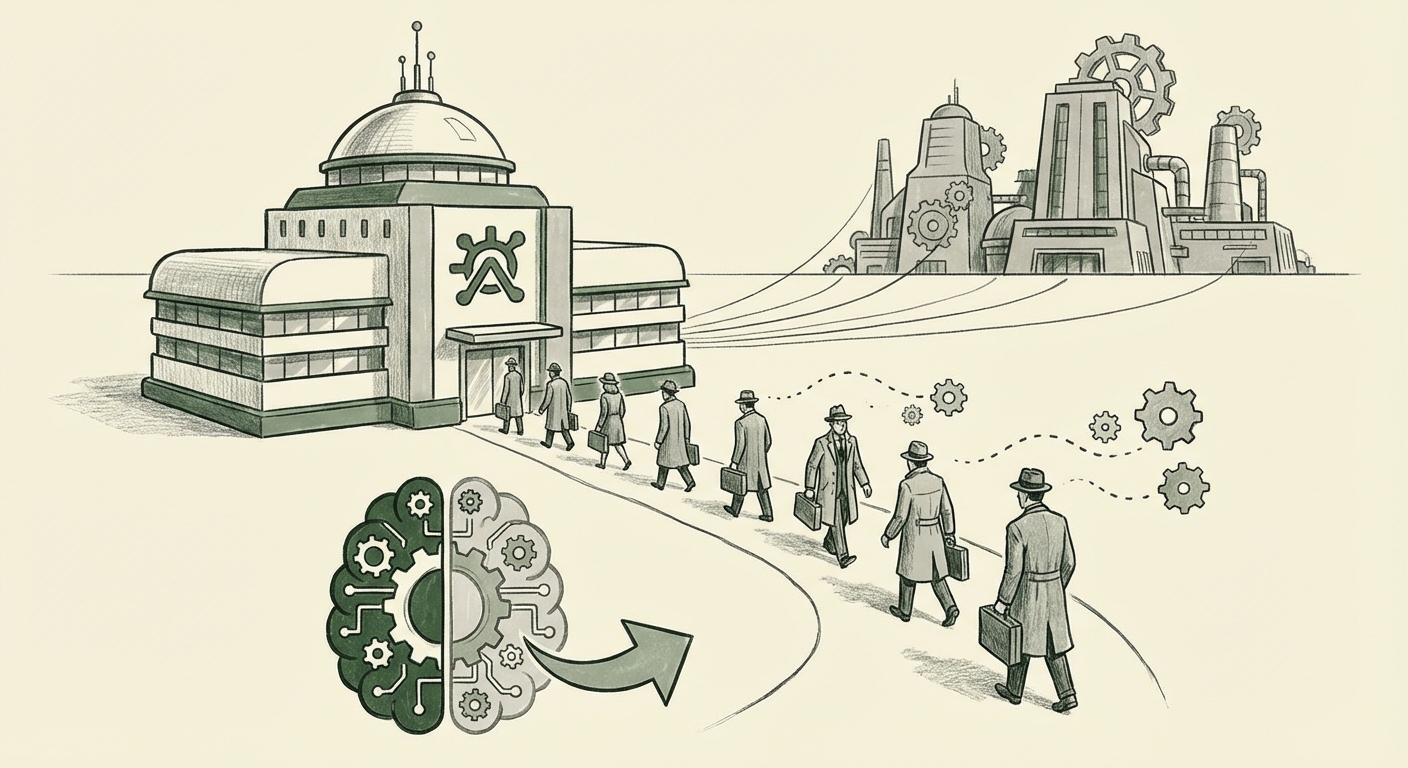
On the surface, this looks like a packaging change. A company tidying up its product line. But look closer, and it is actually a signal about something much bigger: the era of the "chatbot as a separate app" is ending. AI is becoming one connected workspace where talking, working, and getting things done all happen in the same place.
For businesses, that shift matters more than any single feature announcement. It changes how teams buy AI, how they train on it, and how they measure whether it is actually working. For everyone else, it changes what it feels like to use AI day to day.
What Anthropic Actually Announced
The announcement is straightforward: the separate products are becoming one. Claude Chat, the conversational assistant people type into, and Cowork, plus other pieces of the Claude lineup, are being folded together under a single roof.
That word "more" is important. This is not just about bolting a chat window onto a work tool. It suggests Anthropic is pulling its whole Claude experience into one place, rather than making users jump between apps that each do a slice of the job.
Think about how most people use AI today. They open a chat window to ask a question. They close it. They open a different tool to summarise a document. They open another one to draft an email. Each tool has its own login, its own memory of what you are doing, and its own idea of who you are and what you need.
Merging Chat and Cowork into one product attacks that problem directly. The conversation you had with the assistant and the work you were doing with the assistant stop being two separate things. They become one continuous thread.
The Bigger Trend: From App Sprawl to a Single Workspace
This move fits a pattern that has been building across the AI industry for a while. For the past few years, the market has been flooded with AI tools. Every week brought a new app for writing, coding, researching, or automating something. It was exciting. It was also exhausting.
Users ended up with tool sprawl, a dozen subscriptions, a dozen places where their context lives, and no single view of what the AI knows about them.
Consolidation is the natural correction. When a technology is new, lots of small tools compete. When it matures, the winners are usually the platforms that absorb those tools and make them work together.
Why Consolidation Is Happening Now
Three forces are pushing AI companies toward single, unified products:
- Context is the real product. An AI that remembers your projects, your preferences, and your past conversations is far more useful than one that starts from zero every time. But that memory only works if everything lives in one place.
- Agents need a home. AI is moving from answering questions to doing tasks. Agents that take action, drafting, editing, organising, coordinating, need somewhere to operate. A chat window alone is not enough.
- Buyers want simplicity. Companies do not want to manage fifteen AI vendors. They want one contract, one security review, one place to train staff.
A merged Claude product speaks to all three at once.
What This Means for the Future of AI
If this consolidation works, it points toward a future where AI stops being something you visit and starts being something you inhabit while you work.
The Assistant Becomes the Operating Layer
Today, most people treat AI like a website. You go to it, you use it, you leave. The more likely future is that AI becomes the layer everything else runs through, the place where documents, conversations, decisions, and follow-ups all live together.
That is what a single product makes possible. Not just a smarter chatbot, but a working environment where the assistant already knows the context because it never left.
Agents Move From Demo to Daily Work
For a couple of years, AI agents have been impressive in demonstrations and unreliable in practice. One big reason: they had nowhere to live. An agent that can only see one narrow slice of your work cannot do much of it.
When chat, collaboration, and task execution sit inside one product, agents get the context they need. They can see the conversation, understand the goal, take action, and report back, all in the same space. That is the difference between an agent that looks clever in a video and one that actually saves you an hour on a Tuesday afternoon.
Memory Becomes a Competitive Battleground
Once everything is in one product, the value shifts from "what can the model do?" to "what does the system know about my work?" Memory, continuity, and context become the features that decide which platform a company picks, and how hard it becomes to leave.
Practical Implications for Businesses
If you run a team or a company, this announcement has real, near-term consequences.
1. Your AI Stack Is About to Get Simpler
Fewer products means fewer logins, fewer contracts, and fewer security reviews. That is good news for IT departments that have been drowning in AI subscriptions. Start auditing which tools overlap, because the market is about to do some of that consolidation for you.
2. Training and Adoption Get Easier
One of the biggest reasons AI rollouts fail is that employees do not know which tool to use for which task. A single product removes that confusion. One place to learn, one set of habits, one set of guidelines.
3. Governance Becomes More Centralised
When AI lives in five products, your data policies live in five places too. A merged product makes it easier to set rules once, what data can be used, who can access what, how outputs are reviewed, and apply them everywhere.
4. Vendor Lock-In Deserves a Hard Look
This is the flip side. The more your conversations, projects, and institutional memory live inside one product, the harder it is to switch providers. Consolidation is convenient, but convenience has a cost. Ask your vendor hard questions about data portability and export before you move everything in.
What This Means for Workers and Society
For individual workers, the shift is subtle but real. Today, using AI often feels like a separate activity, you stop working, you ask the AI something, you go back to work. When AI is built into the workspace itself, that boundary fades.
That is mostly good. Less copying and pasting. Less re-explaining. Fewer moments where you have to remember what you told the AI last week.
But it also raises questions worth taking seriously:
- Skill atrophy. If the assistant drafts, summarises, and organises everything, do people lose the ability to do those things themselves? The answer depends on whether we use AI to replace thinking or to sharpen it.
- Oversight. As AI takes on more tasks inside the workspace, who checks its work? Automation without review is how mistakes scale quietly.
- Transparency. When AI is woven into everyday work, it becomes less obvious when it is involved. That is convenient and also easy to abuse.
None of these are reasons to slow down. They are reasons to put simple guardrails in place now, while the habits are still forming.
The Risks and Open Questions
Anthropic's merger is a bet. It assumes people want one place instead of many. That is probably true for many users, but not all of them. Some teams want best-in-class tools for specific jobs, and they are willing to manage the mess to get them.
There is also a platform risk. If a single product becomes the centre of how a company works, any outage, pricing change, or policy shift hits harder. Concentration creates efficiency and fragility at the same time.
And there is the competitive question. If a unified Claude product works well, expect the rest of the market to follow quickly. Consolidation tends to arrive in waves.
Actionable Insights: How to Prepare
Whether you are a solo user or running a large organisation, here is what to do with this news:
- Map your current AI tools. List every AI product your team pays for and what it is used for. Highlight the overlaps. That overlap is where consolidation will hit you.
- Test one connected workflow. Pick a real project and run it end to end inside a single AI product, research, drafting, review, follow-up. Measure the time saved. That number is your business case.
- Write your context policy. Decide what information you are comfortable putting into an AI workspace, and what you are not. Do this before it becomes an accident, not after.
- Demand portability. Ask vendors how you export your conversations, files, and memory. If the answer is vague, treat that as a warning sign.
- Keep humans in the loop. Set clear rules for which AI outputs need a human check before they leave the building.
- Train for direction, not just prompting. The skill that matters most in a unified AI workspace is knowing what you want and being able to judge whether you got it.
The Bottom Line
Anthropic merging Claude Chat, Cowork, and more into one product is not just a product decision. It is a statement about where AI is going: away from scattered tools you visit, and toward a single working environment you live inside.
That shift will make AI more useful, more integrated, and harder to ignore. It will also make the choices around training, oversight, and vendor dependence more important than ever.
The companies and workers who treat this consolidation as a chance to tidy up their tools, set clear rules, and rethink how work actually flows will come out ahead. Everyone else will simply get a new app icon and carry on the way they always have, which, in a market moving this fast, is its own kind of risk.