Google DeepMind Launches Interdisciplinary AGI Institute: What It Means for the Future of AI
On September 16, 2026, Google DeepMind launched an interdisciplinary institute dedicated to tackling the big questions surrounding artificial general intelligence, or AGI. That single move says more about where AI is heading than any benchmark score or product launch this year.
AGI is the term for an AI system that can learn and reason across many different tasks the way a human can, instead of being great at just one narrow job. For years, AGI sat in the realm of science fiction and late-night conference talks. Now one of the world's largest AI labs is building a permanent structure around it, and staffing it with people from more than one field.
That shift from "research project" to "institute" is the real story. Here is what it means, why it matters, and how businesses and everyday people should think about it.
What Just Happened, and Why the Word "Interdisciplinary" Is the Headline
The announcement is straightforward on its face: a new institute, focused on the big open questions around AGI. But the choice of the word interdisciplinary is doing a lot of work. It signals that the lab believes the hardest questions about AGI are no longer purely technical.
Consider what "big questions" actually means in this context. They tend to fall into a few buckets:
- Technical questions: How do we measure progress toward general intelligence? How do we know when a system is safe at scale?
- Ethical and philosophical questions: If a system can reason like a person, what does it owe us, and what do we owe it?
- Social and economic questions: Who benefits, who gets displaced, and how fast does change arrive?
- Governance questions: Who sets the rules when the technology crosses borders?
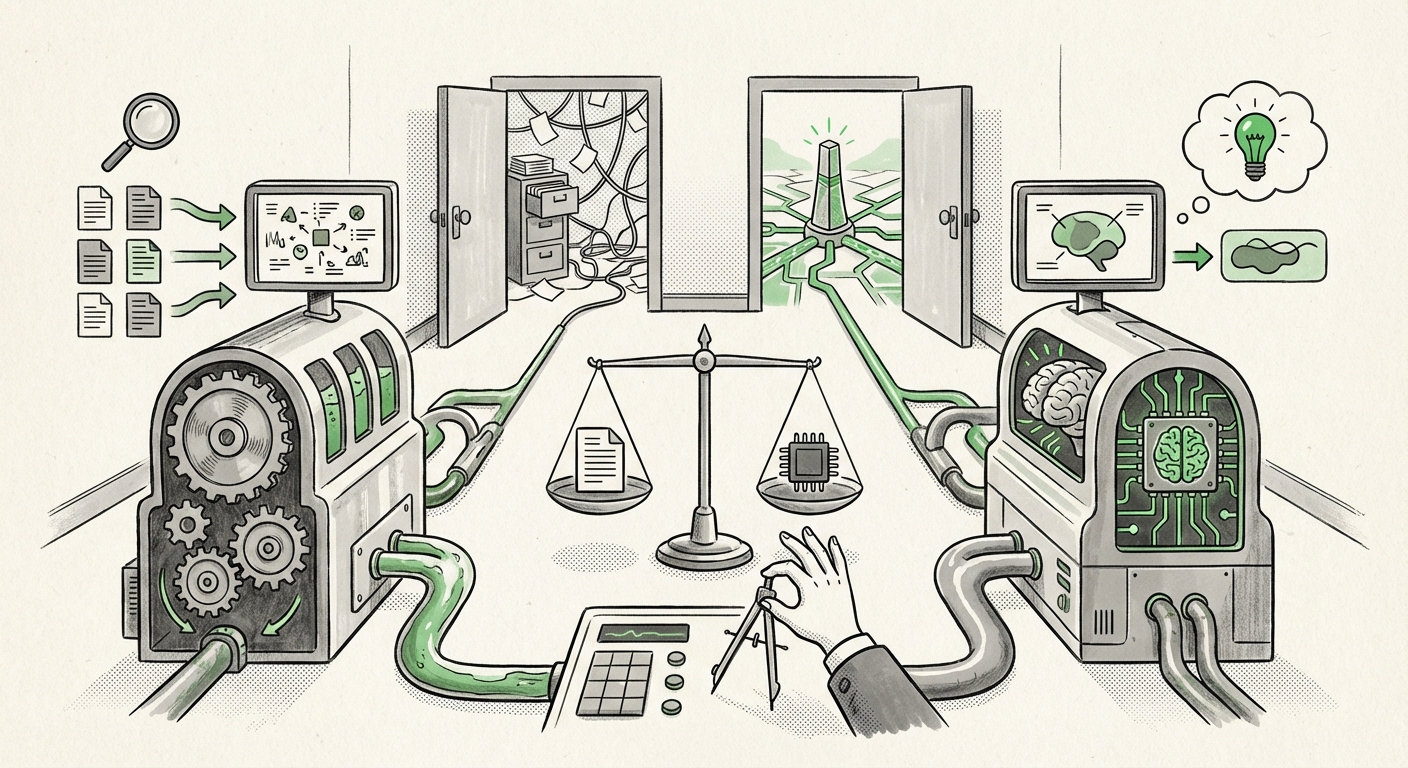
A pure engineering team cannot answer most of those. You need economists, ethicists, legal scholars, cognitive scientists, and social researchers in the same room as the model builders. That is what an interdisciplinary institute is designed to do: force those conversations to happen early, rather than after a product ships.
This is a meaningful change in posture. Historically, AI labs have treated safety and social impact as a review step at the end of the pipeline. Creating a standing institute flips that. It says these questions deserve their own budget, their own staff, and their own research agenda, not a checkbox on a launch checklist.
The Broader Trend: AI Labs Are Becoming Institutions
Step back and a pattern becomes clear. The frontier AI labs have spent the last several years behaving like startups, ship fast, learn fast, iterate. Now the leading labs are starting to look more like research institutions, with permanent departments, long-horizon programs, and public-facing commitments.
Why the change? Three forces are pushing in the same direction.
1. Capability is outpacing our ability to describe it
Modern AI systems already do things their creators did not explicitly program. That makes them harder to evaluate with simple tests. When you cannot fully predict what a system will do, you need a wider set of experts to help define what "good" and "safe" even look like.
2. Regulators and the public are asking harder questions
Governments, courts, and ordinary users are all asking the same thing: who is accountable when an AI system causes harm? Labs that can point to a real research body studying those questions have a better story to tell, and a better shot at shaping the rules rather than just reacting to them.
3. Talent wants purpose, not just scale
The top researchers in the field increasingly want to work on problems that matter beyond the next product cycle. An institute focused on foundational questions is a recruiting tool as much as a research one.
What This Means for the Future of AI
If this model works, expect several downstream effects.
AGI timelines get a shared vocabulary
Right now, "AGI" means something different to everyone. Some people use it to mean human-level performance on most cognitive tasks. Others mean something closer to superintelligence. That vagueness makes public debate nearly impossible. An interdisciplinary institute is well positioned to help define measurable milestones, and to be honest when a system falls short of them.
Safety research moves from side project to core discipline
Safety work has often been done by small teams inside large labs. Institutionalizing it gives the field its own career path, its own conferences, and its own standards. That is how a niche becomes a discipline.
Policy conversations get more technical
Lawmakers routinely admit they lack the technical background to regulate AI well. If institutes like this one publish clear, plain-language research, they can raise the quality of those conversations. That is good for everyone, including the labs themselves, which benefit from rules that are clear rather than contradictory.
The gap between labs and everyone else may widen
There is a risk here too. If the deepest thinking about AGI happens inside a handful of well-funded institutes, smaller companies, universities, and developing countries may get left out of the conversation. The most important questions about humanity's future should not be answered by a small group behind closed doors. Watch whether this institute publishes openly and invites outside researchers in.
Practical Implications for Businesses
You do not need to build AGI to be affected by it. Here is what this development means for the average company.
Expect clearer signals about what AI can and cannot do
As research bodies get better at evaluating general-purpose systems, vendor claims will face more scrutiny. That is good news for buyers. It becomes easier to separate real capability from marketing language.
Plan for longer capability curves, not shorter ones
Institutes think in years, not quarters. That is a hint about how the technology actually develops: unevenly, with long plateaus and sudden jumps. Build your strategy around the plateau, not the hype cycle. Invest in data quality, workflow design, and staff training, things that pay off no matter which model wins.
Governance is becoming a competitive advantage
Companies that can show they use AI responsibly will find it easier to win enterprise deals, pass audits, and keep customer trust. The research coming out of institutes like this one will likely become the reference point for what "responsible" means in practice. Get ahead of it.
Watch for new roles and new skills
As the field matures, demand grows for people who sit between technology and other domains, AI policy analysts, evaluation specialists, ethics reviewers, and domain experts who can translate between engineers and the rest of the business. These roles barely existed five years ago.
What Society Needs to Decide
Technology does not decide how it gets used. People do. The launch of a dedicated AGI institute forces a few hard questions into the open:
- Who gets a seat at the table? If AGI research is concentrated in a few companies, the rest of the world is a spectator.
- How transparent should the work be? Publishing everything can spread risk; publishing nothing destroys trust.
- How do we measure harm before it happens? Traditional product testing assumes you can enumerate the risks. General systems make that much harder.
- What happens to work? Even partial progress toward AGI reshapes labor markets. The planning needs to start well before the technology arrives.
None of these have easy answers. But they are far more likely to get good answers when economists, ethicists, and engineers are working on them together, which is exactly the bet this institute is making.
Actionable Insights
- For business leaders: Treat AGI-adjacent research as a leading indicator. Assign someone to track it. It will shape vendor roadmaps, compliance expectations, and hiring needs.
- For technologists: Broaden your reading. The most valuable engineers in the next decade will be the ones who understand economics, law, or human behavior alongside code.
- For policymakers: Build relationships with research institutes now, before you need expert input under deadline pressure.
- For everyone else: Learn the vocabulary. Words like "general intelligence," "evaluation," and "alignment" are moving from academic papers into public debate. Understanding them is a form of literacy.
The Bottom Line
The launch of an interdisciplinary institute for AGI questions is not a product announcement. It is a statement about how one of the world's most important AI labs sees the road ahead: long, uncertain, and too big for engineers alone.
That is a mature position to take. The biggest risks in AI are not purely technical, and neither are the biggest opportunities. Whether this institute lives up to its promise will depend on whether it shares what it learns, invites outside voices in, and resists the temptation to become a marketing arm. If it does, it could raise the standard for the entire industry.
The age of AGI debate has arrived. The question now is who gets to take part.