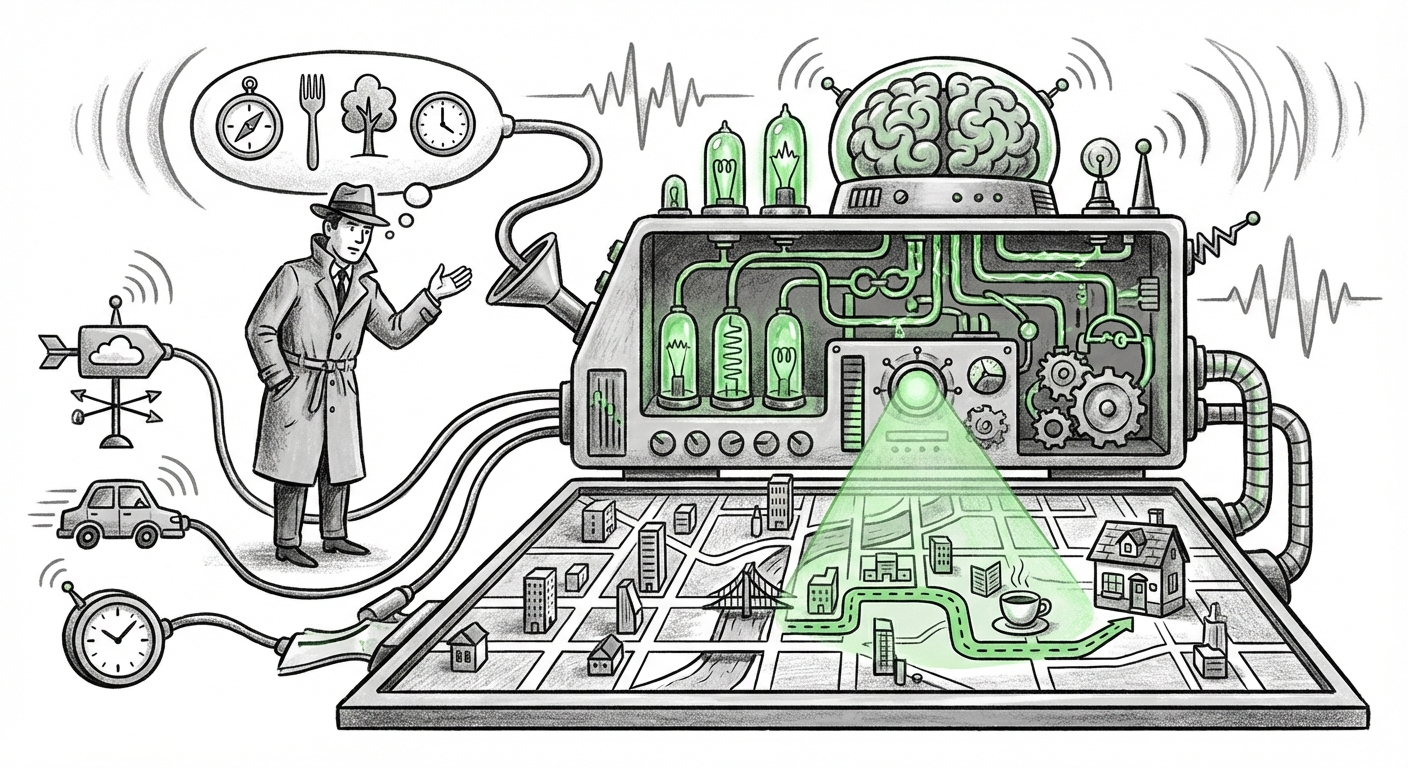
Chinese Algorithmic Efficiency vs. American Scale: What the Next Phase of Frontier AI Really Means
For the past few years, the story of artificial intelligence has been a story of size. Bigger models, bigger clusters, bigger electricity bills. The assumption was simple: whoever spends the most compute wins. That assumption is now being tested by a very different playbook coming out of China, one built on algorithmic efficiency rather than raw scale.
This is not a small technical footnote. It is one of the most important strategic questions in technology right now. If you can get the same results with far less computing power, then the advantage of simply owning more chips shrinks. And when that advantage shrinks, the whole economics of AI changes, for companies, for countries, and for anyone planning to build with these systems.
Let's break down what's actually happening, why it matters, and what smart businesses should do about it.
Two Roads to the Frontier
Think of frontier AI as a mountain peak. There are two ways to get there.
The American approach has been to build a wider, taller, more powerful road. Pour in enormous amounts of computing power. Train on massive datasets. Scale up until the model gets smart. This approach works, and it has produced remarkable results. But it is expensive, it is power-hungry, and it depends on access to the most advanced chips in the world.
The Chinese approach, shaped in part by limits on access to top-tier hardware, has leaned harder into cleverness. Better training methods. Smarter use of the data you already have. Architectural tricks that squeeze more performance out of fewer resources. In other words: if you can't buy a bigger engine, you rebuild the car so it goes faster on less fuel.
Here's the key insight. These two strategies are not opposites, they are competing answers to the same question: what actually drives intelligence in a machine?
Why Efficiency Suddenly Matters to Everyone
For a long time, the AI industry treated efficiency work as a second-order concern. Nobody worried too much about squeezing costs when the goal was simply to reach the next level of capability. Efficiency was something you did later, once the frontier was secure.
That attitude is changing fast. There are three reasons.
1. The cost curve is becoming a business problem
Training and running frontier models is enormously expensive. Every dollar spent on compute is a dollar not spent on products, people, or distribution. When efficiency techniques improve, they don't just help the labs chasing the frontier, they lower costs for every company that wants to use AI. Cheaper inference means more use cases become profitable.
2. Hardware access is not guaranteed
The most advanced chips are concentrated in a small number of hands and are subject to export restrictions. Any organization that assumes unlimited access to the very best hardware is building on sand. Efficiency-focused research is, in part, a hedge against that risk, and hedges tend to become strategies over time.
3. Efficiency compounds
Scale gives you a bigger single jump. Efficiency gives you a repeating advantage. Every improvement in training methods or model architecture makes the next generation cheaper to build, which frees up resources for the generation after that. Over several cycles, compounding improvements can close gaps that looked permanent.
The Scale Playbook Isn't Dead, It's Changing Shape
It would be a mistake to read the efficiency story as "scale no longer matters." It does. Massive compute still buys you things that clever engineering alone struggles to match, especially at the very top of the capability ladder.
What's really happening is a merge. The most competitive labs, on both sides of the Pacific, are learning from each other. American teams are investing heavily in efficiency research. Chinese teams are still acquiring as much compute as they can. The dividing line is blurrier than the headlines suggest.
The strategic question for the next few years is not "which approach wins?" It is: how quickly does efficiency progress erode the returns on pure scale?
If efficiency gains arrive faster than hardware advantages can be extended, the field tightens. If hardware keeps leaping ahead, scale stays dominant. Nobody knows the exact answer yet, and that uncertainty is precisely why this is worth watching closely.
What This Means for Businesses
You don't need to pick a side in a geopolitical tech race to be affected by it. Here's what this shift means in practical terms.
AI will get cheaper, and cheaper AI changes your options
As efficiency techniques spread, the cost of running AI models should keep falling. That means tasks that aren't economical today, analyzing every customer conversation, reviewing every contract, monitoring every production line, become viable tomorrow. Builders should assume costs fall and plan for more AI usage, not less.
Model choice becomes a real strategic decision
When capability gaps narrow, the differences between models start to matter less than cost, speed, privacy, and control. That's good news for buyers. You can route different jobs to different models based on what each one does best and cheapest. This is already happening in mature AI teams, and it will become standard practice.
Proprietary data becomes the real moat
If the models themselves become more commoditized through efficiency, then the durable advantage shifts to what you feed them. Your own data, your own workflows, your own domain knowledge. The model is the engine; your data is the fuel. Companies that treat data as a strategic asset will win.
Smaller, specialized models get more attractive
Efficiency research has made it possible to do more with smaller models tuned for specific jobs. For many businesses, a focused model that runs cheaply and privately beats a giant general-purpose one. Expect more of this in regulated industries where data can't leave the building.
What It Means for Society
The efficiency-versus-scale dynamic has implications well beyond corporate strategy.
Access widens. When frontier-level performance becomes achievable with fewer resources, more countries, universities, and startups can participate. AI stops being a game only the wealthiest players can afford. That's broadly positive, though it also means more actors hold powerful tools.
Safety gets harder to manage. More capable systems in more hands is a governance challenge. Efficiency doesn't create the problem, but it accelerates the timeline for solving it. Rules, standards, and evaluation practices need to keep pace with how quickly the technology spreads.
Energy matters more than people think. The scale-heavy path has a real environmental cost. Efficiency-focused development is a rare case where competitive pressure and sustainability goals point in the same direction. That's worth encouraging.
Talent and ideas flow both ways. Research travels. Papers get published, techniques get copied, engineers move. Any strategy that assumes a permanent technical lead should be treated with skepticism, in either direction.
Actionable Insights: What to Do Now
- Assume falling costs. Build your AI plans around the expectation that inference gets cheaper and faster. Design systems that can swap models as costs change.
- Don't marry one vendor. Keep an abstraction layer so you can move work between models based on price, performance, and privacy needs.
- Invest in data quality now. Cleaning, labeling, and organizing your internal data is the highest-leverage AI work most companies can do, and it doesn't get cheaper by waiting.
- Watch efficiency research, not just benchmarks. The interesting news isn't always a new model announcement. It's a new training method that cuts costs by a meaningful margin.
- Plan for capability diffusion. If competitors can access similar models at similar prices, your differentiation has to come from process, product, and data, not from the model alone.
- Revisit your build-versus-buy math regularly. As efficiency improves, options that seemed too expensive a year ago may now make sense.
- Think about the second-order effects. Cheaper AI means more AI in more places. That changes customer expectations, hiring plans, and compliance requirements. Get ahead of it.
The Bigger Picture
The most useful way to think about this is not as a race between two countries, but as a convergence. Scale and efficiency are both instruments. The labs that figure out how to combine them, spending big where it counts, and getting clever everywhere else, will set the pace.
For everyone else, the message is simpler. The frontier is moving from "who has the most compute" toward "who can use compute best." That shift favors organizations that are willing to experiment, measure, and adapt, not just those with the biggest budgets.
The efficiency era of AI doesn't mean the technology gets less powerful. It means it gets more available. And when powerful tools become widely available, the winners are rarely the ones who owned the tool. They're the ones who figured out what to do with it first.