Google DeepMind's Dream-RSI: How AI Agents Now Learn by "Dreaming" About Past Attempts
The biggest bottleneck in artificial intelligence has never really been raw intelligence. It has been experience. A powerful AI model can answer questions, write code, and summarize documents, but it usually learns nothing lasting from the moment it just spent working for you. Every task starts close to zero. Every mistake can repeat itself forever.
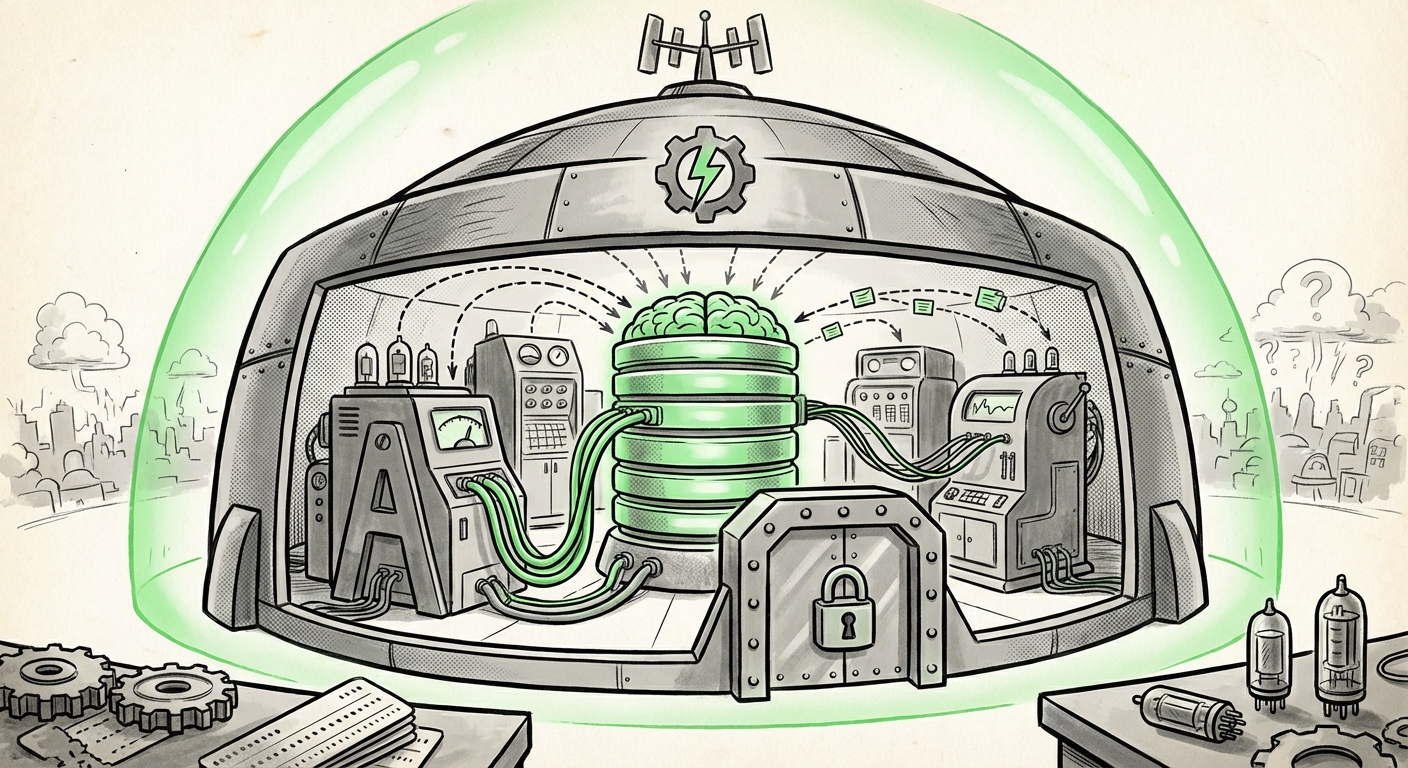
Google DeepMind's Dream-RSI goes after that exact problem. The idea, in plain terms, is that AI agents get better by "dreaming" about attempts they have already made. Instead of only learning from fresh trial and error in the real world, which is slow, costly, and sometimes impossible, the agent replays and reworks its own past efforts in an imagined space. It practices on its own history. Then it comes back sharper.
That sounds like a small engineering trick. It is not. It is one of the clearest signals yet of where AI is heading: away from static models that need to be retrained, and toward systems that quietly teach themselves while they work.
What "Dreaming" Actually Means Here
The word "dreaming" is doing a lot of work, so it is worth unpacking. In AI research, dreaming generally refers to an agent generating or simulating experience rather than only consuming real experience. The agent is not literally asleep. It is running through scenarios internally, imagined variations of things that already happened, and learning from the results.
Pair that with RSI, which in AI circles most commonly stands for recursive self-improvement: the idea that a system can use its own output to make itself better, in a loop. That loop is the part that makes people sit up straight. A system that can improve itself, even slightly, is not a tool anymore. It is a process.
Put the two together and Dream-RSI describes something specific and powerful: an agent that reviews its past attempts, re-imagines them under different conditions, extracts lessons, and folds those lessons back into how it approaches the next attempt. It is closer to how a chess player studies their own lost games than to how a standard chatbot responds to a prompt.
Why Learning From the Past Is a Breakthrough for AI Agents
Today's AI agents, the kind that browse, book, code, negotiate, or run multi-step workflows, have a memory problem. They take actions, see results, and then largely forget. The context window fills up, the session ends, and the learning evaporates.
Dream-RSI changes the shape of that loop in three ways:
- It compresses real-world cost. Real attempts are expensive. They burn compute, money, and time. Some of them, running a robot arm, executing a trade, sending a customer email, cannot be repeated casually. Dreaming lets the agent rehearse without paying the full price of failure.
- It multiplies scarce experience. If an agent succeeds once, that is one data point. If it can dream up twenty plausible variations of that success and test them internally, it has twenty data points from a single real event.
- It creates continuity. Improvement stops being a one-off training run and becomes a running habit. The agent carries lessons forward instead of resetting.
This is the difference between a worker who does the job and forgets you, and a worker who does the job, thinks about it on the way home, and shows up better tomorrow.
From Trial and Error to Reflection
For most of the last decade, making AI better meant one of two things: throw more data at it, or throw more compute at it. Both are blunt instruments. Both require someone external to run the process.
Dream-RSI points at a third path: reflection as a built-in feature. The agent becomes its own coach. It becomes its own source of training data. That is a meaningful shift in the economics of AI.
It also lines up with a broader pattern across the field. The most valuable AI systems in the near future will not be the ones with the largest raw models. They will be the ones with the best feedback loops, systems that keep getting better at your specific problem, in your specific environment, without a full rebuild every time something changes.
What This Means for the Future of AI
If agents can reliably improve from their own past attempts, several things follow.
1. Agents Get Their Own Careers
A deployed agent stops being a frozen product and starts being a long-running employee. It accumulates scar tissue. This makes AI more valuable over time, and it makes switching costs much higher. Once your agent has learned from thousands of your past cases, it is not easily replaced.
2. The Gap Between Demo and Deployment Narrows
Most AI pilots die because the real world is messier than the demo. Systems that learn from their own failures in that messy world are naturally more robust. They adapt instead of breaking.
3. Compute Becomes About Thinking, Not Just Training
If improvement happens through internal rehearsal, a growing share of compute goes toward an agent reasoning about its own experience. That reframes hardware demand and reframes what "using AI" even means. You are not just running a model. You are funding an ongoing education.
4. Evaluation Gets Much Harder
A system that changes itself is hard to certify. Regulators, auditors, and enterprise buyers all want to know what a system will do. Self-improving agents make that question slippery. This is not a reason to stop. It is a reason to build strong logging, versioning, and rollback from day one.
Practical Implications for Businesses
The immediate takeaway is not "wait for Dream-RSI." It is that the design principles behind it are already usable, and the organizations that adopt them early will pull ahead.
- Start capturing agent history now. Every action, prompt, outcome, and failure is training material for a future self-improving agent. If you are not storing it, you are throwing away your agent's memory.
- Reward reflection, not just output. Build workflows where the agent reviews what it did, scores itself, and proposes a better next attempt. Even without full self-improvement, this raises quality.
- Design for adaptation within limits. Let agents tune their approach, but keep the goals, guardrails, and permissions under human control. A system that rewrites its own strategy is very different from one that rewrites its own rules.
- Measure improvement curves, not just accuracy. The interesting question is no longer "how good is it?" It is "how fast does it get better?" That is the metric Dream-RSI makes central.
- Plan for compounding costs and compounding value. Continuous self-improvement uses compute continuously. Budget for it the way you budget for staff, not the way you buy software.
Risks Worth Watching
There is a real tension inside recursive self-improvement, and it deserves to be said plainly. A system that improves itself can also drift. Dreaming is imagination, and imagination can produce confident nonsense. If an agent rehearses a flawed idea enough times in its own head, it can harden that flaw into a habit, a kind of automated groupthink with only one participant.
There is also the risk of overfitting to the past. Agents trained to relive old attempts may become excellent at yesterday's problems and brittle at tomorrow's. Real environments shift. Dreaming must be paired with real-world grounding, or it becomes a very fast way to become very wrong.
And there is the accountability question. If an agent improves itself in ways its creators did not directly script, who is responsible when it makes a bad call? That question will not be answered by technology. It will be answered by policy, contracts, and law, and those are moving far more slowly than the models.
The Road Ahead
Dream-RSI is best understood as a marker rather than an endpoint. It signals that the frontier of AI is moving from knowledge to experience, from models that know a lot to agents that learn from doing.
That shift will not arrive all at once. It will show up first in narrow, high-repetition, low-risk domains: coding, customer support, research, data cleanup, process automation. Places where an agent can run thousands of attempts, dream about them, and quietly get better without anyone watching.
From there it spreads. And when it does, the companies that win will not be the ones with the biggest model. They will be the ones whose agents have the richest memories, the tightest feedback loops, and the clearest guardrails.
The age of the AI that gets better by doing the job is starting now. The organizations that treat their agents as learners, not just tools, will be the ones writing the rules for everyone else.