Daily AI Use in the U.S. Just Doubled in Six Months, Here's What That Really Means for the Future of AI
Something changed in how Americans use artificial intelligence, and it happened faster than almost anyone expected. Daily AI usage in the United States has more than doubled in just six months. That single sentence sounds simple. But it marks one of the most important shifts in the short history of consumer technology.
Doubling in half a year is not a gentle curve. It is a speed that changes the math of everything around it, how people work, how companies build products, how schools teach, how electricity is consumed, and how trust is earned. When a technology stops being something people try and becomes something people use every day, the rules of the game change.
This article breaks down what that doubling tells us, why daily usage matters more than any headline number, and what businesses, workers, and policymakers should do about it right now.
Why "Daily" Is the Only Word That Matters Here
Plenty of new technologies get a wave of curiosity. People sign up, poke around, and then quietly stop. That is the normal life cycle of most apps and gadgets. Daily usage is different. It means the tool has crossed from novelty into routine.
Think about the technologies that became part of daily life: search engines, smartphones, messaging apps, streaming video. None of them won because they were exciting. They won because they became habits. A habit is far stickier than a download. Once something is part of your morning, your commute, or your workday, removing it costs you real effort.
That is why a doubling in daily use deserves more attention than a much larger jump in total sign-ups. Sign-ups measure curiosity. Daily use measures dependence. And dependence is what builds markets, careers, and entire industries.
Doubling Is a Signal, Not Just a Statistic
When a number doubles in six months, the interesting question is not the number itself. It is what has to be true for that to happen.
Growth like that usually requires three things working at once. First, the tool has to be genuinely useful, not just impressive in a demo. Second, the friction to using it has to be low enough that people reach for it without thinking. Third, the value has to show up quickly, often within seconds.
All three conditions appear to be in place. The tools have gotten better at everyday tasks. They are easier to reach, often built into the software people already use. And the payoff, a draft written, a question answered, a confusing document explained, arrives fast.
There is also a social layer. Once enough people around you use AI daily, using it stops feeling unusual. It becomes expected. That shift in norms is often the real accelerator. It turns a personal choice into a group behavior, and group behavior is much harder to reverse.
What Changes When AI Becomes a Daily Routine
The first draft becomes free
Most knowledge work involves producing a first attempt at something: an email, a plan, a summary, a bit of code, a slide deck. That first attempt used to be the expensive part. It required staring at a blank page. When AI handles the blank page, the cost of starting collapses.
That sounds small. It is not. When starting is cheap, people start more things. They test more ideas, write more often, and explore options they would have skipped before. Over time, that changes the volume and the variety of work a single person can produce.
Questions get asked more freely
People hesitate to ask a colleague a basic question. They do not hesitate to ask a machine. Daily AI use means millions of small questions get answered that would otherwise have gone unasked, how to format a spreadsheet, what a contract clause means, how to phrase something politely.
That is a quiet productivity gain that rarely shows up in official statistics. It shows up in confidence and in speed.
Skill floors rise, and so do skill ceilings
When a tool raises the floor, beginners produce work that used to require experience. When a tool raises the ceiling, experts take on work that used to require a team. Both effects are happening at once, and both are hard to measure.
What This Means for Businesses
For companies, a doubling of daily consumer use is a warning and an invitation at the same time.
The warning: your customers and employees are already using AI daily in their personal lives. Their expectations for your products, your support, and your internal tools are being set by that experience. A slow, confusing interface will feel worse than it did a year ago because the baseline has moved.
The invitation: habits spread. People who use AI daily at home bring that habit to work. That means adoption inside companies may require less convincing than leaders assume. What it requires more of is direction, clear guidance on what is allowed, what is reviewed, and what stays human.
Practical steps for organizations
- Map the real usage. Assume employees are already using AI tools, whether or not you approved them. Find out where.
- Publish simple rules. A short, clear policy beats a long, vague one. Say what data can never be entered and who signs off on customer-facing output.
- Train for judgment, not just prompts. The skill that matters is knowing when the output is good enough and when it is not.
- Measure tasks, not tools. Track time saved on specific workflows instead of counting how many people logged in.
- Keep a human in the loop where mistakes are costly. Legal, medical, financial, and safety-critical decisions still need accountability.
What It Means for Workers
The honest answer is that this shift rewards a particular kind of worker: someone who is good at judging quality, framing problems clearly, and checking work carefully. Producing a first draft is becoming cheaper. Deciding whether that draft is correct is becoming more valuable.
This is not a story about AI replacing everyone. It is a story about tasks moving. Routine drafting, summarizing, and formatting are shifting toward machines. Verification, context, relationships, and accountability are shifting toward people. Workers who lean into the second group tend to do better through these transitions.
The most practical move for most people is not to master every new tool. It is to build one durable habit: use AI daily for something real in your work, and get faster at spotting when it is wrong.
The Friction Points Nobody Should Ignore
Rapid adoption always creates pressure. A doubling of daily use in six months puts strain on several systems at once.
Accuracy and trust
AI systems can produce confident, well-written answers that are simply incorrect. As usage grows, so does the number of people who could be misled. The fix is not to slow adoption, it is to build better habits of verification and clearer signals about when output has been checked.
Privacy and data
Daily use means daily data. Every conversation adds to the record of what people are thinking about, working on, and worried about. Companies and platforms will face growing pressure to explain clearly what happens to that information and to give users real control over it.
Energy and infrastructure
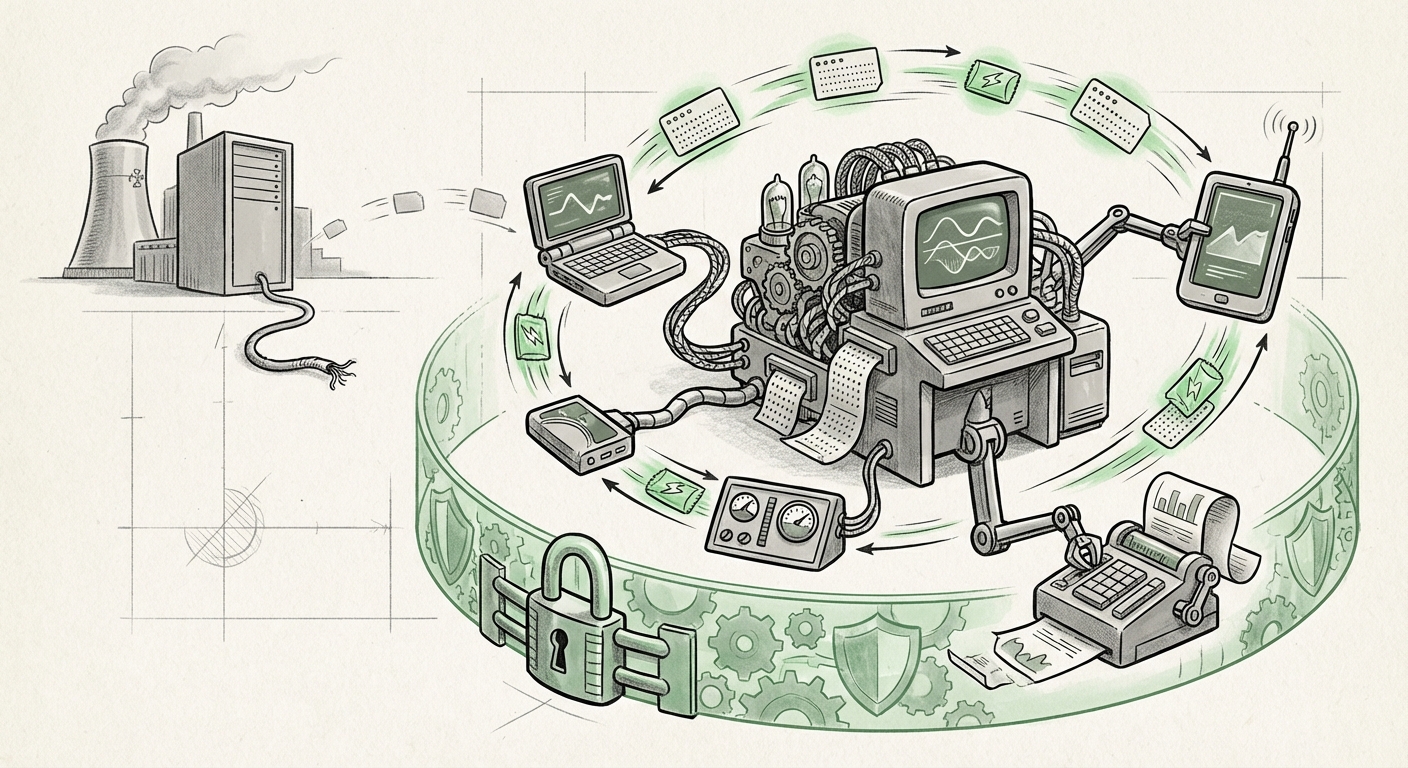
More daily use means more computing demand. That puts pressure on data centers, power grids, and hardware supply chains. These are physical constraints, and physical constraints move slower than software. Expect this to become a bigger part of the conversation as usage climbs.
Concentration of power
When a small number of systems become part of daily life for a large population, questions about competition, openness, and accountability follow naturally. This is a governance issue as much as a technology one.
What to Watch Next
If daily usage has already doubled once in six months, the next six months matter enormously. Here is what to keep an eye on.
- Whether the curve flattens or keeps climbing. Early doubling is easier than later doubling. Sustained growth signals real, lasting integration.
- Whether usage spreads beyond early adopters. The clearest sign of maturity is when daily use becomes common across age groups, income levels, and regions.
- Whether trust improves. Adoption can stall fast if people feel burned by bad answers or unclear data practices.
- Whether the workplace catches up. Enterprise adoption usually trails consumer habits. A narrowing gap would signal a bigger economic shift.
- Whether costs stay manageable. Cheap and reliable access is a big part of what makes a daily habit possible in the first place.
Actionable Insights: What to Do This Quarter
- For leaders: treat AI literacy as a core skill, not a side project. Budget for training the same way you budget for security.
- For product teams: design for the second week of use, not the first five minutes. Habit formation is the real product metric.
- For individuals: pick one recurring task and hand the first draft to AI every single day for a month. Measure the time you get back.
- For educators: teach verification alongside creation. The ability to check an answer is now a foundational skill.
- For policymakers: focus on transparency and accountability rather than trying to slow a behavior that is already mainstream.
- For investors and analysts: watch daily active usage ahead of total users. It is the better predictor of long-term value.
The Bigger Picture
Doubling daily usage in six months is the kind of number that looks modest in a headline and enormous in hindsight. It says that AI has stopped being a topic people discuss and started being a tool people reach for. That transition is where real change happens, not in the announcements, but in the ordinary moments of an ordinary day.
The future of AI is unlikely to be decided by the most impressive demo. It will be decided by whether the habit holds. If daily usage keeps climbing, the pressure on businesses, schools, power grids, and regulators will keep climbing with it. The organizations that prepare now will spend the next few years adapting. The ones that wait will spend them catching up.