Runway Wants AI Video to Be a Live Stream You Control, Here's Why That Changes Everything
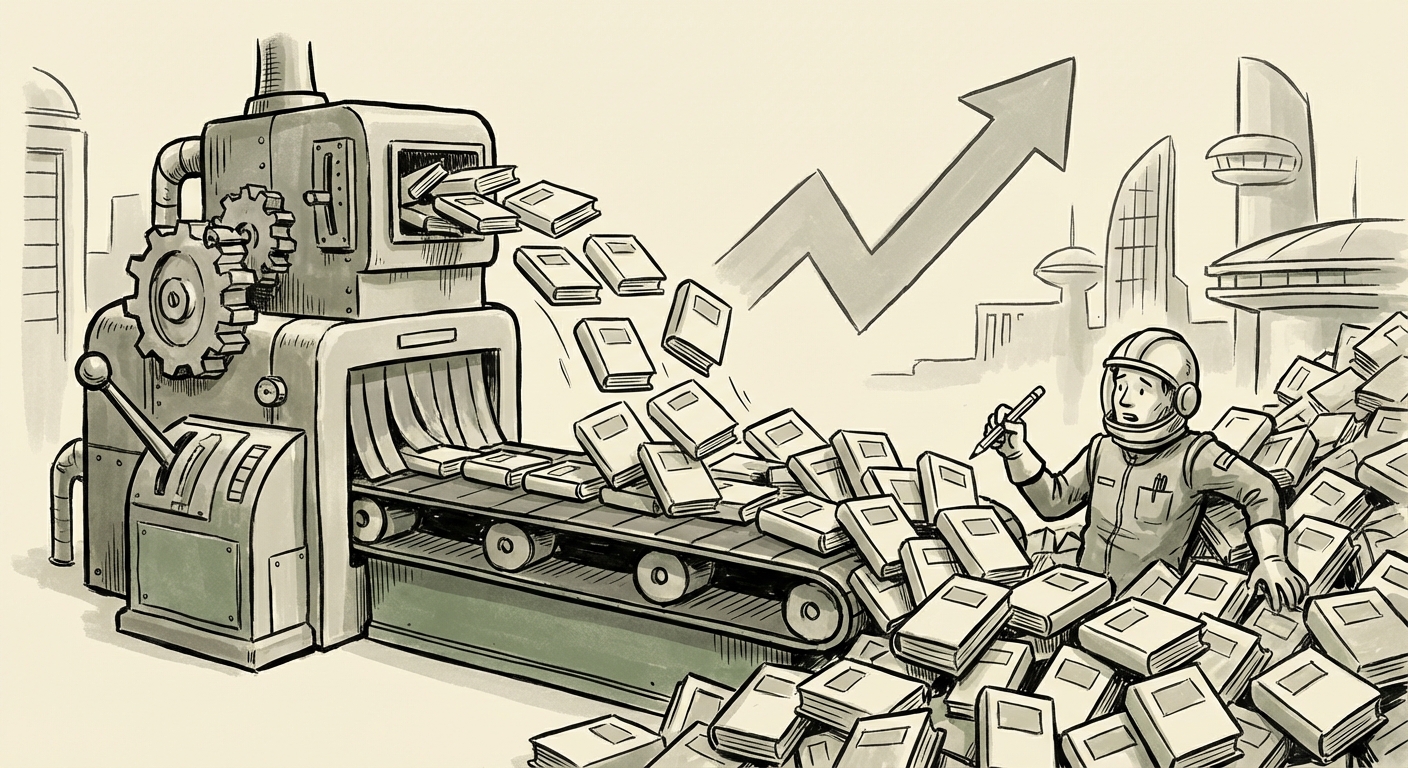
For the last few years, making video with AI has worked like a vending machine. You type a prompt, you wait, and a clip drops out. If you don't like it, you start over. It's powerful, but it's slow, and it's a one-way conversation.
Runway is now pointing at something very different: turning AI video generation into a live stream you control in real time. Instead of waiting for a finished clip, you'd be steering the picture as it happens, nudging the scene, changing the mood, moving the camera, reacting to what you see on screen, moment to moment.
That might sound like a feature upgrade. It's actually a category change. And it tells us a lot about where AI is heading next.
From "Generate a Clip" to "Direct a Stream"
Think about the difference between a photograph and a video call. One is frozen and finished. The other is alive, and you're inside it. That's roughly the jump from today's AI video tools to what real-time AI video would mean.
Today's workflow looks like this: write a prompt, hit go, wait, review, re-prompt, repeat. The AI is a factory. You order something, it builds it, you pick it up.
A live, controllable stream flips that. Now the AI is more like a camera crew, set designer, and lighting team rolled into one, all responding to your direction as the broadcast rolls. You're not ordering a product. You're performing with a tool.
That's a much harder problem to solve, and a much bigger prize.
Why Real-Time Is the Real Breakthrough
Latency Is the Product
In AI video, speed isn't a nice-to-have. It is the feature. If you turn a dial and the picture reacts a second later, the magic dies. You feel like you're filling out a form, not flying a plane.
Real-time control only works when the gap between your input and the visible result is small enough that your brain treats it as one action. That's the same reason video games feel good and laggy video calls feel awful. Runway's push toward live generation is really a push toward solving latency, and latency is the hardest wall in generative media.
AI Stops Being a Tool and Becomes an Instrument
A jukebox plays what you pick. A guitar plays what you feel. The difference is control in the moment.
Once AI video can be steered live, it stops being something you use and starts being something you play. That opens doors that clip-based generation simply can't reach:
- Live shows where the visuals change based on the crowd or the music.
- Interactive ads that shift depending on who's watching and what they do.
- Training simulations where the scenario reacts to the trainee's choices.
- Streams that never repeat, because they're being made as they're watched.
The Cost Curve Is Bending
Real-time anything used to be unthinkable. The fact that companies are now aiming at live AI video tells you something important: the cost of generating a frame is falling fast enough that "always on, always reacting" is starting to look possible rather than absurd. That curve is the quiet engine behind the whole idea.
The Hard Problems Nobody Gets to Skip
Wanting real-time AI video and shipping it are two very different things. Here's what stands in the way.
Quality vs. Speed
Big, beautiful, detailed video takes time to compute. Do it live and you usually have to make trade-offs. The winning teams will be the ones who find the sweet spot where the video looks good and keeps up.
Staying Consistent Over Time
A five-second clip can get away with a lot. A ten-minute live stream cannot. Faces have to stay the same face. Backgrounds can't melt. Objects can't randomly change shape. Long-form consistency is where most AI video still stumbles.
Control That Feels Natural
Nobody wants to type prompts in the middle of a live broadcast. Real-time control needs inputs that feel instinctive, a slider, a gesture, a voice command, a physical controller. The interface matters as much as the model.
Safety Without a Take-Back
When you generate a clip, you can review it before anyone sees it. When you generate live, it's out in the world the instant it exists. That removes the safety net. Live AI video needs real-time guardrails, not post-game cleanup.
What This Means for Businesses
Marketing and Retail
Imagine a product page where the video changes based on what a shopper clicks. Or a livestream that shows the same product in a hundred different styles, environments, and seasons, generated on the fly instead of shot on location. The cost of producing variations collapses. So does the excuse for showing everyone the same ad.
Entertainment and Gaming
Games already render live graphics in response to players. Adding live generative video means worlds that don't just react with physics, they react with imagery. Cutscenes that are never the same twice. Characters whose faces and settings shift with the story instead of a fixed asset library.
Training and Simulation
This may be the most underrated use case. Real-time AI video can create scenarios that respond to a trainee's decisions, a difficult customer, a safety incident, a surgical complication, a crisis drill. Practice gets closer to reality, and reality gets cheaper to rehearse.
Customer Experience
Instead of static help pages, a live visual assistant could show you exactly what to do, adapting as you go. The same technology that makes a live stream controllable makes an explainer personal.
What It Means for Society
Creators gain leverage. A small team, or even one person, could produce something that looks and feels like a live broadcast with a full production crew. That's a real shift in who gets to make things.
New jobs appear. "AI stream director" isn't a job title yet, but it will be. The skill won't be writing the perfect prompt, it'll be performing with the model: knowing when to push, when to hold, and how to keep a live picture coherent under pressure.
Trust gets harder. Live video has long been our strongest proof that something really happened. If live video can be generated and steered in the moment, that proof weakens. Expect a growing demand for verification tools, watermarks, and provenance signals that travel with a stream.
Energy and cost matter. Live generation runs continuously. That's a different cost profile from generating a clip once. Efficiency won't be a nice engineering detail, it'll decide which of these products survive.
Actionable Insights: How to Get Ready
- Stop thinking in clips, start thinking in systems. If video becomes live and reactive, your content strategy needs to be a set of rules and controls, not a folder of finished files.
- Find your latency-sensitive moment. Ask where in your business a one-second delay would change everything. That's where real-time video will hit first.
- Design the control surface now. The winning interface for live AI video probably isn't a text box. Prototype sliders, gestures, and voice.
- Build your safety plan for live content. Assume no review step. What catches a mistake in real time?
- Track compute economics. Live generation is a subscription to a cost, not a one-time purchase. Model it before you pitch it.
- Train your people to direct, not just prompt. The skill that matters is judgment under motion.
The Bigger Picture: AI You Conduct
There's a pattern across the whole AI field right now. It started with AI that answered questions. Then AI that made things, images, code, video. The next step is AI that responds while you act.
That's the real signal in Runway's direction. Turning AI video into a live stream you control isn't just a nicer way to make clips. It's a preview of how people will work with AI generally: not by submitting requests to a machine, but by collaborating with it in real time, the way a musician works with an instrument.
The technology isn't all the way there. Latency, consistency, cost, and safety are all real walls. But the direction is clear, and the companies that treat real-time AI as a different kind of product, not a faster version of the old one, will be the ones who define what comes next.
The vending machine is turning into a live broadcast studio. The question for businesses isn't whether they'll use it. It's whether they'll be ready to direct it.