AI Tutors Learn Faster When Simulated Students Make Real Mistakes
The hardest part of building a great AI tutor has never been the teaching. It has been the students.
To train a machine to explain fractions, debug code, or coach someone through a tricky paragraph, you need practice learners. You need people who get confused in specific ways, who stumble on the same idea three times before it clicks, who guess wrong for reasons a teacher can actually diagnose. Real students provide that, but they are slow, expensive, and impossible to scale. You cannot run a million tutoring sessions before lunch, and you certainly cannot ask a real child to fail the same problem five hundred times so a model can learn from it.
New work on AI tutors points to a different path. Instead of waiting for real learners, you build simulated students, digital learners designed to make realistic mistakes. These simulated students do not just get answers wrong at random. They get them wrong the way people actually do. And that single design choice appears to help AI tutors learn faster and teach better than training on clean, correct, well-behaved data ever could.
The Training Problem Nobody Talks About
Most AI systems learn from examples of good output. Show a model a thousand correct math solutions, and it learns what correct looks like. That works fine when the goal is to produce answers.
Teaching is different. A tutor's job is not to produce the right answer, it is to respond to a learner who does not have it yet. That means the model needs to see confusion, half-understanding, and creative wrongness. It needs to learn which explanation unlocks which mistake.
Real tutoring data is precious and thin. It is also private. Student conversations sit behind privacy rules in most countries, and rightly so. You cannot simply hoover up millions of vulnerable learning moments and feed them to a training run. That leaves AI tutors starved of exactly the data they need most: the messy, human, error-filled kind.
Simulated students solve the supply problem. They are infinite, cheap, and free of privacy concerns. The catch has always been realism. A simulated student that only makes silly mistakes teaches the tutor nothing useful. A simulated student that makes realistic mistakes teaches it almost everything.
What Makes a Simulated Student Realistic?
The interesting part of this approach is the discipline behind it. Building a useful simulated learner is not about making a chatbot that says "I don't get it." It is about modelling the specific ways understanding breaks down.
Think about how a real student fails at algebra. They might:
- Apply a rule that worked last week to a problem where it does not apply
- Drop a negative sign and carry the error forward without noticing
- Get the right answer for the wrong reason
- Understand the concept but freeze on the notation
- Say "I get it" and then immediately prove they do not
Each of those mistakes calls for a different teaching response. A tutor that has only ever seen correct work has no idea what to do with any of them.
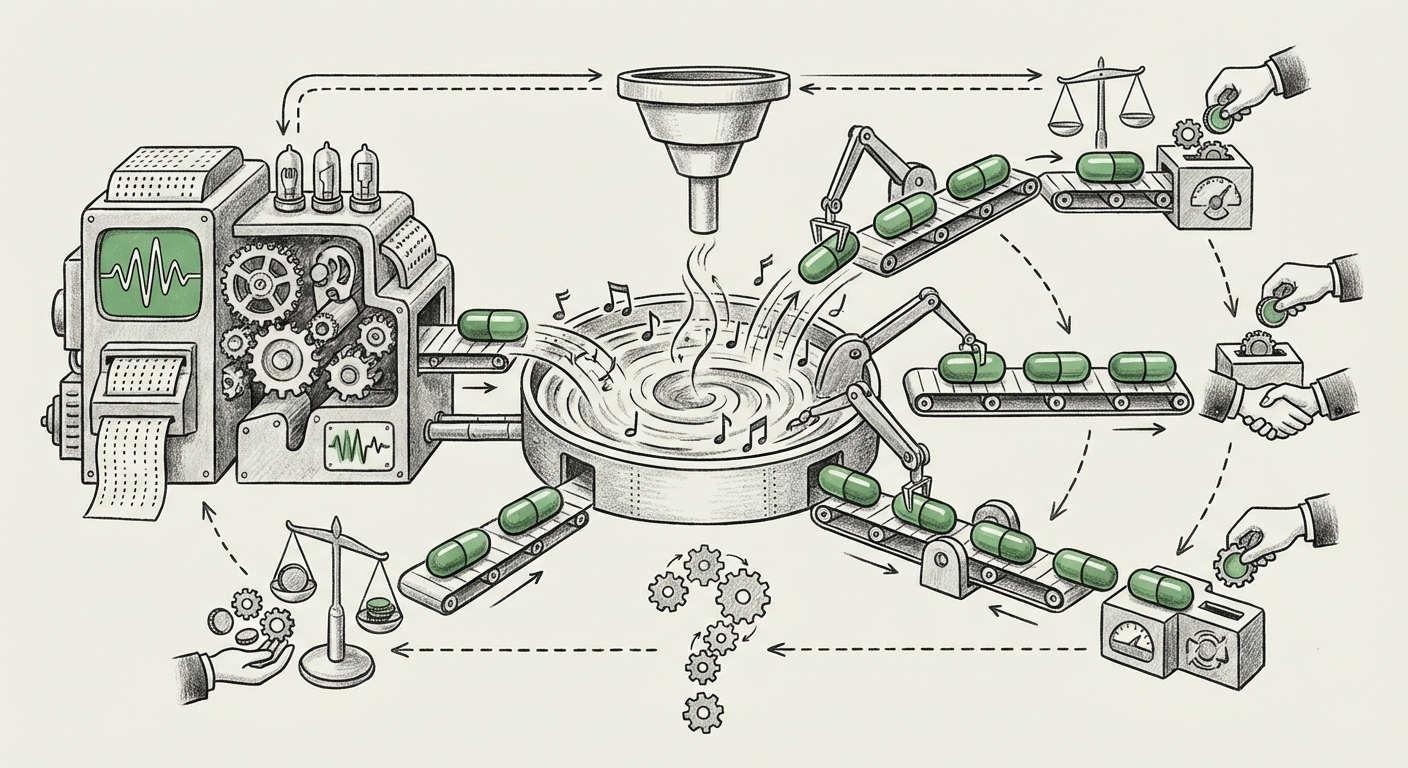
Good simulated students reproduce these patterns, and then respond to the tutor's explanation the way a real learner would. Fix the sign error gently and the simulated student adjusts. Bury them in jargon and the simulated student gets more confused. That feedback loop is what turns practice into skill. The AI tutor proposes an explanation, the simulated student reacts, and the tutor learns which moves actually move a learner forward.
Why Mistakes Are the Secret Ingredient
There is a deeper idea here that reaches far beyond education.
AI systems trained only on correct examples tend to be brittle. They can produce good answers but struggle to recognise bad ones. They have no feel for the space between "right" and "wrong", the space where most human reasoning actually lives.
Training against realistic failure changes that. When a tutor model repeatedly encounters plausible misconceptions, it has to build an internal map of how understanding works. It learns that a wrong answer is not noise. It is a signal about what the learner believes.
That is a fundamentally different capability. It is the difference between a system that knows the answer and a system that understands the person in front of it. And it is exactly the capability that businesses keep asking AI to have.
The Bigger Trend: Simulated Worlds as Training Grounds
This development is one visible piece of a much larger movement. Across the industry, the frontier of AI training is shifting from collecting data to generating environments.
Real-world data is running out in many domains. It is expensive, private, and slow. So teams are building simulated worlds where AI agents can practice endlessly: simulated customers, simulated software bugs, simulated negotiations, simulated patients, simulated classrooms. The question is no longer "do we have enough data?" It is "is our simulation realistic enough to teach the right lessons?"
Simulated students making realistic mistakes is a clean, well-defined example of that shift. Education happens to be an ideal testing ground because the quality of teaching is easy to measure, did the learner improve or not? That makes it a template for every other domain where AI has to interact with humans who are not at their best.
What This Means for Businesses
The practical implications stretch well past edtech.
Customer support and service AI
Support agents deal with frustrated, confused, and imprecise people all day. Training AI support systems against simulated customers who misunderstand products, describe problems badly, or ask the wrong question is the same play. A bot trained only on clean tickets will fall apart on real ones.
Sales and negotiation training
Sales coaching AI can be trained against simulated buyers who raise objections in realistic ways, change their minds, or go quiet. That produces coaching that responds to behaviour rather than reciting scripts.
Corporate learning and onboarding
Internal training platforms face the same data scarcity as schools. Simulated learners let companies generate training feedback loops without exposing employee data or waiting for real cohorts to cycle through.
Healthcare and safety-critical training
Where mistakes matter most, simulated practice is often the only ethical option. Realistic simulated failure is how professionals already train in aviation and medicine, AI tutors are now being built the same way.
The economics angle
The cost structure matters. If simulated students can replace or supplement expensive human tutoring data, the barrier to building a competent AI tutor drops sharply. More players can enter, quality can improve faster, and personalised tutoring becomes viable in markets that could never afford one-on-one human instruction.
The Risks and Blind Spots
None of this is free of danger, and leaders should be clear-eyed about it.
The simulation gap. Simulated students are not real students. If the simulation misses a whole category of real-world confusion, the tutor will be confident and wrong. Measuring against real learners is not optional, it is the only way to know whether the simulation is teaching anything true.
Reinforcing bias. If simulated students are built from data that reflects one culture, one language, or one learning style, the tutor will learn to teach that kind of student well and everyone else badly. Simulation makes scale easy, and scaling a blind spot is dangerous.
Optimising for the wrong target. A tutor can get very good at making simulated students improve without making real people learn. That is a classic case of a metric drifting away from the goal.
Model collapse and narrowness. Systems trained heavily on their own generated data risk losing diversity and becoming repetitive. The realism of the simulated mistakes is the safeguard, but it has to be maintained deliberately.
Actionable Insights: What to Do Now
- Treat realistic failure as a dataset, not a defect. If you are building any AI that interacts with humans, start collecting and modelling the ways people get things wrong, not just the ways they get things right.
- Build a simulation, but validate it against reality. Set up a strict comparison: how does your AI perform with simulated users versus real ones? If the gap is large, your simulation needs work before you scale.
- Diversify your simulated population. Different backgrounds, skill levels, and communication styles. A narrow simulation produces a narrow tutor.
- Measure outcomes, not activity. The only metric that matters is whether the human on the other end actually improved.
- Watch the privacy bonus. Simulation lets you train on realistic teaching situations without touching real student conversations. That is a genuine compliance advantage worth factoring into build-versus-buy decisions.
- Expect the pattern to spread. If it works for tutors, it will be applied to coaches, agents, assistants, and advisors. Plan your AI roadmap with simulated practice loops in mind.
The Bigger Picture
For years, the story of AI progress was about more data and bigger models. That story is changing. The next wave is about better practice, creating environments where AI systems can fail safely, repeatedly, and in ways that resemble how humans actually fail.
Simulated students that make realistic mistakes are a small, sharp example of that shift. They point to a future where the measure of an AI system is not how much it has read, but how well it has learned to respond to someone who does not understand yet.
That is a more human standard for AI. And it is a harder one to fake.