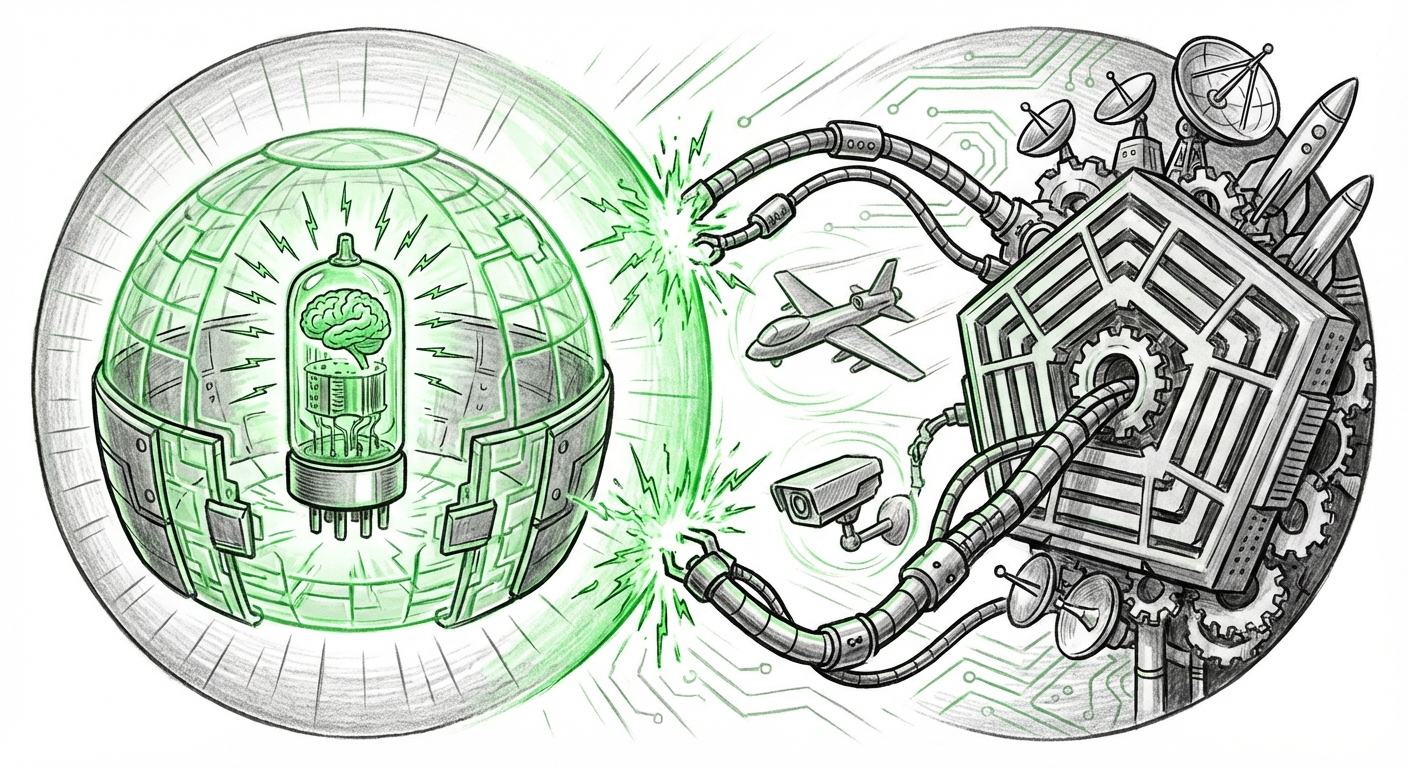
Trump's "AI Force" and AI Czar: What an Unchecked AI Push Means for the Future of AI
Something changed in how the United States government talks about artificial intelligence. The announcement of a new "AI Force" and plans to appoint an "AI czar", paired with an explicit push for unchecked AI growth, is not just another policy headline. It is a signal about which direction the world's largest AI economy intends to run, and how fast.
For anyone building with AI, buying AI, or simply living alongside it, this matters. Government posture shapes how fast models get deployed, what rules companies must follow, who gets access to compute, and how much risk the public is asked to absorb. When the posture shifts from careful to fast, the ripple effects reach every industry.
What Was Announced
The announcement centers on two things. First, an "AI Force", a structured government effort to organize AI capability and talent. Second, plans for an "AI czar", a single senior figure meant to coordinate AI strategy across the federal government.
Both come wrapped in a broader message: the priority is growth. The framing is not "how do we slow this down until we understand it," but "how do we go faster." That is a meaningful break from the regulation-first language that dominated much of the AI conversation in recent years.
It is worth being precise about what this is and isn't. These are announcements of intent and structure. The details, budgets, authorities, timelines, who fills the roles, will determine whether this becomes a real operating machine or a headline. But the direction is unmistakable, and direction is what markets and builders respond to first.
Inside the "AI Force" Idea
Governments have long used the word "force" for organized, mission-driven groups, task forces, workforces, cyber forces. Applying it to AI suggests several possible functions, and likely all of them together:
- A talent pipeline. Bringing AI-skilled people into government, where pay and speed have historically lagged the private sector.
- A procurement engine. Coordinating what agencies buy and build, so the government acts as one large customer instead of dozens of small ones.
- A capability hub. Centralizing expertise so that agencies without AI staff can borrow it rather than reinvent it.
- A delivery squad. Moving from strategy documents to working systems inside agencies.
The most consequential of these is likely procurement. When the government buys as one, it shapes entire markets. Vendors build to federal requirements. Standards set in Washington tend to travel, into state contracts, into industry practice, and sometimes into international norms.
There is also a talent angle that cuts both ways. A serious AI Force could pull scarce AI talent into public service. Or it could simply rebrand existing staff without changing the underlying constraints. The difference shows up in output, not org charts.
The "AI Czar": One Voice, One Strategy
The czar role is the more politically charged piece. The logic is straightforward: AI touches defense, health, education, energy, labor, trade, and civil rights. Without a single coordinating figure, agencies pull in different directions, duplicate effort, and contradict each other.
A czar can fix that. A czar can also concentrate enormous influence over which companies win, which safety questions get asked, and which concerns get shelved. The role's power depends entirely on its mandate: does the czar set policy, coordinate policy, or simply narrate it?
For businesses, this is the practical question. Who do you call? In a fragmented system, companies lobby many agencies. In a coordinated one, a handful of people become the choke point, and the opportunity.
The "Unchecked Growth" Signal
The phrase that should get the most attention is not "AI Force" or "czar." It is unchecked growth.
Every technology wave forces a trade-off between speed and safety. Aviation chose safety after disasters. Pharmaceuticals chose pre-market testing. Software chose speed and patched later. AI is currently being sorted into one of these categories, and the announcement leans hard toward the software model: ship fast, fix later, accept that some failures are the cost of progress.
That choice has real consequences. Faster deployment means faster learning, and faster harm when something goes wrong. It means fewer gates before a system touches a loan application, a medical triage queue, or a hiring decision. It means safety work shifts from compliance to culture, something companies do because they believe it, not because a rule forces them to.
Advocates of this approach argue that hesitation is itself a risk. If one country slows down and another doesn't, the cautious one loses the technology and the influence that comes with it. Critics argue that unchecked growth transfers risk from the companies that profit to the people who don't.
Both arguments are old. What's new is which one is currently winning.
What This Means for the Future of AI
Three shifts stand out.
1. Speed becomes the default setting
When the largest government in the AI economy signals that growth is the priority, the private sector recalibrates. Risk teams that spent two years building conservative review processes may find themselves asked to move faster. Startups that assumed regulatory headwinds may now assume tailwinds. The center of gravity in the AI industry moves from justify to deploy.
2. Government becomes a customer, not just a referee
An AI Force with procurement power turns the government into one of the largest buyers of AI in the world. That changes vendor strategy. It also changes what gets built, systems designed for federal needs, like document processing, fraud detection, logistics, and citizen services, will attract more investment.
3. Safety moves from rules to reputation
If rules loosen, the remaining guardrails are reputational and commercial. Companies will still need to manage AI risk, not because a regulator demands it, but because customers, employees, insurers, and courts do. The question is whether reputation is fast enough to catch problems that rules would have prevented.
Practical Implications for Businesses
The immediate takeaways are less about politics and more about planning.
- Assume regulatory divergence. A lighter federal posture does not mean no rules. States, other countries, and industry bodies will fill the gap, and they will not agree with each other. Build for multiple regimes, not one.
- Watch procurement closely. A coordinated AI Force creates a clearer, larger path to government revenue than the current maze. For vendors, that is a real opportunity.
- Prepare for regulatory whiplash. Policy direction can reverse with an election. Companies that build only for today's tailwinds get caught when the wind changes.
- Keep your own standards. When external rules lighten, internal governance becomes your only defense. Document your AI decisions. Know what your models do. If something goes wrong, "the rules allowed it" is a weak answer.
- Compete for talent against a new buyer. If the AI Force is serious about hiring, it becomes another bidder for scarce AI skills.
- Plan for energy and compute pressure. Faster AI growth means faster demand for power, chips, and data center capacity. Those constraints will bite before policy debates resolve.
What It Means for Society
For the public, the stakes are simpler to state and harder to solve. Faster AI deployment touches jobs, healthcare, education, policing, benefits decisions, and the information people see. Unchecked growth means more of those systems arrive before anyone has agreed on how to test them.
That does not automatically mean worse outcomes. Rapid deployment can also mean faster access to medical breakthroughs, better government services, and economic growth that funds public goods. The variable is not speed alone, it is whether anyone is watching.
The honest answer is that under an unchecked-growth posture, the watching shifts to civil society, journalists, researchers, courts, and companies themselves. Whether that is enough is the central open question of the next few years.
Actionable Insights
- Build a policy radar. Track federal AI announcements, but weight state and international moves just as heavily. Divergence is where the compliance cost lives.
- Separate speed from safety in your roadmap. You can ship fast and still keep human review on high-stakes decisions. The two are not opposites.
- Write down your AI principles now. Under lighter regulation, your documented standards become your best legal and reputational shield.
- Position for government demand. If you sell AI services, understand federal procurement. If you buy AI, expect vendors to prioritize federal-grade features.
- Invest in workforce transition early. Whether or not policy supports it, automation will reshape roles. Early retraining is cheaper than late reaction.
- Watch the czar's mandate. Whether that role mainly coordinates or actually decides will tell you more about US AI policy than any speech.
The Road Ahead
The announcement of an AI Force, an AI czar, and a push for unchecked AI growth is best understood as a declaration of national posture. It says the United States intends to compete on speed, and it accepts the trade-offs that come with that choice.
For the AI industry, this is a tailwind. For regulators and safety researchers, it is a warning. For businesses, it is a planning problem: how to move fast without breaking things you cannot repair. For the public, it is a question that will be answered in practice rather than in principle.
The next twelve months will reveal whether this becomes a functioning machine or a slogan. Either way, the direction is set, and everyone building, buying, or living with AI should plan accordingly.