AI Agent Software Just Got a Big Upgrade: What It Means for the Future of AI
Something quiet but important happened in the world of artificial intelligence: the wildly popular software that lets AI agents do real work on your behalf got a major upgrade. On the surface, that sounds like a routine software update. In reality, it is a signal flare. The age of AI that simply answers questions is ending. The age of AI that takes action is arriving fast, and upgrades like this one are how that future reaches millions of people at once.
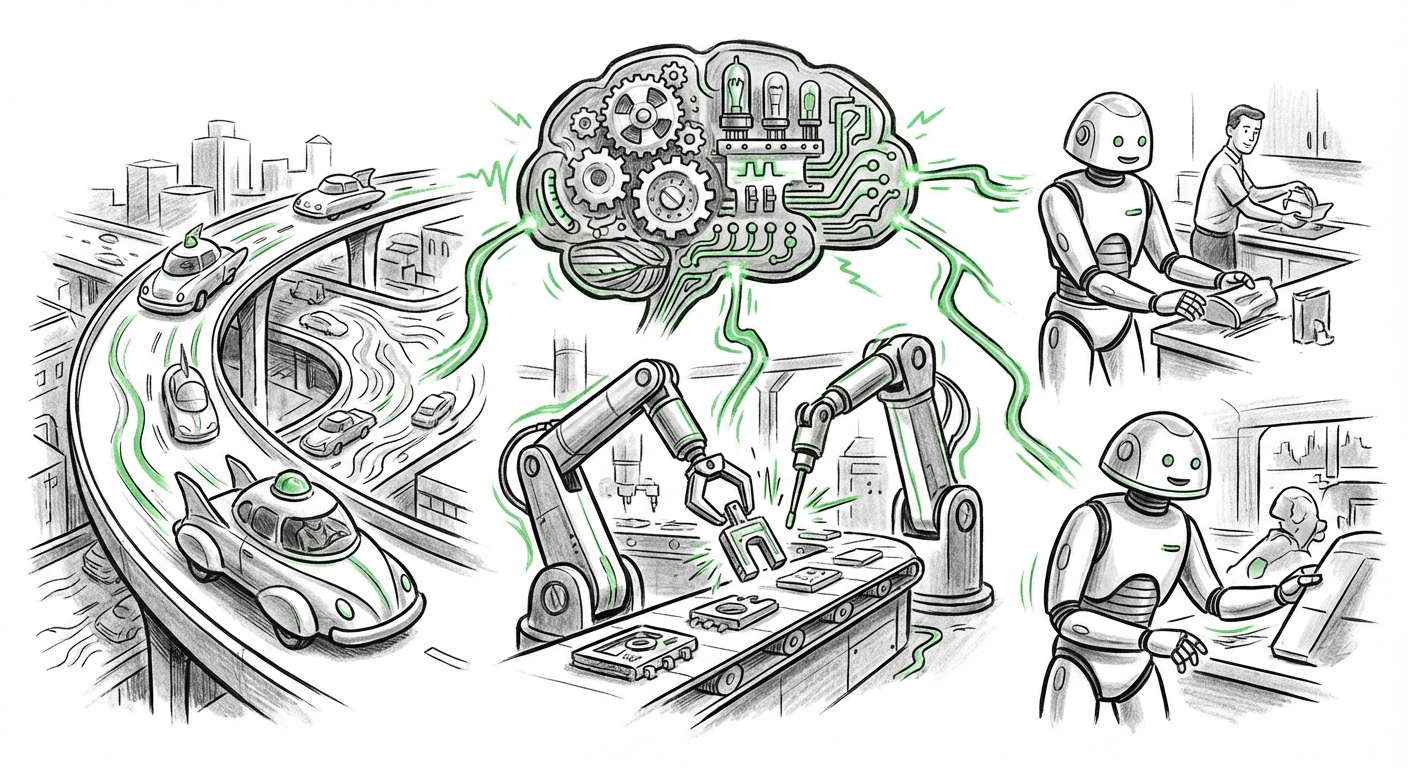
Here is the big idea in plain terms. For the past few years, most people interacted with AI by typing a prompt and reading a reply. You asked, it answered. You copied the answer, then did the work yourself. AI agents flip that model. Instead of handing you a to-do list, an agent opens the tools, clicks the buttons, fills the forms, checks the results, and reports back. You stop being the person who executes the plan. You become the person who approves it.
An upgrade to one of the most widely used agent platforms matters because of a simple rule of technology: distribution beats novelty. A clever new capability inside software that millions already use changes behavior overnight. A clever new capability inside software nobody has installed changes nothing. That is why this update deserves attention far beyond the developers who will install it first.
The Shift From Chatbots to Digital Coworkers
Think about the difference between a search engine and an employee. A search engine tells you where the answer might be. An employee actually goes and gets it. AI agents are being built to be the second thing.
This shift changes what "using AI" even means. When the technology only produced text, the value was measured in time saved on thinking and drafting. When the technology performs tasks, the value is measured in work completed, tickets closed, invoices reconciled, reports built, code tested, follow-ups sent. That is a completely different unit of measurement, and it is the one every business actually cares about.
Upgrades to popular agent software tend to chase the same three goals, and each one pushes the technology closer to being genuinely useful rather than merely impressive:
- Reliability. An agent that works 80% of the time is a novelty. An agent that works 99% of the time is infrastructure. Every serious upgrade is, at heart, a reliability play.
- Context and memory. Agents need to remember what happened last week, what the rules are, and what "done" looks like for this particular team. Memory turns a generic assistant into a colleague who knows the job.
- Connectivity. An agent locked inside one app is a toy. An agent that can move between the tools a business already runs on becomes a workflow engine.
When a widely used agent platform improves in these areas at once, the effect compounds. Better memory makes better tool use possible. Better tool use generates more context. More context makes the agent more reliable. That flywheel is exactly what separates an interesting demo from a product people depend on.
Why This Upgrade Matters More Than It Looks
Popular software upgrades do something that research breakthroughs cannot: they lower the skill floor. When a capability is baked into a tool that already has a friendly interface, a small business owner, a marketing manager, or a school administrator can use it without hiring an engineer. That is how a technology stops being a specialist's advantage and becomes a general-purpose utility.
There is a second effect too. Popular platforms become standards. When millions of people build their habits, integrations, and internal processes around one agent tool, that tool's quirks become the industry's shared vocabulary. Other vendors then build to match it. The upgrade does not just improve one product, it quietly sets expectations for every competitor.
And there is a third, less comfortable truth. Every step forward in agent capability narrows the gap between "this is helping me work" and "this is doing my work." That gap is where most of the coming debate about AI, jobs, trust, and regulation will live.
What It Means for Businesses
For companies, the practical question is not whether agents are impressive. It is where they belong in the org chart, or whether they belong there at all.
Start with the process, not the tool. The businesses that win with agents will be the ones that pick a specific, repetitive, rules-based workflow and hand it over completely, instead of sprinkling AI across everything and measuring nothing. A single fully automated workflow teaches an organization more than fifty half-finished experiments.
Expect a new role: agent operations. Someone has to decide what agents are allowed to do, watch what they actually do, and fix them when they drift. This is not a side task for IT. It is a real function, and it is forming in real time.
Redesign the handoffs. Most office work is not one task, it is a relay race between people and systems. Agents are at their best when they own a leg of that race end to end. The moment you ask them to improvise inside a messy, undocumented process, results get unpredictable.
Measure in hours and dollars, not vibes. The value of an agent is the labor it removes or the speed it adds. If you cannot name the number, you cannot defend the budget.
The Risks Nobody Gets to Skip
Software that takes action also makes mistakes with consequences. This is the part of the agent story that gets the least attention and deserves the most.
- Permissions. An agent with broad access is an agent that can do broad damage. Least-privilege access, giving an agent only the keys it truly needs, is not optional.
- Audit trails. If you cannot see what an agent did, when, and why, you cannot trust it with anything that matters.
- Manipulation. Agents read instructions from emails, documents, and web pages. Any of those can carry hidden instructions aimed at hijacking the agent. Guarding against this is an active engineering problem, not a solved one.
- Blast radius. Design workflows so that a failure stops at one step instead of cascading through your systems.
- Human checkpoints. Keep a person in the loop for anything irreversible, payments, deletions, public statements, legal commitments.
None of these are reasons to avoid agents. They are the price of admission. The organizations that treat governance as part of the build, rather than a cleanup job afterward, will be the ones that scale agents furthest.
What This Means for Society and Work
When capable agent software becomes a normal part of everyday tools, the change shows up at the level of tasks before it shows up at the level of jobs. Most roles are bundles of activities. Agents will absorb some of those activities long before they can absorb a whole role. That is both reassuring and disruptive: reassuring, because humans stay essential at the center of the work; disruptive, because the parts being absorbed are often the parts people were hired to do first.
The skills that rise in value are the ones agents struggle with, deciding what should be done, judging whether the output is actually good, handling ambiguity, negotiating with people, and taking responsibility when something goes wrong. In an agent-heavy workplace, taste and accountability become the scarce resources, not effort.
There is also a distribution question. If powerful agent software is affordable and easy to adopt, a small team can operate like a much larger one. That is genuinely good news for solo founders and small businesses. The flip side is that the advantage goes to whoever adopts fastest, which puts pressure on everyone else to keep pace.
Where This Is Heading
The upgrade cycle we are watching is a preview of the next phase: agents that work together. Instead of one agent doing one task, you will see a planner agent break a goal into steps and hand those steps to specialist agents, one that researches, one that writes, one that checks, one that executes. The bottleneck stops being raw intelligence and becomes coordination, trust, and clear standards for what "good" looks like.
Two things will decide how fast this arrives. First, interoperability, can agents from different vendors work in the same workflow without breaking? Second, evaluation, can a business prove an agent is doing its job well, not just that it is doing something? Whichever platforms make those two problems easier will win the next round of adoption.
Actionable Takeaways
- Pick one workflow this quarter and automate it end to end with an agent. Measure hours saved and errors caught.
- Inventory your tools and access rights. You cannot connect what you have not mapped, and you cannot secure what you have not limited.
- Write down your guardrails before you need them. Who approves irreversible actions? What gets logged? Who gets paged when something breaks?
- Assign ownership. Give one person or team responsibility for how agents behave across the company.
- Train people to supervise, not just prompt. Reviewing and correcting agent work is a skill, and it is the skill most teams are missing.
- Watch the popular platforms closely. Their upgrades set the baseline for what every business will soon consider normal.
The Bottom Line
A major upgrade to wildly popular AI agent software is not just a product milestone. It is a distribution event. It pushes real autonomy, software that acts, not just answers, into the hands of millions of ordinary users and businesses. That is how the agent era stops being a talking point and starts being a Tuesday.
The winners in this next phase will not be the people who wait for agents to be perfect. They will be the ones who deploy them deliberately, guardrails included, and learn fast in the messy middle. The tools just got better. What happens next depends on what we build with them.