Lab-Grown Neurons Just Took On AI Video: What This Tiny Software Layer Means for the Future of AI
Something strange and important is happening at the edge of artificial intelligence. Instead of only building bigger chips and bigger data centers, researchers are growing living brain cells in a dish and teaching them to help with one of the most demanding jobs in modern computing: AI video.
The latest development is a tiny software layer built from lab-grown neurons that promises to make AI video generation faster and cheaper. It is a small piece of technology with an outsized message. The future of AI may not be silicon alone. It may be a blend of silicon and biology.
This article breaks down what this development is, why AI video is such a hard problem in the first place, and what it means for the future of AI and for the businesses that will depend on it.
What Actually Was Announced
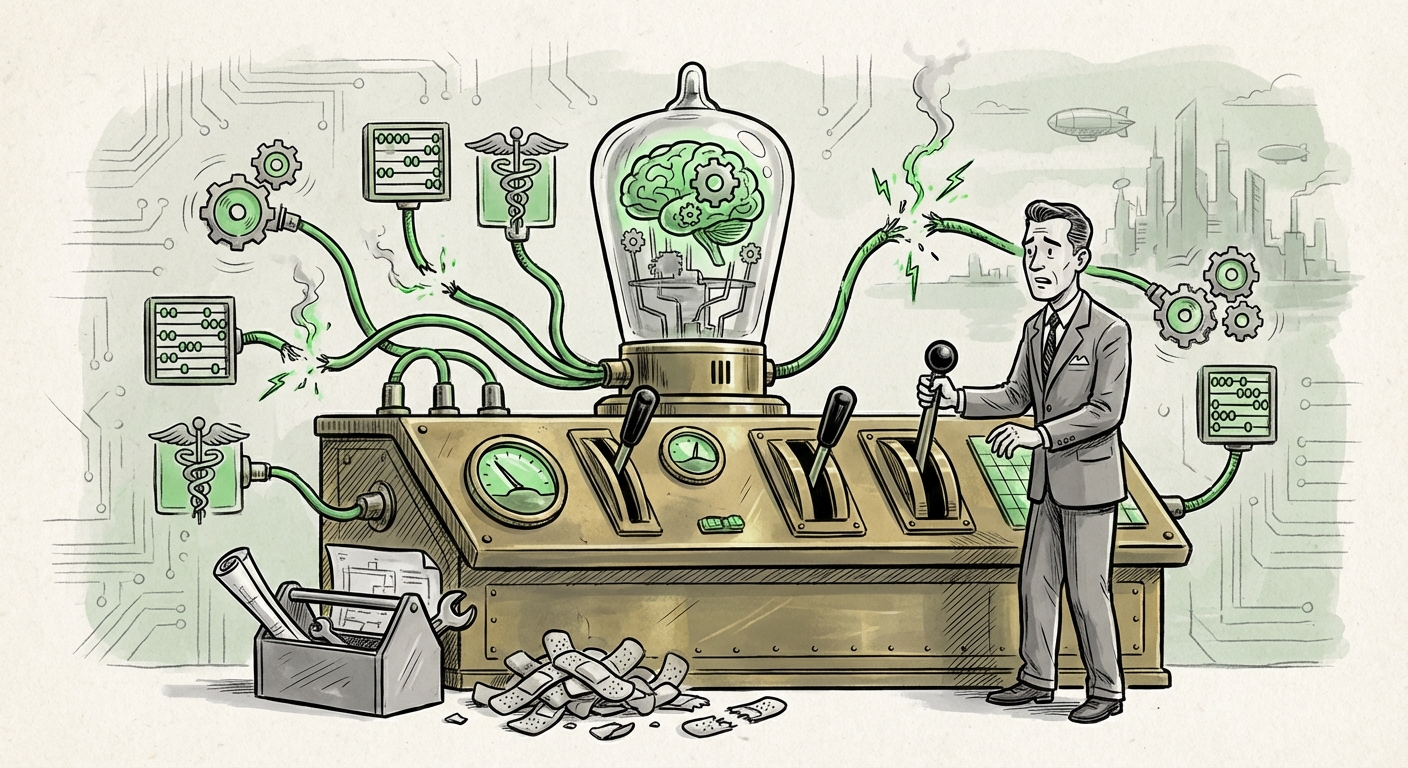
At its core, the news is about a software layer, a thin piece of code that sits between conventional AI systems and a network of lab-grown neurons. A software layer is exactly what it sounds like: a thin layer of software. It is not a new app you download. It is a bridge.
That bridge does something simple to describe and hard to build. It translates regular computing signals into signals that living neurons can respond to, and it translates the neurons' responses back into something a normal computer can use. Think of it like a translator standing between two people who do not share a language.
The neurons in question are not taken from a person. They are grown in a laboratory, a controlled biological system, often described as a small cluster or culture of living nerve cells. These cells can send and receive electrical signals, which is the basic language of all brains.
The promise attached to this layer is specific: it is aimed at AI video, and it is aimed at making that video faster and cheaper. Those two words, faster and cheaper, are the whole story. They are also the two biggest pain points in the entire AI video field.
Why AI Video Is the Hardest Problem in AI
To understand why this news matters, you have to understand why video is such a beast.
Text is light. A paragraph of text is a few hundred words. An image is heavier ��� millions of pixels, each with a color value. But a video is different in kind, not just degree. A single second of smooth video can contain dozens of individual frames, and every frame must look right and stay consistent with the frame before it and the frame after it. If the lighting flickers, if a hand changes shape, if a face shifts between frames, the illusion collapses.
That means an AI video system is not just creating one picture. It is creating thousands of pictures that all have to agree with each other. Every extra second of video multiplies the work.
The result is a massive appetite for computing power. AI video generation is widely known as one of the most compute-hungry tasks in the entire AI industry. It burns through expensive hardware, it consumes huge amounts of electricity, and it takes real time to finish a job. That cost is why high-quality AI video has stayed mostly in the hands of big studios, well-funded labs, and companies willing to pay steep bills.
Make no mistake: the winners in AI will not necessarily be whoever has the smartest model. They will be whoever can run it cheaply enough to use it every day. That is the real battleground, and it is exactly the battleground this neuron-based layer is trying to enter.
Why Living Neurons Change the Math
Biological neurons are astonishing machines. A human brain runs on roughly the power of a small light bulb, yet it handles vision, language, motion, and memory all at once. No data center on Earth comes close to that efficiency per unit of energy.
That gap is the whole reason researchers are interested in biological computing. Living cells store and process information in a completely different way than a silicon chip does. Silicon is fast, precise, and predictable. Biology is messy, adaptive, and incredibly energy-frugal.
When you point that kind of hardware at video, a task built on patterns, motion, and timing, the fit starts to look natural. Video is about sequences and changes over time. So are neurons. Biological systems are designed for exactly that kind of flowing, real-time signal.
That is the theory behind the promise of faster, cheaper AI video. If even part of the work can be handed to a system that uses a fraction of the energy, the cost curve bends. And when a cost curve bends, an entire industry changes shape.
The Software Layer Is the Real Breakthrough
Here is the part that gets overlooked. Growing neurons is not new. Labs have been growing nerve cells and studying their signals for years. What has been missing is a practical way to connect them to the ordinary software the world actually runs on.
That is why the "tiny software layer" framing matters so much. It suggests the hard problem is no longer just biology. It is integration, the plumbing that lets a living system plug into a real product pipeline.
Think about how this plays out in practice. A company making AI video does not want to become a biology lab. They want to write the same code they always write and get better results. A software layer promises exactly that: the biology stays hidden behind an interface, and developers treat it like any other tool in their stack.
This is the classic pattern of every major technology shift. The winning layer is rarely the most exciting one. It is the one that makes the new thing easy to use. Electricity mattered when it reached homes through a standard plug. The internet mattered when browsers made it clickable. If lab-grown neurons become a normal part of AI, it will be because a layer like this made them boring.
What This Means for the Future of AI
Zoom out and three big shifts come into view.
1. AI Moves Beyond Silicon
For a decade, the story of AI has been a story about chips, more of them, faster ones, packed closer together. This development hints at a different road. Instead of only scaling silicon, the industry may start mixing in biological components for specific jobs where biology has an edge. Video is a natural first target because the pain is so acute.
2. Cost Becomes the Deciding Factor
The frontier of AI is shifting from "can we do this?" to "can we afford to do this at scale?" Every business leader watching AI budgets knows this. A technology that lowers the cost of video generation does not just improve a product, it opens the door to uses that were never economically possible.
3. Hybrid Systems Become Normal
The most likely near-term future is not biology replacing silicon. It is hybrid systems, where each part does what it does best. Silicon handles logic, control, and precision. Biological components handle pattern-heavy, energy-hungry work. The software layer is the glue that holds the two halves together.
Practical Implications for Businesses
You do not need to run a biology lab to be affected by this. Here is what it means on the ground.
- Video costs may fall. Cheaper generation means more video, more testing, and more personalization. Marketing, training, entertainment, and education all get cheaper to produce.
- Smaller players get a shot. When a capability gets cheaper, it stops being a luxury for giants. Startups and mid-size companies can compete on ideas rather than budgets.
- Speed changes workflows. Fast generation means creators can iterate in real time instead of waiting. Iteration speed is often the real competitive advantage.
- New infrastructure questions appear. If biological components enter the pipeline, companies will need to think about reliability, supply, and maintenance in ways that feel closer to farming than to servers.
- Watch the interfaces, not the headlines. The companies that win will be the ones that make new hardware easy to adopt through clean software.
Risks and Open Questions
This is early work, and honesty matters more than hype.
Living systems are fragile. Neurons need the right temperature, nutrients, and conditions. They can behave differently from one batch to the next. A data center runs 24/7 for years. A dish of cells does not. Turning biology into dependable infrastructure is a serious engineering challenge.
Reproducibility is a question. Silicon gives the same answer every time. Biology does not. For creative work that variability might be a feature. For business pipelines that need predictable results, it could be a problem.
Ethics and oversight matter. Whenever living tissue is used in computing, questions arise about how it should be treated, how it should be regulated, and where the line sits between a tool and something more. These conversations are already starting, and they will only grow louder as the technology matures.
Scale is unproven. A small working demonstration is not the same as a factory floor. The gap between a promising prototype and a dependable product is where most technologies die. This one has not crossed that gap yet.
Actionable Insights: What to Do Now
You do not need to act on lab-grown neurons today. But you should act on the trend they represent.
- Plan for falling AI video costs. If video generation gets dramatically cheaper, what would you build? Start sketching those use cases now so you are ready when the price drops.
- Track biological and hybrid computing. Follow developments in this space as a strategic signal, not a curiosity. It tells you where the cost curve is heading.
- Invest in integration skills. The value keeps flowing to people who can connect new tools to existing systems. That skill is durable no matter what the hardware is made of.
- Keep a hybrid mindset. Stop thinking in terms of one perfect technology. Ask which part of your workload belongs on which kind of machine.
- Stay grounded. Treat every bold claim as a hypothesis. The right posture is curious but measured, watching closely, spending slowly.
The Bigger Picture
The headline is about video. The deeper story is about the direction of computing itself.
For years, the entire AI industry has pushed in one direction: more silicon, more power, more money. That approach has produced remarkable results, but it is running into hard limits, limits of energy, cost, and physics. A tiny software layer built on lab-grown neurons is a signal that the industry may be ready to try something genuinely different.
It is too early to say whether biology becomes a standard part of the AI stack or remains a laboratory curiosity. But history is clear about one thing: when a technology promises to make something expensive cheaper, and something slow faster, it deserves attention. AI video is the first test case. It will not be the last.
The future of AI may not be built entirely in factories. Some of it may be grown.