OpenAI Calls for International Standards on Self-Improving AI, What It Means for the Future of AI
Imagine a tool that can redesign itself. Not just get a software update, but actually study how it works, spot its own weak spots, and write better versions of itself. That is the idea behind AI that could improve itself. And OpenAI is now calling for international standards to govern it.
That call, made in September 2026, is a big deal. It signals that the people building the most powerful AI systems think the technology is moving into territory where one company, or one country, cannot set the rules alone. This article breaks down what "self-improving AI" really means, why global standards are suddenly on the table, and what businesses and everyday people should take away from it.
Let's start with the basics, because a lot of the fear around this topic comes from fuzzy definitions.
What "AI That Can Improve Itself" Actually Means
Today's AI models are trained, then frozen. Engineers tweak them, retrain them, and ship new versions. A human is always in the loop, deciding what to change and when.
Self-improving AI flips part of that. In this scenario, an AI system helps do the work of AI research itself. It suggests better training methods. It writes and tests code. It spots patterns in its own failures and proposes fixes. Humans still supervise, but the pace of improvement stops being limited by how many engineers you can hire.
Think of it like a student who not only does the homework but also rewrites the textbook. That is powerful. It is also the kind of thing you want more than one set of eyes on.
There is a spectrum here. At the mild end, AI tools speed up research the way calculators speed up math. At the far end, systems could make meaningful changes to themselves with very little human input. Most experts put us somewhere in the early part of that range today. But the direction of travel is clear, and that is why OpenAI is asking for shared rules now rather than later.
Why OpenAI Is Asking for International Rules Instead of National Ones
AI does not respect borders. A model trained in one country can be used in another within seconds. Rules written in a single capital city are easy to route around. That mismatch is the core problem international standards are meant to solve.
There are a few practical reasons this push makes sense:
- Safety is a shared problem. If one lab cuts corners on testing, the consequences do not stay local. Shared standards create a floor everyone has to meet.
- Companies need one rulebook, not fifty. A firm building AI products for global customers currently faces a patchwork of rules. Common standards reduce cost and confusion.
- Trust drives adoption. Businesses and consumers adopt faster when they know there is a common way to check that a system is safe and honest.
- Speed is outrunning policy. Self-improving systems could change quickly. Rules made slowly will always lag behind. International coordination is one way to keep pace.
It is worth noting what a call for standards is not. It is not a call to stop building. It is a request for a shared language, how to test, how to document, how to report problems, so that progress and safety can move together instead of one dragging the other.
The Three Gaps Standards Would Need to Close
1. The Testing Gap
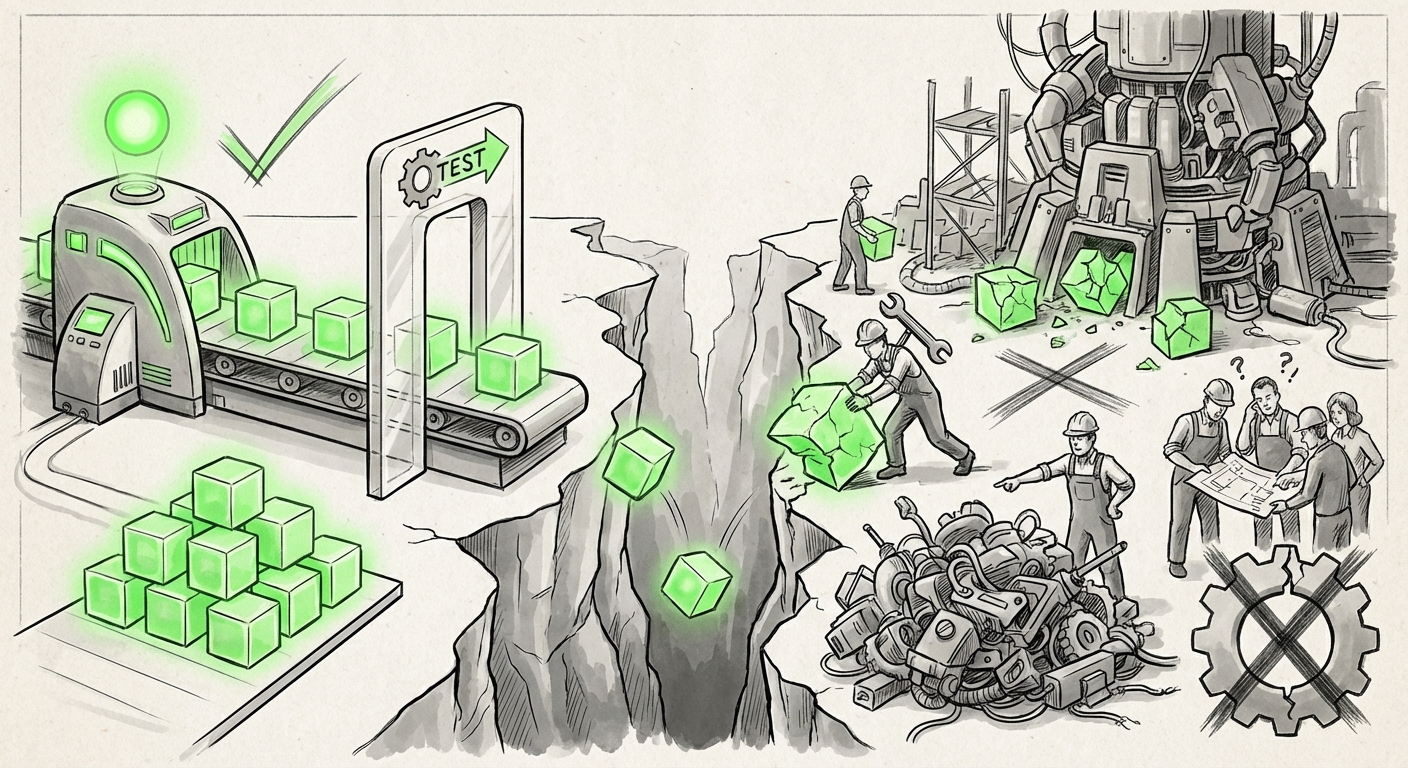
Right now, there is no common way to measure whether an advanced AI system is safe. Different labs run different tests and report results differently. International standards could create shared evaluation methods, a kind of crash test for AI. That would let regulators, customers, and the public compare systems on equal terms.
2. The Transparency Gap
If an AI system changes itself, who is told, and how? Standards could require clear records: what changed, why, and what testing followed. This matters because self-improvement makes it harder to point to a single moment when a system "became" something new. Documentation turns a murky process into an auditable one.
3. The Accountability Gap
When a system writes part of its own code, blame gets slippery. Was it the original developers? The team that approved the update? The system itself? Standards can assign responsibility before something goes wrong, rather than scrambling afterward. Clear lines make companies more careful and give the public something to rely on.
What This Means for Businesses
If you run a company, this story is not just about labs at the frontier. It touches your roadmap.
First, compliance will become a selling point. Just as food labels and safety certificates became normal, AI systems may soon come with standardised safety documentation. Buyers will ask for it. Vendors who have it will win deals faster.
Second, build for portability. If international standards emerge, products designed around one country's quirks may need rework. Building to a common baseline from the start saves money later.
Third, treat self-improvement as a supply chain issue. If the AI tools you rely on get better on their own, your costs and capabilities can shift quickly, in both directions. Keep an eye on how your vendors handle updates and testing.
Fourth, watch the talent and tooling angle. AI that helps build AI compresses timelines. Teams that learn to work alongside these systems, checking their output, directing their effort, will move faster than teams that do not.
What It Means for Society
For the public, the value of international standards is simple: predictability.
People already use AI to write, plan, learn, and get medical information. As systems get better at improving themselves, the question shifts from "can it do this?" to "who checked, and how do I know?" Shared standards are one of the few tools that can answer that question across many countries at once.
There is a fair debate to have about whether standards slow innovation or protect it. History leans toward the second. Building codes did not stop cities from growing. Food safety rules did not stop the food industry. They made it possible to scale without constant crisis.
There is also a real risk that standards become paperwork that looks good and changes nothing. The details matter: who writes the rules, who enforces them, and whether smaller countries and independent researchers get a seat at the table. A standard written only by the biggest players will be weaker than one built with broad input.
Actionable Insights: What to Do Now
- Track the standards conversation. Follow the international bodies and industry groups shaping AI rules. Early awareness beats late scrambling.
- Audit your AI use. Know which systems you rely on, what data they touch, and how they are updated. You cannot govern what you have not mapped.
- Ask vendors hard questions. How do they test models? How do they handle updates that change behaviour? Do they document changes?
- Build internal review habits. Even without formal rules, a light review process for AI outputs reduces risk and builds confidence.
- Train your people. The most valuable skill in the next few years is knowing when to trust an AI system and when to double-check it.
- Prepare for documentation. Start keeping simple records of how AI is used in your organisation. When standards arrive, you will already be ready.
The Road Ahead
Self-improving AI sits at the centre of the biggest open question in technology: how do you let a powerful tool get better, fast, without losing the ability to understand it?
OpenAI's call for international standards is a signal that the industry itself sees the stakes. It is an admission that no single company, and no single government, can manage this alone. That is a meaningful shift in tone, and it is likely to shape how AI is built, sold, and trusted for years to come.
The next phase will not be won by whoever builds the fastest system. It will be won by whoever builds a system the world feels safe enough to use at scale. Standards are boring on paper. In practice, they are how big technologies grow up.
Watch this space. The rules being written now, or not written, will decide what the next decade of AI looks like.