Xiaomi's Affordable Flagship AI Tops the Open Models, And Claude Helped Build It
Something strange and important just happened in the world of artificial intelligence. A hardware company best known for phones, scooters, and smart home gadgets has pushed its way to the front of the open model pack. Xiaomi's affordable flagship AI now leads the open models. And in a twist that says a lot about how AI is actually built in 2026, Anthropic says Claude helped get it there.
Read that again, because it contains two separate shocks. First, a consumer electronics maker is now a serious AI model builder. Second, one of the world's leading AI labs is openly saying its model was used to help create a competitor. That second point is the one that should keep strategists up at night, and it's the one that tells us where this whole industry is heading.
What Xiaomi Actually Pulled Off
Open models are the ones anyone can download, run, tweak, and build on. For the past few years, that space has been dominated by a handful of specialist labs. The idea that a company whose core business is selling devices could show up and lead that pack would have sounded far-fetched not long ago.
The word doing the heavy lifting here is affordable. Xiaomi has built its entire brand on delivering strong performance at prices that undercut the competition. If it can do the same thing with AI, deliver a flagship-class model at a fraction of the cost of building one from scratch, that changes the math for everyone.
Building a top-tier model the traditional way is brutally expensive. You need enormous amounts of compute, huge datasets, and a team of elite researchers. Very few organizations on Earth can afford that. So what does a company do when it wants to compete but doesn't want to spend a fortune? It learns from the models that already exist.
The Claude Connection: When Frontier Models Train Their Own Competition
Anthropic says Claude helped get Xiaomi's model there. That statement is quietly radical.
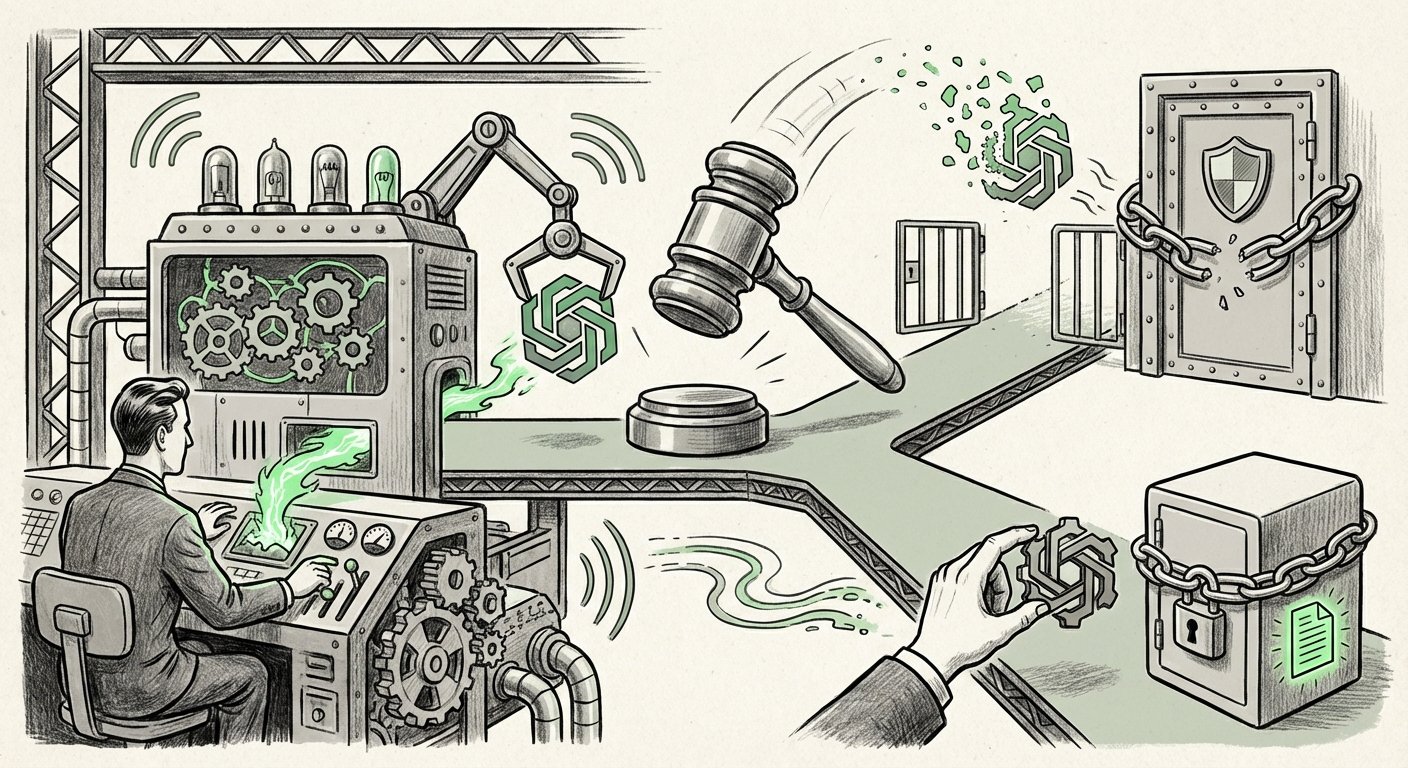
Here's the plain-English version of what's happening. A frontier model like Claude is very good at reasoning, writing, coding, and explaining itself. So builders use it as a teacher. They feed it problems, collect its high-quality answers, and use those answers to train a smaller, cheaper model. This is often called distillation or training on synthetic data, and it has become one of the most powerful shortcuts in modern AI.
The result is a kind of knowledge transfer. Capability that took one lab years and billions of dollars to develop gets compressed and passed along to another model in a fraction of the time and cost. The student model doesn't have to rediscover fire. It just has to learn from someone who already did.
That is why an affordable flagship is possible at all. You don't need to outspend the leaders if you can learn from them efficiently.
But there is an obvious tension buried in all this. If your model is the teacher, aren't you training your own replacement? Anthropic's willingness to say out loud that Claude helped build a leading open model suggests the company sees this differently, not as a threat to be hidden, but as a fact of the ecosystem. Once a model is deployed, you cannot fully control what people learn from it. The knowledge spreads.
This is one of the defining dynamics of the next few years. Frontier labs push the edge of what's possible. Open models follow quickly behind, absorb what they've learned, and then make that capability cheap for everyone else. The gap between "state of the art" and "widely available" keeps shrinking.
Why "Affordable" Is the Most Important Word in AI Right Now
For the first couple of years of the generative AI boom, the story was about raw capability. Who had the smartest model? That race still matters, but a second race has taken over: who can deliver good-enough intelligence at a price that makes sense for real work?
Think about it from a business perspective. A small clinic, a regional law firm, a mid-sized factory, a school district, none of these can justify enormous AI bills. But all of them have tasks that would benefit from a capable model running locally, cheaply, and privately. An affordable flagship open model is exactly the tool that unlocks them.
And "open" matters just as much as "affordable." When you can download a model and run it on your own hardware, three things change:
- Cost becomes predictable. You pay for your own machines, not per query. Heavy usage stops being frightening.
- Privacy becomes possible. Sensitive data never leaves your building. For healthcare, finance, and government, that's often the difference between "can't use AI" and "can."
- Control becomes real. You can fine-tune the model on your own data, audit it, and keep it running even if a vendor changes direction.
Xiaomi's move signals that this tier of AI is no longer a research curiosity. It's a product category, and hardware companies, not just software labs, intend to compete in it.
The Open Model Race Is Now a Global Race
There's a geographic story here too. The open model ecosystem has become genuinely international. Different regions are building models tuned to their own languages, regulations, and markets. That diversity is healthy, and it's accelerating.
When a major consumer electronics company from one of the world's largest device markets decides to lead in open models, you should expect that capability to spread through its own product line, phones, home devices, cars, wearables. On-device AI that understands you, works offline, and costs nothing per query becomes a selling point rather than a subscription.
This is the part that makes Xiaomi's positioning so interesting. It isn't just releasing a model into the void. It has millions of devices to put it on. The model and the hardware reinforce each other.
What This Means for Businesses
If you run an organization of any size, here's the practical takeaway: the assumption that serious AI requires a serious budget is getting weaker by the month.
Three shifts are worth planning around.
1. The floor keeps rising
Capability that used to be premium is becoming baseline. A model you can run cheaply today rivals what the best systems could do not that long ago. If your AI strategy was built on "we'll wait until it's affordable," that moment is arriving.
2. The moat is your data, not your model
When strong models are widely available, the model stops being your advantage. Your proprietary data, your workflows, and your understanding of your customers become the differentiator. The winners will be the organizations that pair a good open model with knowledge nobody else has.
3. Vendor lock-in is a choice, not a requirement
Open models give you an exit ramp. Smart teams are designing systems so the model can be swapped. That keeps pricing honest and protects you if a provider changes terms or disappears.
What This Means for Society
There are genuine upsides. Cheap, capable, locally runnable AI is a democratizing force. A student in a small town, a solo founder, a rural clinic, all of them get access to tools that were previously reserved for well-funded institutions. That's a big deal.
There are also real questions we shouldn't wave away. If frontier models are effectively teaching open models, what does that mean for the labs making the investment? Do they keep leading if their work propagates so quickly? The answer so far seems to be that they keep moving the frontier forward while the rest of the world catches up to last year's edge.
And there are open questions about distillation itself, how much of a model's capability can be learned from another model's outputs, and where the line between "learning from" and "copying" sits. Those debates are only getting louder, and they will shape licensing, contracts, and possibly regulation in the years ahead.
Five Things to Watch Next
- Whether Xiaomi's lead holds. Open model rankings move fast. Holding the top spot is much harder than reaching it.
- How other frontier labs respond. If one lab openly credits its model for helping build a competitor, others will face the same question, and will have to decide whether to embrace it or fight it.
- Device-level AI. Watch for this model showing up inside phones and home hardware, running locally.
- Pricing pressure on closed models. When a strong open alternative exists, premium pricing gets harder to defend.
- Distillation rules. Terms of service and licensing around training on model outputs are likely to tighten.
Actionable Insights
If you want to act on this rather than just read about it, start here:
- Run a cost comparison. Take one real workflow you'd like to automate and price it against both a closed API and an open model on your own hardware. The answer may surprise you.
- Test an open model on your private data. Full control and no data leaving your environment is a different category of value than a raw score on a leaderboard.
- Design for swappability. Build your AI features so the underlying model is a replaceable component, not a foundation you're married to.
- Double down on proprietary data. The model is becoming a commodity. Your data is not.
- Watch the hardware layer. As device makers enter AI, the next wave of adoption may arrive through products people already own, not through a new subscription.
The Bigger Picture
The most striking thing about this story isn't that Xiaomi built a strong model. It's the shape of the pipeline: frontier lab builds something powerful, that power gets passed to a cheaper model, an affordable flagship emerges, and it lands in the hands of millions of people through everyday devices.
That pipeline is now running fast. The distance between "cutting edge" and "available to everyone" is collapsing. And Anthropic's own acknowledgment that Claude helped build a leading open model is a signal that the industry has accepted this reality rather than fighting it.
For builders, the message is simple: the intelligence is getting cheaper. Your advantage will come from what you do with it. For everyone else, the message is that powerful AI is moving out of the data center and into the products in your pocket, and it's arriving faster than most predictions expected.