AI's Next Big Move: Jev, Gemini, and Paper2Agent Show How the Learning Loop Is Changing Everything
Something important is happening in artificial intelligence, and it is not just one new model or one new tool. It is a pattern. Three separate developments, an attention-grabbing system called Jev, the continuing evolution of the Gemini model family, and a clever tool called Paper2Agent, all point at the same idea: AI is moving out of the "look what I can do" stage and into a repeating loop of learning, building, and doing real work.
That loop is the real story. A single breakthrough is exciting for a week. A system that keeps improving itself, keeps getting plugged into new tools, and keeps turning knowledge into action is a different kind of thing entirely. It changes how companies plan, how workers build careers, and how fast the whole field moves.
Let us break down each piece and then look at what it all means.
The Learning Loop, Explained Simply
Think about how you get better at a job. You learn something, you try it, you see what worked, and you adjust. Then you do it again. Each round makes you a little sharper.
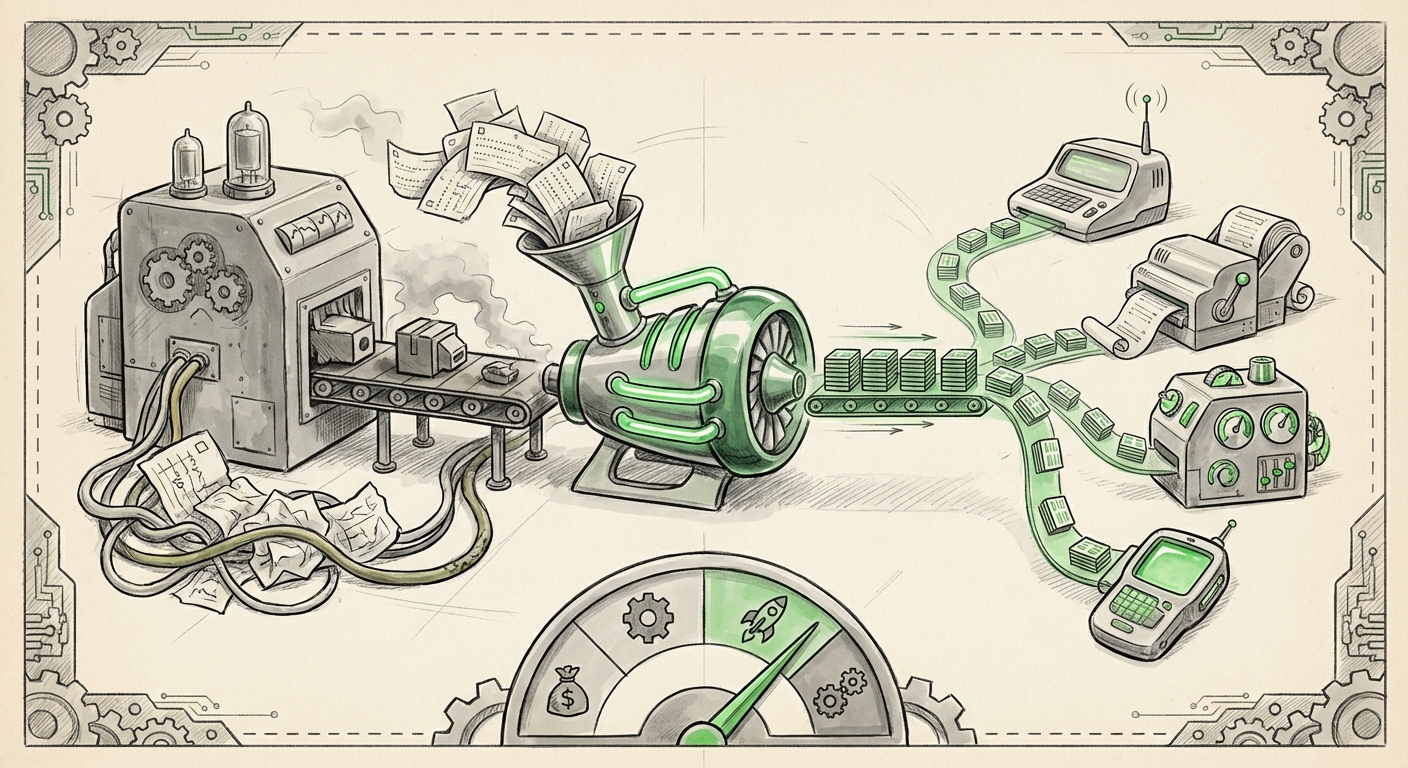
AI is now doing a version of that. Early AI models were frozen after training. What you got on day one was what you got forever. Today, the interesting work happens around the model, not just inside it. Models read documents, call software, check their own output, try again, and hand results to other AI systems. Each pass through the loop adds capability without anyone rebuilding the model from scratch.
This is what ties Jev, Gemini, and Paper2Agent together. One pushes what a model can do. One shows how far the foundation can stretch. One closes the gap between written research and working software. All three feed the loop.
Jev: The System Everyone Is Talking About
Jev is the wildcard in this group, the development that has people describing it in glowing terms. When a new AI system earns that kind of reaction, it is worth paying attention, but it is also worth being disciplined about what the excitement actually tells you.
Here is the useful way to read any "amazing" new AI announcement:
- Ask what it does, not what it scores. Benchmarks matter, but the real question is what task it performs that nobody could perform last quarter.
- Look for the loop. Does the system improve with use, or is it a fixed snapshot? Systems that learn from feedback and from their own environment are the ones that compound.
- Check whether it connects. A model that can call other tools, read your data, or run code is dramatically more valuable than one that only chats.
The reason a name like Jev travels so fast through the AI world is that it signals the frontier has moved again. Every time that happens, the practical ceiling for businesses rises too, usually within months, not years. The teams that track these moments and test them early are the ones who get the advantage.
Gemini: The Frontier Gets More Useful
Gemini represents a different kind of progress. It is not a surprise entrance; it is a steady climb. And that matters, because in AI, steady climbs are where real adoption happens.
Frontier model families like Gemini matter for three reasons. First, they handle many kinds of input, text, images, documents, code, audio, which means one system can serve many business needs instead of five separate tools. Second, they keep getting better at following detailed instructions, which is what makes them usable in regulated or high-stakes settings. Third, they become the foundation that everything else is built on top of.
That third point is the one people underestimate. When a strong general model is available, thousands of smaller tools and agents get built on it. The model becomes infrastructure, like electricity or cloud storage. You stop debating whether to use it and start debating what to build with it.
For a business, the practical takeaway is simple. You do not need to chase every model release. You do need to know which model family your products and workflows depend on, and you need a plan for swapping in better versions without rewriting everything. Build for the loop, not for the model.
Paper2Agent: Turning Reading Into Doing
Now for the piece with the most immediate practical punch. Paper2Agent addresses a problem that has slowed AI adoption for years: research moves faster than implementation.
Every week, new papers describe better methods for reasoning, search, coding, and automation. Almost none of that reaches a working product quickly. The gap between "a paper proved this works" and "we have this running in production" can be a year or more.
Paper2Agent attacks that gap directly. The idea is to take the knowledge in a research paper and turn it into an agent that can actually perform the described task, not just summarize the paper, but operate. That is a meaningful shift. It compresses the distance between an idea and a working tool from months to something much shorter.
Why this matters beyond research labs:
- Speed. Companies can test new techniques almost as soon as they appear.
- Access. You no longer need a specialist team to translate academic work into something usable.
- Compounding. Every paper becomes a potential new capability added to your stack, and those stack up fast.
The same principle applies far beyond papers. Contracts become agents that review contracts. Support manuals become agents that handle tickets. Standard operating procedures become agents that follow the steps. Anywhere there is written knowledge sitting unused, there is now a path to turning it into action.
Why These Three Belong in the Same Conversation
Line them up and the pattern is clear.
Jev shows the ceiling moving. New systems keep arriving that do things we did not expect so soon, which resets expectations across the industry.
Gemini shows the floor rising. Strong general models keep getting better, cheaper to use, and easier to build on, which pulls capability down to ordinary teams.
Paper2Agent shows the bridge being built. The distance between knowing something and doing it keeps shrinking.
Put those together and you get a fast-moving loop: a new capability appears, a general model makes it affordable, a tool turns it into a working agent, and the results feed back to improve the next round. That is not a single product launch. That is a system that accelerates itself.
What This Means for Businesses
If the loop is real, then planning in yearly cycles is too slow. Here is what to do instead.
Stop buying point tools. Start building reusable capability.
A tool that solves one problem today will be outdated in six months. A team that knows how to turn documents, data, and processes into agents can solve a new problem every month. Invest in the skill, not just the software.
Pick a foundation and stay flexible.
Choose a strong model family to build on, but keep the layer between your product and the model thin. That way, when a better version arrives, and it will, you upgrade in days, not quarters.
Audit your written knowledge.
Every manual, policy, report, and playbook in your organization is now raw material for an agent. Find the ones that describe repeatable work. Those are your fastest wins.
Build a testing habit.
New AI systems will keep arriving with big claims. Have a small, standing process to test them against real work. An hour of honest evaluation beats a month of headlines.
What This Means for Society
The learning loop has two sides.
The good side is access. When turning knowledge into working tools gets easier, small businesses, clinics, schools, and solo operators get capabilities that used to belong only to large firms with big budgets. That is a genuine leveling effect, and it is rare.
The harder side is pace. When tools improve on a loop, the skills that matter shift faster than training systems can keep up. The people who do well will not be the ones who memorized a specific tool. They will be the ones who can look at a new system, understand what it is for, and apply it to a real problem.
There is also a trust question. Systems that act, that read documents, make decisions, and complete tasks, need clear rules about when a human checks the work. The more the loop accelerates, the more important those checkpoints become. Speed without oversight is not progress.
Actionable Takeaways
- Follow the loop, not the headlines. Track which systems actually improve with use and connect to other tools.
- Test one new system a month. Small, regular experiments beat one big bet.
- Turn your documents into agents. Start with the most repetitive, best-documented process you have.
- Keep your architecture model-agnostic. Make upgrading a routine task, not a project.
- Train for judgment, not tool mastery. The ability to evaluate AI output is the durable skill.
- Set human checkpoints early. Decide now what AI can do alone and what needs a person.
The Bottom Line
Jev, Gemini, and Paper2Agent look like three unrelated stories. They are not. They are three views of the same shift: AI is becoming a loop that learns, builds, and acts, and that loop is speeding up.
For businesses, the winner will not be the company with the biggest AI budget. It will be the one that can absorb a new capability every month and put it to work. For individuals, the edge goes to people who can spot what a new system is good for and apply it fast.
The models will keep changing. The names will keep changing. The loop is the thing to watch, and it is already running.