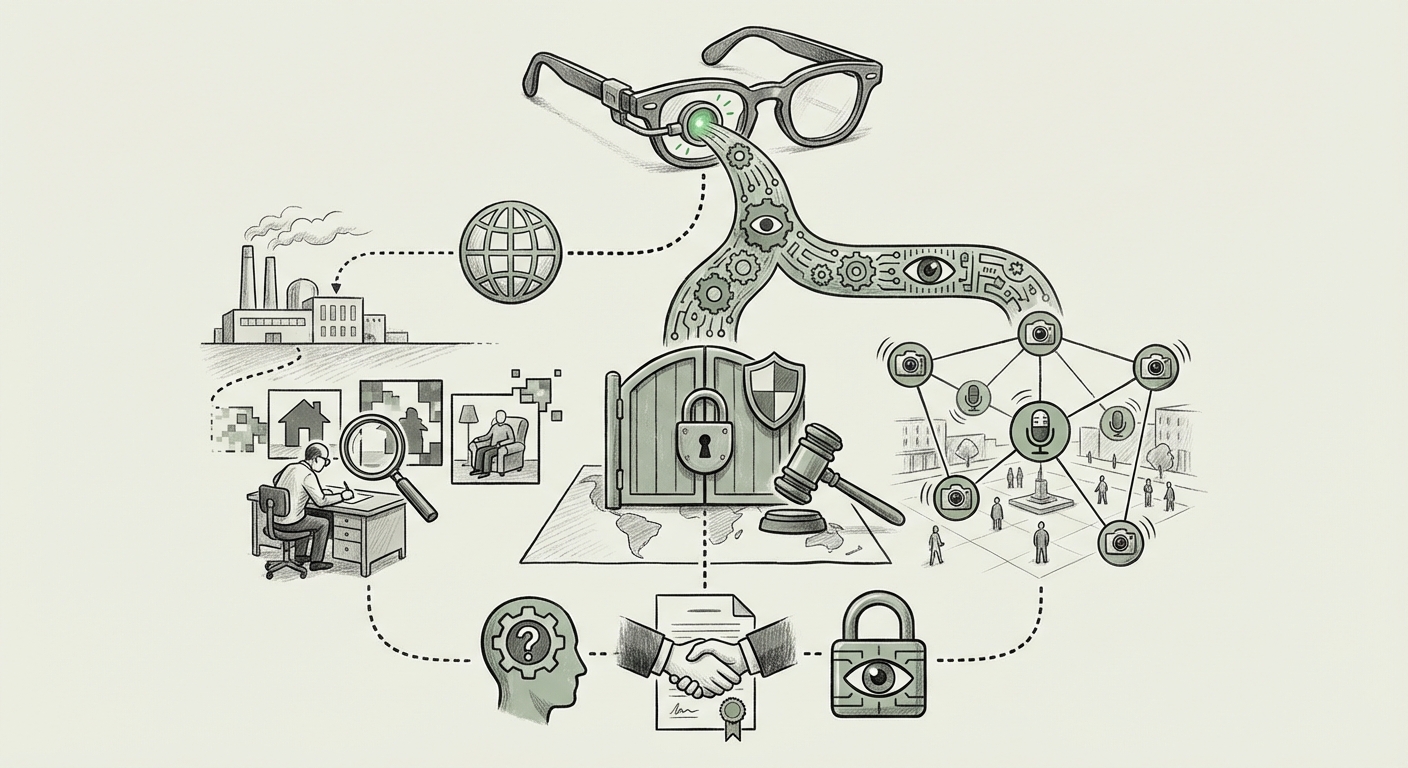
Google's Suncatcher Project Wants AI Data Centers in Orbit, Here's What That Means for the Future of AI
AI has a power problem. Every big AI model needs huge amounts of electricity, land, and cooling water to run. That demand keeps growing, and the planet's power grids are feeling the strain. Now Google is floating an idea that sounds like science fiction: put AI data centers in orbit around Earth, powered by solar energy.
The project is called Suncatcher. Its stated goal is to move AI computing off the ground and into space, where the sun shines without clouds, night, or weather getting in the way. It's a bold, expensive, and technically difficult idea. It's also a signal about where the AI industry is heading, and how desperate the search for clean, abundant power has become.
Let's break down what Suncatcher is, why it matters, the hard problems it faces, and what businesses and ordinary people should take away from it.
What Suncatcher Actually Is
Strip away the hype and the core idea is simple. Google's Suncatcher project aims to place AI data centers in orbit, powered by solar energy. That's the whole pitch in one sentence. Data centers are the warehouses full of computers that train and run AI models. Right now, they sit on concrete floors in places like Virginia, Ireland, and Singapore. Suncatcher asks: why not put them above us instead?
The attraction is power. Solar panels in space can catch sunlight almost constantly. There's no night in the right orbit, no cloud cover, no rainy season, no atmosphere soaking up the light before it reaches the panel. A solar array in orbit can produce far more usable energy per square meter over time than the same array on a rooftop in Seattle.
There's also the land question. Data centers eat up real estate, and they generate noise and heat that nearby residents often don't love. In orbit, there are no neighbors to complain, at least, none on the ground.
That's the appeal. The catch is everything else.
Why the AI Boom Is Pushing Companies Toward Radical Ideas
For years, the limit on AI progress was software and chips. That has changed. Today, the binding constraint is increasingly physical: electricity, cooling, land, and permits.
Training a frontier AI model can consume as much power as a small town over the course of a run. Running those models for millions of daily users burns power every second of every day. Meanwhile, utility grids in many regions are already stretched, and new transmission lines can take years to approve and build. Communities that once welcomed data centers are now pushing back over water use, noise, and rising local power bills.
That pressure has companies exploring every possible answer:
- Efficiency: squeezing more work out of every watt through better chips and smarter scheduling.
- Alternative power: nuclear, geothermal, long-duration batteries, and gas with carbon capture.
- Location shifting: building in places with cheap, plentiful, or stranded energy.
- Going off-grid entirely: and, in Suncatcher's case, off the planet.
Suncatcher sits at the far end of that list. It's the most extreme version of "we need more power, and we need it somewhere nobody objects."
The Hard Problems Nobody Can Wave Away
Any honest look at orbital data centers has to face a list of serious engineering and economic obstacles. These aren't reasons the idea is silly. They're the reasons it will take a long time, if it ever happens.
1. Getting Heat Out Is Brutal
On Earth, data centers dump heat into air or water. In the vacuum of space, there's nothing to dump heat into. The only way to cool down is to radiate heat away as infrared light, which is slow and requires enormous radiator surfaces. A space data center has to be built around cooling first, computing second.
2. Distance Adds Delay
Light is fast, but space is big. Every message between a user and an orbiting data center makes a round trip. For some jobs, batch processing, model training runs, long simulations, a delay of a fraction of a second barely matters. For real-time tasks like voice assistants, live translation, or interactive agents, it can matter a lot. This alone probably rules out orbit for many latency-sensitive AI workloads.
3. Bandwidth Is a Bottleneck
AI models and datasets are enormous. Pushing terabytes of training data up to orbit and pulling results back down demands serious communications capacity. That capacity exists in principle, but sharing it with all the other satellites and ground stations is another layer of complexity.
4. Repairs Are Extremely Hard
A failed server on Earth gets swapped out by a technician in minutes. In orbit, a failed server might mean a robot mission, a costly replacement launch, or simply a dead component sitting in a rack forever. Hardware reliability standards would have to be far higher than anything in a typical data center.
5. Launching Is Still Expensive and Risky
Every kilogram sent to orbit costs money and carries risk. Launching enough hardware for a meaningful AI data center, plus radiators, solar arrays, and shielding, is a massive undertaking. Launch costs have fallen dramatically over the past decade, but the gap between "cheaper than before" and "cheaper than building on dirt" remains wide.
6. Radiation and Debris
Space is full of radiation that can flip bits and degrade electronics, so chips need hardening. And orbit is increasingly crowded with debris. Adding large structures raises the risk of collisions that create even more debris, a shared risk that affects everyone who depends on satellites.
7. Who Makes the Rules?
Orbits, radio spectrum, and liability for accidents are governed by a patchwork of international agreements and national regulators. A commercial orbital data center would raise brand-new questions about ownership, safety, and responsibility that today's rules were never designed to answer.
What This Means for the Future of AI
Even if Suncatcher never launches a single server, the fact that it exists tells us something important: the AI industry now thinks of energy as its biggest long-term constraint.
That shift changes how AI will be built and used over the next decade.
Compute Will Move to Where Power Is Cheap
Already, AI workloads flow toward cheap electricity. Expect that trend to accelerate. Some training runs will happen in remote regions with abundant solar, hydro, or geothermal power. Some inference will happen on the user's device to avoid data center costs entirely. Orbital compute is the logical extreme of this pattern, but it's far from the first step.
AI Efficiency Will Become a Competitive Weapon
When power is scarce, efficiency wins. Companies that can train the same model with half the energy, or serve the same number of users on a third of the hardware, gain a real cost advantage. Expect more research into smaller, smarter models and specialized chips.
Sustainability Claims Will Face Harder Scrutiny
Customers, investors, and regulators are asking tougher questions about AI's energy and water footprint. Projects like Suncatcher are partly a response to that pressure, an attempt to imagine AI growth that doesn't strain local grids or water supplies.
Practical Implications for Businesses
If you run a company that uses or builds AI, here's what's worth paying attention to.
- Don't plan around orbit. Any orbital capacity is years or decades away, and its economics are unproven. Plan on terrestrial power, efficiency, and location strategy for the foreseeable future.
- Watch for cost signals. The moment orbital compute is cheaper than ground compute for any workload, you'll hear about it loudly. Until then, treat it as an option, not a plan.
- Design for flexibility. Build AI systems so the heavy lifting can shift between cloud regions, on-premises hardware, and edge devices. Workload portability is the real hedge against energy constraints.
- Track the supply chain. Solar manufacturing, launch capacity, radiation-hardened chips, and space-based communications are all industries that would grow if this idea advances, and shrink if it stalls.
- Ask about latency budgets. For any latency-sensitive product, understand exactly how much delay your users will tolerate. That number determines which compute locations are even viable.
Practical Implications for Society
The bigger picture matters too. Data centers have become a local political issue. Residents worry about noise, water, and higher electricity prices. If some AI compute eventually moves off-world, those local pressures could ease, but so would the local jobs, tax revenue, and grid investments that data centers bring.
There's also a fairness question. If the most powerful computing moves to orbit, access to it depends on who can afford a launch and who controls the orbital slots and spectrum. Space is often described as a shared resource, but the practical barriers to entry are extremely high. That concentration of power is worth watching.
And then there's the debris risk, which is genuinely shared. A collision in orbit doesn't just hurt the company that owns the satellite. It threatens communications, weather monitoring, navigation, and scientific research that billions of people rely on every day. Any expansion of orbital infrastructure has to be handled with that in mind.
How to Think About Suncatcher Right Now
The honest answer is that Suncatcher is a long-horizon bet on a real problem. The problem, AI's appetite for energy, is urgent and getting worse. The solution it proposes is elegant in theory and brutally difficult in practice.
What makes it worth taking seriously is not that it will succeed tomorrow, but that it shows how far major players are willing to reach. When a company starts talking about orbit, it's telling you that ground-based options are starting to look insufficient.
For now, the smart stance is curiosity plus skepticism. Follow the milestones that actually matter: real hardware built, real launches scheduled, real power and cooling figures published, real cost-per-compute comparisons. Ideas are cheap. Radiators are not.
Conclusion
Google's Suncatcher project aims to put AI data centers in orbit, powered by solar energy, a vision that turns the sky into the next frontier for computing. It's a striking answer to a genuine crisis: AI is growing faster than the world's ability to power and cool it on the ground.
Whether or not servers ever hum above our heads, the project points to where AI is heading. The future of AI won't be decided only by better algorithms or bigger models. It will be decided by who can find clean, reliable, affordable energy, and who can move that energy, or that compute, to wherever it's needed most.