Pentagon Wins Court Fight to Label Anthropic a Supply Chain Risk: What This Means for the Future of AI
A federal court has backed the Pentagon's decision to label AI company Anthropic as a security supply chain risk. The ruling is short on drama and long on consequence. It says, in effect, that the government can decide which artificial intelligence tools it trusts, and that a court will not stand in the way.
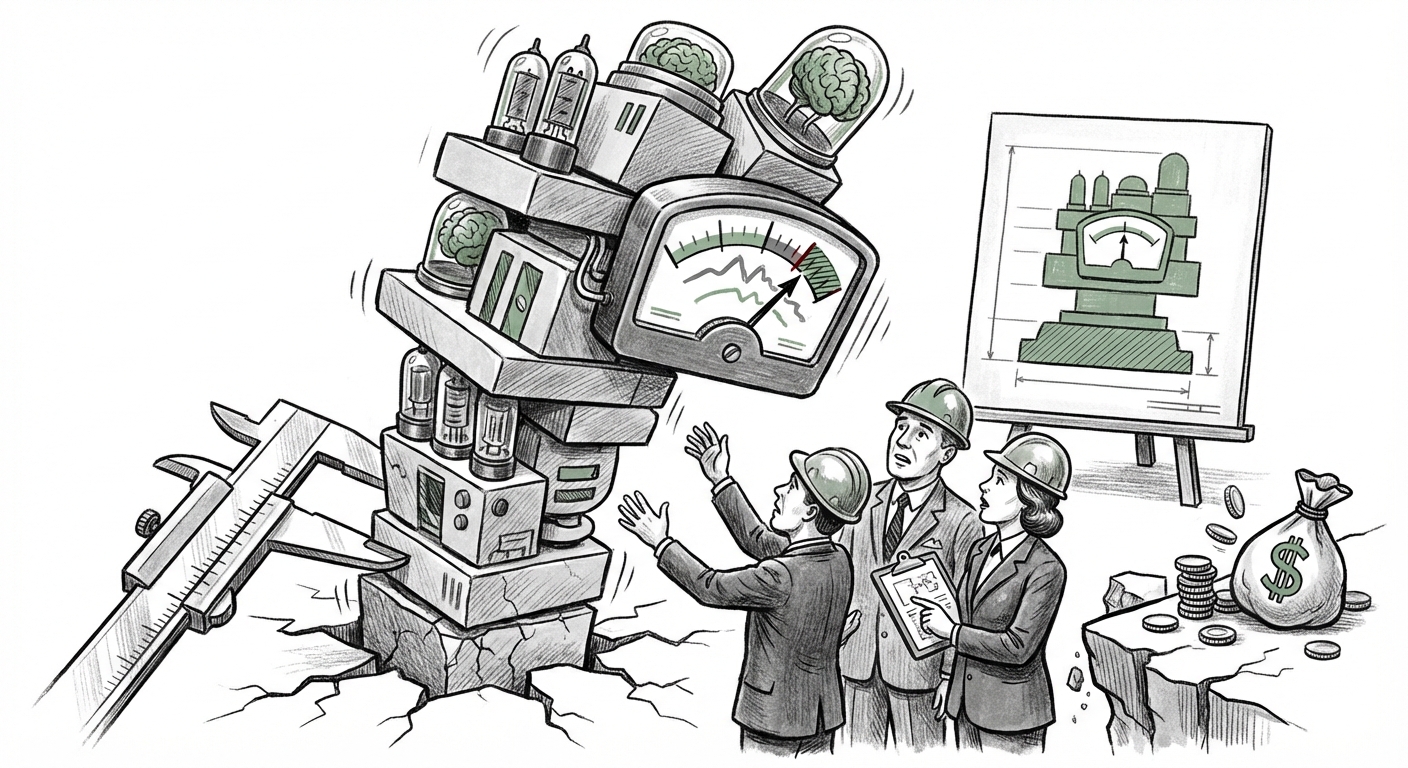
For anyone who watches AI, this is a turning point. It is the moment the world's most advanced software stopped being just a product and started being treated like a piece of critical infrastructure. And once a technology gets that label, everything around it changes: how it is bought, who can sell it, how it is built, and who gets to say yes or no.
What Actually Happened
Anthropic challenged the Pentagon's move to apply a security supply chain risk designation to the company. That kind of label is used in federal contracting to flag a vendor whose products could create a risk to national security systems. It is not a fine. It is not a criminal charge. It is something quieter and, in many ways, more damaging, a formal mark that says: this vendor is a risk.
The federal court sided with the Pentagon. The label stands.
That is the whole of the decision at the headline level. But the meaning of it stretches much further than one company's contract status.
Why a "Supply Chain Risk" Label Is So Powerful
Think about how governments buy technology. They do not just ask whether a product works. They ask who built it, where the data goes, who controls the servers, who could switch it off, and what happens if the relationship sours. Those questions used to be reserved for networking gear, chips, and cloud platforms. Now they are being asked about AI models.
That is the big shift. An AI model is not a toaster. It can read documents, write code, summarize intelligence, and help plan operations. If a government agency leans on it, the model becomes part of the decision-making chain. Once a tool sits inside that chain, the question "is this safe?" becomes "is this safe for the country?"
A supply chain risk label answers that question with a no. And a no from the Pentagon travels. Other agencies notice. Contractors notice. Partners and allies notice. Reputation risk compounds faster than any legal penalty.
The Quiet Precedent
The most important part of this story is not Anthropic. It is the precedent. A court has now confirmed that national security judgments about AI vendors can survive legal challenge. That gives the government a roadmap. Expect more labels, applied to more companies, in more corners of the AI stack, not just model makers, but the cloud providers, data vendors, and tooling companies that feed them.
AI Has Become Critical Infrastructure
For years, AI was framed as a productivity story. Faster drafts. Better search. Smarter chatbots. That framing is fading.
Governments now treat frontier AI the way they treat power grids, ports, and pipelines: as something that must be secured, not merely used. That is why the language of this ruling sounds more like procurement law than tech policy. Security reviews, vendor risk, supply chain integrity, these are the words of infrastructure, not apps.
The implication is straightforward. If AI is infrastructure, then the companies building it will be governed like infrastructure providers. That means audits, disclosures, restrictions on who they can work with, and limits on where their technology can go. Some of that will be formal. Much of it will be informal pressure that never appears in a statute.
What This Means for AI Companies
For frontier labs, the ground has shifted in three ways.
1. Compliance Becomes a Product Feature
Being allowed to sell to governments is now a competitive advantage. That means companies will invest in security teams, transparency reports, data residency controls, and audit trails. Some will build separate, hardened versions of their systems specifically for public sector use, a "government-grade" tier that looks and behaves differently from the commercial one.
2. The World Splits Into Trust Zones
A model that is welcome in one country may be unwelcome in another. Over time, this pushes the industry toward regional stacks: different hosting, different weights, different partners, different rules. That is more expensive and more complex, but it may become the price of operating globally.
3. Legal Risk Becomes Reputation Risk
Losing a court fight is one thing. Being publicly labeled a supply chain risk is another. Buyers, governments and large enterprises alike, tend to copy each other's caution. A single designation can ripple through deal pipelines for years.
What This Means for Businesses Everywhere
You do not need a Pentagon contract to feel this. If your company uses AI, you now have a supply chain problem too.
Most organizations have quietly concentrated their AI usage in one or two vendors. That was fine when AI was a novelty. It is less fine now that AI touches customer data, internal code, legal review, hiring, and finance. If your primary model provider gets restricted, delisted, or sanctioned, what happens to your workflows?
This ruling is a warning shot. It says that AI vendors can be reclassified by forces entirely outside your control, geopolitics, national security reviews, court decisions. Your business continuity plan should now include your AI stack.
The Rise of Model Portability
The practical answer is portability. Companies that can swap models without rewriting their entire operation will sleep better than those locked into a single provider. That means building an abstraction layer between your applications and any one model, keeping your prompts and data pipelines vendor-neutral, and testing alternatives before you need them, not after.
Procurement Is Now a Security Function
Expect AI contracts to grow new clauses: data residency guarantees, termination and transition assistance, disclosure of subcontractors, and commitments around model updates. The companies that ask for these terms early will get better deals and fewer surprises. The ones that sign whatever is put in front of them will inherit someone else's risk.
What This Means for Society
There is a harder question underneath all of this. Who gets to decide which AI is trustworthy?
When a government applies a security label, it is making a judgment that affects public services, private markets, and the pace of innovation. Those judgments are often made behind closed doors, with little explanation and almost no appeal. That is not automatically wrong, some security decisions must stay secret, but it does mean the AI ecosystem is being shaped by decisions the public cannot see or debate.
There is also a real trade-off. Tight security controls can keep dangerous capabilities out of the wrong hands. They can also slow down useful tools, push talent and investment elsewhere, and create a patchwork of rules that no company can satisfy at once. Getting that balance right is one of the defining policy problems of the decade.
And there is the concentration problem. If only a handful of companies can meet the security bar for government work, power consolidates. Smaller players and open-source efforts get pushed to the edges. That may be safer in the short term and less innovative in the long term.
Actionable Steps: What to Do Now
- Map your AI dependencies. List every model, API, and AI tool your business relies on, and note which ones are single points of failure.
- Build for portability. Keep an abstraction layer so you can switch providers without rebuilding products.
- Test a second vendor. Run a real workload on an alternative model this quarter, not next year.
- Rewrite your AI contracts. Ask for transition help, data residency guarantees, and clear notice if a vendor's legal status changes.
- Add AI to your risk register. Treat model providers like any other critical supplier.
- Separate sensitive from routine work. Not every task needs your most powerful or most exposed model.
- Track the policy news. Security designations, export rules, and procurement shifts now move faster than most technology cycles.
- Document your data flows. Knowing where your data goes is the first step to defending it.
The Road Ahead
This ruling will not be the last word. It is the opening of a longer argument about how free societies should secure artificial intelligence without smothering it. More court cases are coming. More labels are coming. More countries will build their own versions of the same rules, and they will not match each other.
What is now clear is that AI has graduated from experiment to infrastructure. That changes the incentives for everyone. Builders must design for trust, not just performance. Buyers must plan for disruption, not just capability. And policymakers must accept that every security decision they make is also an economic and creative decision.
The organizations that thrive in the next phase of AI will not be the ones with the single best model. They will be the ones that can move between models, absorb political shocks, and keep working when the ground shifts beneath them.
TLDR: A federal court upheld the Pentagon's decision to label Anthropic a security supply chain risk, confirming that national security judgments about AI vendors can survive legal challenge. The ruling signals that AI is now treated as critical infrastructure, which means more government scrutiny, more vendor restrictions, and growing pressure on companies to prove they are trustworthy. For businesses, the lesson is simple: do not depend on a single AI provider, build for model portability, and add your AI stack to your risk plan. For the wider AI industry, the ruling is a preview of a world where trust, geography, and compliance matter as much as raw model performance, and where courts are likely to keep deferring to governments on security calls.