Meta's Muse Agent Gives Every User a Full Ubuntu Cloud Computer, and That Changes What AI Can Actually Do
For years, AI assistants have been stuck in a box. You type a question. You get an answer. Then you close the tab and do the real work yourself. The AI could talk about your project, but it could never touch it.
On September 25, 2026, Meta changed that equation. The company's Muse agent now hands every user a full cloud computer running Ubuntu Linux. Not a locked-down sandbox with a few buttons. A real machine with a file system, a terminal, installed software, and memory that survives between conversations.
That sounds like a technical detail. It is not. It may be the single most important shift in how AI gets used since the chatbot first arrived.
Why Giving an AI a Computer Is a Bigger Deal Than It Sounds
Think about what a chatbot can do. It can suggest code, draft an email, summarize a document. But it cannot save a file. It cannot run the code it just wrote. It cannot install a tool, check whether something worked, and try again.
Every one of those limits comes from the same root cause: the AI had no place to work. No desk, no drawers, no tools. Just a conversation window that forgets everything.
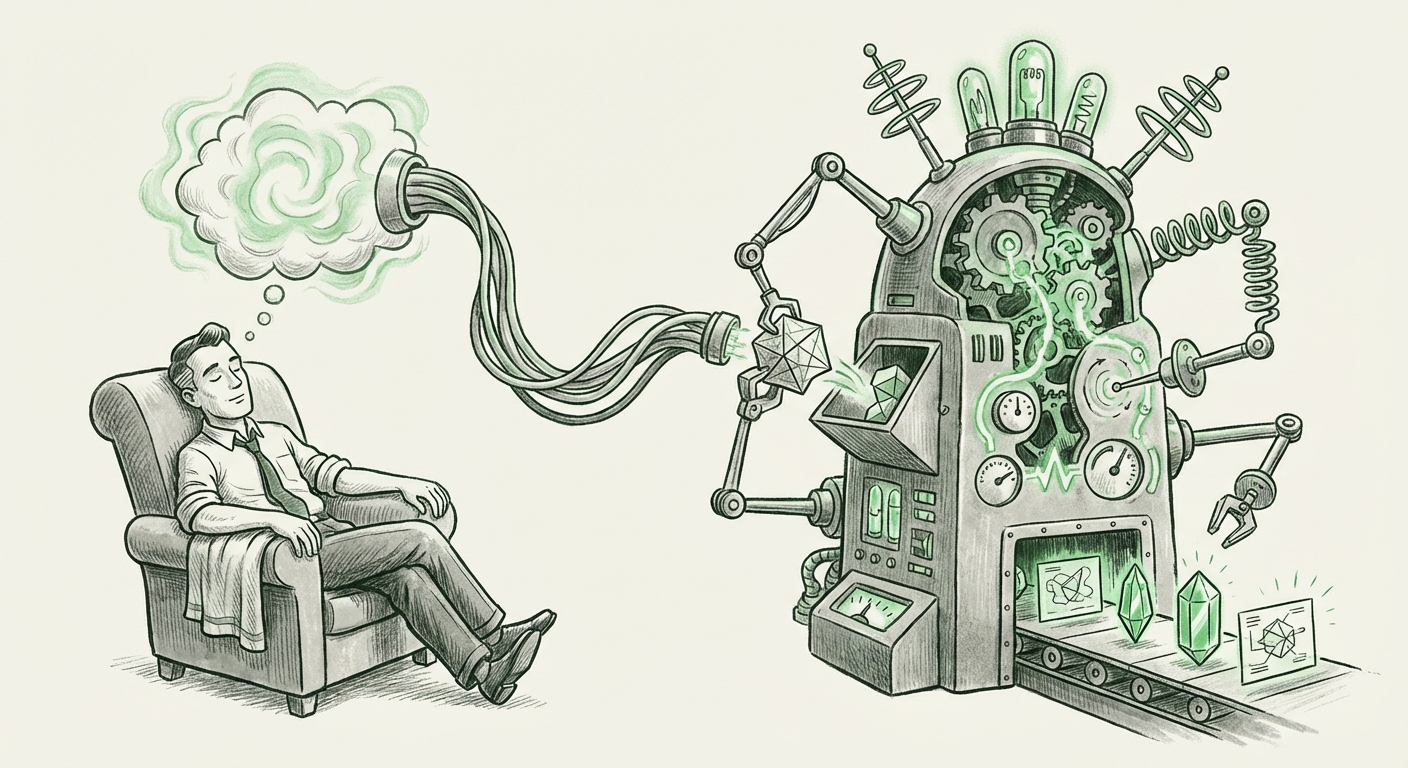
Meta's Muse agent removes that limit. Each user gets their own Ubuntu machine in the cloud. The agent can open files, write scripts, run commands, download packages, and keep state over time. When you come back tomorrow, the work is still there.
This is the difference between an assistant that talks and a coworker that ships.
The Agentic Shift: From Answers to Actions
The whole industry has been pushing toward "agents", AI that plans, acts, and completes multi-step tasks on its own. But agents need infrastructure. They need somewhere to stand.
A full Linux environment is close to the ideal answer. Linux is open, well documented, and supports nearly every programming language and tool ever written. Ubuntu in particular has a massive software library. An agent working inside Ubuntu is not limited to a few pre-approved actions. It can build almost anything a human developer could build on the same machine.
That is the quiet genius of Meta's choice. Instead of inventing a new platform and begging developers to support it, Meta gave its agent the platform developers already use. The learning curve collapses. The tool supply is practically infinite.
Three trends are now colliding
- Persistent state. The agent remembers your work because it lives on a machine, not in a chat log.
- Real execution. The agent tests its own output instead of guessing whether it works.
- Zero setup. Users skip installation and configuration entirely. The machine is waiting when they log in.
Put those together and you get something new: an AI that can be handed a goal and trusted to grind through the messy middle of a task.
What This Means for Businesses
The practical effects show up fast, and they cut in several directions at once.
The upside
Small teams suddenly get capabilities that used to require a full engineering department. A five-person marketing shop can have an agent that processes data, generates reports, builds simple internal tools, and automates repetitive back-office work, all inside an environment that costs nothing extra to provision.
Developers get instant, disposable environments. Need to test an idea in a clean Ubuntu box? The agent spins one up, runs the experiment, and reports back. That removes a huge amount of friction from the daily workflow.
Larger companies gain a standardized execution layer. Every employee has the same kind of machine, governed the same way, running the same agent. That is far easier to manage than a thousand people cobbling together their own automation scripts.
The downside
IT departments just inherited a new kind of endpoint, one they do not control directly. It runs an operating system, installs software, and holds files. It can reach the network. It must be governed like any other machine, or it becomes a blind spot.
Licensing and support models built around human seats start to look shaky when a single employee can direct an agent that does the work of several. Finance teams will want new ways to measure value per user.
And measuring productivity becomes genuinely hard. If the agent does the work, what does performance review even mean?
Security Is the Elephant in the Room
The moment an AI can do things, the cost of it being wrong goes up. A chatbot that gives bad advice wastes your time. An agent with a shell account that follows bad instructions can delete files, leak data, or rack up cloud bills.
Three risks deserve attention right now.
Prompt injection. If the agent reads a web page, an email, or a document that contains hidden instructions, it might follow them. With a full computer under its control, the consequences move from embarrassing to expensive.
Permission sprawl. A machine that can install anything is powerful and dangerous. Agents need clear boundaries, what they can touch, what they can spend, what requires a human signature.
Data location. A cloud computer holds your working files. Businesses will need straight answers about where that data sits, how long it is kept, and who can access it.
The good news is that these are solvable problems. Containerization, scoped credentials, approval gates, full audit logs, and hard spending caps all help. The bad news is that many organizations will not think about them until something goes wrong.
The Competitive Picture Just Got More Interesting
Meta's move raises the bar for every other AI platform. Once users experience an assistant that can actually finish a job, a chat-only product feels thin by comparison.
This pushes the whole market toward a new question: who controls the runtime? Not the model, not the interface, the environment where the work happens. Whoever owns that layer sits between the user and everything the agent does.
Ubuntu is a smart choice here precisely because it is neutral ground. It belongs to no AI company. Any competitor can offer the same thing, which means the real differentiator shifts to reliability, trust, and how well the agent uses the machine it is given.
Expect two things next. First, more platforms will bundle some form of cloud workspace with their agents. Second, the pricing conversation will move from "per user" to "per unit of work", because compute, not access, becomes the thing you actually pay for.
What It Means for Society and the Future of Work
Give every user a real computer and a capable agent, and the dividing line between "can build" and "cannot build" gets thinner. Someone with an idea and no technical background can now direct a machine to turn that idea into something real. That is a genuine broadening of who gets to participate in the digital economy.
But there is a flip side. When a handful of big platforms provide the compute layer for millions of people, dependence on those platforms deepens. If your agent, your files, and your workspace all live in one company's cloud, switching costs become enormous.
The skills that matter will shift too. Less emphasis on doing every step by hand. More emphasis on describing a goal clearly, setting boundaries, and checking the work. Verification becomes the core human skill. Someone has to look at the output and decide whether it is right, safe, and good enough.
That is not a downgrade of human work. It is a redirection of it, from execution toward judgment.
Actionable Steps: How to Prepare Now
- Map your agent-ready tasks. List the repetitive work that involves files, data, or software. Those are the first candidates.
- Define permission boundaries before you deploy. Decide what the agent can access, spend, and change without approval.
- Keep a human in the loop for anything irreversible. Deletions, payments, and external messages should require sign-off.
- Write better task specs. Clear goals, clear constraints, clear examples. Agents perform in proportion to the quality of the brief.
- Plan for usage-based costs. Budget for compute, not just seats, and set hard limits.
- Ask hard questions of any vendor. Where does the data live? What is logged? How do I shut it off?
- Start small and measure. Pick one low-risk workflow, run it for a month, and track hours saved and errors made.
The Bottom Line
Meta's Muse agent giving every user a full Ubuntu cloud computer looks like an infrastructure decision. It is really a statement about what AI is for. The chatbot era was about answering. This next era is about accomplishing.
The winners will not be the companies with the smartest model alone. They will be the ones that give their AI a proper place to work, and give their users the confidence that the work is safe, checked, and worth keeping.
That shift is already underway. The question is whether your organization is ready to direct it, or whether it will be reacting to it six months from now.