DHH Says He's Done Writing Code by Hand, What This Means for the Future of AI
DHH, the creator of Ruby on Rails, says he is done writing code by hand. That single sentence lands harder than it looks. This is not a weekend hobbyist or a first-year developer talking. This is the person who built one of the most influential web frameworks in the world, a framework that has powered countless startups, products, and production systems for years. When someone with that kind of track record decides to stop typing code manually, it is not just a personal workflow change. It is a signal.
The signal is this: AI has crossed a line in software development. It has moved from a novelty that suggests autocomplete to something a veteran engineer is willing to trust with the core of his craft. That shift has huge implications for how software gets built, who builds it, what skills matter, and where the AI industry goes next.
Why Handwritten Code Is Losing Its Grip
For decades, writing code by hand was the job. You learned syntax. You learned patterns. You memorized APIs. You got fast at typing and debugging. The best developers were often the ones who could hold the most detail in their heads and translate ideas into lines of code quickly and cleanly.
AI coding tools attack that workflow at its most expensive points. They can generate a function from a plain-language description. They can refactor a messy file. They can write tests. They can explain unfamiliar code. They can propose a fix when something breaks. Each of those tasks used to eat minutes or hours. Now they can take seconds, with a human reviewing the result.
When the gap between "idea" and "working code" shrinks that dramatically, handwriting code starts to look like an unnecessary bottleneck. You would not hand-stitch a shirt if a machine could do it better and faster, as long as the quality holds up. DHH's decision is essentially that same judgment applied to software.
The shift from typing to directing
The core change is not that developers stop thinking. It is that they stop typing as the primary act. The job becomes describing intent, reviewing output, testing behavior, and making judgment calls. You move from being the person who writes every line to being the person who decides which lines are right.
That is a different skill set. It rewards clear thinking, good communication, strong system design instincts, and a sharp eye for what is wrong. It punishes vague instructions and blind trust.
What This Means for the Future of AI
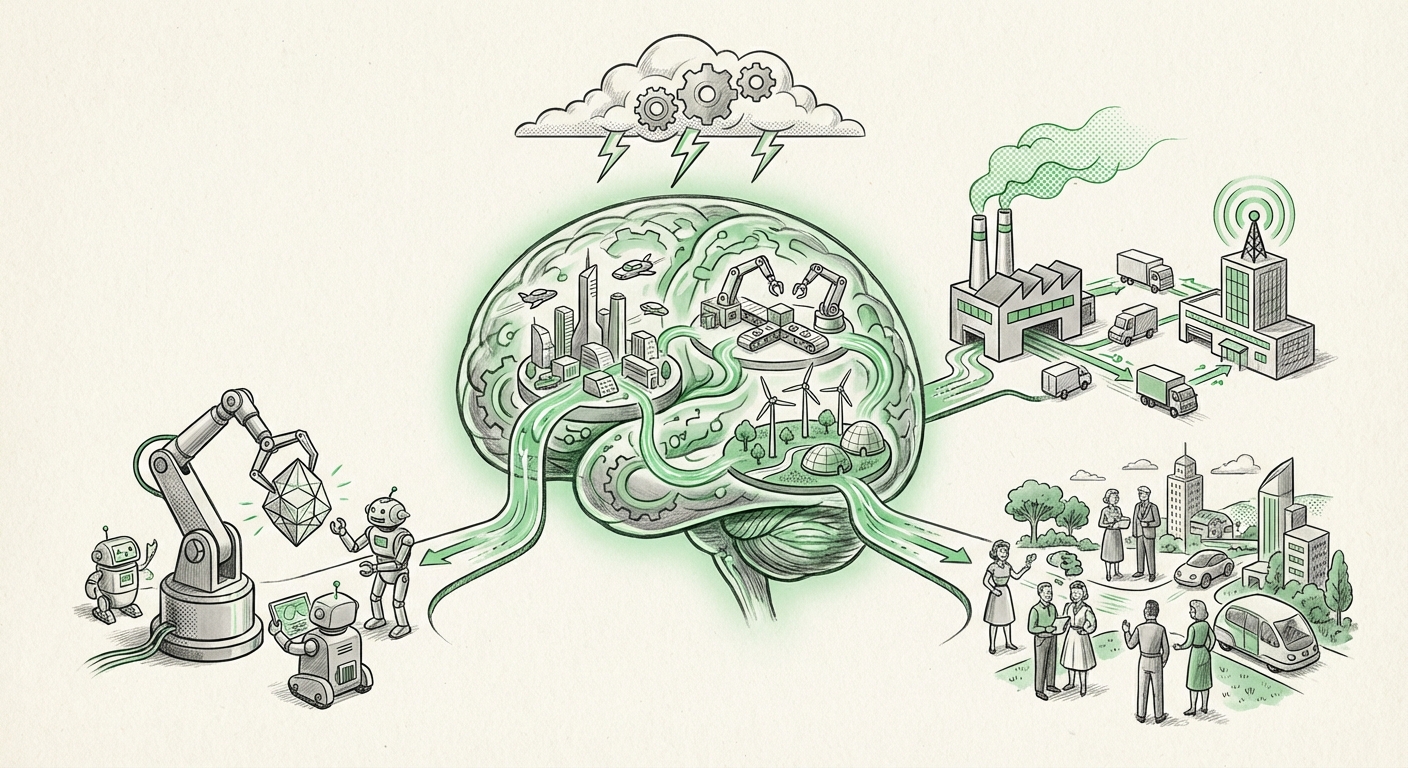
Software development is often the first place new AI capabilities show up, because code is text, feedback is fast, and mistakes are testable. So what happens in coding tends to preview what happens everywhere else.
If a world-class framework creator hands off code writing to AI, expect the same pattern to spread into other knowledge work. Writing, analysis, design, legal drafting, financial modeling, customer support, and operations all have the same shape: a person with judgment directing an AI that produces the first draft. Coding is simply further along the curve.
Three trends this moment confirms
- AI moves from assistant to actor. The tooling is shifting from "suggest the next line" to "build the whole feature." The human role becomes oversight, not production.
- Trust becomes the real product. The winning AI tools will not just be the smartest. They will be the ones people feel safe letting loose on real systems.
- Verification becomes the bottleneck. When generating code is cheap, checking it becomes the scarce resource. Testing, review, and observability become the center of the job.
That third point is the one most teams underestimate. If AI can produce ten times more code, but your ability to review it stays the same, you have not sped up. You have built a bigger pile of unverified work.
The Business Case: Speed, Cost, and New Risks
For businesses, the appeal is obvious. Faster shipping. Smaller teams doing more. Lower cost to launch a product. Less time lost to boilerplate. Companies that adopt this well can outrun competitors who do not.
But the upside comes with a bill that arrives later. AI-generated code can be subtly wrong. It can introduce security holes. It can copy patterns that do not fit your system. It can create code nobody on the team fully understands, which is a maintenance trap. It can also create legal questions around where the generated code came from.
Smart organizations are responding by changing process, not just buying tools. That means stronger automated testing, mandatory human review for anything touching money or user data, clear rules about what AI is allowed to touch, and logging so you can trace what was generated and when.
The accountability question
When a human writes a bug, you can point to the person and the commit. When AI writes it, accountability gets murky. The developer who accepted the suggestion is still responsible, but the review process has to be built for a world where the volume of generated code is high and the reasoning behind it is not always visible.
This is why the most important AI skill in software may not be prompting. It may be reviewing. The people who can look at a large block of machine-written code and spot the flaw fast will be the most valuable engineers in the room.
The New Skills Developers Need
The days of competing purely on typing speed and syntax recall are fading. Here is what matters more now:
- System thinking. Knowing how pieces fit together, so you can tell when AI output solves the wrong problem.
- Clear specification. The quality of what you get depends on the quality of what you ask for.
- Testing discipline. Tests are how you check AI work at scale without reading every line.
- Debugging instinct. When something fails, you need to know where to look.
- Domain knowledge. AI knows general patterns. It does not know your business.
Notice that none of these are about typing. They are about judgment. That is the direction the profession is moving, and it applies whether you write in Ruby on Rails or anything else.
What happens to junior developers?
This is the uncomfortable part. Junior roles have traditionally been where people learn by doing the simple work. If AI does the simple work, the entry path narrows. Companies that care about their long-term talent pipeline will need to build new ways for people to learn: reviewing AI output, working on tests and tooling, and pairing with senior engineers on hard problems.
The alternative is a skills gap in five years, when nobody has been trained to judge the systems that AI has been quietly building.
What to Do Now
Whether you are a solo developer, a startup, or a large enterprise, the practical moves are similar.
- Adopt, but measure. Track how much faster you ship and how many defects come back. If quality drops, fix the process before scaling up.
- Invest in tests and review. These are your safety net. Without them, AI speed becomes AI risk.
- Set clear boundaries. Decide which parts of your system AI can touch freely and which need senior sign-off.
- Train your team on review. Make "spot the flaw in generated code" a core skill, not an afterthought.
- Keep people accountable. A human owns every change that ships, no matter who or what wrote it.
- Expect the tools to keep changing. Do not hard-wire your workflow to one vendor. Build habits that survive tool swaps.
The Bigger Picture
DHH stepping away from handwritten code is a marker, not a finish line. It says that for at least some of the most experienced people in the field, AI is now good enough to be trusted with real work. That is a meaningful threshold.
But it does not mean code stops mattering. It means the human role moves up a level. Less time spent producing, more time spent deciding, checking, and designing. The same pattern is coming for other industries, and the organizations that adapt their processes, not just their tooling, will be the ones that win.
The future of AI is not a world where nobody understands the code. It is a world where understanding matters more than producing, because production has become cheap and abundant. The scarce things are judgment, taste, and the discipline to verify. DHH's decision is a signpost pointing directly at that future.