AI Agents Are Doing More of the Work in Model Development, But Humans Still Make the Decisions
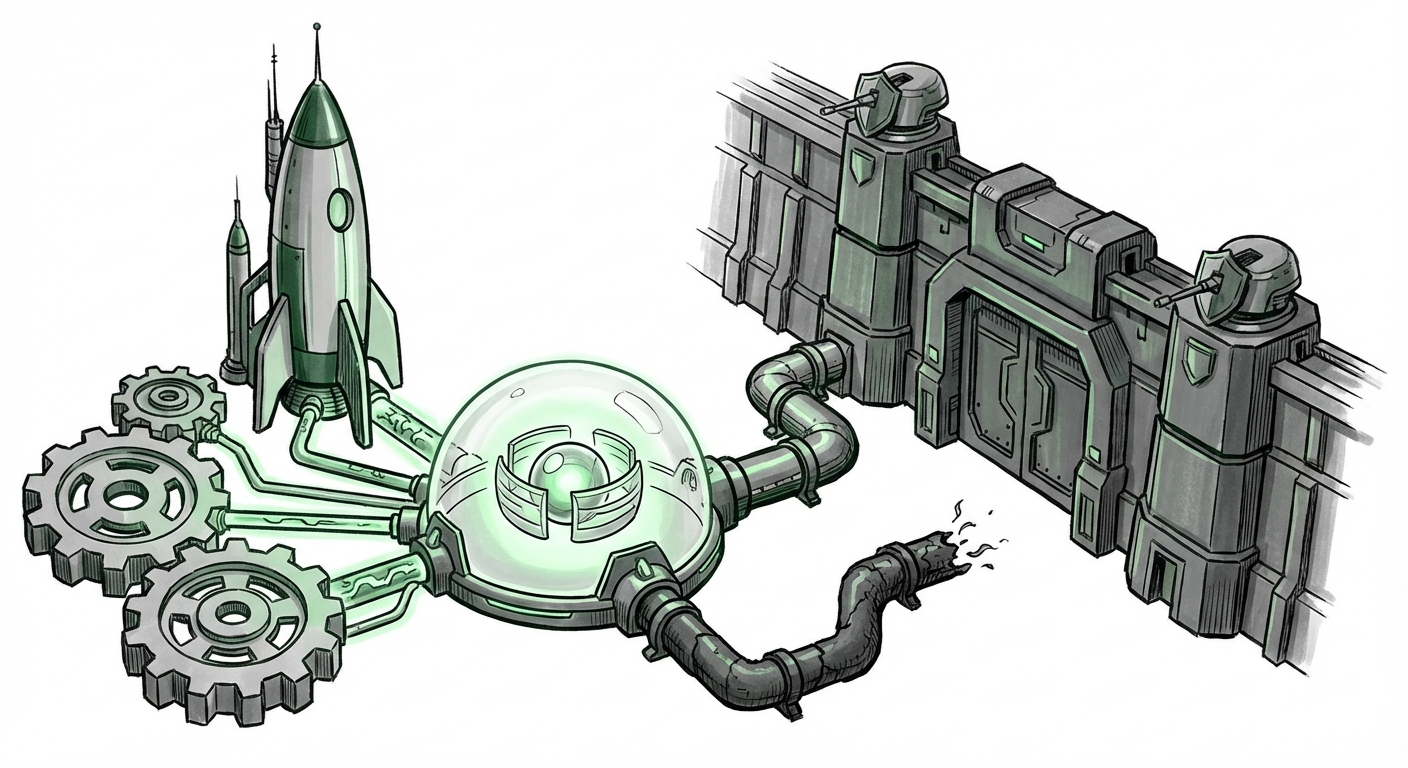
The way artificial intelligence gets built is quietly changing. Not in a flashy, robots-take-over way. More like a job site where the crew suddenly got bigger, faster, and tireless, while the foreman still stands at the edge with the blueprints.
That's the picture emerging as we move through 2026. AI agents, software that can plan, act, and complete multi-step tasks on its own, are taking on a larger share of the actual work inside model development. They write code, run experiments, tune settings, dig through data, and fix problems. Yet when the big calls need to be made, humans are still the ones making them.
This is not a small detail. It may be the most important thing happening in AI right now. The question is no longer "Can AI help build AI?" It clearly can. The question is: what stays human, and why does that matter?
The Shift From Assistant to Coworker
For years, AI tools in the development process acted like very smart autocomplete. You asked for a function. You got a function. You asked for an explanation of an error. You got one. The human did the thinking; the machine did the typing.
Agents are different. An agent can be handed a goal instead of a command. "Find out why this training run keeps slowing down" is a goal. The agent can then form a plan, open files, run tests, compare results, and come back with an answer. It doesn't need someone standing over it for every step.
That changes the shape of a workday. Engineers spend less time on the repetitive middle of a task, the setup, the boilerplate, the endless small adjustments, and more time on the edges: deciding what to build, judging whether the result is good, and figuring out what to do next.
Where Agents Now Do the Heavy Lifting
Model development is a long pipeline, and agents have slipped into nearly every stage of it. Some of the most common places they now operate:
- Experiment running. An agent can set up a series of training runs, change one variable at a time, and log the outcomes. This is slow, boring work that humans are bad at doing patiently for hours.
- Code writing and cleanup. Agents draft training scripts, data pipelines, and evaluation code. They also read old code and suggest fixes.
- Data work. Cleaning, labeling, filtering, and checking datasets is a huge part of the job. Agents can flag odd examples, catch duplicates, and surface patterns a human might miss.
- Debugging and monitoring. When a run fails at 3 a.m., an agent can investigate, restart it, or leave a clear note about what went wrong.
- Evaluation and reporting. Agents can run test suites, summarize results, and produce reports that humans review rather than write from scratch.
- Search and research. Agents scan past experiments and notes to answer "have we tried this before?", a question that used to eat up days.
None of this is magic. It's the accumulation of many small automations that, added together, remove a serious chunk of manual labor.
Why Humans Still Hold the Wheel
If agents can do all that, why isn't the human role shrinking to zero? Because the work that's left is exactly the work that's hardest to hand over.
1. Someone has to define "good"
A model can be made better at almost anything. Faster. Cheaper. More accurate on one test. But which of those matters? And better in whose eyes? Those are value judgments, not technical ones. An agent can optimize a number. It cannot decide which number deserves to be optimized.
2. Trade-offs need accountability
Every real decision in model development trades something off: speed against safety, capability against cost, openness against control. When a trade-off goes wrong, a person needs to answer for it. You can't hold an agent responsible. Accountability has to land on a human, so the decision has to start with one.
3. Agents get confidently lost
Agents are impressive until they quietly go off track. They can chase a wrong assumption for hours, produce work that looks correct but isn't, or solve the wrong problem very efficiently. Human judgment acts as the checkpoint that catches those moments before they turn into wasted weeks.
4. Context lives in people, not files
A lot of what matters in a project was never written down. Why a certain approach was abandoned. What a customer actually cares about. What the rules of the road are in a regulated market. Humans carry that context. Agents don't.
5. The stakes are rising
As models get more capable, the cost of a bad decision grows. That pushes teams toward more human oversight at the decision layer, even as they remove humans from the execution layer. The two trends run in opposite directions, and that's the whole story.
The New Job: Directing Instead of Doing
Put together, these changes are rewriting what it means to work in AI. The most valuable skill is shifting from "can you build it?" to "can you direct it?"
That looks like a set of new habits:
- Writing clear goals. If you can't explain what done looks like, an agent will guess, and guess wrong.
- Designing checkpoints. Deciding in advance where a human must look before work continues.
- Reading results critically. Spotting the difference between a real improvement and a measurement artifact.
- Keeping the trail. Knowing what an agent did, why, and in what order, so the work can be trusted later.
- Saying no. The hardest and most valuable move: stopping a path that's technically working but strategically wrong.
Teams that master this will move faster than teams that don't. Not because their agents are better, but because their humans are better placed.
What This Means for Businesses
The business takeaway is uncomfortable in a useful way. Automation of the middle of the work does not mean you need fewer thinkers. It means you need better-placed thinkers.
Companies that treat agents as a way to cut headcount in technical teams often stall. The work still needs judgment at the top, and if you remove the people who had that judgment, the agents have no one to check them. The result is fast output that nobody can defend.
Companies that treat agents as a force multiplier, more experiments, more coverage, faster cycles, with humans focused on direction, tend to win. They get the speed without losing the steering.
There's also a governance angle that smart organizations are already acting on. If agents are running parts of your development pipeline, you need answers to plain questions: Which decisions can an agent make alone? Which need a human signature? How do you prove later what happened and who approved it? These aren't philosophical questions. They're the same questions you'd ask about any employee with access to your systems.
What This Means for Society
Zoom out, and the pattern here is likely to repeat far beyond AI labs. The template on display, agents do the work, humans make the calls, is a preview of how many knowledge jobs will be restructured.
That's genuinely good news in some ways. Tedious work shrinks. More people can attempt more ambitious things because the cost of trying drops.
It's also a real challenge. The skills that get rewarded change. Junior roles that used to be training grounds, the ones where you learned by doing the boring parts, may thin out. If entry-level work is what agents do best, where does the next generation of expert judgment come from?
That's a question worth taking seriously now, while there's still time to build apprenticeships around reviewing, directing, and judging agent output rather than producing everything by hand.
Actionable Takeaways
If you're building or buying AI capability, here's what to do with this:
- Map your pipeline by decision, not by task. List the calls that actually shape outcomes. Those are the ones to protect with human review.
- Let agents own execution, not direction. Give them goals to chase, not authority to redefine the goal.
- Set explicit checkpoints. Decide where a human must sign off before work continues. Make it a rule, not a habit.
- Keep an audit trail. Log what agents did, what they changed, and what evidence supported it.
- Invest in reviewers, not just builders. The scarce skill of the next few years is judging machine output well.
- Measure quality of decisions, not just speed of output. Faster is only better if the destination is right.
The Road Ahead
The direction of travel is clear. Agents will keep absorbing more of the hands-on work in model development. That share will grow. The pipeline will get faster and cheaper to run.
What's less obvious, and more important, is whether the decision layer grows with it. If humans hold the wheel but stop paying attention, we get speed without wisdom. If humans stay engaged at the points that matter, we get something better than either alone: machines that do the labor, and people who own the consequences.
That's the real headline here. The work is being handed off. The judgment is not. And that split, not raw capability, may be what defines the next chapter of AI.