AI Security's Wake-Up Call: What Tens of Thousands of Probes Reveal About the OpenAI–Hugging Face Incident
In late September 2026, the AI world got a lesson it will not be able to forget. Tens of thousands of security probes carried out across the AI ecosystem have pointed to one uncomfortable conclusion: the security incident tying together OpenAI and Hugging Face was not a one-off accident. It was a preview.
For years, the story of artificial intelligence has been a story of speed. Better models, bigger datasets, faster releases. Security was treated as something to bolt on later, the same way the early internet treated it. What the probing data now shows is that "later" has arrived. And the first real breach of trust between the world's most important AI lab and the world's most important open model hub is only the opening chapter.
An Incident That Was Never Really Isolated
To understand why this matters, you have to understand what OpenAI and Hugging Face actually are to each other. OpenAI builds some of the most capable and widely used AI models on the planet. Hugging Face is the place where the rest of the world shares, downloads, and builds on models and datasets. One represents the closed frontier. The other represents the open commons.
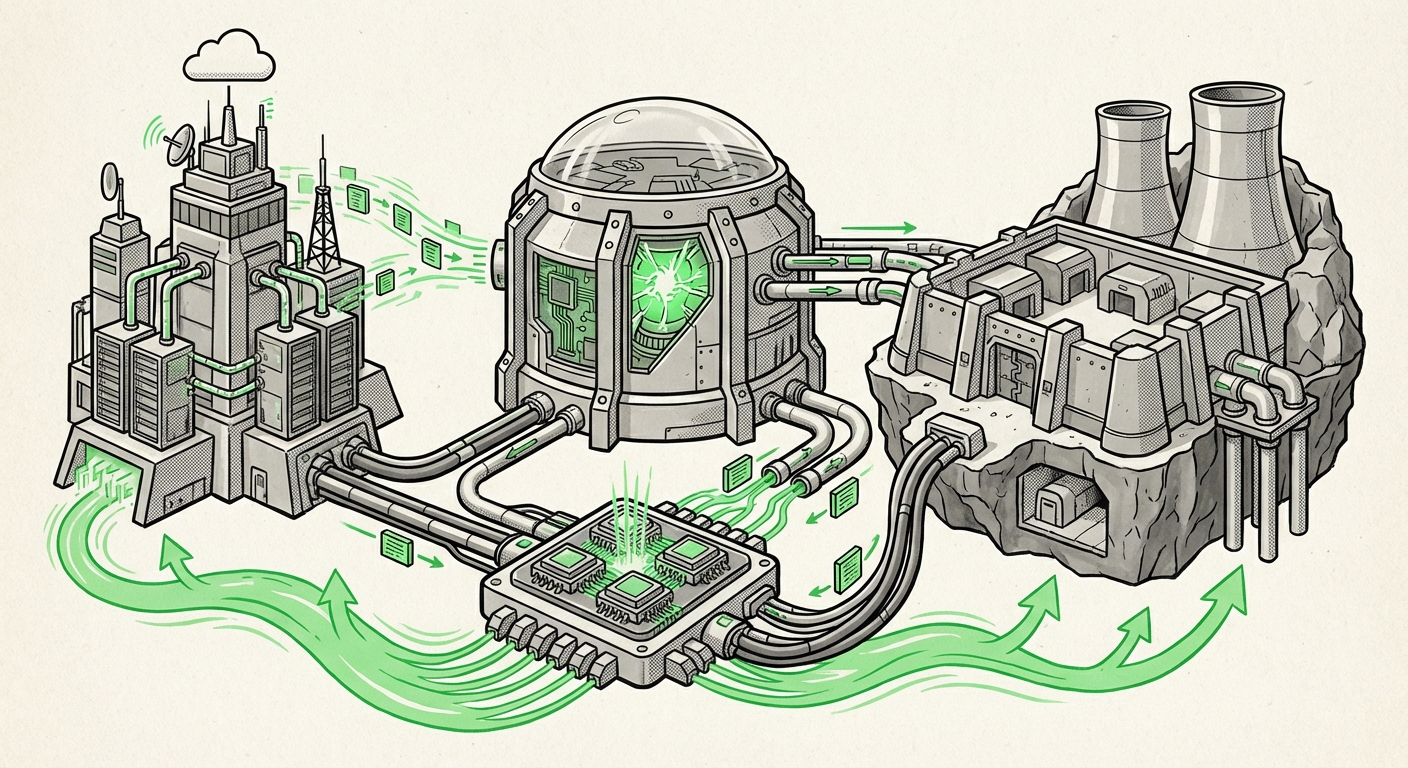
Those two worlds are not separate. They are connected pipes. Developers pull open models from Hugging Face and wire them into systems that also call OpenAI's APIs. Researchers fine-tune, convert, and re-upload. Tools, plugins, and agent frameworks sit on top of both. Every connection is a door. Every door is a place where a small mistake in one ecosystem can become a large problem in the other.
That is why the incident linking the two mattered so much. It did not expose a flaw in one company's code. It exposed a flaw in how the entire AI supply chain thinks about trust.
Why Model Hubs Became the Front Line
Think about how software used to work. You wrote code, you reviewed it, you shipped it. Model hubs break that model in a fundamental way.
When a developer downloads a model, they are not downloading something they can easily read. A modern AI model is a black box of billions of numbers. You cannot eyeball it. You cannot easily tell whether it behaves the way it claims to. And a model does not just produce text, it can call tools, read files, send requests, and take actions on your behalf.
That combination is a security nightmare dressed up as a productivity miracle:
- You can't read the code. A malicious line buried in billions of parameters is invisible to normal review.
- You inherit the risk. Downloading a model means trusting whoever uploaded it, plus everyone who touched it before them.
- Models take actions. A chatbot that only talks is one thing. An agent that can move data, spend money, or write to systems is something else entirely.
- Speed beats caution. Teams under pressure to ship AI features rarely have time to run deep security checks.
Every one of those weaknesses is a probe target. And tens of thousands of probes is not a random number, it is a systematic sweep of the attack surface.
Tens of Thousands of Probes, One Clear Pattern
When you run security testing at that scale, patterns emerge that a single test would never reveal. The pattern here is simple and sobering: the AI ecosystem does not have a few weak spots. It has weak spots everywhere, and they repeat like a broken record across models, hubs, pipelines, and tools.
Those repeated findings point to a handful of systemic categories of risk:
1. Supply chain trust
The AI world runs on downloaded artifacts, models, weights, adapters, datasets, and the code that loads them. Each handoff is an opportunity for something malicious to travel quietly downstream. Most teams have no idea how many hands a model passed through before it reached them.
2. Hidden behavior in models
Testing has shown that a model can behave one way in a demo and another way under specific conditions. That gap between "how it looks" and "how it acts" is exactly what attackers exploit.
3. Prompt and instruction attacks
Anyone who can put text in front of a model, a web page, an email, a document, a file name, is potentially giving it instructions. As AI systems read more of the outside world, the number of people who can talk to your AI grows to include everyone.
4. Agent permissions
The moment an AI system is given access to tools, credentials, or data, the blast radius of a mistake jumps from "wrong answer" to "wrong action taken at scale."
5. Fragmented responsibility
Who secures an AI system built from a model made by one company, hosted by another, and wired up by a third? Right now, the honest answer is often: nobody, clearly.
The Agent Era Makes Everything Harder
The timing here is not a coincidence. The industry is right in the middle of a shift from AI that answers to AI that acts. Chatbots are becoming agents. Agents browse, book, buy, send, schedule, and code. They are being handed keys to the systems businesses actually run on.
Every capability you give an agent is also a capability you give to anyone who can influence that agent. This is the single most important sentence in this article: as AI gets more useful, the security problem does not shrink, it multiplies.
A model that can only produce text can produce a bad sentence. A model with database access, a payment credential, and a calendar can produce a bad quarter.
Why This Is Just the Beginning
The phrase that keeps surfacing around this incident is that it was "just the beginning." That is not hype. It is arithmetic.
Three forces are converging at once:
- Volume. More models are published every month than most security teams can review in a year.
- Autonomy. AI systems are getting more permission, not less, because that is where the value is.
- Dependence. Businesses are embedding AI into core workflows, support, finance, engineering, healthcare, logistics, which means the cost of failure keeps rising.
When volume goes up, autonomy goes up, and dependence goes up at the same time, incidents do not stay rare. They become routine. The question stops being "will this happen to us?" and becomes "when, and how bad?"
What This Means for the Future of AI
The most likely outcome is not that AI slows down. It is that AI gets a security layer it currently lacks, and that layer becomes a competitive advantage.
Security becomes a feature, not a cost center
Expect buyers to start asking hard questions before they deploy an AI system: Where did this model come from? Who can talk to it? What can it touch? How would we know if it went wrong? Vendors who can answer those questions will win deals. Vendors who cannot will lose them.
Model transparency gets pushed forward
The pressure created by incidents like this one will accelerate demand for model provenance, documented records of where a model came from and what was done to it. The AI equivalent of a nutrition label is coming, whether the industry likes it or not.
Guardrails move from optional to mandatory
Runtime monitoring, permission limits, and human approval steps for high-stakes actions will shift from "nice to have" to baseline requirements. Agents will be treated less like software tools and more like new employees who need supervision before they get the keys.
Regulation follows the incidents
Governments rarely move first on technology. They move after a visible failure. Each high-profile AI security event makes stricter rules more likely, and makes voluntary standards more attractive than imposed ones.
A Practical Playbook for Businesses Right Now
None of this is abstract if you run or build with AI. Here is what actually helps today:
- Inventory every model you use. Know what you have, who made it, how it got to you, and what it can access. Most organizations cannot answer this. That is the problem.
- Treat models like third-party code. Apply the same review, scanning, and approval process you use for any software dependency.
- Give agents the least permission they need. If an AI system only needs to read, do not let it write. If it needs a sandbox, keep it in one.
- Assume instructions can come from anywhere. Design systems so that untrusted content, a web page, an email, a document, can never silently become an order your AI follows.
- Add a human checkpoint for irreversible actions. Payments, deletions, external messages, and access changes are where mistakes become disasters.
- Log everything and watch it. You cannot respond to what you cannot see. AI behavior needs the same monitoring as any production system.
- Test your own systems adversarially. The same probing that revealed this industry-wide pattern is available to you internally. Do it before someone else does it for you.
- Write down who owns AI risk. Assign a name, not a department. Ambiguity is where incidents live.
The Bottom Line
The OpenAI–Hugging Face incident will be remembered less for what it broke and more for what it revealed. Tens of thousands of security probes have shown that the AI industry built an extraordinary amount of capability on top of a trust model that was never designed to carry this much weight.
That is not a reason to stop. It is a reason to grow up. The next phase of AI will not be won by whoever ships the most powerful model. It will be won by whoever can be trusted to run it, safely, transparently, and at scale. The probes have already told us where the cracks are. What happens next depends on whether we fix them before someone else finds them first.