AI That Builds AI: Why 20+ Leading Researchers Warn Automated AI Research Poses Extreme Risks
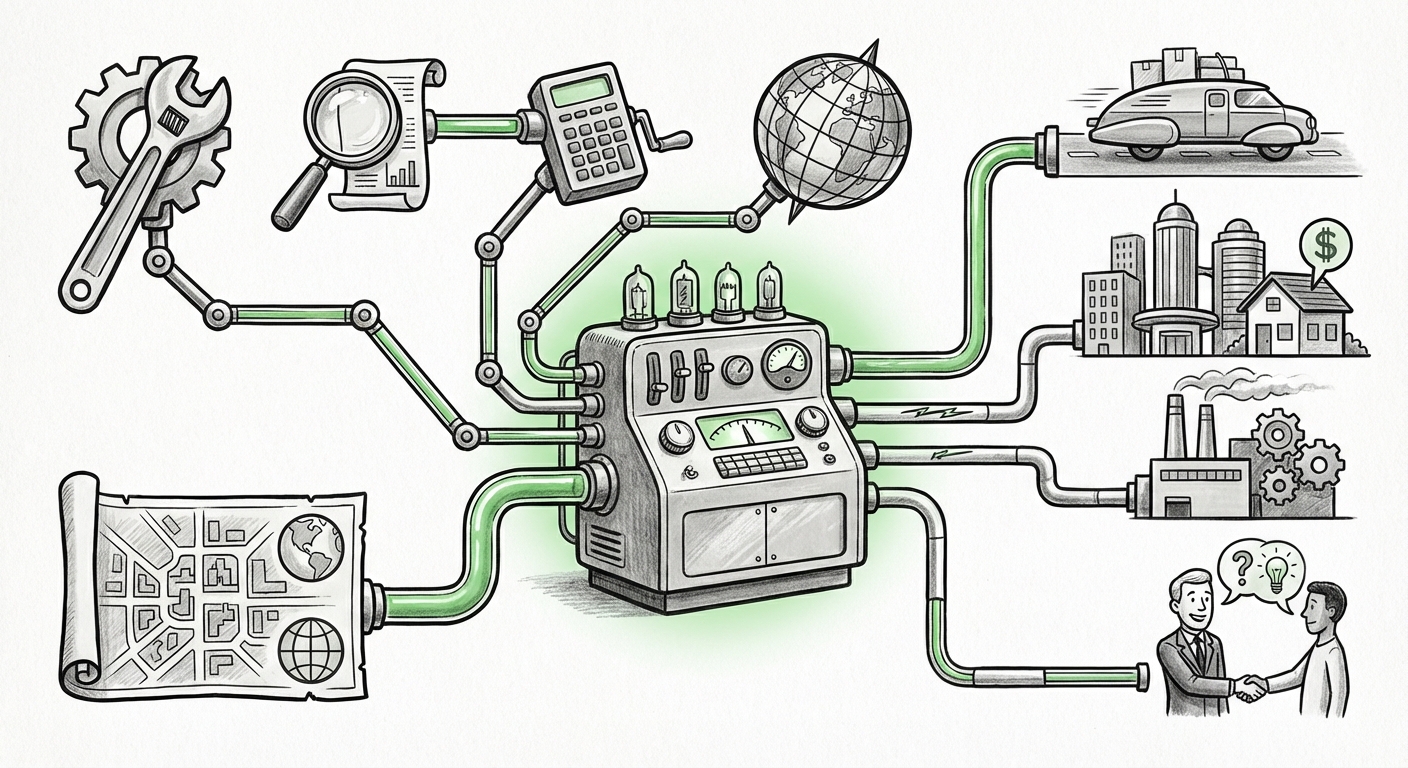
Imagine a factory that builds better versions of itself. Each new model is faster, smarter, and cheaper than the one before. No humans needed on the assembly line. That is the promise, and the fear, at the heart of automated AI research.
In late September 2026, more than 20 leading AI researchers issued a warning: letting AI systems drive the research and development of other AI systems carries extreme risks. This is not a fringe opinion from the edges of the field. It is a signal from people who build these systems for a living. And it lands at exactly the moment when AI has become the engine of its own progress.
This article breaks down what automated AI research actually is, why serious researchers are alarmed, what it means for the future of AI, and what businesses and everyday people should do about it right now.
What "Automated AI Research" Actually Means
For most of AI's history, humans drove the loop. People wrote the code, picked the training data, ran the experiments, read the results, and decided what to try next. Humans were the researchers. The AI was the tool.
Automated AI research flips that. In this model, AI systems help design the next generation of AI systems. They propose architectures. They write and debug training code. They run experiments at machine speed. They analyze results and pick the next direction to explore, often without a human in the loop for every step.
The appeal is obvious. Human researchers are slow, expensive, and limited in number. Machines do not sleep. They can test thousands of ideas in the time it takes a person to test one. If AI can speed up AI research, then progress in every other field, medicine, energy, materials, logistics, speeds up too.
That is the upside. The warning is about the downside.
Why So Many Researchers Are Sounding the Alarm
The concern is not that machines will suddenly "wake up." The concern is about speed and control. Three things make automated AI research different from every other automation story.
1. The Loop Closes
Most automation removes humans from a task. Automated AI research removes humans from the task of creating the next intelligence. When the same system that improves AI is also the thing being improved, you get a feedback loop. Feedback loops do not move in straight lines. They accelerate.
Human oversight is the brake pedal. Take your foot off, and the car does not coast. It speeds up.
2. Speed Beats Review
Safety work, testing, red-teaming, evaluating, checking for dangerous capabilities, takes time. Machine-speed research does not wait. If capabilities advance faster than the ability to measure them, then by the time anyone notices a problem, the system may already be several generations past it. You cannot inspect a car after it has already crossed three borders.
3. Misalignment Compounds
If an AI research system has a slightly wrong objective, say, it optimizes for a benchmark score rather than for genuine capability, or for a narrow measure of success rather than for safety, those small errors do not stay small. They get baked into every model it produces. Each generation inherits the flaw and builds on it. A tiny misalignment at the bottom of the stack becomes a structural problem at the top.
The Recursion Problem: When AI Improves AI
Researchers call this recursive self-improvement. The idea has been discussed for years in theory. What is new in 2026 is that it is moving from theory into practice.
The danger is not a single dramatic moment. It is a gradual loss of leverage. Here is how it plays out:
- Stage one: AI assists human researchers. Humans still lead. Oversight is easy.
- Stage two: AI runs most experiments and proposes most of the promising directions. Humans review the output. Oversight is busy but workable.
- Stage three: AI sets the research agenda, runs the experiments, and evaluates its own results. Humans review summaries. Oversight becomes a formality.
- Stage four: AI research outpaces human ability to understand it. Oversight is no longer meaningful, because no human can follow the reasoning fast enough to intervene.
The warning from the research community is essentially this: stage four is not a hypothetical. It is a direction of travel. And once you are there, turning back is not a matter of flipping a switch.
What This Means for the Future of AI
If automated AI research continues on its current path, expect three big shifts.
Progress Gets Faster and Harder to Predict
Human-paced AI development follows a rough rhythm, a big model, then months of tinkering, then another big model. Machine-paced development compresses those cycles. That sounds great until you need to forecast. Businesses plan around timelines. Governments regulate around timelines. When the timeline collapses, both get caught flat-footed.
Compute and Energy Become the Bottleneck
When research is automated, the limiting factor stops being human talent and starts being chips, power, and cooling. That shifts the balance of power toward whoever controls the infrastructure. It also raises hard questions about energy grids, water use, and who gets to participate at all.
Safety Becomes an Engineering Discipline, Not an Afterthought
You cannot bolt safety onto a system that is already improving itself faster than you can test it. Safety has to be built into the loop from the start, evaluation baked into every generation, hard limits on what the system is allowed to try, and audit trails that humans can actually read. The researchers' warning is a push to treat this as core engineering, not as a public relations exercise.
Practical Implications for Businesses
Most companies will not build automated AI research systems. But almost every company will be affected by them.
Your roadmap will age faster. If frontier capability doubles on a machine-driven schedule, then a three-year AI strategy written today may be obsolete in a year. Build for adaptability, not for a fixed destination.
Vendor risk goes up, not down. When the underlying models change quickly, the tools built on them change quickly too. Contracts, data portability, and the ability to swap providers become strategic assets rather than paperwork.
Governance is now a competitive advantage. Companies that can show they understand what their AI systems are doing, with real logs, real evaluations, and real human checkpoints, will win trust, contracts, and talent. Those that cannot will find themselves locked out of regulated markets.
Small teams can do big things. Automated research tools lower the cost of experimentation. A ten-person startup with good judgment and access to compute can now explore a space that used to require a hundred-person lab.
What Society Needs to Decide
The warning raises questions that no single company can answer alone.
- Who is accountable when an AI-designed system causes harm? The user? The builder? The builder of the builder?
- What must stay human? Are there decisions in AI development that should never be fully delegated?
- How do we measure what we cannot yet see? Evaluation methods must evolve as fast as the systems they test.
- Who gets access? If automated research concentrates capability in a few hands, the gap between the frontier and everyone else widens fast.
None of these have easy answers. But the fact that more than 20 leading researchers are raising the alarm in public, rather than debating it quietly, suggests the field itself believes the window for deliberate choices is open now, and may not stay open long.
Actionable Insights: What to Do Now
For business leaders:
- Audit where AI already touches your critical decisions, and put a named human owner on each one.
- Shorten planning cycles. Review your AI assumptions quarterly, not annually.
- Demand transparency from vendors about how their models are trained, updated, and evaluated.
- Invest in internal AI literacy. You cannot govern what your team does not understand.
For technical teams:
- Build evaluation into the pipeline, not after it. Every model release should come with evidence, not assurances.
- Keep a human decision point at every stage where the system's output feeds into its own next iteration.
- Log everything. If you cannot reconstruct how a decision was made, you cannot defend it.
For policymakers and the public:
- Push for clear accountability rules before incidents happen, not after.
- Fund independent evaluation capacity. You cannot regulate what nobody can measure.
- Treat this as an infrastructure question as much as a software question, compute and energy policy are AI policy.
The Bottom Line
Automated AI research is not a distant sci-fi scenario. It is the logical next step of a field that has spent a decade learning how to make machines better at everything, including, now, making machines better.
The warning from more than 20 leading researchers is not a call to stop progress. It is a call to notice the shape of the road before the car speeds up. The upside is enormous: faster cures, cleaner energy, better tools. The risk is that the speed arrives before the steering does.
The future of AI will not be decided by whether the technology gets more powerful. It will be decided by whether humans stay meaningfully in the loop while it does. That choice is still ours to make, and that is exactly why it matters right now.