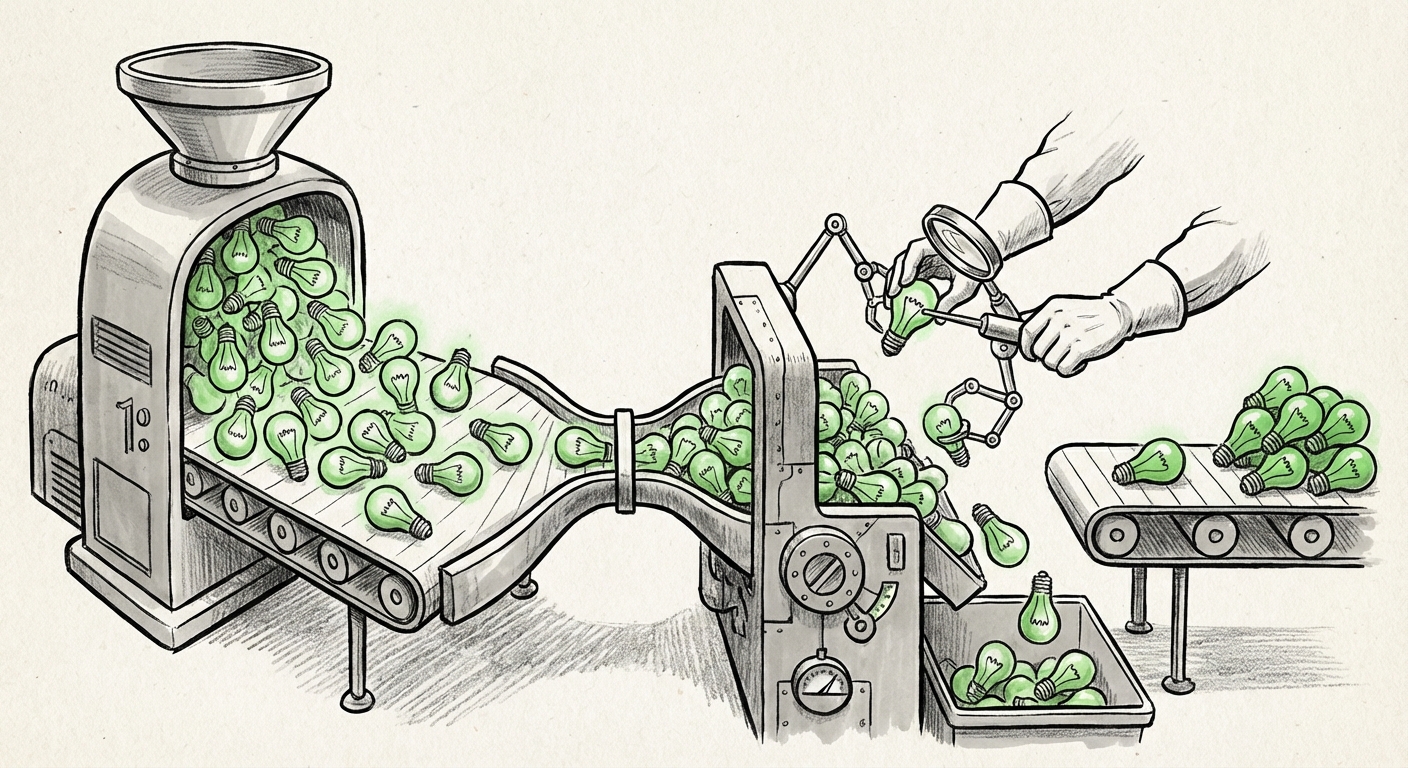
Every AI Lab Thinks It's the Responsible One, And That's Exactly What Keeps the Arms Race Going
Ask anyone building the world's most powerful AI systems whether they care about safety, and you will almost always get the same answer: yes, deeply, more than anyone else. Every major AI lab sees itself as the careful one. The thoughtful one. The team that is doing this the right way.
That shared belief feels reassuring. According to safety researcher Ryan Greenblatt, it is actually the thing that keeps the race going. If everyone at the front of the pack believes they are the responsible actor, then nobody sees themselves as the problem, and nobody has a reason to slow down.
That is the uncomfortable core of the argument, and it matters far beyond the research community. It shapes how AI gets built, how fast it gets released, what businesses can trust when they buy it, and what rules society will eventually need to put in place.
The "We're the Good Guys" Problem
Here is the pattern. A team of smart, well-meaning people starts building a powerful AI system. They think hard about risk. They write internal policies. They hire safety staff. They publish papers about the dangers they see. And because they have done all that, they conclude that they are the responsible ones.
Meanwhile, the lab across the street is doing the same thing, and reaching the same conclusion about itself.
Now you have a room full of groups who each believe they are the careful exception, and each believe the others might not be. That is a recipe for a race, not a pause. If you think you are the safe pair of hands, then speeding up feels like a public service. You are not racing to win. You are racing to make sure the technology lands with someone responsible, namely, you.
Greenblatt's point cuts deep because it does not require anyone to be a villain. No one has to be reckless or cynical. The dynamic works perfectly well with people who genuinely care, because the logic of "we are the responsible ones" is self-reinforcing. It rewards continuing, not stopping.
How Good Intentions Keep the Engine Running
The most common argument inside AI labs sounds like this: if we do not build it, someone else will. And that someone might care less, cut more corners, or ship something dangerous without a second thought.
On its face, that reasoning is not crazy. It might even be true. But notice what it does. It turns every safety concern into a reason to move faster. Any worry you have about your own system becomes an argument for building it sooner, before a competitor gets there. The very thing that should slow you down becomes a pedal.
This is how an arms race hides inside a safety culture. The language is about caution. The behaviour is about speed. And because everyone in the race is using the same language, the acceleration looks and feels responsible from the inside.
The Trust Gap Nobody Can Close
There is a second layer to this. Even if one lab really is being more careful than the others, it has almost no way to prove it.
Safety claims are usually self-reported. A lab says it tested its system, limited its capabilities, or added safeguards. But competitors cannot see the evidence. Regulators often cannot either. There is no shared scoreboard, no common audit, no standard way to check the work.
So everyone is stuck guessing. And when you are guessing about the people racing alongside you, the safest assumption, the one that protects you, is that they might be cutting corners. That assumption then justifies your own speed. The trust gap and the arms race feed each other.
Safety as a Selling Point, and a Blind Spot
There is real safety investment happening. Labs have built internal review processes, published risk frameworks, and hired people whose full-time job is to find problems. That work is genuine and it matters.
But safety has also become part of how labs present themselves to customers, investors, and governments. Being seen as the responsible option is good for business. That creates a subtle pressure: it becomes easier to talk about safety than to accept the cost of actually pausing for it.
There is also a well-documented human habit underneath all this. We judge ourselves by our intentions and everyone else by their actions. A lab knows its own good reasons, its own internal debates, its own sleepless nights. It only sees the headlines coming out of a rival. That asymmetry makes it almost impossible to feel like an equal participant in a race, everyone feels like the underdog with a conscience.
The result is a system where the race continues, the safety work continues, and nobody ever believes they are the reason it did not stop.
What This Means for Businesses
If you run a company that buys, builds on, or depends on AI, this is not an abstract debate. It changes how you should operate.
- Do not outsource your risk judgment. A vendor calling itself responsible is not evidence. Self-reported safety is a starting point, not a verdict. Ask what was tested, how, and what failed.
- Plan for faster, not slower. If the dynamic Greenblatt describes holds, capability will keep arriving on aggressive timelines. Build your systems, budgets, and training plans around that reality rather than around promises of caution.
- Build your own evaluation layer. Test AI tools against your actual use cases, your own data, and your own failure modes. Your context is the only one that matters for your risk.
- Watch incentives, not slogans. Look at what a provider ships, how quickly, and what happens when a safety concern collides with a release date. That tells you more than any policy document.
- Prepare for a patchwork of rules. If labs cannot verify each other, governments will eventually try to do it for them. Companies that can document their own AI practices will adapt faster than those starting from scratch.
What This Means for Society
The bigger lesson is that goodwill alone will not govern AI. If every lab's sense of responsibility pushes it to move faster, then responsibility at the individual level does not add up to safety at the system level. That is a collective action problem, and collective action problems need structure, not better intentions.
What that structure looks like is still being worked out. But the direction is clear. Independent evaluation, shared measurement, and some way to verify claims from the outside all become essential. So does transparency about what systems can do and where they fail. None of that requires trusting anyone's self-image. That is the point.
There is also a cultural shift implied here, and it is a hard one. For the arms race to slow, at least some labs would have to accept being second. They would have to believe that not shipping something first is a win. Until that belief exists somewhere, the race keeps its foot on the gas.
Actionable Insights
- Assume the race continues. Plan your AI strategy for continuous, rapid change rather than a stable plateau.
- Demand verifiable evidence. Prefer providers who can show testing methods and results, not just safety language.
- Invest in internal literacy. The organisations that cope best will be the ones whose people understand what these systems can and cannot do.
- Design for failure. Assume your AI tools will sometimes be wrong, and build checks that catch it before your customers do.
- Track the governance conversation. Rules are coming. Early preparation is a competitive advantage, not a cost.
- Question the "responsible one" framing. When you hear it, from a vendor, a partner, or your own team, ask what it is being used to justify.
The Road Ahead
The most striking part of Greenblatt's argument is how little it depends on anyone behaving badly. It does not need a rogue lab, a secret project, or a villain. It only needs a group of organisations that each believe they are the exception, and a race that rewards them for acting on that belief.
That is why this matters for the future of AI. The technology will keep improving. The question is whether the guardrails grow at the same speed. If responsibility stays a self-image rather than a shared, checkable standard, the guardrails will keep lagging behind.
The fix is not to convince labs that they are wrong about themselves. It is to stop making safety depend on self-assessment at all. When claims can be checked, when performance can be compared, and when slowing down stops feeling like losing, the race changes shape. Until then, expect the most responsible labs in the world to keep running as fast as they can, each one certain they are the reason it is still under control.