Nvidia's On-Chip Watchdog: How Hardware Guardrails Will Shape the Future of AI Agents
Something important is shifting in the world of artificial intelligence. For the past few years, the biggest question about AI has been "how smart can it get?" Now, a much more practical question is taking over: how do we keep it under control once it can actually do things on its own?
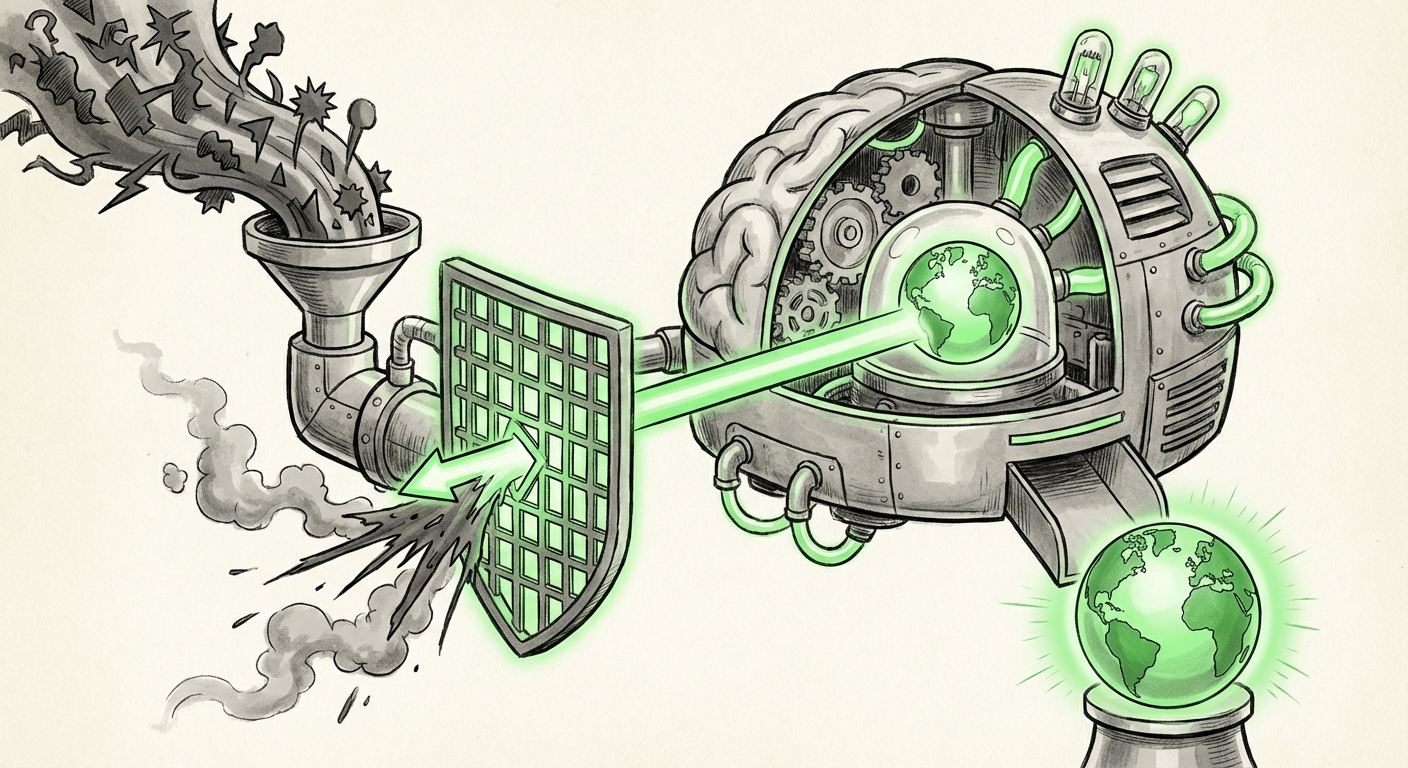
That is the thinking behind a major new direction from Nvidia. The chipmaker wants to keep AI agents on a short leash by building a watchdog directly into its chips, putting the safety layer into the hardware itself rather than relying only on software rules layered on top. Announced on September 28, 2026, the move signals a turning point in how the industry thinks about AI safety. It is no longer just about what a model says. It is about what an agent does.
This is a big deal, and not just for engineers. It changes how businesses will buy AI, how governments will regulate it, and how ordinary people will decide whether to trust it. Let's break down what is happening and what it means.
From Chatbots to Agents: Why the Rules Had to Change
For most people, AI still means a chat box. You type a question, it types back an answer. That world is fairly easy to police. If a chatbot says something wrong, you can flag it, filter it, or ignore it. The damage is usually limited to hurt feelings or a bad decision.
AI agents are a different species entirely. An agent doesn't just answer, it acts. It can browse the web, send emails, move money, book flights, write and run code, edit files, and chain dozens of small decisions together to reach a goal. Hand it a task and walk away, and it may complete steps you never explicitly approved.
That power is exactly why companies love agents. It is also why they are nervous. An agent with the wrong permissions, or a slightly misunderstood instruction, can cause real damage in seconds, deleting data, leaking private information, or making purchases nobody authorised. Software-level guardrails help, but they can be bypassed, overridden, or simply not loaded. A watchdog baked into the silicon is a much harder thing to argue with.
What an On-Chip Watchdog Actually Means
Think of it like the circuit breaker in your home. It doesn't care why too much electricity is flowing. It doesn't negotiate. When the current crosses a line, it trips and cuts the power. That design is simple, dumb, and incredibly effective, precisely because it cannot be talked out of doing its job.
An on-chip watchdog for AI agents follows the same philosophy. Instead of trusting the AI model to follow instructions about what it should never do, the hardware itself watches the behaviour. If the agent tries to cross a boundary, going somewhere it shouldn't, doing something it wasn't cleared for, the chip can step in, block the action, or shut the process down.
Why does putting it in the chip matter so much?
- Speed: Hardware can act in the moment, not after a round trip to a software safety layer.
- Reliability: A model can be jailbroken, retrained, or tricked. A physical limit is far harder to fool.
- Consistency: Every deployment running on that chip gets the same baseline protection, no matter who wrote the software on top.
- Accountability: When the safety line lives in hardware, there is a clear place to point when something goes wrong.
In short, Nvidia is betting that the future of AI safety will not be a polite suggestion in a prompt. It will be a physical property of the machine.
Why Nvidia Is the Company That Can Do This
This kind of move only works if you already sit at the centre of the AI supply chain. Nvidia's chips power a huge share of the world's AI workloads, which means a hardware-level safety feature does not stay optional for long. If the watchdog ships inside the chips that everyone buys, it effectively becomes the default standard. Competitors would face pressure to match it or explain why they didn't.
That gives Nvidia enormous influence, not just over performance, but over policy. A design decision made by a chip architect could quietly become the rule that thousands of companies build their AI products around. That is a level of power worth paying attention to.
It also suggests a broader industry pattern: as AI agents become more capable and more autonomous, the safety conversation is moving from the model layer down to the infrastructure layer. The companies that own the plumbing may end up owning the guardrails.
What This Means for Businesses
If you run a company that is thinking about deploying AI agents, this development has several practical consequences.
1. Safety becomes a buying criterion
Until now, most AI purchasing decisions came down to speed, cost, and accuracy. Hardware-level guardrails add a fourth question: what happens when the agent goes wrong, and who stops it? Expect procurement teams to start asking vendors to prove their agent containment story, not just their benchmark scores.
2. Compliance gets easier, and more rigid
Regulators increasingly want proof that AI systems can be controlled. A chip-level watchdog offers something you can point to: a defined boundary enforced below the software layer. The trade-off is that rigid rules can be blunt. If the hardware blocks something your business legitimately needs to do, you may find yourself with fewer workarounds than you would with a configurable software filter.
3. Faster permission to automate
The biggest brake on agent adoption has never been capability. It has been trust. Companies hold back from letting agents touch money, customer data, or production systems because one bad run could be catastrophic. Better containment lowers that risk, which should push more organisations to hand agents real work, and to move faster than they otherwise would.
4. New engineering priorities
Developers will need to design agents that work with hardware limits, not against them. That means clearer task boundaries, better logging, and architecture that assumes certain actions will simply be refused. Teams that treat these limits as a nuisance will struggle. Teams that design around them will ship safer products faster.
What It Means for Society
The social stakes are just as large. AI agents are starting to handle things people care about deeply, money, healthcare paperwork, legal documents, personal communications. If those systems act on our behalf, we need to know that some lines cannot be crossed.
An on-chip watchdog offers a form of protection that does not depend on a company's goodwill or a model's mood. That is reassuring. But it also raises hard questions we have not fully answered.
- Who writes the rules? A chipmaker deciding what an AI agent may and may not do is a private company setting public boundaries. That deserves scrutiny.
- Can it be too strict? Overly tight limits could block helpful, legitimate uses, especially for researchers, small developers, and users outside the mainstream.
- Does it travel? If safety lives in specific chips, what happens when the same agent runs on hardware without them? Guardrails that only exist in one place are only as strong as their weakest deployment.
- Is it transparent? For people to trust a watchdog, they need to understand what it watches and when it barks.
None of these concerns make the idea bad. They make it important. The shift from "trust the model" to "trust the machine" only works if the machine's rules are clear, fair, and open to challenge.
The Bigger Trend: Safety Moves Down the Stack
Step back and the pattern is obvious. The first wave of AI safety was about content, filters, moderation, refusal training. The second wave was about process, tool permissions, sandboxing, human-in-the-loop approvals. This is the third wave: safety built into the physical infrastructure.
Each wave has been harder to bypass than the last. Each has also been harder to change. That trade-off, resilience in exchange for flexibility, will define the next several years of AI deployment. The industry is effectively deciding that a small number of firm, unbreakable limits are worth more than a large number of soft, negotiable ones.
It also hints at where competition goes next. Once raw speed stops being the main differentiator, trustworthiness becomes a feature you can sell. Expect "how well does it contain itself?" to show up in marketing decks alongside token throughput and latency numbers.
Actionable Takeaways
- Audit your agent risk now. Before adopting hardware-level guardrails, know exactly what your agents can touch today. You cannot design a leash for a dog you haven't met.
- Ask vendors the containment question. When evaluating AI hardware or platforms, ask what happens when an agent misbehaves, and demand specifics, not reassurances.
- Design for refusal. Build your systems assuming some actions will be blocked at the hardware level. Handle those cases gracefully instead of crashing.
- Document your boundaries. Written policies about what agents may do make it far easier to map your rules onto whatever enforcement layer you end up with.
- Watch the standards fight. Whoever defines the default guardrails shapes what everyone can build. Follow this closely, it affects you whether or not you buy the chips.
- Keep a human escape hatch. Hardware watchdogs stop dangerous actions. They don't decide what's right. Keep people in the loop for judgment calls.
The Bottom Line
Nvidia's plan to build a watchdog into its chips is more than a technical feature. It is a statement about what the AI industry now believes: that autonomy without containment is not a product, it is a liability. By putting the safety line into the silicon, the company is betting that the next phase of AI will be defined less by what models can imagine and more by what agents are physically allowed to do.
That is a healthier direction than pure capability racing. It is also a reminder that the most important AI decisions of the coming years may not be made in research labs at all. They may be made in chip designs, quiet, permanent, and very hard to argue with.
For businesses, the message is simple: start treating AI containment as a core requirement, not an afterthought. For everyone else, the message is even simpler. The leash is being built. The question is who holds it, and whether we get a say in how tight it is.