OpenAI Reopens the $200 Pro Plan but Halves API Credits: The Real Story Behind AI's Move to Pay-Per-Use
On September 29, 2026, OpenAI did something that looked, at first glance, like a small billing tweak. It reopened its $200 Pro plan. At the same time, it cut the API credits bundled into that plan in half. Read the two moves together, and a much bigger story appears, one about how AI companies plan to charge for what they sell, and how the rest of us will end up paying for it.
This is not a footnote in a pricing page. It is a signal about where the entire AI industry is heading. The subscription era, where a flat monthly fee bought you a generous bundle of everything, is quietly ending. What is replacing it is a world of metered, pay-per-use AI, where you pay for what you actually consume, and the bill scales with your ambition.
For anyone building with AI, buying AI, or just trying to budget for it, that shift matters more than any single model release.
What Actually Changed
Two things happened at once, and they pull in opposite directions.
First, the $200 Pro plan came back. For customers who wanted the top-tier subscription, the door reopened. That is a customer-acquisition and retention move. It says OpenAI still believes there is a market of power users, developers, analysts, founders, agencies, willing to pay a premium flat fee for the best access and the highest limits.
Second, the API credits included with that plan were halved. A subscription that once bundled a substantial pool of programmatic usage now bundles half as much. If you want to push that same volume of work through the API, you will be paying for it separately.
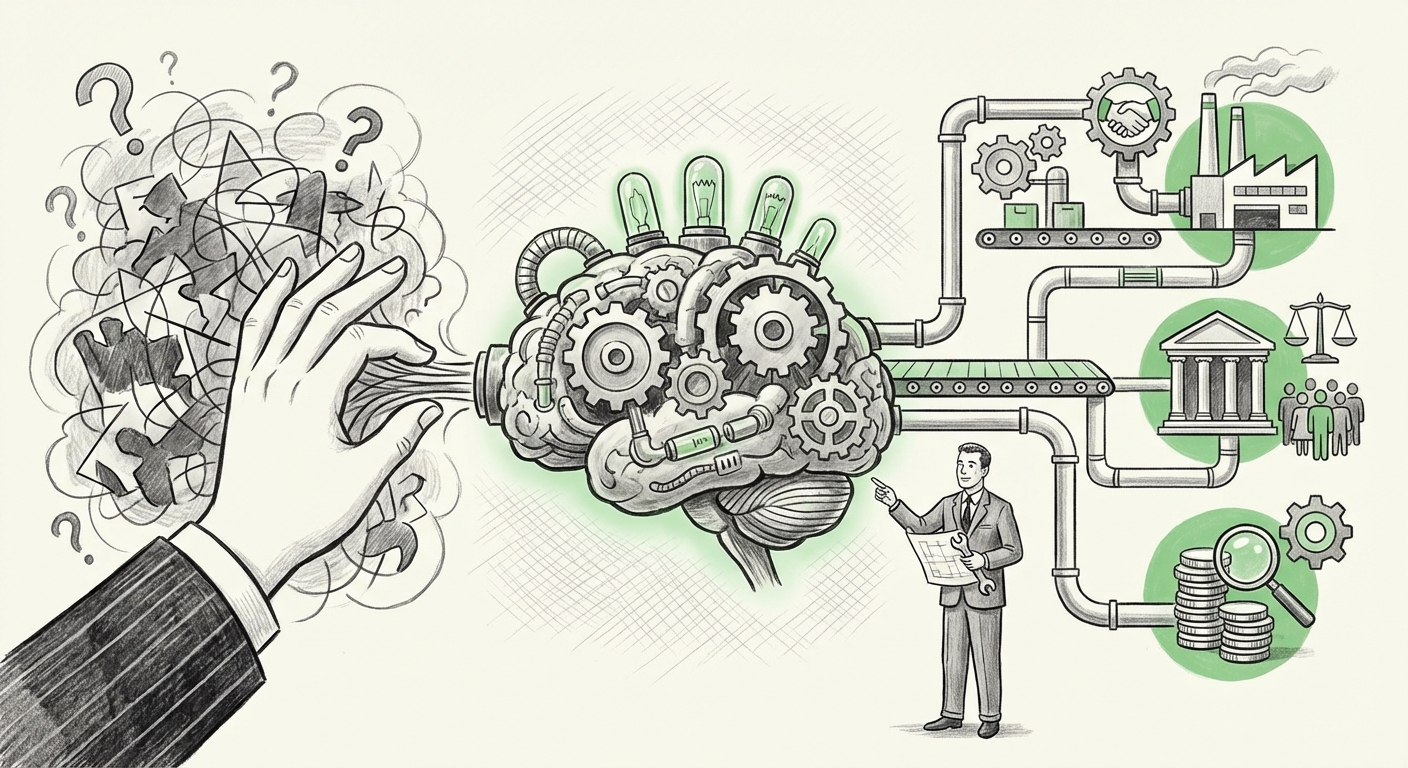
Put another way: the subscription still exists, but it no longer pretends to cover your heavy usage. The plan is being reframed as a seat, access for a human, while the machines that do the actual heavy lifting get billed by the meter.
That is a deliberate nudge. And it is a nudge in a very specific direction: pay-per-use.
Why the Flat-Fee Bundle Was Always Borrowed Time
To understand why this is happening, you have to understand what an AI subscription actually is. It is not a piece of software you download once. Every single prompt you send triggers real work on real hardware. Chips run, power is drawn, cooling kicks in, and a model produces tokens. That cost happens whether you use the product once a month or ten thousand times a day.
Early on, AI companies absorbed that cost to grow fast. Flat fees were a land-grab strategy: make it cheap and simple to get hooked. But as usage patterns changed, the math got uncomfortable.
And usage patterns have changed dramatically. The biggest driver is the rise of agentic AI, systems that do not just answer a question, but plan, browse, write code, call tools, check their own work, and loop until a task is done. A single "agent run" can involve dozens or hundreds of model calls. One user clicking one button can consume the compute of a hundred ordinary chats.
That breaks subscription economics. When a small number of heavy users can consume enormous amounts of compute for a fixed price, the flat fee becomes a liability, not an asset. The fix is obvious: stop pricing access, start pricing consumption.
The Strategic Logic: Seats vs. Meters
What OpenAI is doing mirrors a pattern we have seen across enterprise software. Companies sell two different things at once: seats for people, and meters for machines.
Seats are predictable. They are easy to sell. They are how you get a company to sign a contract and standardise on your platform. Meters are where the growth lives. If your product becomes deeply embedded, writing code, handling support tickets, processing documents, running research, the metered side of the bill can eventually dwarf the seat side.
By reopening the Pro plan but shrinking its bundled credits, OpenAI keeps the seat as an entry point while making sure the meter is where the real revenue sits. The plan is the on-ramp. Pay-per-use is the highway.
This also protects the company in a way that matters a lot right now: it aligns its revenue with its costs. When you sell compute by the unit, your margin is far more defensible than when you sell unlimited compute for a fixed price.
What This Means for the Future of AI
1. AI spending becomes variable, and visible
For most of the AI boom, businesses could treat AI as a line item. A few hundred dollars a month, a handful of seats, done. That is over. As pay-per-use takes hold, AI budgets start to look like cloud budgets did years ago: usage-driven, sometimes spiky, and occasionally shocking. The companies that thrive will be the ones that treat AI cost as an engineering problem, not just a finance problem.
2. Efficiency becomes a competitive advantage
When every token costs money, wasting tokens costs money. This pushes the whole ecosystem toward smarter design, smaller models for simple tasks, caching, batching, cheaper models as first pass and expensive models as a fallback, tighter prompts, fewer pointless loops. The era of throwing the biggest model at every problem is ending. The era of routing and restraint is beginning.
3. Pricing power shifts toward whoever owns the meter
Every company that builds on top of someone else's API now has a variable cost it does not fully control. That is a strategic vulnerability. Expect more businesses to hedge, mixing providers, running some workloads on open models, and negotiating volume commitments. Multi-model strategies stop being a technical nicety and become a financial necessity.
4. The free tier becomes more important, and more limited
When consumption is expensive, free access gets rationed more carefully. The freemium funnel stays, but it narrows. Users get a taste, then a wall, then a decision.
Practical Implications for Businesses
If you are buying or building AI today, here is what this shift demands of you.
- Get granular about usage. Track which teams, features, and workflows actually consume AI. You cannot manage a metered bill you cannot see.
- Match model to task. A small model for classification and a large model for reasoning is not just cheaper, it is often faster and just as accurate.
- Build guardrails, not just features. Set caps, timeouts, and loop limits on any agent. Runaway processes are now runaway invoices.
- Recheck your contracts. If your plan's bundled credits just shrank, your effective cost per unit of work went up, even though the headline price did not change.
- Forecast in scenarios. Model your AI costs at low, medium, and high adoption. The high scenario is the one that will surprise your CFO.
The Bigger Picture: AI Grows Up Financially
There is a temptation to read this as bad news. It is not, or at least, not only. What it signals is that AI is becoming a mature utility. Utilities are metered. Electricity is metered. Cloud computing is metered. Nobody expects a fixed monthly fee for unlimited electricity, because the cost genuinely varies with use.
AI is arriving at the same place. The businesses that win will be the ones that stop thinking about AI as a subscription they buy and start thinking about it as infrastructure they operate, with all the discipline that implies.
There is a genuine risk, though. If pay-per-use becomes the only path, smaller companies, researchers, hobbyists, and nonprofits can get priced out of experimentation. Innovation often comes from the edges, from people who could not afford a big meter. How the industry handles that, through cheap small models, open-weight alternatives, credits, or education programs, will shape who gets to build the next generation of AI products.
And there is a fairness question worth watching: when the same company sells the seat and owns the meter, it sets both the flat price and the per-unit price. That is a lot of leverage. Regulators and enterprise buyers will both be paying attention.
How AI Will Be Used From Here
The direction is clear. AI is moving from a tool people open to a service people run. Instead of logging in to chat, more work will happen in the background, agents handling support queues overnight, drafting reports before the team arrives, watching dashboards and flagging anomalies, processing documents in bulk.
That is a fundamentally different pattern of usage, and it consumes a fundamentally different amount of compute. Pay-per-use is not a pricing trick. It is the only model that can sustain that shift.
The reopening of the $200 Pro plan keeps the human front door open. Halving the bundled API credits keeps the machine door metered. Both moves point the same way, toward a future where AI is priced like the utility it is becoming.
For companies, the takeaway is simple and urgent: start measuring, start optimising, and start budgeting for AI the way you budget for cloud. The bill is now a design decision.