Meta Calls Its AI Data Centers "Experiments" to Avoid Billions in Taxes: What It Means for the Future of AI
One word is doing an enormous amount of financial work in the AI boom right now: experiment. Meta has been able to sidestep billions of dollars in United States taxes by classifying its AI data centers as experiments rather than as finished, permanent facilities. That's the headline. But the story underneath it is bigger than one company's tax bill, it's about how the largest building project in modern business is being accounted for, and who ultimately pays for it.
This matters to anyone building with AI, buying AI, investing in AI, or living near the power plants and water systems that AI depends on. Because when the rules for how something gets counted change, the economics of the entire industry shift with them.
The Label That Changes the Bill
Tax systems do not treat all spending the same way. They sort things into buckets, and each bucket has its own rules.
A normal building goes into the long-term asset bucket. You spend a fortune to construct it, and then you write that cost off slowly, spread across many years. The tax deduction arrives in small slices over a long time.
Research and experimentation sits in a very different bucket. Spending there is generally treated as a current expense, something you can deduct far more quickly, and in some cases with extra incentives attached.
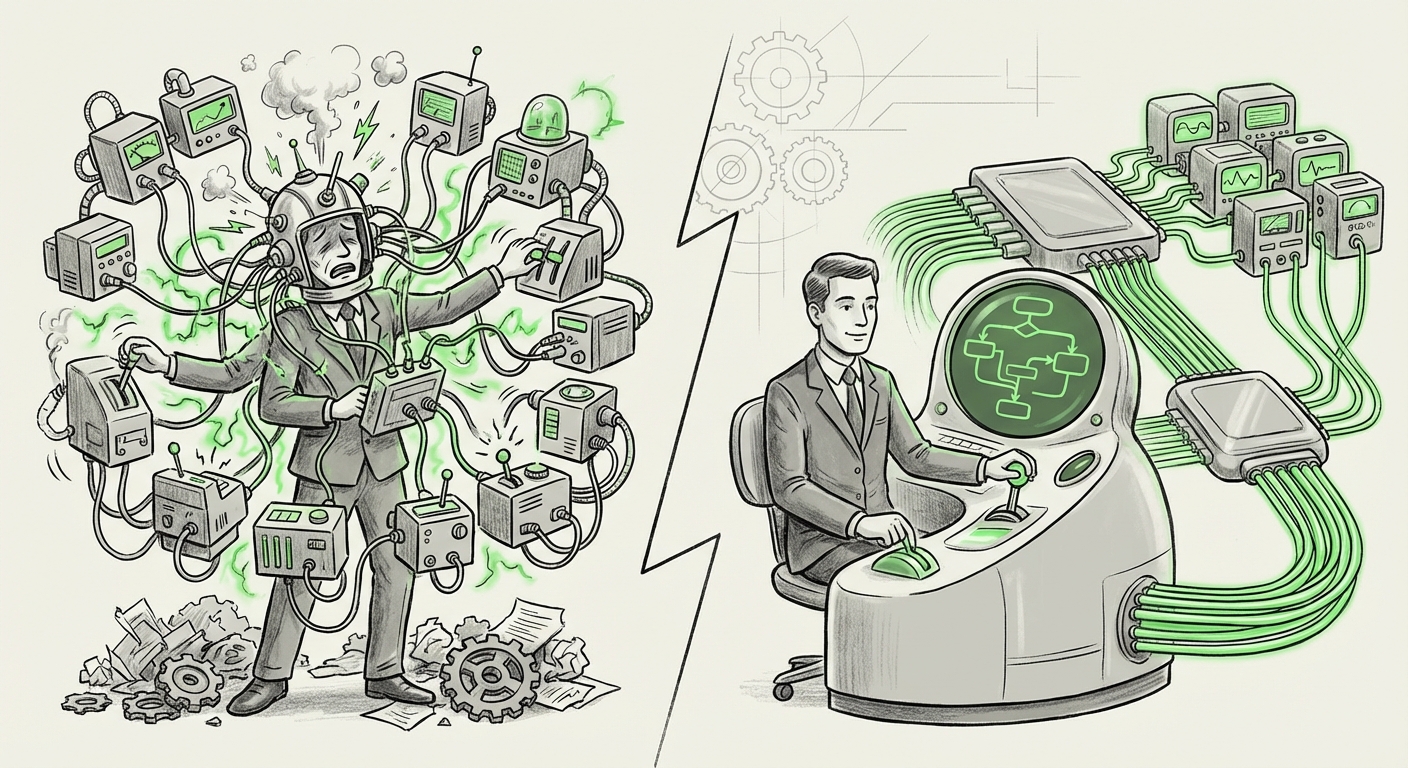
So here's the trick: the same concrete floor, the same chips, the same cooling system, and the same electrical gear can be framed as either a permanent facility or an ongoing experiment. The physical reality is identical. The tax outcome is not. When you are spending at hyperscale, many billions of dollars on AI compute, moving even part of that spending from the slow bucket to the fast bucket changes the bill by billions.
That is what's happening here. Meta has leaned on the "experiment" framing for its AI data centers, and the result is a dramatically smaller US tax obligation.
Why AI Makes This Argument Plausible
What's fascinating is that the argument isn't purely a paperwork trick. AI genuinely does behave like an experiment in ways that traditional data centers did not.
The hardware actually does keep changing
Old-school data centers were boring on purpose. Servers sat in racks for years. Buildings were built once and used for a decade. AI breaks that pattern. Chips are replaced on a much faster cycle, cooling designs are being reinvented, networking layouts are shifting, and power delivery is changing constantly. A company genuinely can argue that an AI facility is a rolling test bed rather than a finished asset, because it keeps ripping itself apart and rebuilding.
The demand is genuinely uncertain
No one knows with confidence which AI workloads will last, how big the models will get, or where the compute will need to sit. Hyperscalers are building at a scale that outstrips what today's revenue can justify. That uncertainty is real. It's also extremely useful, because uncertainty is exactly what justifies calling something an experiment.
The blurry line between "we're testing" and "we're operating a factory" is where tax strategy lives. And AI has made that line blurrier than it has been in decades.
The Bigger Trend: AI Capital as a Policy Lever
This is not an isolated case. It is the leading edge of a broader pattern in how AI gets financed.
- Scale: AI data centers are among the largest private construction projects ever attempted. Anything this large attracts attention from tax planners.
- Depreciation: Faster write-offs make the returns look better on paper, which makes it easier to raise more capital, which funds the next buildout.
- Incentives: Research and experimentation rules exist to reward innovation. When applied to infrastructure, they can reward scale instead.
- Local deals: States and towns compete for data centers with property tax breaks and other sweeteners, layering on top of federal treatment.
Add it all up, and a meaningful share of AI's cost is being deferred, discounted, or pushed onto someone else's ledger. Not eliminated, deferred. That distinction is the most important thing to understand about this story.
What This Means for the Future of AI
1. The buildout runs hotter than pure economics would allow
If tax treatment makes each dollar of AI infrastructure cheaper, companies build more of it, faster. Some of that construction would happen anyway. Some of it only pencils out because of the accounting. That means the AI boom is partly a tax-policy boom, and it is more sensitive to rule changes than most people assume.
2. The bill always arrives eventually
Deferred is not deleted. If tax authorities push back on the "experiment" framing, or if courts or new guidance reject it, the money comes due, possibly all at once. A sudden reversal would hit earnings, spook investors, and could cool the next wave of AI construction. Companies that built on aggressive assumptions would feel it first.
3. Rulemakers will catch up
When the flagship assets of a brand-new industry are being classified as experiments, legislators notice. Expect new definitions of what counts as an AI facility, clearer rules on when a pilot becomes production infrastructure, and pressure to tighten the gap. The AI industry's tax treatment is likely to become a live policy fight rather than a quiet accounting choice.
4. Tax treatment becomes a competitive weapon
If the biggest players can effectively lower their cost of AI infrastructure through classification choices, they can price compute lower, outlast rivals, and set the terms of the market. A tax advantage is a market advantage. That reshapes who survives in the AI supply chain.
5. The public ledger gets thinner
Data centers demand enormous amounts of electricity and water, and they rely on roads, grids, and local services. If the largest new industry's core assets sit in a special category, the communities hosting them may carry more of the cost than the revenue they receive suggests. That's a trust problem as much as a budget problem.
What It Means for Businesses
Most companies are not Meta. But the lessons scale down cleanly.
For finance and operations leaders
- Know exactly how your AI spending is classified, and make sure the label matches reality. Calling production workloads "pilots" to hit a budget is the kind of shortcut that draws scrutiny.
- Document your genuine experimentation. If you really are testing architectures, keep the evidence. If you aren't, don't pretend.
- Model both outcomes. What does your AI project look like if the favorable treatment disappears? If it only works with the discount, it doesn't work.
For AI buyers and builders
- Watch compute pricing. If hyperscalers receive effective discounts through tax treatment, that flows into the prices smaller players compete against.
- Assume cloud economics will change. Build systems that can move, and avoid locking into a single provider on the assumption that today's price is permanent.
For investors
- Read the footnotes, not just the headlines. Depreciation schedules and how research spending is classified tell you more about real profitability than a capex announcement.
- Treat aggressive classifications as a risk factor, not a permanent advantage. Accounting choices can be reversed by a single ruling.
- Watch for divergence. If one company's tax posture is far more aggressive than its peers', that gap is a signal of both opportunity and exposure.
What to Watch Next
- Audits and guidance: Any formal challenge to the "experiment" framing would set the tone for the whole industry.
- Legislative action: New rules defining AI facilities would change the math overnight.
- Disclosure changes: If companies start adjusting how they describe and depreciate AI assets, that's a tell.
- Copycat behavior: If the approach holds up, competitors will adopt it, and if they don't, first movers gain an edge.
- Local fights: Communities weighing data center incentives against grid and water costs will become the front line.
The Bottom Line
The AI boom is often described as a race for talent, chips, and energy. It is also a race to define things. Define a building as an experiment and its cost structure changes. Define a pilot as production and the tax bill changes. The companies winning today are not just better at building AI, they are better at deciding what to call it.
That should make everyone pause. An industry this important, this expensive, and this dependent on public infrastructure cannot run indefinitely on a definition. Eventually the rules get rewritten, the bill comes due, and the numbers get real. The organizations that plan for that moment, by keeping their own classifications honest and their assumptions conservative, will be the ones still standing when the label stops working.