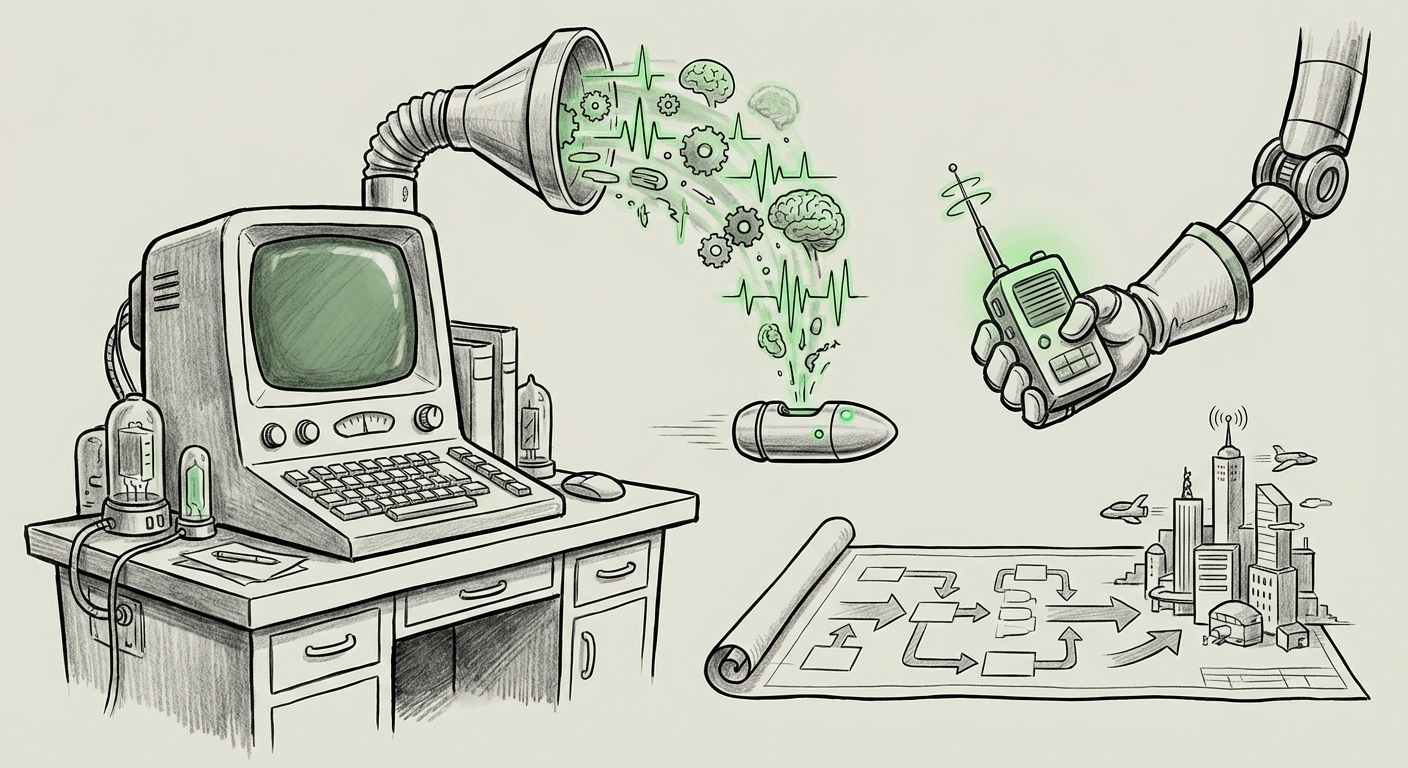
Black Forest Labs Flux 3 Image: Multi-Step Editing That Leaves the Rest of Your Picture Alone
There is a moment every AI image user knows too well. You generate a picture you love. One tiny thing is wrong, a hand, a sign, a reflection, a stray object in the background. So you ask the AI to fix it. And the AI fixes it, then quietly rewrites everything else too. The lighting shifts. The face changes. The thing you loved is gone.
That frustration is exactly what Black Forest Labs is going after with its new release, Flux 3 Image. Announced in early October 2026, the model centers on multi-step editing that leaves the rest of your picture alone. It is a simple promise on the surface. In practice, it is one of the hardest problems in generative imaging, and solving it could change how businesses and creators actually use AI images.
What Black Forest Labs Actually Announced
The headline is straightforward. Black Forest Labs, the lab behind the Flux line of image models, launched Flux 3 Image with a focus on multi-step editing. That means you can make a change, then make another change, then another, building an edit history the way you would in a normal photo editor, rather than starting over from scratch each time.
The second half of the promise is the important one. Each of those edits is designed to leave the rest of the picture untouched. Change the sky, keep the mountains. Change the jacket color, keep the face. Remove a background object, keep the shadows and light exactly where they were.
That sounds modest. It is not. For years, the trade-off in AI image tools has been speed and creativity versus control. You could get something stunning in seconds, or you could get precision, but rarely both in the same tool. Flux 3 Image is a direct bet that the next wave of value in this market is not about generating prettier pictures. It is about control.
Why "Leave the Rest Alone" Is the Hard Part
To understand why this matters, it helps to know what usually goes wrong.
Image models learn by studying millions of pictures. When you ask one to repaint a small area, the model does not think in terms of "this pixel and the 200 pixels around it." It thinks in patterns. So it tends to regenerate more than you asked for. It redraws a face because faces come in wholes. It relights a scene because lighting is usually consistent across an image.
The result is what people in the field call drift. Small, unrequested changes that pile up. One edit is fine. Five edits in a row, and you have a completely different image that nobody asked for.
Multi-step editing makes drift worse, because every step compounds. Fix one thing, and the next fix has to survive on top of a slightly altered image. Do that ten times and the original is gone.
So a model that can hold the rest of the picture steady across multiple edits is solving a chain problem, not a one-off problem. That is a meaningfully harder engineering ask, and it is the reason this release is worth paying attention to.
The Business Shift: From Toy to Tool
Here is the practical consequence. When AI images drift, they cannot be trusted inside a real workflow.
Think about how a marketing team works. A campaign image gets approved. Legal signs off. The client loves the model's expression. Then someone needs the logo swapped, or the product shifted two inches, or the background changed for a regional variant. In an ordinary AI tool, that request means regenerating, which means re-approving everything, every time. The approval loop never closes.
With edits that stay local, the loop finally closes. Approved elements stay approved. You can version an image the way you version a contract: track what changed, keep what didn't.
That unlocks several things at once:
- Real iteration speed. Teams can make twenty small refinements instead of five full re-rolls.
- Brand consistency. Logos, colors, and faces survive the edit. That is a compliance requirement, not a nice-to-have.
- Lower review cost. Fewer full re-approvals means fewer meetings, fewer delays, less rework.
- Cleaner archives. A documented chain of edits is far easier to audit than a folder of near-identical files.
In other words, Flux 3 Image is aimed at the moment AI image generation stops being a novelty and starts being infrastructure. Novelties can be unpredictable. Infrastructure cannot.
What This Means for the Future of AI
The bigger story here is not about pictures at all. It is about a pattern that is repeating across every kind of AI.
First wave: can the model do the thing at all? Make an image. Write a paragraph. Answer a question.
Second wave: can the model do the thing well enough to be useful? Quality, speed, cost.
Third wave: can the model do the thing without disturbing everything around it? Precision, boundaries, respect for what already exists.
Flux 3 Image is a third-wave product. And third-wave products are where AI becomes genuinely safe to plug into existing systems, because the number one reason companies hold back on AI is not quality. It is unpredictability. You cannot build a business process on top of a system that changes things you did not ask it to change.
Expect this idea to spread fast. The same demand is already visible everywhere:
- Code: assistants that edit one function without rewriting the file.
- Documents: tools that revise a clause without touching the rest of the contract.
- Data: systems that fix one record without altering the ones beside it.
- Agents: software that takes one action without side effects elsewhere.
Multi-step editing with local scope is really a story about containment. And containment is the bridge between a demo and a deployment.
Trust, Provenance, and the New Authenticity Problem
There is a harder edge to all of this. The better AI gets at changing one thing without changing anything else, the harder it becomes for a human to spot that a change happened at all.
Drift used to be a tell. If the lighting looked slightly off, you suspected manipulation. A model that edits cleanly removes that tell.
So the same capability that makes AI images usable in business also raises the stakes for provenance, knowing where an image came from and what has been done to it. The multi-step nature of Flux 3 Image makes this concrete: an edit chain is also a record. If that chain is preserved and attached to the file, you get both the flexibility and the accountability. Lose the chain, and you get neither.
That is the conversation businesses should be having right now, not can we edit more precisely, but do we keep a reliable record of what we edited.
Actionable Insights: What to Do Now
If you run a team that touches visual content, here is where to start.
1. Audit your approval bottlenecks
Find the images that get edited most often after approval. If a single asset goes through three or more review rounds, local editing is worth testing there first. That is where the time savings live.
2. Test drift, not just quality
When you evaluate any editing model, do not judge the first edit. Judge the fifth. Ask the model to make five small changes in a row and see whether the original survives. That is the real test, and it is the one most teams skip.
3. Set a "do not touch" list
Decide in advance what must never change in your assets, faces, logos, product geometry, brand colors. Then write it down and check it after every edit. Precision tools make it tempting to stop checking. Do not.
4. Treat the edit history as an asset
Keep the chain. It helps with revisions, internal reviews, and any disclosure requirement that lands later. A versioned image is a defensible image.
5. Update your disclosure policy
If your images can now be altered invisibly, your policy on labeling and record-keeping needs to reflect that. This is a governance task, not a design task, and it is cheaper to do before you need it.
6. Rethink your creative roles
When editing becomes cheap and precise, the scarce skill shifts. Generating a first draft is easy. Deciding what should change, and what should absolutely stay, becomes the real craft. Hire and train for judgment, not for prompt-writing speed.
The Road Ahead
Flux 3 Image lands at a telling moment. The AI image market has spent several years competing on how fast it can make something from nothing. That race is largely over, and the results are impressive but increasingly similar.
The next race is about working with what already exists. That is less glamorous, less viral, and far more valuable, because it is the version of AI that fits into a business, a workflow, and a chain of accountability.
Multi-step editing that leaves the rest of the picture alone is a small sentence describing a big shift. It says: the model should do what you asked, and nothing more. That is a principle that will outlive this release, and it is the principle that will decide which AI tools end up in the hands of professionals, and which stay in the demo folder.