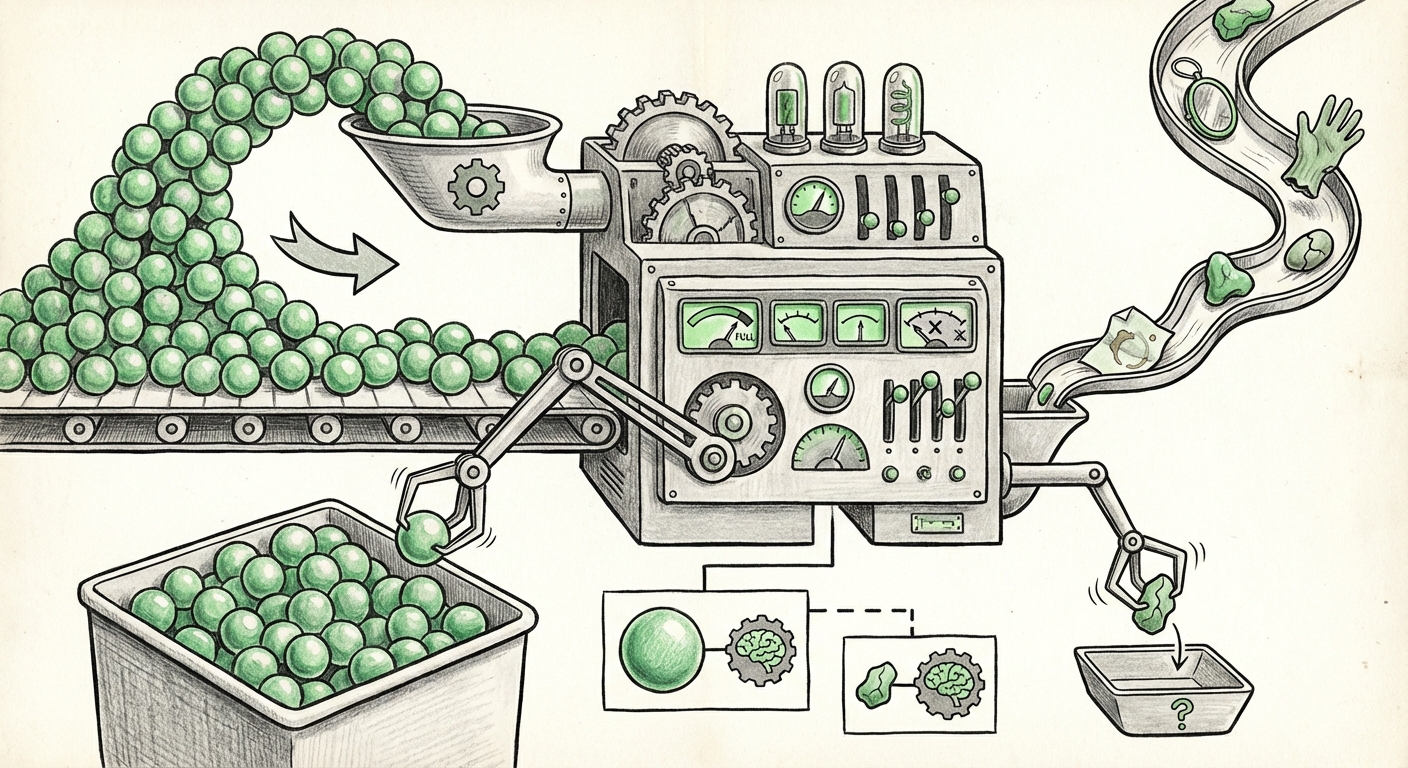
Datumbox Machine Learning Framework 0.6.0 Released: What It Means for the Future of AI
On May 4, 2015, the Datumbox Machine Learning Framework shipped version 0.6.0. On the surface, that is a small piece of news. A version number ticks up. A download link goes live. Most people never notice.
But if you zoom out, releases like this one tell a much bigger story. They mark the moment machine learning stopped being a science project locked inside universities and research labs and started becoming something ordinary businesses could actually pick up and use.
That shift did not happen in one dramatic moment. It happened through thousands of small, unglamorous software updates. Version 0.6.0 is one of them. And understanding why a release like this matters is one of the best ways to understand where AI is heading next.
A Small Version Number With a Big Signal
Let's start with the number itself. A 0.6.0 release sits in a very specific place in a project's life. It is not version 1.0, so the team is not yet promising a frozen, stable interface. But it is not 0.1 either. Reaching a point-six release means the project has survived long enough to be rewritten, refined, and re-released several times.
That matters more than it sounds. In software, surviving is the hard part. Most open-source projects die quietly after one or two releases because the original author moves on. A project that keeps shipping new versions is showing something valuable: momentum.
For anyone evaluating machine learning tools, momentum is a better signal than a feature list. Features can be added or faked. Momentum cannot. It tells you there is a team, a community, and a reason to keep going.
Why open source changed the math
Before open-source frameworks matured, building a machine learning system meant either hiring rare specialists or buying expensive commercial software with heavy licenses and lock-in. Both options were out of reach for most small and mid-sized companies.
Open frameworks flipped that. They turned machine learning from a purchase into a download. That is a profound change, and it is the change that a release like 0.6.0 represents.
The Bigger Trend: Machine Learning Leaves the Lab
Around the middle of the last decade, machine learning was crossing a threshold. The algorithms were not new. Many core methods had existed for years or decades. What changed was everything around the algorithms: the tooling, the documentation, the community, the ease of use.
Think of it like electricity. The science of electricity arrived long before the electric grid. What made electricity transform society was not the discovery, it was the wiring. Machine learning reached its wiring phase in this period, and open frameworks were the copper.
Three trends drove it:
- Cost of experimentation dropped. When software is free to download and run, trying an idea costs time instead of money.
- Knowledge became shared. Open code doubles as documentation. You can read exactly how a method works instead of trusting a sales pitch.
- Talent multiplied. When tools are accessible, far more people can learn them, and the talent pool grows faster than any single company can hire.
Each new framework release, including 0.6.0, adds another layer of wiring.
What This Means for the Future of AI
Here is the central insight: the future of AI will be shaped as much by software engineering as by research breakthroughs.
Headlines love big model announcements. But the real-world impact of AI depends on plumbing, packaging, versioning, documentation, testing, and compatibility. A brilliant algorithm that nobody can install helps nobody.
Layered stacks are forming
As frameworks mature, they naturally split into layers. One layer handles data. Another handles model training. Another handles deployment. Another handles monitoring. Each layer can be swapped, upgraded, and improved independently.
This is exactly what happened with web development. Early websites were hand-built from scratch. Today, developers assemble proven pieces. Machine learning is following the same path. Releases like 0.6.0 are the early chapters of that story.
Standards beat brilliance
In the long run, the tools that win are rarely the smartest. They are the ones that are easiest to adopt. Predictable interfaces, clear changelogs, and steady releases beat clever but chaotic alternatives almost every time.
That means the projects that keep shipping, the ones that reach 0.6.0 and beyond, will shape what AI looks like in practice for the next decade.
Practical Implications for Businesses
If you run a business, what does a framework release actually mean for you?
1. The cost of trying AI just fell again
Every mature open release lowers the price of a pilot project. You no longer need a huge budget to test whether AI can help with forecasting, sorting, scoring, or detection. You need a small team, a clean dataset, and a few weeks.
2. "Buy versus build" gets more interesting
Open frameworks mean you can build a working prototype without committing to a vendor. That gives you leverage. You can compare a home-built model against a commercial product on real results rather than on promises.
3. Vendor lock-in becomes a real risk to manage
If your AI runs only inside one closed platform, you are exposed. Open alternatives give you an exit route. Smart teams keep their data and models portable, even when they choose a commercial tool.
4. Your data matters more than your algorithms
When the software is free and widely available, it stops being your advantage. The edge moves to what you own: your data, your domain knowledge, and your ability to measure what works.
5. You may not need a research team
Frameworks handle a lot of the heavy lifting. For many business problems, the winning move is not inventing a new method, it is applying a known one correctly to well-prepared data.
What Society Gains, and What to Watch
The spread of accessible machine learning is mostly good news. Smaller companies, nonprofits, clinics, and public agencies gain tools that were once reserved for the largest players. That widens who gets to build with AI.
But openness cuts both ways. Three things deserve attention:
- Bias travels easily. Free tools spread good and bad practices at the same speed. A flawed model can now be copied just as fast as a good one.
- Governance lags behind code. Software ships in weeks. Rules and oversight move far more slowly.
- Hype outruns reality. Easy tools can make weak results look impressive. Careful testing becomes more important, not less.
The lesson is not to slow down. It is to pair fast tools with honest measurement.
Actionable Insights: What to Do Now
Whether you are an engineer or an executive, here is a practical checklist:
- Watch release cadence, not just features. A steady stream of versions tells you a project is alive.
- Run a small pilot before a big bet. Pick one real problem and test it end to end.
- Invest in data hygiene early. Clean, well-labelled data beats a fancy model almost every time.
- Build an evaluation habit. Decide in advance how you will know if a model is actually working.
- Keep your options open. Avoid designs that make it painful to switch tools later.
- Contribute back when you can. Bug reports and documentation help the frameworks you depend on, and raise your team's profile.
The Bottom Line
A single version bump on May 4, 2015 looks tiny. But it belongs to a pattern that reshaped the entire field. The Datumbox Machine Learning Framework reaching 0.6.0 is a marker of a world where machine learning tools are open, iterating, and available to anyone with a laptop and a question.
The future of AI will not be decided only by who builds the biggest model. It will be decided by who builds the most usable tools, and who puts them in the most hands. That race is already well underway, one release at a time.