OpenClaw 2.0 Is Here: What This Milestone Means for the Future of AI Agents
OpenClaw 2.0 has arrived. On the surface, that is a release announcement, a version number ticking upward, a changelog, a fresh round of installs. But step back and it reads as something bigger: a signal that the AI agent era has moved out of the experimental phase and into the phase where software gets versioned, hardened, and depended upon.
Version 2.0 is never a small thing in software. It is the moment a project stops being a promising idea and starts being infrastructure. It means the people building it believe the foundation is stable enough to build on top of, and that the people using it believe it is worth the cost of migrating, retraining, and rewriting.
That is the lens worth using here. Not "what is in the box," but "what does it mean that we now have a box worth opening at all?"
Why a 2.0 Release Matters More Than a Feature List
In the first wave of generative AI, every few weeks brought a new model, a new demo, a new benchmark record. The energy was real, but the ground kept moving. Nothing had time to become a standard because everything was being replaced before anyone could build a habit around it.
A 2.0 milestone is a break from that pattern. It says a project has survived long enough to earn a second major release, which, in a field this young, is a genuine accomplishment. It implies a community, a maintenance rhythm, and users who filed enough bugs and feature requests to justify a rewrite.
The practical takeaway for anyone watching this space: the important question is not whether OpenClaw 2.0 outshines whatever came before it. The important question is what its arrival tells you about where the whole category is heading. And the answer is that AI agents are being treated less like science projects and more like dependencies, the kind of thing you put in a production stack and expect to still work next quarter.
The Bigger Trend: AI That Acts, Not Just Answers
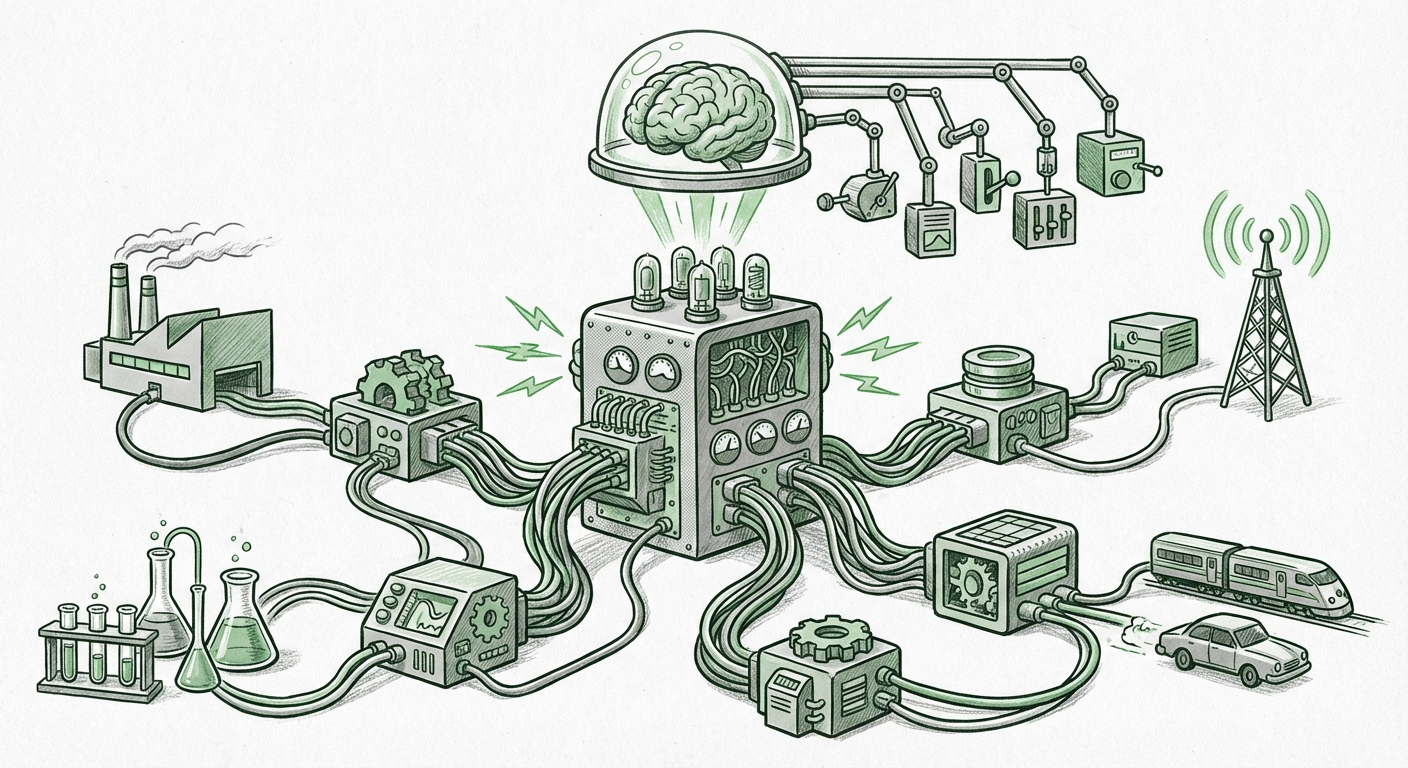
The defining shift of the past several years has been from AI that responds to AI that acts. Chatbots answer questions. Agents take steps: they read files, call tools, run commands, check results, and try again when something fails.
That shift changes everything about how AI gets evaluated. A chatbot that gives a slightly wrong answer is annoying. An agent that takes a slightly wrong action is a problem, one that shows up in your logs, your invoices, or your security review.
So the industry has been quietly reorganising around a new set of requirements: permissions, sandboxing, audit trails, rollback, cost controls, and the ability to see exactly what an autonomous system did and why. These are not glamorous features. They are the features that decide whether a tool gets adopted by a company that has something to lose.
A project reaching a 2.0 release is usually a project that has spent real time on exactly this layer. Version one proves the concept. Version two proves it can be trusted.
What Open-Source Momentum Means for the AI Market
Projects like OpenClaw sit in a broader pattern: open, extensible AI tooling that spreads faster than any single vendor can control. This matters for three reasons.
- It lowers the entry price. Teams that cannot justify a large contract can still experiment, learn, and build a proof of concept. Skill with agent tooling becomes portable rather than vendor-specific.
- It sets expectations. When open projects make certain capabilities standard, closed products have to match them. Users win.
- It creates a talent pipeline. Developers who learn on open tools bring those patterns into their workplaces, and eventually into the products they build.
The counterweight is equally real. Open ecosystems fragment. Documentation lags. Security is uneven. And "free" software still costs money in engineering hours, integration work, and the unglamorous labour of keeping things running.
The mature response is not to pick a side in the open-versus-closed debate. It is to recognise that the agent layer is becoming a commodity layer, and that the durable advantage will not come from which agent framework you use, but from what proprietary knowledge, data, and workflows you connect it to.
Practical Implications for Businesses
If you run a business, the arrival of a mature agent release should prompt a specific kind of thinking. Not "how do we use this?" but "which of our processes are ready to be handed to something autonomous, and which absolutely are not?"
Start with processes that are boring, frequent, and reversible
The best first candidates for agent automation are tasks that happen constantly, follow predictable rules, and can be undone if something goes wrong. Internal research. Draft generation. Data clean-up. Ticket triage. Report assembly. These are low-drama wins that build organisational trust.
Keep humans on the irreversible steps
Payments. Deletions. Anything touching customer records. Anything that leaves the building. The pattern that works is not "full autonomy" or "no autonomy", it is graduated trust, where an agent earns more responsibility as its track record improves.
Measure cost per completed task, not cost per token
Autonomous systems are unpredictable in ways chat systems are not. An agent that loops, retries, and re-plans can burn through budget fast. The useful metric is what a finished job actually costs, including the human time spent fixing the ones that went sideways.
Risks, Guardrails, and the Trust Problem
The uncomfortable truth about agentic AI is that capability and risk scale together. The more a system can do, the more damage it can do by being slightly wrong.
Three risks deserve particular attention:
- Prompt injection and instruction hijacking. An agent that reads outside content can be manipulated by that content. Any tool that touches email, web pages, or user uploads needs a clear boundary between data and instructions.
- Silent failure. Agents that fail loudly are manageable. Agents that confidently produce plausible nonsense are not. Logging, verification steps, and human spot-checks are not optional extras.
- Accountability gaps. When an autonomous system takes an action, someone still needs to own the outcome. Governance has to be designed in, not bolted on after the first incident.
None of these are reasons to avoid the technology. They are reasons to adopt it deliberately, the same way companies learned to adopt cloud infrastructure, with policies, reviews, and a clear sense of what is and isn't allowed to touch production.
What to Watch Next
Milestone releases tend to be followed by a predictable sequence. First, a wave of tutorials and integrations. Then, the first serious production deployments and the first serious failures. Then, consolidation, as the ecosystem decides which patterns are worth keeping.
For anyone tracking the field, the signals worth watching are not benchmark scores. They are:
- Whether enterprises start listing agent frameworks in job postings, a reliable sign of real adoption.
- Whether security tooling grows up around agents, the way it did around containers and APIs.
- Whether the cost of running an agent for a full workday becomes a line item businesses can predict.
- Whether the standard for evaluating an agent shifts from "did it answer well?" to "did it complete the job correctly and safely?"
Actionable Insights: What to Do This Quarter
- Pick one workflow and instrument it. Choose something low-risk and high-frequency. Track time spent, errors made, and cost incurred, before and after.
- Write down your boundaries. Decide in advance which actions an agent may never take without a human approving. Put it in writing.
- Build the audit habit early. If you cannot reconstruct what an agent did last Tuesday, you are not ready to expand its scope.
- Invest in the plumbing, not the demo. The value is in connecting agents to your real systems and data, not in a flashy prototype nobody uses.
- Train people, not just models. The teams that get the most from agentic tooling are the ones who understand what it is good at and where it quietly falls apart.
The Bottom Line
OpenClaw 2.0 arriving is a small event with a large meaning. It is another data point in a clear direction of travel: AI is moving from something you talk to, to something you delegate to. That transition will be messier, slower, and more consequential than the chatbot era that preceded it.
The organisations that do well will not be the ones that adopt the newest framework the fastest. They will be the ones that treat autonomy as a spectrum, pair ambition with guardrails, and keep a human accountable at every step that actually matters.
Version 2.0 means the tools are growing up. The question now is whether the people using them will grow up alongside them.