PaddleOCR 3.5 and Its New Transformers Backend: The Quiet Upgrade That Could Change How Every Business Reads Documents
Most people never think about OCR. Optical Character Recognition, the technology that turns a picture of text into actual, searchable text, has been quietly working in the background for decades. It reads your receipts, your scanned contracts, your passport photos at the airport. It is boring, invisible infrastructure. And that is exactly why what just happened matters so much.
On May 18, 2026, PaddleOCR 3.5 arrived with a notable change: it can now run OCR and document parsing tasks with a Transformers backend. On the surface, this sounds like a small technical detail, a plumbing change that only developers would care about. In reality, it is a signal flare. It tells us where document AI is heading, who will win in the next wave of enterprise automation, and why the boring infrastructure layer is suddenly the most strategically important place in AI.
What PaddleOCR 3.5 Actually Does
PaddleOCR is an open-source toolkit for two related jobs: OCR (pulling raw text out of images and PDFs) and document parsing (understanding the structure of that text, where the tables are, what the headers say, which numbers belong to which line items, and how the reading order flows).
The 3.5 release adds a Transformers backend. In plain terms, that means the pipeline can now run on top of the widely used Transformers framework for loading and running pretrained models. Instead of being locked into one specific model architecture or one specific way of serving models, the toolkit can plug into the broader ecosystem of models built in that style.
Why does that matter? Because flexibility at the model layer is where real-world document AI lives or dies.
Real documents are messy. A clean printed page is easy. But the documents that actually cost companies money are the ones that arrive as blurry phone photos, multi-column PDFs, handwritten forms, stamped invoices, three languages on one page, and tables that shift shape every time a vendor updates their template. No single model handles all of that well. A backend that lets you swap models, tune them, and mix approaches is worth far more than a slightly better benchmark score.
Why the Transformers Backend Is the Real Story
Three forces are colliding, and this release sits right at the intersection.
1. The model layer is becoming a commodity
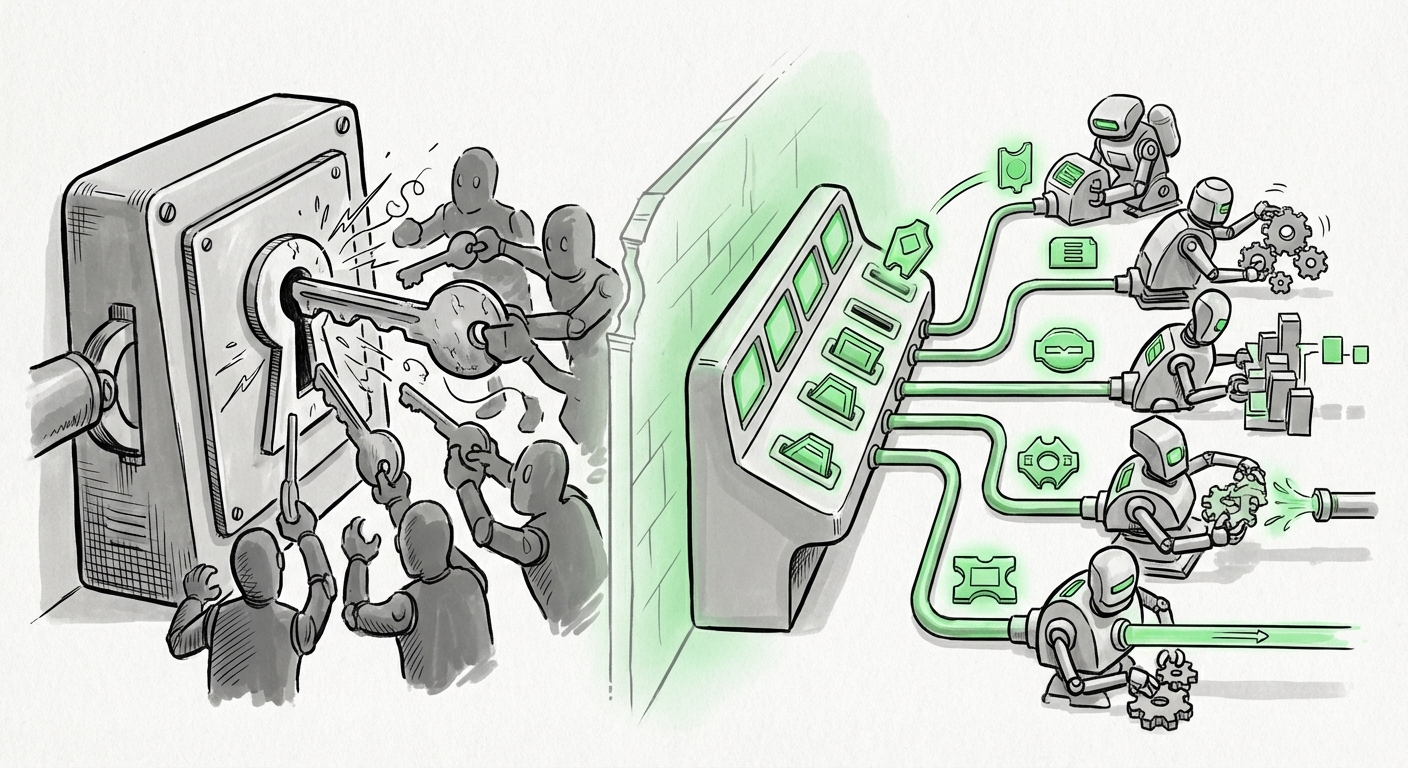
Two years ago, having a decent OCR engine was a moat. Today, there are many good options. When the model itself stops being the differentiator, the value moves to the pipeline, how well you chain detection, recognition, layout analysis, and post-processing together, and how easily you can swap pieces in and out. A Transformers backend is a bet that openness beats lock-in.
2. Document AI is becoming the front door to enterprise AI
Ask any company what they want AI to do first, and the answer is usually the same: deal with documents. Invoices, claims, contracts, purchase orders, medical records, shipping paperwork, loan applications. This is where the money, the errors, and the compliance risk all sit. Every AI agent that reasons about a business also needs to read that business's paperwork first. OCR is no longer a standalone tool, it is the intake valve for everything else.
3. Open tooling is racing ahead of closed tooling
When a capable open-source toolkit adds a flexible backend, it lowers the cost of building serious document pipelines to nearly zero on the software side. That pressures every vendor selling document AI as a black box to justify their price with something other than "we have OCR."
The Future: From Text Extraction to Document Understanding
Here is the direction of travel. In the old world, OCR gave you a wall of text. In the new world, you get structured meaning.
- Old pipeline: Image → text → human reads it → human types it into a system.
- Current pipeline: Image → text + layout + tables → structured data → rules engine.
- Emerging pipeline: Image → structured data → reasoning model → decision, action, or draft response.
That third stage is where things get interesting. Once a document can be reliably turned into structured data, an AI agent can compare it against policy, flag anomalies, route it to the right person, or answer a question about it. The OCR step stops being a tool and starts being a nervous system.
A backend that supports the Transformers ecosystem makes it easier to slot modern, reasoning-capable models into that flow, and easier to swap them as better ones arrive. Given how fast the model landscape moves, that swappability is not a nice-to-have. It is the difference between a pipeline that survives the next twelve months and one that gets rewritten twice.
What This Means for Businesses
The cost of document processing keeps falling
Every time a flexible, open toolkit gets better, the floor drops out of the market price for basic document extraction. If your business case for an AI project rests on "we save money by not paying humans to type," that savings is being competed away. The new value is in what you do after extraction: faster decisions, fewer errors, better compliance, and new services built on top of clean document data.
Vendor lock-in becomes a choice, not a trap
With a swappable backend, companies can evaluate models on their own documents instead of trusting a marketing page. That shifts power to the buyer. It also means procurement teams should start asking a new question: can we change the model underneath this product without changing the product?
Human-in-the-loop stays essential, but changes shape
Highly accurate automated parsing still needs a review path for the weird 5% of documents. The good news is that the human's job shifts from typing to verifying. That is better work, and it scales further, because one reviewer can check far more documents than they could ever transcribe.
Sectors that feel this immediately
- Financial services: loan files, statements, KYC paperwork, and claims packets.
- Healthcare: forms, referrals, and records that need structure before they can be used.
- Logistics: bills of lading, customs documents, and delivery proofs.
- Legal and professional services: contract review and discovery at a scale no team could read manually.
- Government and public sector: permit applications and citizen records, where accessibility and auditability both matter.
What This Means for Society
The benefits are real and easy to overlook. Better OCR means accessibility, screen readers that actually read scanned documents correctly. It means language access, because translation pipelines depend on clean text extraction first. It means small businesses and community organizations, which could never afford custom document automation, get access to the same capability as large enterprises when the core tooling is open.
There is a harder side too. A world where every document can be read by machines at near-zero cost is also a world where every document can be surveilled at near-zero cost. Identity documents, medical records, and legal filings all become machine-readable by default. The technology is neutral. The governance around it is not.
The practical implication: as document AI gets cheaper, data handling rules, retention limits, and audit trails become the real product differentiator. Companies that treat document AI as purely a speed play and ignore the governance layer will eventually pay for it.
Actionable Insights: What to Do Now
If you are technical, or you lead a team that touches documents, here is a practical checklist.
- Build a test set from your own documents. Not a public benchmark. Your messiest, most annoying 200 files. Everything else is a guess.
- Measure the full cost per document, not just model accuracy. Include human review time, infrastructure, and rework. That number decides whether a project is real.
- Keep the model layer swappable. Prefer pipelines that let you change the backend without a rewrite. This release is a good example of why that matters.
- Design for the review queue from day one. Assume 5% of documents will need a human. Build the interface before you need it.
- Separate extraction from decision-making. Clean structured data is an asset. The rules and reasoning on top of it will change constantly, keep them independent.
- Write down your data rules early. What gets stored, for how long, who can see it, and what never leaves your environment. Retro-fitting this is painful.
- Do not build what is already a commodity. Basic text extraction is not your competitive advantage. Your workflows are.
The Bigger Picture
PaddleOCR 3.5 with a Transformers backend will not make headlines outside developer circles. That is fine. The most important shifts in AI rarely announce themselves. They show up as a new option in a config file, a backend you can swap, a dependency you no longer have to fight with.
What it signals is clear: document AI is moving from a niche tool to general infrastructure. The models are becoming interchangeable. The pipelines are becoming the product. And the businesses that win will be the ones that treat clean, structured document data as the foundation for everything else they want AI to do, while taking seriously the responsibility that comes with being able to read everything.
The age of the machine-readable business is here. It arrived quietly, through a backend change most people will never see.