Why Harness Engineering Is Becoming the New AI Moat, And What It Means for the Future of AI
For the past few years, almost every conversation about artificial intelligence has been about the model. Which one is smartest? Which one writes better code, passes more exams, reasons more cleanly? That was the story: bigger model, better results, winner takes all.
That story is running out of road. The advantage in AI is quietly shifting away from the model itself and toward everything wrapped around it, the plumbing, prompts, tools, memory, checks, and feedback loops that turn a raw model into something a business can actually rely on. People are starting to call this work harness engineering, and it is shaping up to be the real competitive moat in AI.
What Exactly Is a "Harness"?
Think of a model as an engine. On its own, an engine is just a loud, powerful block of metal. It doesn't steer, it doesn't brake, it doesn't tell you how fast you're going. You need a car around it, a chassis, a transmission, a dashboard, a steering wheel.
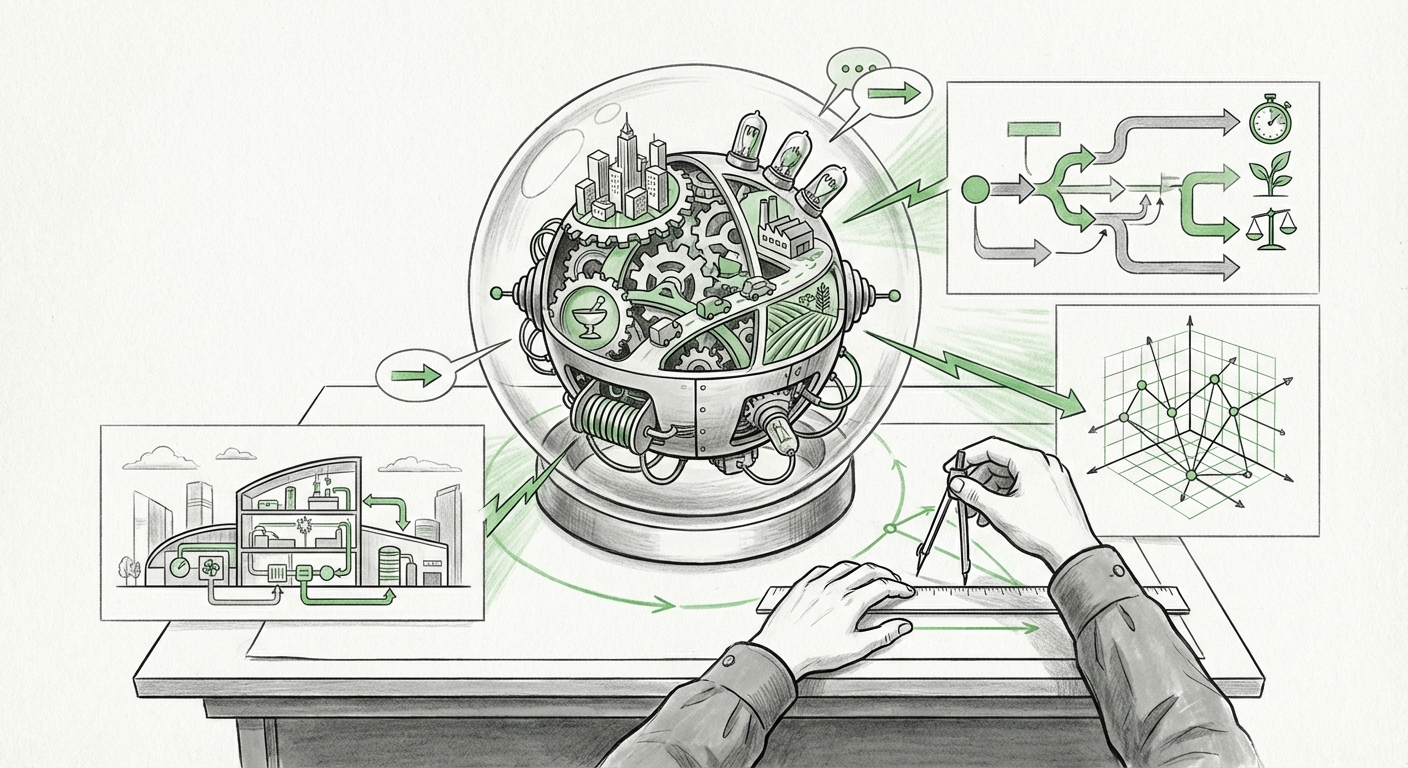
In AI, the harness is that car. It is everything that sits between a user's request and the model's answer, and everything that happens after. A harness typically includes:
- Context assembly, deciding what information the model sees, in what order, and what gets left out.
- Tool and system access, letting the model read a database, send an email, run code, or call an internal service.
- Memory and state, remembering what happened last time so the model isn't starting from zero.
- Retrieval, pulling the right documents, records, or policies at the right moment.
- Planning and loops, breaking a big job into steps and deciding when to try again.
- Guardrails and validation, catching bad output before it reaches a customer or a system of record.
- Evaluation and feedback, measuring whether the whole thing actually worked, and feeding that back into improvements.
- Cost and latency routing, sending easy jobs to cheap, fast paths and hard jobs to stronger ones.
None of these are glamorous. All of them are where the difference between a demo and a product lives.
Why the Model Stopped Being the Moat
A moat is anything that protects a business advantage from being copied. Models used to look like a moat because training a frontier one cost enormous amounts of money and talent. That has changed in three ways.
First, capability is converging. On a long list of everyday business tasks, summarizing, drafting, extracting, classifying, answering questions, the leading models now behave a lot alike. The gap that used to justify switching vendors has narrowed to the point where most users can't reliably tell the difference on their own work.
Second, open-weight models keep closing the distance. A capable model you can download, host, and fine-tune changes the negotiating position of every buyer. When something good enough is available cheaply, "we have the best model" stops being a durable claim.
Third, you can rent a model, but you can't rent a harness that fits your business. Anyone can get the same intelligence from the same API. Nobody else can buy your company's accumulated understanding of its own workflows, the weird edge case in claims processing, the way your contracts are actually written, the fact that this customer always means the opposite of what they say.
From the Model Race to the System Race
When models were the whole story, the scoreboard was benchmarks. When harnesses become the story, the scoreboard changes to something much harder to fake: did the task actually get done, reliably, at acceptable cost, without a human cleaning up afterward?
That shift matters because reliability and raw intelligence are not the same thing. A brilliant model in a sloppy harness will confidently produce wrong answers all day. A merely good model in a well-built harness, one that retrieves the right policy, checks the output against a rule, and escalates when uncertain, will beat it on real work almost every time.
This is why so many organizations have hit a strange wall. They ran impressive pilots. They bought access to the best available intelligence. And yet the results in production were uneven. The model wasn't the problem. The harness was missing.
Why Harnesses Are So Hard to Copy
If harnesses matter this much, why doesn't everyone just build one? Because they are not a product you can buy off a shelf. They are made of the least copyable material there is: tacit knowledge.
- They encode how a specific organization works. A harness for a hospital and a harness for a logistics firm may use the same model and share almost no design.
- They are built from accumulated failure. Every bug, every bad output, every angry customer adds a rule, a check, or a retrieval tweak. That history can't be replicated from a blog post.
- They are partly organizational, not just technical. Getting the right data to the right place often means changing a process, not writing code.
- They compound. A harness that improves a little every week for a year is very far ahead of one that started last month, and the lead grows.
- They are invisible. Nobody publishes a paper about their retry logic. Competitors can see your product but not the machinery underneath it.
That combination, hard to see, hard to copy, and improving over time, is the textbook definition of a durable advantage.
What This Means for Businesses
The practical takeaway is a change in what you buy and what you build. Renting intelligence is now cheap and getting cheaper. The scarce skill is turning that intelligence into a dependable process.
That reshapes several decisions:
Build versus buy flips
Buy the model. Build the harness. Treat model access as a commodity input you can swap, and treat your harness as core infrastructure you invest in and protect. The moment switching models becomes a configuration change, you've gained real leverage.
Procurement questions change
Stop asking only "which model is best?" Start asking "what does the surrounding system do when the model is wrong?" Vendors that can't answer the second question are selling you horsepower without a steering wheel.
The skills you hire for change
The people who build great harnesses are often not the people who train models. They are the ones who understand the workflow deeply, who can define what "correct" means, and who can turn messy human judgment into testable rules. Domain expertise becomes a technical asset.
Evaluation becomes a discipline, not a chore
You cannot improve a harness you cannot measure. Teams that build real test suites around their AI systems, covering the boring edge cases, not just the impressive demos, pull ahead fast and stay there.
What This Means for the Future of AI
If harnesses are the moat, several things follow for the field as a whole.
Model builders will feel pressure to move up the stack. If raw intelligence is commoditizing, providers have every incentive to sell harnesses too, agents, tools, memory, enterprise integrations. That creates a genuine tension: the same vendors supplying your engine may soon be competing with your car. Buyers should expect this tug-of-war and design for portability from day one.
Agents will be judged by their harness, not their brains. The current wave of autonomous AI systems lives or dies on the scaffolding around them, how they recover from mistakes, how they know when to stop, how they avoid taking harmful actions. Expect the conversation about agents to become a conversation about harness design.
Safety and governance will move into the harness. Rules, audit trails, permissions, and human review points are harness components, not model features. That's good news: it means responsible AI becomes something you can engineer, inspect, and improve, rather than something you hope a model learned.
Competitive advantage will spread unevenly, but not only to the biggest players. Large firms have more data and more engineers, which helps them build broad harnesses. But small, focused firms can build deep ones for a narrow niche and win there. A specialist who truly understands one messy workflow can outperform a generalist giant inside that workflow. The moat rewards depth, and depth is available to anyone willing to go get it.
The AI conversation will get less magical and more practical. Less talk about sparks of general intelligence, more talk about retry budgets, fallback paths, and whether the system knows what it doesn't know. That's a healthier conversation, and it's the one that actually ships.
Actionable Insights: Where to Start
- Map your harness today. Pick one AI workflow in production and write down every step between the user's request and the final result. Most teams discover the model is a small part of it.
- Instrument everything. Log inputs, outputs, tool calls, and outcomes. Without traces you have opinions, not evidence.
- Build an evaluation set from real failures. Every time the system gets something wrong, add it as a permanent test. That list is your moat forming in real time.
- Design for model portability. Keep model access behind a clean layer so you can switch providers without rewriting your business logic.
- Put humans at the right points. Automate the high-confidence path, and route uncertainty to a person. The goal is a system that knows its own limits.
- Invest in domain knowledge, not just engineering. Pair your builders with the people who do the work every day. The best harness designs come from that pairing.
- Measure end-to-end outcomes. Track task completion, correction rates, and cost per successful result, not model benchmark scores.
Conclusion
The era when a better model alone won the market is fading. Intelligence is becoming abundant and interchangeable; the machinery that turns intelligence into reliable work is not. That machinery, the harness, is built slowly, from real experience, inside real organizations, and it is genuinely hard to copy.
This is a hopeful development as much as a competitive one. It means the winners in AI won't only be the companies with the largest training budgets. They'll be the ones who understand their own work most clearly and engineer around it most carefully. The model is the engine. The harness is the car. And increasingly, the car is what people actually buy.