Agentic AI Summit Los Angeles 2026: What It Means for the Future of AI and How We'll Use It
The Agentic AI Summit in Los Angeles, held in September 2026, was not just another conference about chatbots. It marked a clear turning point in how the world thinks about artificial intelligence. The conversation has moved past "What can AI say?" and landed squarely on "What can AI do?"
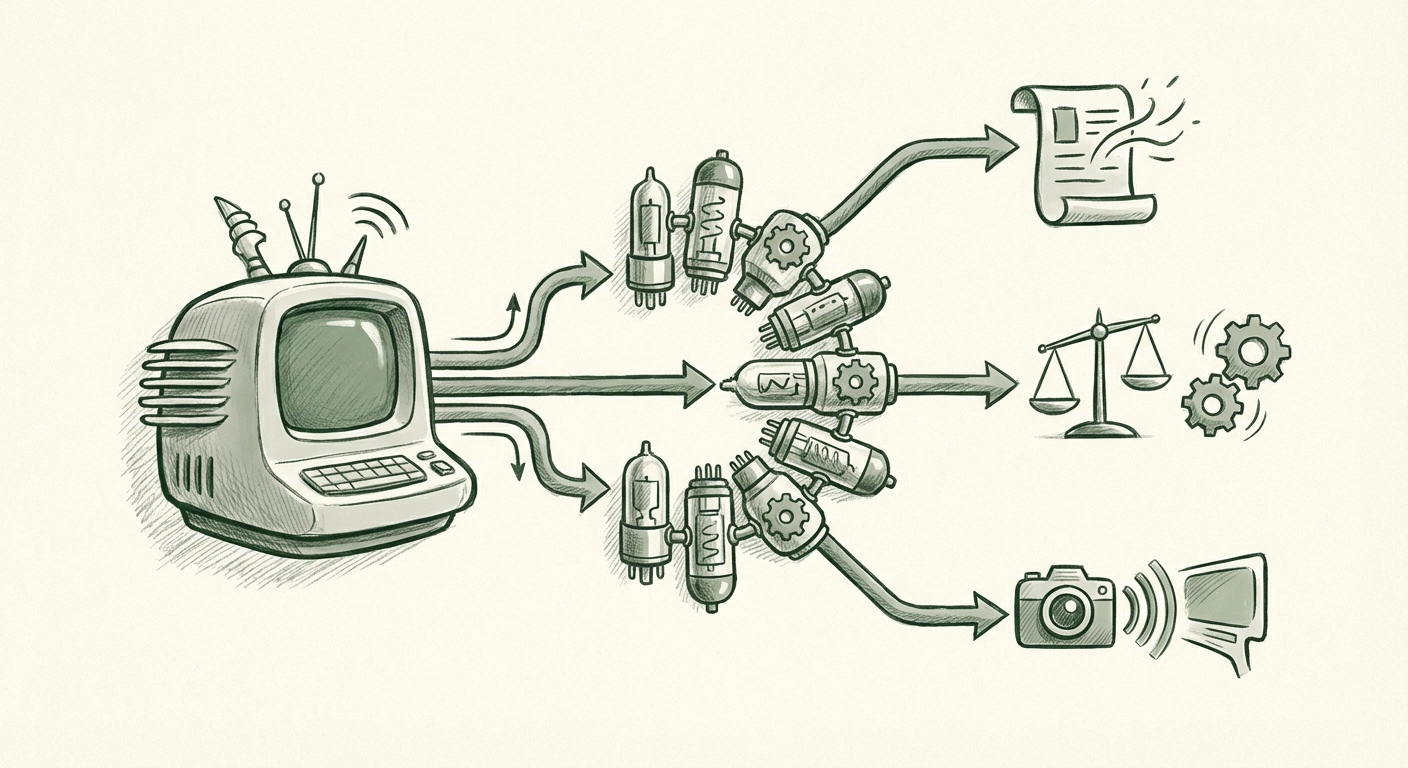
That shift is huge. For years, AI was something you talked to. You asked a question, it gave an answer. Now, AI is becoming something that acts on your behalf. It books the meeting. It files the report. It fixes the bug. It negotiates the contract. It runs for hours or days, making decisions along the way.
This article breaks down what agentic AI actually is, why the Los Angeles summit matters as a marker of where the industry is heading, and what it all means for businesses, workers, and society. No hype. No jargon. Just the practical picture.
From Answers to Actions: The Core Shift
A traditional AI model is like a very well-read consultant who only speaks when spoken to. It has no memory of yesterday and no ability to do anything beyond producing text.
An agent is different. It has three extra ingredients:
- Goals, you give it an outcome, not a single instruction.
- Tools, it can search the web, write files, call software, send messages, or use your company systems.
- Loops, it checks its own work, tries again, and keeps going until the job is done or it gets stuck.
Put those together and you get software that behaves much more like an employee than a search engine. That is the entire story behind the agentic AI wave, and it is why an entire summit is now dedicated to it.
Why the Los Angeles Summit Is a Milestone
Los Angeles has become a serious technology hub, and hosting a dedicated agentic AI summit there signals something important: agentic AI has graduated from research labs and startup pitches into a mainstream industry event with real enterprise buyers in the room.
When a topic gets its own summit, three things have usually happened:
- Buyers are spending money. Companies are not just curious anymore, they are deploying.
- Standards are starting to form. People need shared language for how agents are built, tested, and controlled.
- Risk conversations get serious. Once agents touch real systems and real money, failure stops being an academic problem.
The 2026 timing matters too. The industry has spent the last few years learning that a clever demo is easy and a reliable product is hard. Agentic AI is where that lesson gets tested at scale.
The Agentic Stack: Three Layers That Matter
To understand where this is going, think of agentic AI as a three-layer stack. Each layer is a place where businesses will compete and where things can go wrong.
Layer 1: The Model
The underlying AI model provides the reasoning. This layer is becoming more of a commodity. Many strong models exist, and the differences between them matter less than they did a couple of years ago. Choosing a model is now an engineering decision, not a strategic identity.
Layer 2: Orchestration
This is the layer that decides which model to use, what tools to call, in what order, and when to stop. It handles memory, planning, retries, and handoffs between multiple agents working together. This is where most of the real value, and most of the real difficulty, lives today.
Layer 3: Guardrails and Governance
This is the layer that keeps agents inside the lines. Permissions. Spending limits. Approval steps. Audit logs. Rollback plans. If layer two is the engine, layer three is the brakes and the steering wheel.
The uncomfortable truth is that in many early deployments, layer three gets skipped. That is a mistake companies will regret, and it is one of the biggest themes the industry is now being forced to confront.
What This Means for Businesses
For most organizations, the question is no longer whether to use agentic AI. It is where to start and how to stay safe.
The pattern that works looks like this:
- Start with boring, high-volume work. Ticket triage, data cleanup, document review, order processing. Low drama, high repetition.
- Keep a human in the loop at first. Let the agent propose, let a person approve. Then loosen the leash as trust builds.
- Measure outcomes, not activity. Nobody cares how many steps the agent took. They care whether the customer got helped and the cost went down.
- Design for failure from day one. Agents will do weird things. The system should catch it, log it, and recover without a crisis.
The companies that win here will not be the ones with the fanciest agent. They will be the ones that picked the right process, connected the right tools, and built the right safety net.
A Practical Starting Checklist
If you are a leader trying to figure out your first move, keep it simple:
- Pick one process that is repetitive, rules-based, and painful.
- Map every system the agent would need to touch.
- Define what "done" looks like in plain language.
- Set hard limits on what the agent cannot do without approval.
- Run it in parallel with humans for a set period.
- Review results, then expand scope slowly.
This is not glamorous. It is how real value gets captured.
What It Means for Workers and Society
The honest answer is mixed, and anyone promising a simple outcome is selling something.
Agentic AI is very good at tasks and still weak at judgment. It can process a thousand invoices but cannot decide whether a customer relationship is worth saving at a loss. It can draft code but cannot decide what the product should be.
What that means in practice:
- Routine digital work shrinks. Roles built on repetitive screen work will change fastest.
- Oversight work grows. Someone has to review, correct, and take responsibility for what agents do.
- Taste and trust become premium skills. Knowing what "good" looks like is harder to automate than doing the work itself.
- The gap widens between prepared and unprepared organizations. Same tools, very different results.
Society also faces a harder question: when software acts on your behalf, who is accountable when it goes wrong? Right now, the answer is usually "the company that deployed it." That will not hold forever, and the rules are still being written.
The Risks That Cannot Be Ignored
Agentic systems introduce failure modes that plain chatbots simply do not have.
- Compounding errors. A small mistake early in a long chain gets repeated and amplified.
- Security exposure. An agent with access to your tools is a new door into your systems. Prompt injection, where hidden text tricks an agent into misbehaving, is a real and unsolved problem.
- Silent drift. An agent that worked last month may behave differently after a model update or a data change.
- Accountability gaps. "The AI did it" is not a defense anyone wants to give a regulator or a customer.
These are not reasons to avoid agentic AI. They are reasons to build it carefully. The organizations treating guardrails as a core feature rather than an afterthought are the ones that will scale.
Where This Is All Heading
Looking past the summit, a few directions feel inevitable.
Agents will get more specialized, not more general. A general agent that does everything poorly is less useful than a focused agent that handles one workflow extremely well. Expect a wave of narrow, reliable, deeply integrated agents.
Multi-agent systems will become normal. Instead of one agent doing everything, teams of agents will split work, check each other, and hand off tasks. This mirrors how human teams already operate.
Evaluation will become a product category. You cannot manage what you cannot measure. Testing and monitoring agent behavior will be as standard as monitoring a website.
Regulation will catch up. Not overnight, and not uniformly. But once agents move real money and make real decisions, oversight follows.
Interfaces will fade into the background. The best agentic AI will not feel like software you open. It will feel like work that simply gets handled.
Actionable Takeaways
Whether you are a founder, an executive, or just someone trying to stay ahead, here is what to do with all this:
- Learn the vocabulary. Goals, tools, loops, guardrails, orchestration. You cannot make good decisions without the words.
- Audit your processes for agent-readiness. Repetitive, digital, rules-based, high-volume, those are your candidates.
- Build the safety layer first. Permissions, logging, and human approval before autonomy.
- Invest in people who can supervise. The skill of directing and correcting AI systems is the new management skill.
- Stay skeptical of demos. Ask what happens when it fails. If there is no answer, there is no product.
- Move, but move in steps. Waiting is risky. Rushing is riskier.
The Bottom Line
The Agentic AI Summit in Los Angeles in 2026 is best understood as a marker, not a moment. It confirms that the industry has decided what the next phase of AI looks like: systems that take action, not just systems that answer questions.
That shift will create enormous value and genuine disruption. It will reward organizations that combine ambition with discipline, and it will punish those that chase headlines without building foundations. The technology is ready enough to matter. Whether it works for you depends far less on the model you pick and far more on the processes, guardrails, and people you surround it with.
The agent era is here. The question is whether you are directing it or reacting to it.