Apple's AI Privacy Trick Could Be the Compromise the EU Needs, And It Changes Everything About How AI Gets Built
There is a fight going on right now over how artificial intelligence should handle your personal data. On one side are the AI companies that want to hoover up everything they can to make their models smarter. On the other side are regulators, especially in Europe, who say you have a right to keep your private life private.
Apple just walked into the middle of that fight with an idea that may be the compromise everyone has been waiting for. If it works, it could reshape how every AI product is built for the next decade. Not just Apple's. Everyone's.
The Problem AI Created For Itself
Here's the tension in plain terms. The most powerful AI features today often need to run in huge data centers. Those data centers are fast, but they are also far away from your phone. To use them, your device has to send your information out into the world.
That is a problem. Your messages, your photos, your calendar, your health data, all of it becomes something that has to travel. And once data travels, questions pile up fast. Who can see it? How long is it kept? Can it be used to train something else? Can a hacker get it? Can a government demand it?
Europe has taken the hardest line on these questions. Its rules put strict limits on how personal data can be collected and moved. That has put European regulators on a collision course with the biggest AI builders, who argue that heavy rules will leave Europe behind in the race for the technology.
Both sides have a point. That is what makes the stalemate so frustrating, and why a new technical approach matters so much.
What Apple's Privacy Trick Actually Is
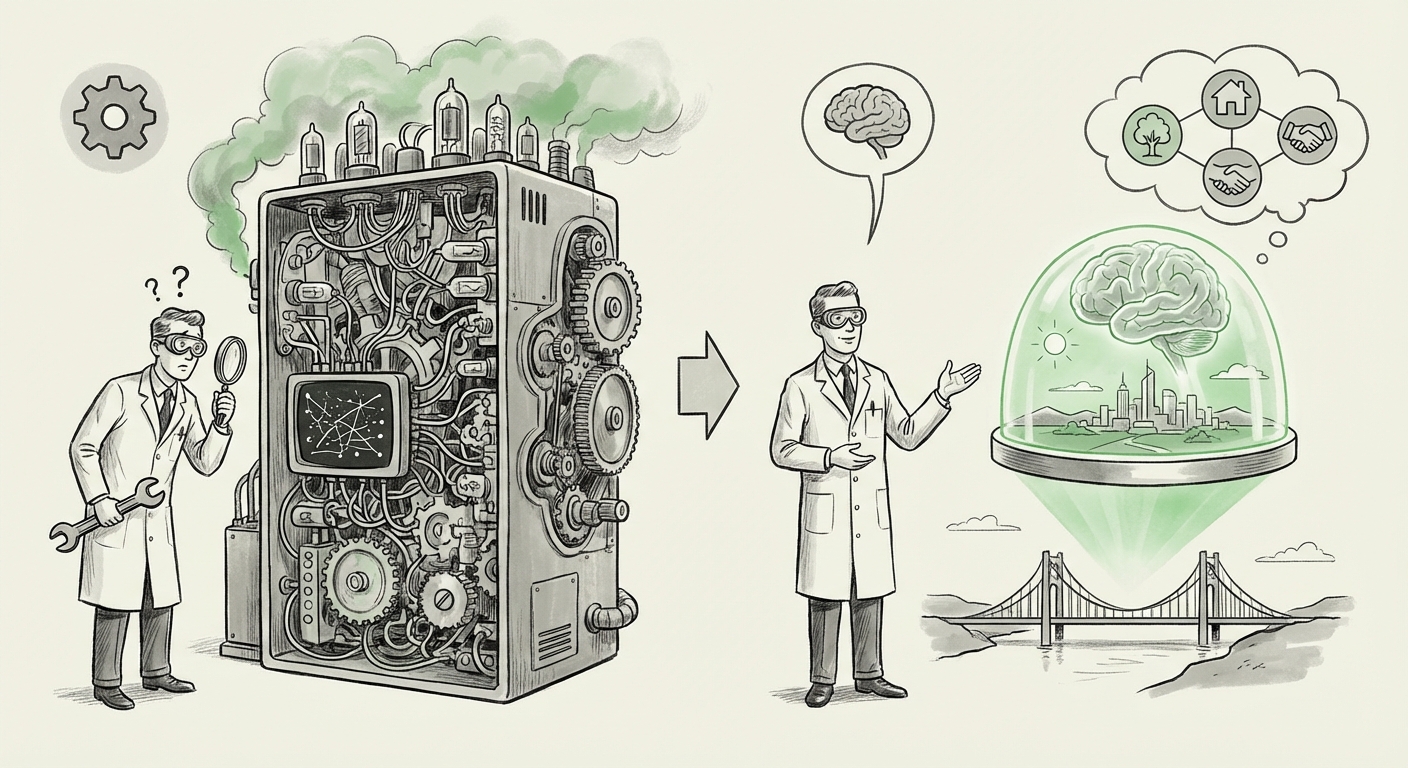
The core idea is simple to say and very hard to build: keep the data on the device, and when you can't, make the cloud act like it never saw anything.
Apple's approach has two layers.
Layer one: on-device intelligence. As much AI processing as possible happens right on the phone, laptop, or tablet in your hand. Your data never leaves. The model runs locally, answers locally, and forgets locally. From a regulator's point of view, this is the cleanest possible outcome. There is no transfer, so there is no transfer to regulate.
Layer two: privacy-preserving cloud computing. Some AI tasks are simply too heavy for a phone. When that happens, Apple's pitch is that the work goes to special servers built for privacy from the ground up. The claims are that data is not stored, that it cannot be accessed by Apple staff, and that independent experts can verify those promises. It is a "trust us, but also check us" model.
Put together, this is the trick. Apple is not asking regulators to relax the rules. It is trying to design a system where the rules are satisfied by default. That is a very different move from the rest of the industry.
Why Europe Is the Real Test
Europe is where this idea either becomes a global standard or stays a niche feature.
European regulators have spent years building a framework that treats personal data as something with rights attached to it. AI has made that framework harder to apply, because AI is not just storing data, it is learning from it, generating from it, and making decisions with it.
The usual industry response has been to ask for flexibility, delays, or softer rules. Apple is doing the opposite. Instead of arguing that the rules are too strict, it is presenting a design that claims to meet them without special treatment.
That matters politically. If a major AI player can show that strong privacy and strong AI can live in the same product, it removes one of the most powerful arguments against tough regulation. Regulators get a working example. Other companies lose their best excuse.
It also gives Europe something it has wanted for a while: a path to being a rule-maker rather than just a rule-blocker. The bloc built its reputation on setting privacy standards the rest of the world eventually copied. If the technical blueprint now exists to match those standards, Europe can push forward without feeling like it is sacrificing its own tech industry.
The Bigger Trend: Privacy Is Becoming a Product Feature
Step back and a larger pattern appears. Privacy used to be something companies promised in a policy document nobody read. Now it is becoming something they engineer into the hardware.
That shift is being driven by three forces at once:
- Regulation. Europe's rules, and similar laws spreading elsewhere, have made data handling a legal risk, not just a PR risk.
- Consumer distrust. People have watched too many data leaks and too many stories about their information being used in ways they never agreed to. They are tired of it.
- Competitive pressure. If one major platform can credibly say "your data stays with you," every other platform has to answer that claim.
When those three forces line up, privacy stops being a nice-to-have and becomes a requirement. That is exactly where we are now.
What This Means for the Future of AI
If the on-device-plus-private-cloud model proves workable, four things change.
1. AI moves closer to you
The next wave of AI will not live only in giant data centers. It will live on your phone, your laptop, your car, and your smart home devices. That means faster responses, less dependence on an internet connection, and less risk when data travels. It also means AI becomes more personal, because a model that runs on your device can learn your habits without ever sending them anywhere.
2. Small and efficient models get more valuable
Running AI on a phone forces you to be clever. You cannot throw a massive model at every problem. You need models that are compact, fast, and cheap on battery. Expect a lot more investment in that direction. The company that makes the best small model may matter more than the company with the biggest one.
3. Trust becomes a competitive weapon
Right now, AI companies compete mostly on capability, who can do the most impressive thing. In the next phase, they will compete on trust. Who can prove what happens to your data? Who lets outsiders check? Who can sell to hospitals, banks, and governments that legally cannot afford a privacy mistake?
4. Regulation gets easier to write
Regulators are not engineers. They struggle to write rules for technology that changes every few months. But if a working design shows that privacy and capability can coexist, the rules can be simpler: meet this technical bar, and you are fine. That is much easier to enforce than a vague promise to "handle data responsibly."
Practical Implications for Businesses
This is not just an Apple story. Every company building or buying AI should be paying attention.
- Audit where your AI data goes. If you cannot draw a clear line showing what leaves your systems and where it lands, you have a problem, legal, reputational, or both.
- Prefer on-device or private processing where it fits. Not every task needs a giant model. Customer support, document search, and internal tools often run fine on smaller, local systems.
- Treat privacy as a selling point. Your customers are asking harder questions. Being able to say "your data never leaves" is now a genuine advantage, not a footnote.
- Prepare for Europe first. If your AI passes muster under Europe's strict rules, you are in good shape almost everywhere else. Designing for the hardest market is the cheapest way to avoid rework later.
- Document your choices. Written records of what data you use, why, and how you protect it will save you when a regulator, a client, or a journalist comes asking.
What Could Go Wrong
Honesty matters here, because the promise is big.
First, verification is the hard part. Saying a server cannot see your data is easy. Proving it, to independent experts, not just to customers, is much harder. If the proof is weak, the whole idea collapses.
Second, on-device AI has real limits. Phones have limited memory, battery, and heat budgets. Some tasks will never run locally. That means the private cloud layer is not optional, it is essential, and it carries all the same trust questions as before.
Third, competitors may not follow. If other AI companies keep collecting data freely, they may get a short-term edge in raw capability. The bet Apple is making is that trust wins in the long run. That bet has not been settled yet.
Fourth, rules can still change. Even a smart technical design cannot fully predict what regulators will demand next. Building for flexibility is as important as building for compliance today.
What To Do Next
Whether you run a business, build software, or just use AI every day, the direction is clear. The era of "collect everything and sort it out later" is ending. Privacy is moving from a legal footnote to a design principle.
The smart move is to get ahead of it. Map your data. Shrink what you collect. Move what you can closer to the user. Prove what you claim. And watch Europe closely, because the rules written there tend to travel.
The Bottom Line
Apple's privacy approach is not just a feature. It is a proposal about how AI should work, one where intelligence gets better without privacy getting worse. Europe has been looking for exactly that kind of compromise for years.
If the model holds up under real scrutiny, it could become the template for the entire industry. AI that lives on your device, thinks locally, and reaches for the cloud only when it must, and only in ways that can be checked.
That would be a genuine turning point. Not because it makes AI smarter, but because it makes AI trustworthy enough to actually use everywhere.