EU Text Provenance Rules Are Here: What AI Content Labeling Means for the Future of AI
Something quiet but important happened on October 5, 2026. The companies building the world's most powerful AI systems started publishing their approaches to the European Union's text provenance rules, the new expectations for showing where written content came from and whether a machine made it.
That might sound like a boring compliance chore. It is not. It is the moment AI stops being an invisible ghostwriter and starts becoming a tracked one.
Think about what has happened over the past few years. AI can write emails, news summaries, legal drafts, marketing copy, school essays, and code. It can do it instantly, in any style, in any language. And until now, once that text left the chat box, there was usually no reliable way to know a machine wrote it. You could read a paragraph and guess. You could run it through a detector and get an answer that was right maybe most of the time. But proof? Almost never.
The EU's move toward text provenance rules changes the game. Provenance means origin, a record of where something came from and how it was made. Applied to text, it means attaching a trail to AI-generated writing so that people, platforms, and regulators can tell what is human and what is machine.
This article breaks down what that means, why text is the hardest case of all, and how it will reshape the way AI gets used across business and society.
Why Text Is the Hardest Provenance Problem
Provenance is already messy for images, audio, and video. But text is worse, and it is worth understanding why.
First, text is trivially easy to copy and paste. An image carries pixels that can hold an invisible signature. A paragraph is just characters. Strip the formatting, move it into a new document, and any hidden marker riding along in the file may vanish completely.
Second, text gets edited. A human takes an AI draft and rewrites half of it. Now what is it? Fifty percent machine? Ten percent? There is no clean answer, and any rule that demands one runs straight into the reality of how people actually work.
Third, text is where human and machine writing blend most naturally. An AI can imitate a specific person's voice, a company's tone, or a legal style with unsettling accuracy. The line between "assisted by AI" and "written by AI" is genuinely blurry.
Fourth, text is small. Unlike a video file with room to spare, a short paragraph has very little space for embedded signals without changing how it reads.
That is why the approaches now being published matter so much. They are attempts to solve a problem that has no clean technical answer, only a set of trade-offs.
The Big Shift: From Voluntary Labels to Real Infrastructure
For the last few years, AI content labeling was mostly voluntary. Companies added watermarks or "generated by AI" notes when they felt like it. Some did it well. Some did it barely. There was no shared standard and no real consequence for skipping it.
That era is ending. EU text provenance rules push labeling from a nice-to-have into something closer to infrastructure, a layer that has to work reliably, across companies, across tools, and across borders.
The key word there is interoperable. A label only one company can read is not a label. It is a bumper sticker. For provenance to be useful, a document written in one AI tool has to be readable by a platform in another country, a newsroom in a third, and a regulator somewhere else entirely. That requires shared formats and shared rules.
This is the real story behind the October 2026 announcements. Companies are not just adding a feature. They are plugging into a system that will eventually touch nearly every piece of digital writing.
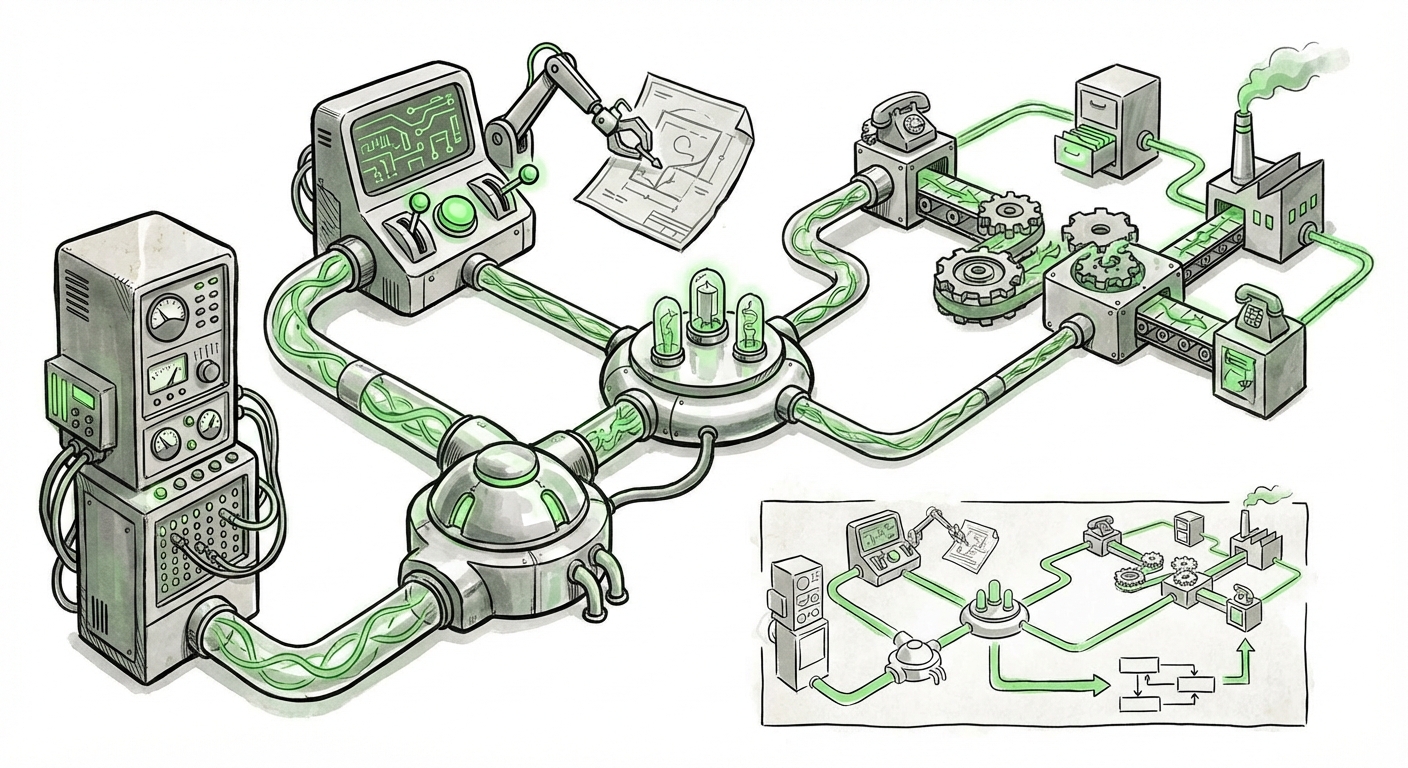
The Three Layers of Text Provenance
Most practical approaches to text provenance stack three different methods. Each has strengths and each has holes.
1. Metadata and Content Credentials
This is the "label on the box" approach. When AI generates text, the system attaches information about it, what model made it, when, and under what conditions. Think of it like a nutrition label for content.
The upside is that it is precise and clear when it survives. The downside is that it is fragile. Copy the text into a plain editor, paste it into a social post, or run it through a system that strips formatting, and the label often disappears. Good for honest use. Easy to lose by accident.
2. Watermarking
Watermarking hides a signal inside the text itself, usually by nudging word choices in statistically detectable patterns. The writing still reads naturally, but a matching detector can spot the fingerprint.
This is the most technically ambitious layer, and the most debated. Watermarks can be weakened by rewriting, translation, or paraphrasing. They can also raise uncomfortable questions, what happens when a false positive flags human writing as machine-made? And what about open models where anyone can remove or ignore the watermark?
3. Logging and Detection
The third layer is record-keeping: systems that log what was generated and when, paired with tools that try to identify AI text after the fact. Detection alone has a shaky track record, which is exactly why it works better as a backup than as the main defense.
Put together, these three layers form a defense in depth. No single one is bulletproof. Together, they raise the cost of hiding machine authorship, which, realistically, is the goal.
What This Means for Businesses
For companies, text provenance is about to become a normal part of doing business online. Here is where the pressure will show up first.
- Content pipelines. Any workflow that mixes AI drafts with human editing will need a way to record that mix. Marketing teams, publishers, and agencies should start documenting their process now, not after a client asks.
- Procurement. When buying AI tools, provenance features become a checklist item. Does the tool attach readable labels? Does it preserve them downstream? Can you export a record of what it produced?
- Customer trust. Being able to say "here is exactly how this was made" is becoming a competitive advantage. Transparency is turning into a product feature.
- Risk and legal teams. Provenance records are evidence. They help you show due diligence, and they help you defend against claims that you passed off machine writing as human.
- Reputation. Getting caught quietly publishing unlabeled AI content will carry a real cost. The rules make silence look like concealment.
The practical takeaway: treat provenance like accounting. It is annoying until you need it, and you always eventually need it.
What It Means for Society and Trust
The bigger question is whether all this actually helps people trust what they read.
There is a genuinely optimistic case. If most AI writing carries a label, the baseline fog of misinformation gets thinner. You can look at a claim and see whether a machine generated it. Platforms can down-rank unlabeled content. Journalists can verify sources faster. The default shifts from "assume nothing" to "check the tag."
But there is a risk too. Provenance labels can create false confidence. A human-written paragraph is not automatically true. A labeled AI paragraph is not automatically false. If people start treating the label as a truth meter rather than an origin meter, we will have solved the wrong problem.
There is also a privacy angle. A perfect provenance trail is also a perfect paper trail. The same system that tells you a document is machine-made could reveal who prompted it, when, and for what purpose. Getting that balance right, transparency without surveillance, is one of the hardest parts of this whole effort.
The Road Ahead: Provenance for Machines Talking to Machines
Here is where this gets genuinely futuristic.
Right now, provenance is mostly about humans reading text and wondering who wrote it. But an increasing share of content is never read by a human at all. AI agents are already summarizing documents, feeding data to other AI systems, and generating text that other software consumes directly.
In that world, provenance becomes something else entirely: a handshake. One system tells another where its content came from, and the receiving system decides whether to trust it. Text provenance turns into a kind of digital passport for information.
That is a much bigger deal than labeling a blog post. It means the standards being built today will likely become the trust layer for the entire machine economy, the way software decides what is real, who made it, and whether it can be relied on.
Companies that treat this as a checkbox will miss that. Companies that treat it as foundational infrastructure will not.
Actionable Insights: A Practical Checklist
Whether you run a small business or a large one, here is what to do right now.
- Map your AI writing. Know where AI generates or edits text in your organization. You cannot label what you do not track.
- Preserve labels. Train staff not to strip provenance data by accident. Formatting decisions have compliance consequences now.
- Ask vendors hard questions. Demand clear answers about labeling, standards support, and record-keeping before you sign.
- Keep your own records. Even if a tool labels its output, maintain your own log of what was generated and how it was reviewed.
- Be transparent by default. A short, honest note about AI use builds more trust than silence ever will.
- Watch the standards, not just the law. The technical formats matter as much as the rules. Early alignment is cheaper than late scrambling.
Conclusion
The EU's text provenance rules mark the end of an unusually wild period, one where AI could write anything, anywhere, with no trace. That freedom was exciting, and it was also dangerous. Rules about where text comes from are not just bureaucracy. They are the first serious attempt to make machine writing accountable.
The approaches being published now are not perfect. Watermarks can break. Metadata can be stripped. Detection can be wrong. But the direction is unmistakable. Over the next few years, provenance will move from an optional feature to a basic expectation, then to invisible infrastructure that nobody thinks about, much like HTTPS or email headers today.
For the future of AI, the message is simple. The technology is no longer being judged only on what it can produce. It is being judged on whether it can be honest about producing it. That shift will define which AI tools win trust, which companies win contracts, and which writing people believe.