Mistral Large 4 "Le Chonk" Is Here: What a 1.05 Trillion Parameter Multimodal MoE Model Means for the Future of AI
Mistral AI has released Mistral Large 4, a model it nicknamed "Le Chonk." The nickname is a joke about its size. The numbers are not. Mistral Large 4 carries 1.05 trillion parameters, handles more than just text, and is built on a mixture-of-experts (MoE) design. In plain terms, it is one of the largest AI models ever shipped by a European lab, and it pushes three trends forward at the same time: raw scale, multimodality, and cost efficiency.
That combination matters more than any single spec. It tells us where the whole field is heading, and what businesses should start planning for right now.
What Mistral AI Just Released
Mistral AI is the French lab known for building fast, efficient models and giving developers more control over how those models run. Mistral Large 4 is its newest flagship-class release, arriving in October 2026.
The headline number is 1.05 trillion parameters. Parameters are the internal dials a model tunes while learning. More dials usually mean more knowledge, more nuance, and better reasoning, but also more computing power needed to run the thing. Crossing the one-trillion mark puts Mistral Large 4 in the same weight class as the biggest frontier systems on the planet.
The second headline is multimodal. That means the model is not limited to reading and writing text. It can work with more than one kind of data. For users, the practical effect is that you stop juggling separate tools for different file types and start talking to one system that understands your whole workspace.
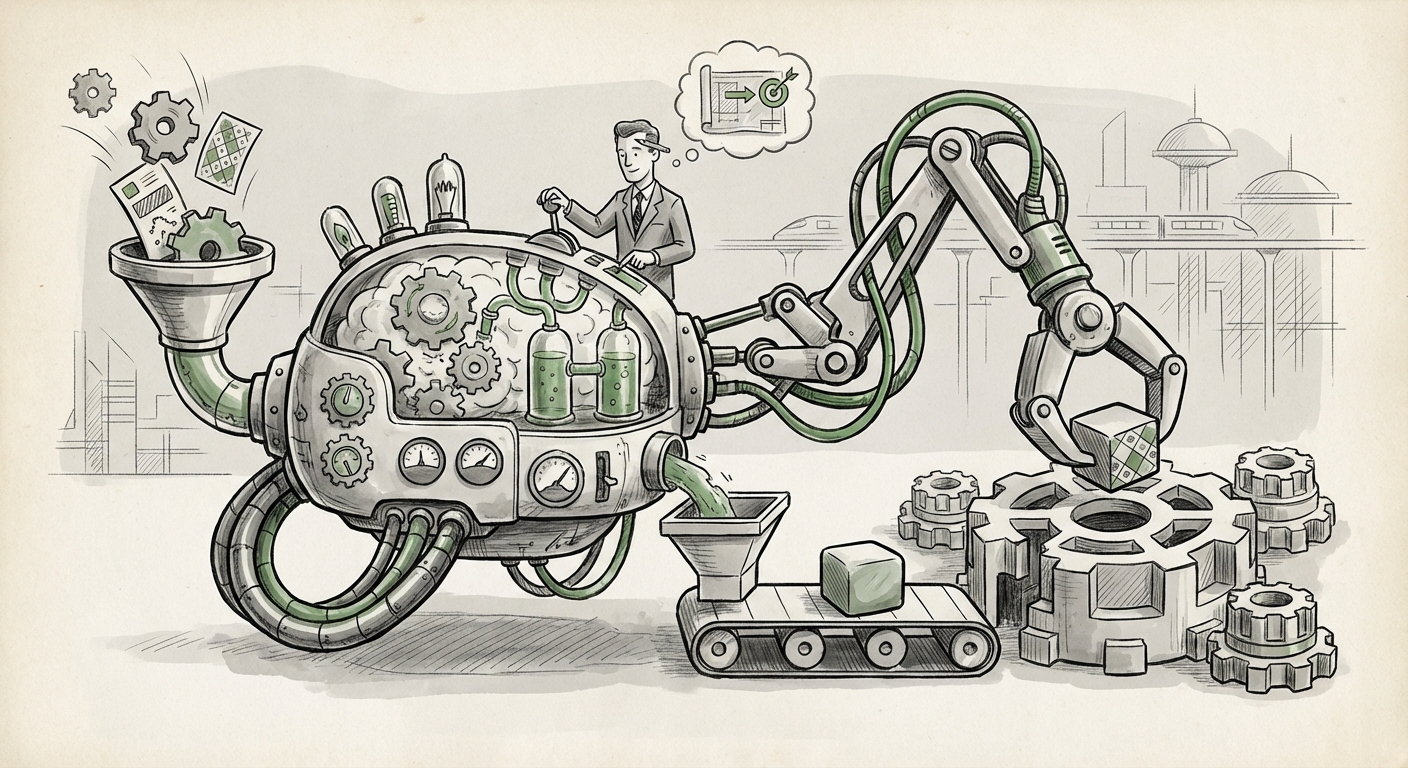
The third headline is mixture of experts. This is the trick that makes a trillion-parameter model practical at all. Instead of running the entire brain for every single question, an MoE model splits itself into many smaller specialist networks. A routing layer looks at each piece of input and sends it to only the few experts that fit best. The rest stay asleep.
Why Mixture of Experts Changes the Economics of AI
Think of a giant hospital. A traditional "dense" model is like waking up every single doctor, nurse, and specialist for every patient who walks in the door. An MoE model is like a smart triage desk that sends a broken arm to orthopedics and a rash to dermatology, and lets everyone else keep sleeping.
The result: you get the knowledge of a massive model with the running cost of a much smaller one. That is why every major lab has moved in this direction, and it is why Mistral Large 4 is such a strong signal. When a trillion-parameter model becomes affordable to serve, it stops being a research curiosity and starts becoming a product.
For buyers, this matters in three concrete ways:
- Lower cost per answer. Efficient routing means fewer compute cycles burned per request, which pushes prices down over time.
- Faster responses. Less work per token generally means quicker replies, which is the difference between a tool people tolerate and a tool people actually use.
- Greener scaling. Doing more with fewer active experts is one of the few genuine levers the industry has on energy use.
The Three Big Bets Behind Mistral Large 4
Bet 1: Scale still matters
For a while, some voices argued that smaller, well-trained models would make giant ones obsolete. Mistral Large 4 is a strong counter-argument. There is still a ceiling that only size can break through, especially for messy, multi-step problems where the model has to hold a lot of context in mind at once.
Bet 2: Efficiency is how you afford scale
Nobody can afford to run a trillion-parameter dense model for millions of everyday users. The MoE design is not a nice-to-have. It is the only reason the headline number is survivable. Expect this pattern to define the next several years: bigger models, smarter routing, flatter costs.
Bet 3: Multimodal is the new default
Text-only models already feel dated. Real work involves screenshots, PDFs, diagrams, recordings, and dashboards. A model that cannot see or hear all of that is a partial assistant. Multimodal capability moving into flagship releases tells us the "text box" era is ending.
What This Means for Businesses
Intelligence is getting cheaper, fast. When frontier-level capability gets more efficient to serve, it moves down-market. Tasks that were too expensive to automate last year become cheap to automate this year. That is not a distant forecast; it is the standard rhythm of this industry.
More work moves from "assisted" to "delegated." Early AI use looked like autocomplete. The next phase looks like handing over a whole task with a goal and a deadline. Trillion-parameter multimodal models are much better at that shift because they can see the source material, reason across steps, and produce something finished.
Vendor choice becomes a real strategy again. A credible, non-US frontier-class model gives companies an alternative supplier. For regulated industries in Europe and elsewhere, that is not just about price. It is about data residency, contract terms, and not being locked into a single provider's roadmap.
Your data advantage grows in value. As the models themselves become commodities, the differentiator moves to what you feed them, your proprietary documents, processes, and customer history. Companies that have cleaned and organized their internal knowledge will get far more out of a model like this than companies that have not.
What This Means for Society
Bigger, cheaper, multimodal models will accelerate a shift that is already underway. Routine knowledge work, summarizing, drafting, checking, translating, formatting, will increasingly be handled by machines, with humans supervising and making judgment calls.
Two things follow from that. First, the value of taste and accountability goes up. Someone still has to decide whether the output is good, safe, and right. Second, access matters. If frontier capability only lives behind expensive enterprise contracts, the benefits concentrate. If it spreads through open-weight releases and competitive pricing, which is the pattern this space has followed, the benefits spread too.
There is also the energy question. Training giant models uses serious amounts of power. Efficiency techniques like mixture-of-experts are one of the main reasons the growth in AI energy demand has not been worse than it is. Every step in that direction buys the industry time and goodwill.
Actionable Insights: What to Do Now
- Audit your highest-volume text tasks. List the ten jobs your team repeats most often. Those are your first candidates, and they just got cheaper to automate.
- Stop treating documents and images as a separate problem. Multimodal models can read both. Design workflows that hand over the whole file, not a manual transcription of it.
- Test more than one provider. Keep a second model in your stack. It keeps pricing honest and protects you if a supplier changes direction.
- Clean your internal data. The model is the engine. Your data is the fuel. Dirty fuel wastes a very expensive engine.
- Build evaluation before you build features. You cannot manage what you cannot measure. Set up a way to score outputs on your real work before you roll anything out widely.
- Keep a human in the loop for anything that matters. High-stakes decisions still need a named person who owns the outcome.
The Road Ahead
Mistral Large 4 is not just a product launch. It is a clear statement about where the frontier is going: trillion-parameter scale, delivered through efficient expert routing, with multimodal understanding as standard equipment. The labs that win the next few years will not be the ones with the biggest raw number. They will be the ones that make that number cheap enough to use everywhere.
For businesses, the window to prepare is now, while the technology is still improving faster than your competitors can reorganize around it. For everyone else, the takeaway is simpler. The models are getting bigger, smarter, and less expensive all at once. That is a rare combination, and it usually changes more than people expect.