NetApp Puts Sovereign Storage at the Center of Europe's AI Infrastructure Decisions
Something quiet but important is happening in how Europe builds its technology. For years, the story of the cloud was simple: put your data somewhere cheap, fast, and reliable, and don't worry too much about where that place actually is. That era is ending.
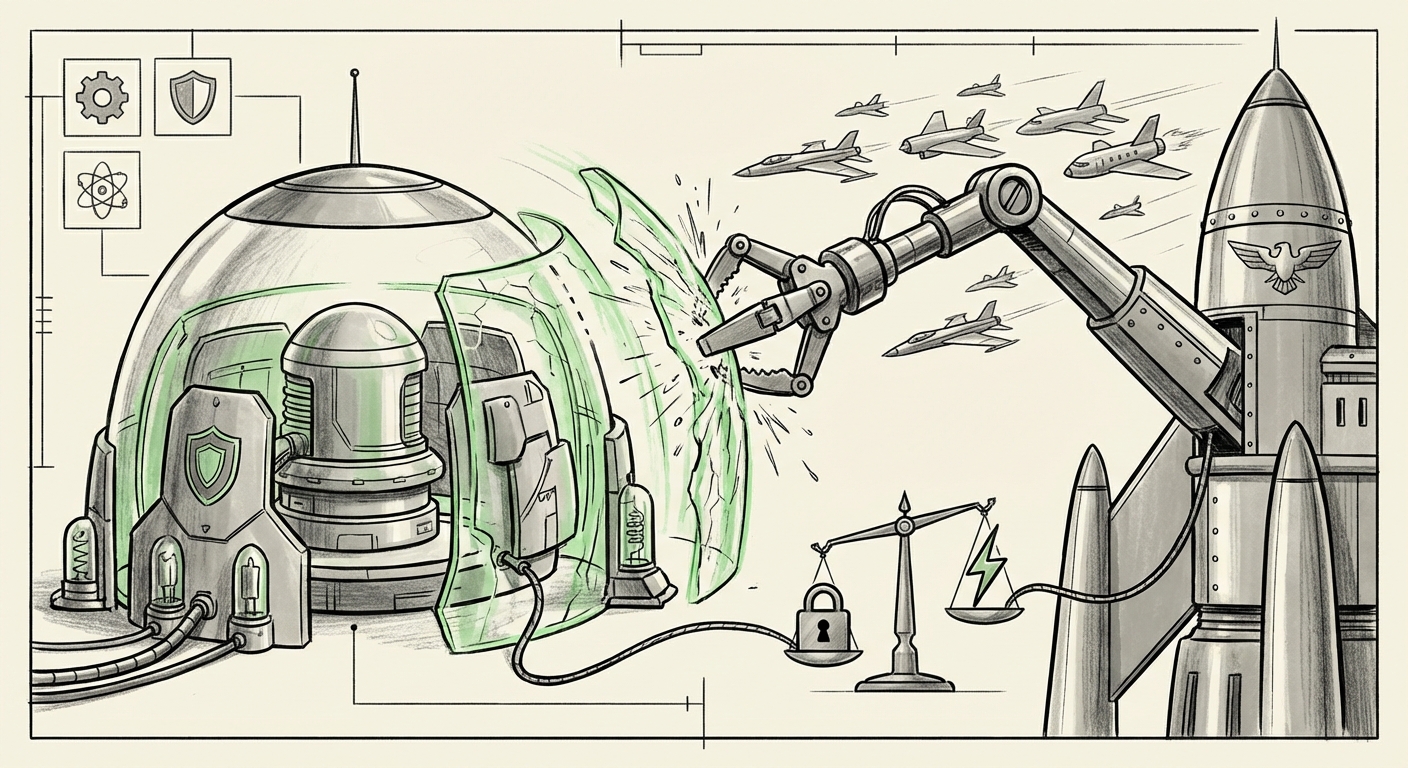
NetApp is now pushing sovereign storage to the middle of the conversation about European infrastructure. That's a big deal, and not just for storage buyers. It's a signal about how artificial intelligence will be built, hosted, and governed over the next decade. Because AI runs on data. And if the data can't leave, the AI can't leave either.
Let's break down what this means, why it matters right now, and what smart teams should do about it.
What "Sovereign Storage" Actually Means
The word "sovereign" gets used loosely, so let's keep it simple. Sovereign storage means data is stored, managed, and protected under the laws and control of a specific region, in this case, Europe. The hardware, the operators, and the legal rules all sit inside the borders that govern them.
Why does anyone care? Because data location is no longer a technical detail. It's a legal question, a political question, and increasingly a business question. If a company can't prove where its data lives and who can access it, it can lose contracts, face fines, or get locked out of entire markets.
For AI, the stakes get even higher. Modern AI systems don't just store data, they learn from it. Training a model means feeding it huge piles of information. Running a model means sending user prompts and private records through servers. If any part of that chain crosses a border, the rules change instantly.
That's why NetApp's positioning matters. Storage isn't a boring back-office topic anymore. It's the foundation layer where sovereignty is either protected or quietly broken.
Three Forces Pushing Europe Toward Local Infrastructure
1. Regulation Has Teeth Now
Europe has spent years building a rulebook around privacy, data protection, and now artificial intelligence. Those rules are not symbolic. They carry real penalties, and they apply to any organization serving European users, no matter where that organization is headquartered.
The practical result: legal teams now sit in the room when infrastructure gets chosen. A decision that used to belong to engineers alone, which storage platform, which region, which provider, is now a compliance decision too. That shift alone explains why sovereign storage is suddenly a board-level topic.
2. AI Workloads Are Data-Hungry and Sensitive
AI has a habit of touching the most sensitive information a company holds. Health records. Financial histories. Employee data. Customer conversations. Legal documents. Training data sets are often a greatest-hits collection of everything an organization would least want exposed.
At the same time, AI workloads are heavy. They need fast storage, huge capacity, and constant access. So companies face a squeeze: they need performance and scale, but they also need provable control. That combination is exactly what sovereign storage vendors are racing to deliver.
3. Trust Is Becoming a Product Feature
Customers now ask where their data goes. Partners ask. Regulators ask. Investors ask. Being able to answer clearly, "your data stays here, under these rules, operated by these people", has become a selling point, not a footnote.
That's the real reason sovereign storage is moving to the center of European infrastructure decisions. It's not only about avoiding penalties. It's about winning deals.
What This Means for the Future of AI
If sovereign storage becomes the default expectation in Europe, the ripple effects on AI will be substantial. Here's how.
AI Will Fragment Into Regional Zones
The dream of one giant global model serving everyone from one place is running into reality. Different regions want different rules. Europe is leading that charge, and other regions are watching closely.
The likely outcome is a world of regional AI zones. Models trained on regional data. Inference running in regional data centers. Governance handled by regional authorities. This isn't a small architectural change, it's a rethink of how AI products get built and shipped.
Storage Becomes an AI Battleground
For years, the AI spotlight fell on chips and model architectures. Storage sat in the shadows. That's flipping. If AI can only use data it's allowed to touch, then the storage layer becomes the gatekeeper of what's possible.
Vendors who can offer high-performance storage inside tightly controlled sovereign boundaries will have real leverage. Those who can't will find themselves excluded from a growing share of the market.
Sovereign AI Becomes a National Priority
Governments increasingly view AI capability the way they once viewed energy or telecom networks, as strategic infrastructure. That thinking pushes toward local compute, local storage, and local talent. NetApp's move aligns with that tide rather than fighting it.
Compliance Becomes a Design Input, Not a Cleanup Task
In the old model, teams built first and asked legal later. In the coming model, sovereignty gets designed in from day one. Where does data live? Who can access it? How is it deleted? What happens when a provider changes hands? These become engineering requirements, not afterthoughts.
Practical Implications for Businesses
Sovereignty sounds abstract until you map it to daily operations. Here's what it changes in practice.
Your Cloud Strategy Needs a Map
Most organizations have data spread across many systems, some of which nobody fully tracks. That's a problem when a regulator or customer asks a simple question about location. You can't protect what you can't see.
A practical first step: build a data map. Where does your data live today? Which systems touch personal information? Which AI tools send data outside your control? Most teams are surprised by what they find.
Vendor Choices Get More Strategic
Choosing a storage or cloud partner is now partly a geopolitical decision. Questions worth asking:
- Where exactly is the data stored, and who can technically access it?
- Which laws apply to the provider, and can those laws override your contract?
- What happens if the provider is acquired or exits a region?
- Can you prove compliance to a regulator without heroics?
If the answers are vague, that's a warning sign.
AI Projects Get a Sovereignty Checklist
Before any new AI project moves forward, teams should answer a short list of questions. Does this model train on data we're allowed to use this way? Does inference stay in-region? Are prompts and outputs logged in a compliant place? Can we delete data fully if asked?
Doing this early saves enormous pain later. Retrofitting sovereignty into a running AI system is expensive and slow.
Cost Models Change
Sovereign infrastructure often costs more than the cheapest global option. That's a real trade-off. But it's increasingly a cost of doing business in Europe, not an optional upgrade. Budgets should reflect that reality rather than treating it as a surprise.
Actionable Insights: A Sovereignty Playbook
Here's a short, practical plan for teams that want to get ahead of this shift.
- Audit first. Map where data lives and where it flows. Include AI tools, SaaS apps, and third-party integrations.
- Classify data. Separate what must stay local from what can move freely. Not everything is sensitive.
- Ask vendors hard questions. Location, legal exposure, access controls, and exit plans. Get answers in writing.
- Design for residency. Make data location a first-class requirement in architecture reviews, not a later patch.
- Train your people. Many sovereignty failures are human ones, an engineer copying data to a convenient tool, for example.
- Prepare for audits. If you can't show proof quickly, you'll struggle when it matters most.
- Watch the market. Storage vendors are repositioning fast. What looks like a niche offering today may be table stakes in two years.
The Bigger Picture: AI's Next Phase Is About Control
The first phase of AI was about capability. Could we build models that write, reason, code, and create? The answer turned out to be yes, and faster than most expected.
The next phase is about control. Who owns the data? Who governs the model? Who decides what's allowed inside a border? Those questions are harder than building the model, because they involve law, politics, and trust.
NetApp's focus on sovereign storage in Europe is a bet that control becomes the defining issue of the AI era. It's a bet that makes sense. Every serious AI deployment eventually runs into the same wall: the data has rules attached to it, and those rules don't bend just because the technology is impressive.
For businesses, the message is clear. Sovereignty is not a niche compliance topic to hand off to legal and forget. It's an architecture decision, a vendor decision, and increasingly a competitive advantage. Companies that get it right can operate confidently across regions. Companies that ignore it will face delays, fines, and lost trust.
Conclusion
Sovereign storage moving to the center of European infrastructure decisions isn't a small product update. It's a marker of a larger shift in how AI gets built and deployed. As rules tighten and data-heavy AI systems spread, the ability to keep data under clear, local control becomes a defining capability.
The winners in the next wave of AI won't just have the smartest models. They'll have the cleanest answers to where the data lives, who can touch it, and who gets to decide. Storage may sound like plumbing, but in this new era, the plumbing is the policy.