FDA Greenlights Pancreatic Cancer Drug: What It Means for AI in Medicine
The news landed on August 30, 2026, and it carried a weight that few headlines do: the U.S. Food and Drug Administration greenlit a drug aimed at transforming pancreatic cancer care. For families who have watched this disease take people far too fast, that alone is enormous. But for anyone tracking artificial intelligence in healthcare, this approval is a different kind of signal, a marker of how far the technology behind modern medicine has come, and where it is heading next.
Pancreatic cancer has long been the hardest target in oncology. It hides deep in the body, shows few early symptoms, and often announces itself only after it has spread. That combination has made it a graveyard for promising ideas. So when a regulator opens the door to a new treatment, it is worth asking a bigger question: what changed?
A large part of the answer, across the industry as a whole, is data and computation. And that is where AI enters the story.
Why Pancreatic Cancer Is the Ultimate Stress Test
Think of drug development as a giant search problem. Scientists are looking for a molecule, or a combination of molecules, that will hit the right target in the body without breaking everything else. The number of possible options is astronomical, far more than any team could test in a lab in a lifetime.
Pancreatic cancer makes that search even harder. The tumors sit behind a thick, dense barrier of tissue that blocks many drugs from reaching them. The cancer also changes fast, which means a therapy that works in one patient may do little in another.
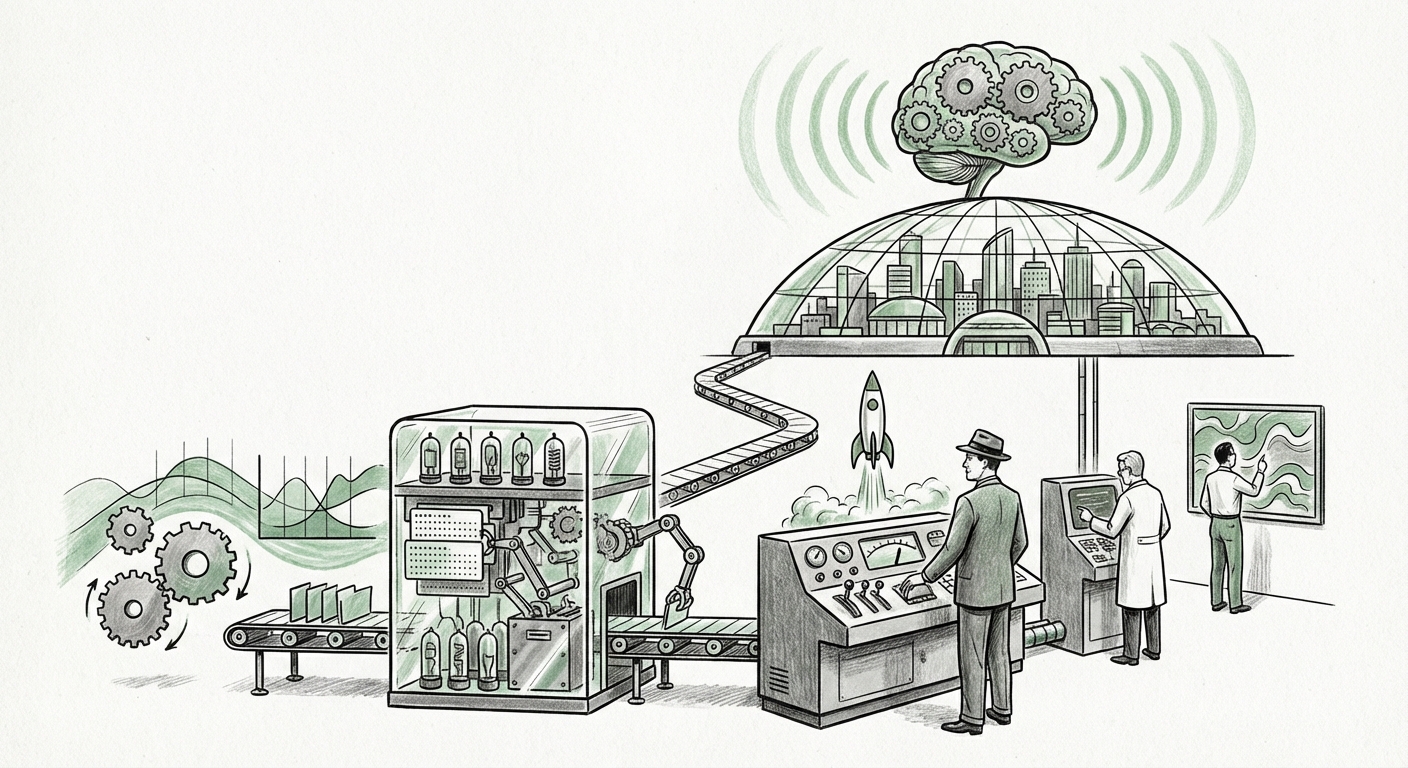
For decades, researchers worked through this problem by hand, one experiment at a time. Today, AI systems help sift through millions of possibilities before anyone picks up a pipette. They look for patterns in genetic data, protein structures, and lab results that a human team might never spot. They rank candidates. They flag dead ends early.
To be clear: we do not yet have full public detail on how much AI touched this particular drug's path to approval, and it would be wrong to claim otherwise. What matters more is the broader pattern. The tools that now surround every major oncology program, from target discovery to trial design, are increasingly AI-driven. A green light in the hardest cancer to treat tells the industry that the modern pipeline, AI included, can produce results in places it previously could not.
Where AI Actually Shows Up in Drug Development
It helps to break down the pipeline into stages, because "AI in drug discovery" is a phrase so broad it has almost stopped meaning anything.
1. Finding the target
Researchers use machine learning to scan huge sets of genomic and biological data. The goal is to find a weak point in a cancer cell, a protein or pathway the tumor depends on. AI narrows thousands of candidates down to a shortlist worth testing.
2. Designing the molecule
Once a target is chosen, someone has to build a drug that fits it. AI models can propose molecular structures and predict how they will behave. This used to take years of trial and error. In some cases, it now takes weeks.
3. Testing in silico before the lab
Simulations can rule out compounds that are likely to be toxic or unstable before they are ever made. Every failed simulation saves money, time, and animal testing.
4. Running smarter trials
This is where AI may matter most. Clinical trials fail constantly, often not because the drug is bad, but because the trial was designed poorly. AI helps pick patients most likely to respond, adjust dosing, and monitor safety signals in real time. Better trials mean faster answers and fewer patients exposed to treatments that will not help them.
The Regulatory Signal Nobody Should Miss
Approvals are not just about one drug. They are about what a regulator is willing to accept.
For years, the FDA has been building a framework for evaluating AI tools used in medicine, from software that reads scans to models that help design studies. Every approval that leans on computational methods, even indirectly, makes the next one easier. It builds precedent. It builds reviewer familiarity. It builds confidence.
This is the quiet engine of change. A regulator that understands AI-assisted evidence is a regulator that can move faster on the innovations that follow. For biotech startups, that matters enormously. The path to market is the single biggest risk they face, and anything that smooths it changes the math on investment.
Finding Pancreatic Cancer Before It's Too Late
There is a second, equally important use of AI here, and it has nothing to do with making drugs.
Pancreatic cancer is so deadly largely because it is found late. If AI can help spot it earlier, by flagging subtle patterns in medical imaging or routine blood work that a human reviewer might dismiss, then the value of any new treatment multiplies. A drug that works is far more powerful when it reaches a patient at stage one instead of stage four.
This is the convergence that should excite everyone in the field. Treatment and detection are usually discussed separately. Increasingly, they are two halves of the same system. A new therapy creates demand for earlier diagnosis, and AI-powered screening is the most plausible way to meet it at scale.
What This Means for Business
If you run a company, in healthcare or far outside it, here is why this matters to you.
- Pharma and biotech: The cost and time of development is the industry's central problem. AI compresses both. Firms that build real internal capability here will outrun those that treat it as a marketing line.
- Health systems: New treatments mean new workflows. Someone has to decide who gets the drug, how it is monitored, and how data is captured. AI tools that support those decisions will move from nice-to-have to necessary.
- Insurers and payers: Expensive new therapies force hard questions about coverage. AI-driven evidence on who benefits most becomes a tool for getting those decisions right, and for defending them.
- Software and data companies: The bottleneck in medical AI is not algorithms. It is clean, structured, well-labeled data. Whoever solves that problem owns a piece of the next decade.
- Every other industry: The pattern on display here repeats everywhere. When a field gets a hard, high-stakes problem, AI gets applied to it first. Oncology is just the most visible example.
The Risks, and Why They Matter
None of this is free of danger.
AI models learn from historical data, and historical data carries historical bias. If a model is trained mostly on one population, it may perform poorly on others. In cancer care, that is not an abstract concern, it is a life-and-death one.
There is also the hype problem. Plenty of companies claim AI-driven breakthroughs without evidence that AI did the heavy lifting. Regulators and investors are getting better at telling the difference, but the noise is real.
And there is the black box issue. A model that recommends a treatment but cannot explain why is hard to trust, hard to regulate, and hard to defend in a hospital. Explainability is not a nice extra. It is the price of admission.
Actionable Insights: What to Do Now
- Audit your data before your algorithms. Most AI failures are data failures wearing a disguise.
- Build validation into the process from day one. Test models on populations that look different from your training set.
- Partner rather than pretend. If you are not a life sciences company, do not try to become one. Collaborate with the people who are.
- Watch the regulatory calendar. What the FDA accepts shapes where investment flows. These signals are public and free to read.
- Invest in the human side. Doctors and researchers need to understand what these tools can and cannot do. Adoption fails without trust.
The Bigger Picture
A single approval does not change medicine overnight. But it does something nearly as important: it proves a direction is viable. The hardest cancer to treat is now a place where new tools are being brought to bear, and computational methods are increasingly part of how that happens.
The future of AI in medicine will not be announced with a single headline. It will arrive as a slow accumulation of approvals, validations, and quiet improvements in how fast we find, test, and deliver treatments. The pancreatic cancer green light is one of those moments. It is a signal that the pipeline is getting stronger, and that the technology behind it is no longer experimental.
For businesses, the lesson is simple. The industries that pair deep human expertise with serious AI capability are the ones that will solve the problems everyone else has written off. Pancreatic cancer was one of those problems. It still is, in many ways. But the door just opened a little wider.