AI and the Iran Nuclear Standoff: What Vance's Push and Tehran's 'Never' Mean for the Future of Technology
On October 7, 2026, Vice President JD Vance called on Iran to make nuclear concessions. The answer from a senior official in Tehran was blunt: Iran will "never" give up enrichment. Two positions, one wall, no obvious door.
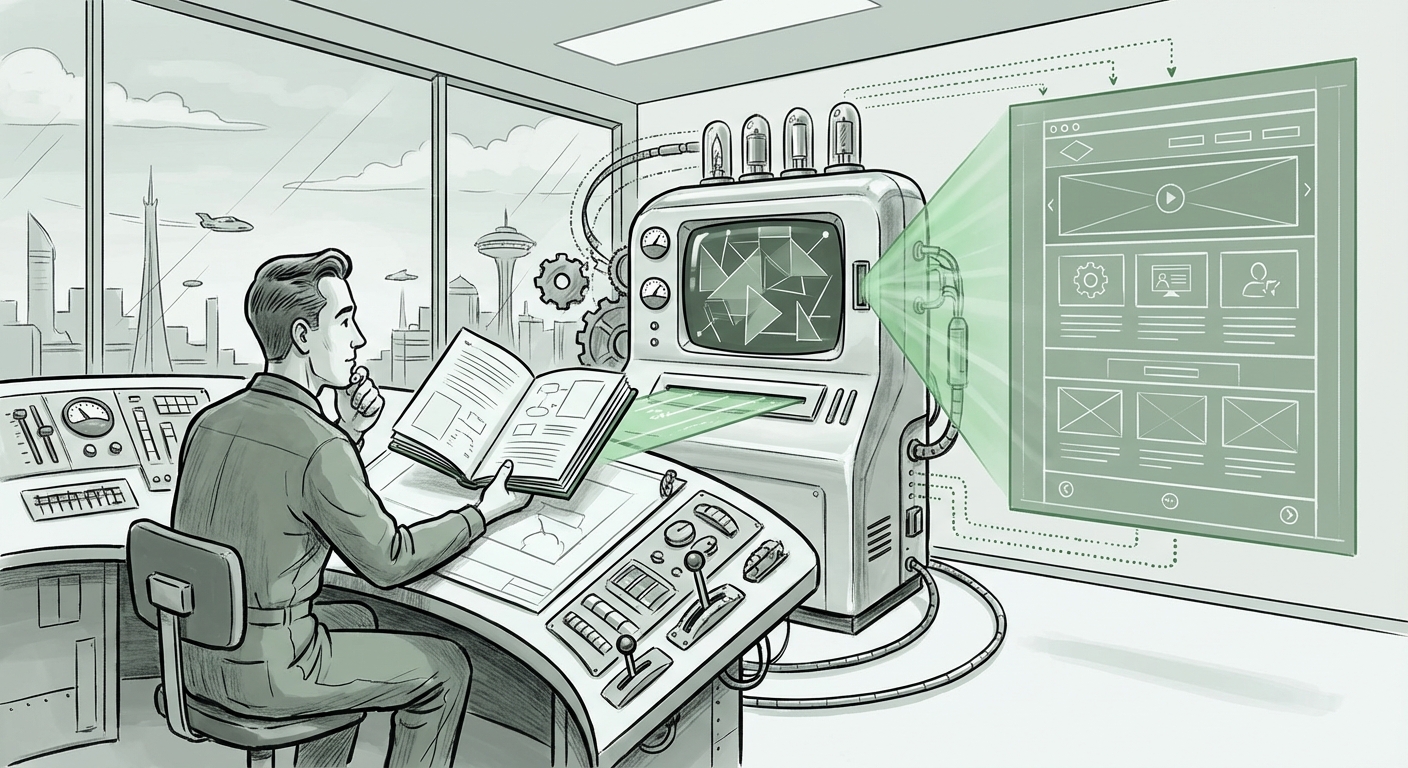
Most people will read that exchange as a story about diplomacy. It is also, and maybe more importantly, a story about technology. Because the tools that decide whether a nuclear standoff ends in an agreement or a crisis are no longer just diplomats and treaties. They are satellites, sensors, algorithms, and chips. Artificial intelligence now sits inside every layer of this problem, from spotting a hidden facility in a photo to drafting the talking points a negotiator reads on the way into the room.
That makes this standoff a preview of something bigger: what happens to AI when the world's hardest security problems run straight through it.
The Standoff in Plain Terms
Here is the situation without the jargon. The United States wants Iran to give up ground on its nuclear program. Iran says enrichment, the process that can produce fuel for reactors, and also material for weapons, is not on the table. Ever.
That is not a small gap. It is the kind of gap that talks cannot close quickly, because both sides have staked their credibility on it. Vance's call for concessions sets an expectation in Washington. Tehran's flat refusal sets an expectation at home. Once leaders say "never" out loud, walking it back costs them politically.
When words harden like that, the pressure moves to a different question: how do you verify anything either side promises? And that is where AI enters the picture in a very practical way.
Why This Is an AI Story
Think about what a nuclear agreement actually requires. Not trust, nobody in this standoff is offering trust. It requires proof. Someone has to be able to say, with confidence, "that facility is doing what they said it would do," or "something changed there last Tuesday."
Modern monitoring leans heavily on machines:
- Satellite imagery analysis. AI models scan thousands of images a week and flag changes, a new road, fresh construction, a different pattern of truck traffic.
- Sensor fusion. Seismic, acoustic, and radiation data get combined and sorted by algorithms that look for signatures humans would miss.
- Pattern detection. Procurement records, shipping manifests, and financial flows get cross-checked at a scale no analyst team could handle by hand.
- Language processing. Thousands of hours of public statements, broadcasts, and technical documents get translated and indexed in minutes.
None of this replaces human judgment. But it changes what humans can even notice. A monitoring team of ten people with good AI tools can watch more ground than a team of a hundred could a decade ago.
The Machine That Watches the Centrifuges
Imagine an inspection regime built around AI. Cameras at a facility feed into a model that learns what "normal" looks like, the rhythm of operations, the heat signatures, the vibration. When something drifts outside that pattern, an alert goes out.
This is already how a lot of industrial safety works. Power plants use it. Factories use it. Banks use it for fraud. The nuclear version is the same idea with much higher stakes.
The upside is real. Continuous monitoring is far harder to cheat than occasional visits. If a country knows that a model is watching every hour of every day, the cost of a secret move goes up. That alone can shape behavior.
The downside is also real. AI models produce probabilities, not verdicts. A 92% confidence flag is not proof. And in a standoff where both sides already assume bad faith, a false alarm can become a diplomatic crisis in an afternoon.
What AI Still Cannot Do
It is tempting to treat AI as a truth machine. It is not. Three limits matter here:
1. It can be fooled on purpose
Anyone who knows what a detection model looks for can design around it. Cover a heat source. Time truck movements. Feed false signals. This is an arms race, and the AI side does not automatically win.
2. It cannot explain intent
A model can say "uranium is moving." It cannot say why, or what the leadership plans, or whether a technician made a mistake. Intent still requires people who understand the country, the politics, and the history.
3. It cannot sign anything
Verification supports a deal. It does not create one. Vance's call and Tehran's refusal are political facts, and no algorithm changes a political fact.
Negotiations at Machine Speed
There is a quieter AI story here too, the one happening in the room.
Negotiating teams increasingly use software to model outcomes. What happens to sanctions relief under scenario A versus scenario B? How does an oil market react? What does a phased timeline look like if inspections slip by six months? These used to be months of analyst work. Now they are a dashboard.
Translation and speech tools let a delegate follow a counterpart's tone in real time, not through a summary written afterward. Sentiment analysis flags when a phrase lands badly. Research tools compress a decade of public statements into a briefing.
None of this decides anything. But it changes the pace. And when pace changes, the side that prepares faster usually gets more of what it wants.
The Credibility Trap: Deepfakes and 'Never'
Here is where AI becomes dangerous in a standoff like this one.
Iran's position rests on a single word: never. That word is now public, quotable, and permanent. In a world of cheap, realistic synthetic media, public statements become unstable ground. A fabricated audio clip of a leader softening a red line can spread worldwide before anyone verifies it. A real statement can be dismissed as fake.
This cuts both ways. Governments that want out of a hard position might find deniability in the noise. Governments that want to hold a hard position might find their own words doubted.
The result is a trust tax on diplomacy itself. Every claim now needs provenance, who said it, when, on what recording, verified how. Expect authentication technology to move from a niche concern to a core part of how states communicate. Expect the same pressure inside businesses, where a faked executive voice note can move a stock price.
Chips, Curbs, and a Two-Bloc AI World
There is a third layer, and it is the one businesses feel first. Advanced computing hardware is now a tool of statecraft. Controls on who can buy the fastest chips and the best training tools have become bargaining chips in exactly this kind of negotiation.
When a nuclear standoff and a technology standoff run on the same track, three things happen:
- Compute becomes leverage. Access to top-tier AI infrastructure gets traded, withheld, or offered as an incentive.
- The AI world splits. Companies increasingly build for two sets of rules, two supply chains, two compliance regimes.
- Dual-use anxiety grows. The same model that helps a hospital also helps a weapons program. Every capability is scrutinized twice.
A "never" on enrichment in Tehran and a "no" on chip sales in Washington start to look like the same negotiation seen from different angles.
What This Means for Businesses
You may not sell centrifuges. This still affects you.
Energy and input costs
Any escalation risk in the region shows up in oil and gas prices within hours. Companies with thin margins need faster scenario planning. AI-driven forecasting is no longer a nice-to-have for logistics and manufacturing teams, it is how you avoid being the last to react.
Compliance gets harder, not easier
Sanctions rules shift, and they now cover technology exports as well as goods. Manual screening does not scale. Firms that automate sanctions and export screening will spend less time in legal review and less money on fines.
Cyber risk rises with tension
Geopolitical friction usually shows up in networks before it shows up anywhere else. AI-assisted detection is now table stakes for defenses, and AI-assisted attacks are the reason why.
Trust becomes a product feature
If synthetic media erodes confidence in what is real, then verification tools, content provenance, signed communications, authenticated voice and video, move from novelty to necessity. This is one of the clearest growth areas in enterprise AI over the next few years.
Actionable Insights
- Model the shock, not the headline. Build simple scenarios for energy price swings and shipping disruptions. Update them monthly, not yearly.
- Automate sanctions and export screening now. Rules tied to technology exports are only getting more complex.
- Audit your verification stack. If your company cannot tell a real executive message from a fake one, fix that this quarter.
- Treat compute access as a strategic risk. Know where your AI infrastructure sits, who controls it, and what happens if rules change.
- Keep humans in the loop on high-stakes decisions. AI flags; people decide. The standoff proves why that line matters.
- Watch the monitoring sector. Verification AI, satellite analytics, sensor fusion, provenance, is where geopolitical demand and technical capability are colliding fastest.
The Road Ahead
Vance asked for concessions. Tehran said never. That exchange will be read as a setback by some and a firm stand by others. But underneath it, a different race is already running.
The countries and companies that can see more clearly, verify more reliably, and decide faster will hold an advantage in every standoff, nuclear, economic, or technological. AI is what makes that possible. It is also what makes deception cheaper, trust more fragile, and the gap between a signal and a decision much shorter.
The lesson is not that AI solves hard problems. It is that AI changes the speed at which hard problems are argued, verified, and misunderstood. In a world where one word, "never", can freeze a negotiation for years, whoever handles that speed best wins the room.
That is the real story behind the headline. Not just what was said on October 7, 2026, but what technology now does with every word after it.