AI Swarms Could Hijack Democracy Without Anyone Noticing, What It Means for the Future of AI
Democracy has always been a contest of persuasion. Campaigns knock on doors, newspapers print editorials, neighbors argue over fences. What happens when millions of those persuaders are not people at all, but swarms of AI agents that coordinate with each other, learn from each other, and never sleep?
That is the warning at the center of a striking new analysis: AI swarms could hijack democracy without anyone noticing. The claim is not about a single clever chatbot writing a mean post. It is about something far more structural, networks of AI agents working together at a scale and speed no human organization can match, nudging opinions in ways that feel organic rather than engineered.
The timing matters. As of April 2026, AI agents are no longer experimental toys. They browse, they post, they hold conversations, they manage accounts, and increasingly they talk to each other. That last part is where the danger quietly multiplies.
What Exactly Is an AI Swarm?
Think of a swarm the way you think of a flock of birds or a school of fish. No single bird is in charge, yet the group moves as if it has one mind. Each member reacts to the ones nearby, and small adjustments ripple outward into coordinated motion.
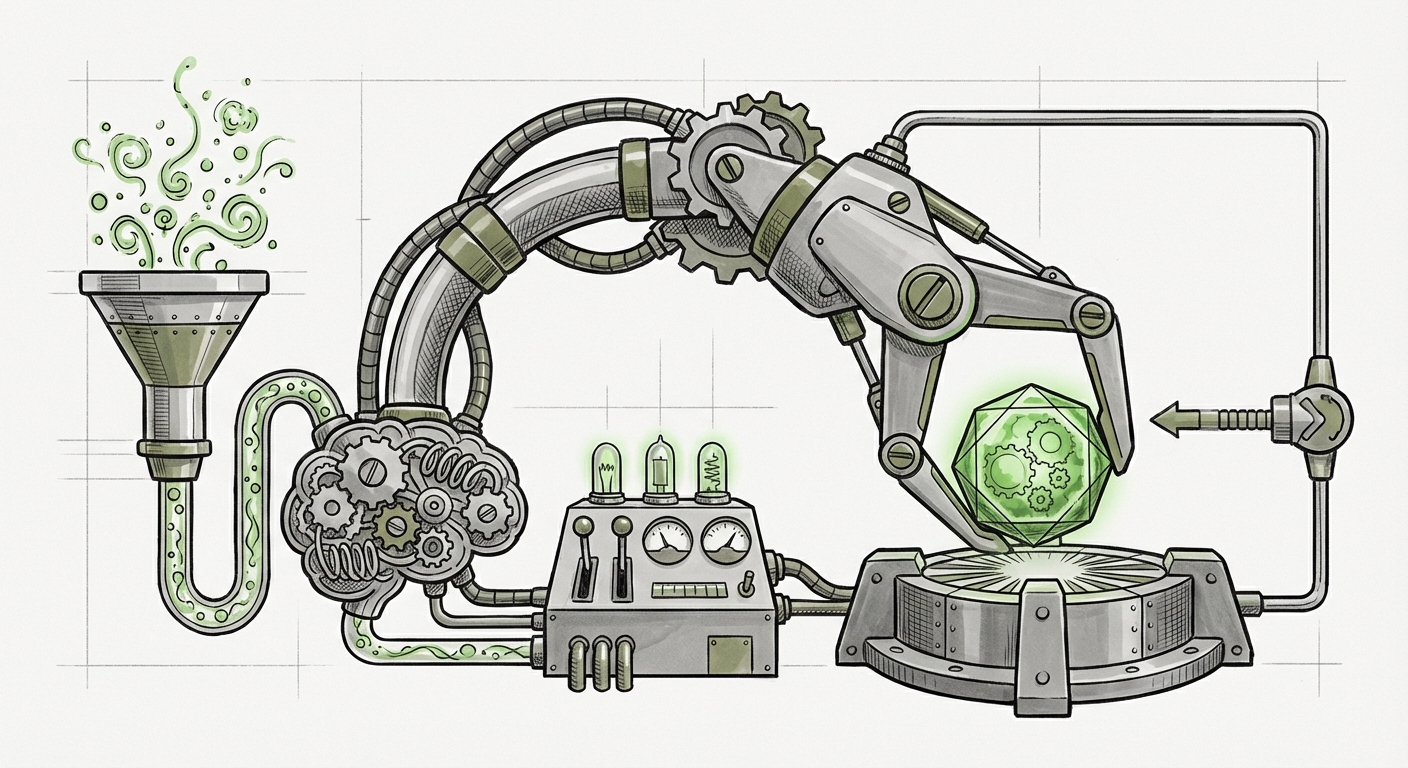
AI swarms work the same way. Instead of one big system trying to do everything, you have many smaller AI agents, each with a narrow job. One drafts messages. One picks targets. One tests which phrasing lands best. One watches how the audience reacts and feeds that back to the others. Nobody writes a master plan, because the system generates its own plan as it goes.
This is often called multi-agent AI. For businesses, it is one of the most exciting developments in years, teams of AI workers that divide up tasks, check each other's work, and improve over time. For anyone who cares about public discourse, it is also one of the most unnerving.
Why Swarms Change the Threat Model Completely
Old-school online manipulation had obvious fingerprints. Accounts were created in bulk. They posted the same message. They shared the same links at the same times. Researchers could spot the pattern and platforms could sweep them away.
Modern AI agents break every one of those tells:
- They write differently every time. A single AI agent can produce thousands of unique messages, each in a slightly different voice, tone, and reading level.
- They adapt in real time. If a message flops, the swarm shifts. If a phrase goes viral, the swarm amplifies it. This happens in minutes, not weeks.
- They imitate real people convincingly. Local slang, regional concerns, the way a frustrated parent or small business owner actually talks, all of it can be simulated.
- They coordinate without a visible command center. No one has to send instructions. The agents respond to each other and to the environment.
- They are cheap to run. What once required an army of paid staff can now be handled by software that scales almost for free.
Put those five traits together and you get a persuasion machine that looks, sounds, and behaves like a genuine grassroots movement.
The Invisibility Problem
The most unsettling part of the warning is not the scale. It is the silence.
When a foreign government buys ads or a campaign floods a hashtag, there are paper trails, spending records, and news stories. When a swarm acts, there is often nothing to point at. The activity is spread across thousands of ordinary-looking accounts. There is no single purchase, no single slogan, no single villain.
Worse, the swarm can blur the line between what is fake and what is real. Once AI-generated content enters a conversation, real people pick it up, repeat it, and defend it. The original source disappears. The idea survives. Human beings become, unknowingly, part of the swarm.
This is the heart of the concern: democratic debate could be shaped without anyone being able to prove it was shaped.
From Botnets to Believable Neighbors
It helps to separate the old problem from the new one.
The old problem was fake accounts. The new problem is fake consensus. An AI swarm does not need to convince you directly. It only needs to make an idea look popular. If you believe everyone around you already thinks something, you become far more likely to go along, or at least to stay quiet.
That silence is the real prize. Democracies do not fall apart because everyone suddenly agrees on something extreme. They erode when ordinary people stop trusting that anyone else is honest, stop speaking up, and stop believing that their vote or their voice changes anything.
AI swarms are uniquely good at manufacturing exactly that atmosphere.
What This Means for the Future of AI
The story of AI over the next few years will not be about a single giant model that knows everything. It will be about many small agents working in teams. That shift is already underway in business software, customer support, research, coding, and marketing.
The same architecture that makes an AI workforce so powerful also makes it so dangerous when pointed at public opinion. You cannot ban the technology without banning the productivity gains. You cannot detect it reliably because good agents look like people. You cannot regulate it at the border, because it runs on ordinary cloud servers.
This forces a hard question: if coordination itself becomes weaponizable, what does a healthy public square even look like?
Three likely directions stand out:
1. Provenance becomes a product category
Expect a growing market for tools that verify where content came from, who created it, and whether a human was involved. Digital signatures for media, verified identity layers for platforms, and "chain of custody" style tracking for information will move from niche to standard.
2. Detection shifts from accounts to behavior
Catching fake accounts is a losing game. The better approach is watching for patterns too perfect to be human, coordination that is too fast, agreement that is too smooth, timing that is too convenient.
3. Platforms face real legal weight
Once researchers can demonstrate coordinated AI influence, pressure will grow on platforms to act. Expect new rules, new disclosure requirements, and new lawsuits. The fight will be about who is responsible when a swarm shapes an election.
Practical Implications for Businesses
This is not only a political story. Any company that depends on public trust should pay attention.
- Reputation risk. A competitor, or just a prankster, can spin up a swarm to make your brand look hated or beloved. Both are manipulation, and both distort your real feedback.
- Polluted market research. If your surveys, reviews, and social listening are filled with AI-generated noise, your decisions are built on sand.
- Marketing ethics under pressure. The line between "engaging content" and "coordinated influence" is getting thinner. Companies that cross it will not always know they have.
- New defensive spending. Expect budgets to shift toward verification, authenticity checks, and AI-threat monitoring, the same way cybersecurity became a line item twenty years ago.
Practical Implications for Society
For voters, the challenge is uncomfortable: you can no longer rely on volume as a signal of truth. A thousand voices agreeing used to mean something. Now it might mean one person with a laptop.
For institutions, media, universities, election offices, the task is harder. They must rebuild trust in a world where any claim can be faked and any crowd can be rented. That requires transparency, not just confident statements.
The most important shift may be cultural. Communities that already have strong local ties, trusted local voices, and real human relationships are far harder for a swarm to hijack. Influence operations thrive where people feel alone and unheard.
Actionable Insights: What to Do Now
- Assume coordination until proven otherwise. When a topic suddenly trends with unusual intensity, pause before reacting.
- Check the source, not the crowd. Ask who first said it and whether that source can be verified, not how many people repeated it.
- Build AI literacy into every team. Marketing, HR, legal, and communications all need to understand what swarms are and how they behave.
- Audit your own AI use. If your company uses multi-agent systems to engage audiences, set clear rules about disclosure and honesty now, before a mistake becomes a scandal.
- Invest in verification tools early. The organizations that can tell real from synthetic will have a serious advantage.
- Strengthen real communities. Trusted human networks are the most durable defense against manufactured consensus.
- Push for clear rules, not panic. Knee-jerk bans rarely work. Standards, transparency, and accountability do.
The Road Ahead
The most important insight in this warning is not that AI can lie. It is that AI can now organize. That is a new capability, and it lands in the middle of one of the most fragile systems humans have ever built: public opinion.
The same technology will also be used to run smarter businesses, speed up research, and give small teams the reach of large ones. Swarms are not going away. They will become part of how work gets done.
The choice, then, is not whether to allow multi-agent AI. It is whether democracies will build the awareness, the tools, and the trust to notice when something is being done to them rather than by them.
Because the danger of a swarm is not that it shouts. It is that it whispers, in a voice that sounds exactly like everybody else, and leaves no one to blame.